


More news on this day
Staffing related constraints in the air traffic system triggered a pause in flights at Chicago’s O’Hare International Airport, disrupting operations across one of the United States’ busiest hubs and leaving United Airlines with the highest number of cancellations among major domestic carriers.
Get the latest news straight to your inbox!
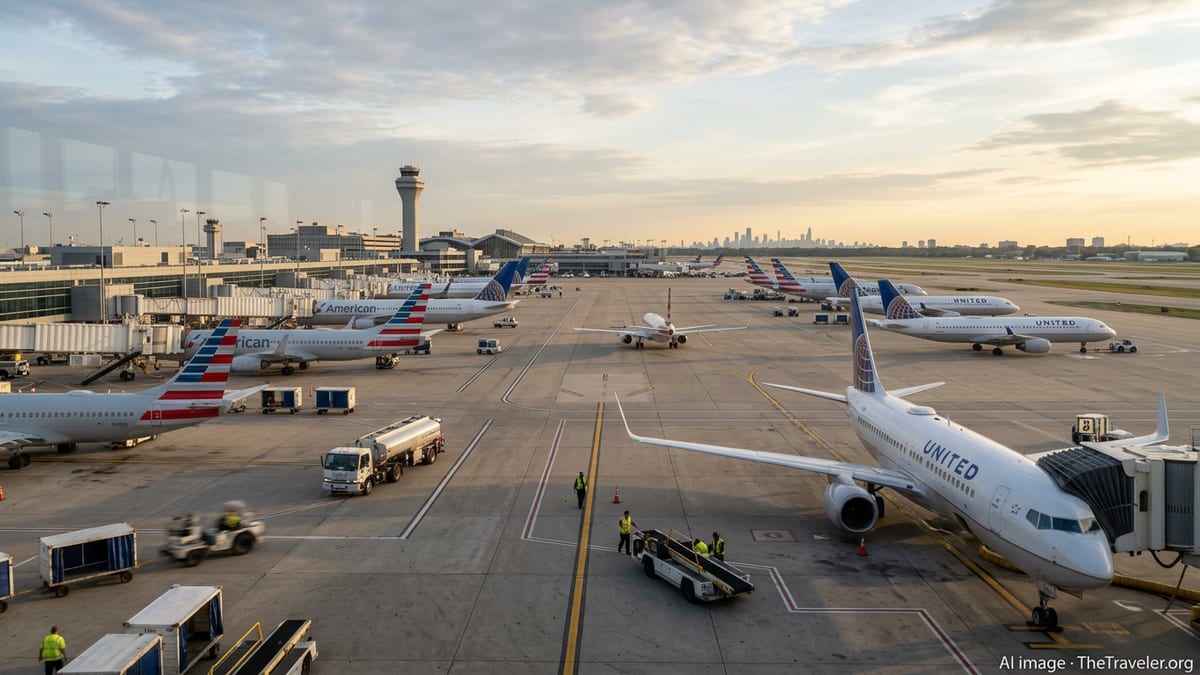
Staffing Limits Trigger Flight Pause at Key Midwestern Hub
Reports from flight tracking platforms and aviation data providers indicate that air traffic flow programs tied to staffing levels led to a temporary halt and heavy metering of flights into and out of Chicago O’Hare. The measures, applied through Federal Aviation Administration traffic management tools, effectively paused many departures and sharply reduced arrivals as controllers worked within reduced staffing thresholds.
Publicly available operational notices and traveler accounts describe a patchwork of ground stops and flow restrictions that intermittently affected O’Hare, compounding delays that were already building during a busy travel period. Aircraft were held at gates or on taxiways while inbound flights were slowed or rerouted, creating knock on schedule disruptions throughout airline networks.
Industry analysts note that such pauses are designed to preserve safety margins when controller staffing dips below targeted levels or when traffic volumes exceed what local facilities can handle. At a complex hub like O’Hare, any constraint of this kind can quickly ripple outward because of the airport’s central role in connecting traffic between coasts, the Midwest, and international destinations.
The latest pause drew particular attention because it came amid ongoing scrutiny of staffing pressure in portions of the national airspace system, including facilities responsible for handling traffic around Chicago. Previous traffic management alerts have referenced controller availability as a factor in limiting the number of flights into and out of the region.
United Bears Brunt of Cancellations Among U.S. Carriers
As operations at O’Hare slowed, publicly available data from flight tracking services showed United Airlines accounting for the largest number of cancellations among U.S. carriers. The Chicago based airline operates one of its primary hubs at O’Hare and runs an extensive schedule of domestic and international flights through the airport, leaving it highly exposed when bottlenecks emerge.
Because United concentrates a large share of its departures and arrivals in tightly timed banks to maximize connections, any ground stop or capacity reduction at O’Hare can force the carrier to cut flights in order to reset the operation. Aviation analysts explain that airlines often prioritize long haul and high demand routes while canceling shorter domestic legs or later frequencies when capacity is constrained, a strategy that can inflate cancellation counts for a hub carrier.
Comparative figures compiled from airline status boards and independent tracking platforms show that United’s cancellation totals outpaced those of competitors during the disruption, even at airports where several carriers maintain substantial operations. That pattern reflects both the airline’s hub structure and its aggressive growth at O’Hare in recent seasons, with schedules that leave little slack when constraints arise.
Travel industry watchers point out that while weather often receives the most attention from passengers, staffing related caps can be just as disruptive. When the constraint is on the air traffic side rather than the airline’s own crews, even carriers with available pilots, cabin staff, and aircraft can find themselves unable to operate planned flights.
Travelers Face Cascading Delays and Network Wide Disruptions
The pause in flights at O’Hare produced a familiar pattern for travelers: growing departure boards full of delays, crew timeouts on aircraft that waited too long to push back, and missed connections that forced passengers to rebook for the following day. Social media posts and traveler accounts from the terminal described long lines at customer service counters and crowded gate areas as schedules unraveled.
Operational data suggest that the impact extended far beyond Chicago. Because O’Hare serves as a major connecting point, cancellations there removed aircraft and crews that were scheduled to continue on to other cities across the United States. Flights that did depart often did so late, creating secondary delays downline as arriving aircraft missed their planned departure slots elsewhere in the network.
Analysts note that staffing related caps magnify these knock on effects because they tend to last for multiple hours, limiting the ability of airlines to quickly catch up once the immediate constraint is lifted. Aircraft and crews end up out of position, leading carriers to preemptively cancel later flights to restore some balance to their schedules and reduce the risk of overnight strandings.
For passengers, the result is a patchwork of options that can change rapidly as carriers adjust. Same day alternatives may vanish quickly on popular routes, particularly when multiple airlines are affected by the same underlying constraint. Travel planners advise that, during such events, rebooking tools and mobile notifications often provide faster information than airport counters alone.
Spotlight on Air Traffic Staffing and Capacity Planning
The episode at O’Hare has renewed attention on air traffic controller staffing and broader capacity planning in one of the country’s busiest airspace regions. Publicly available government documents and previous coverage have highlighted that key Chicago area facilities are operating with staffing levels that leave limited room to absorb surges in traffic or weather related reconfigurations.
Experts in aviation operations emphasize that the relationship between staffing and delays is complex. Controller numbers are only one factor alongside runway layouts, weather patterns, airline scheduling strategies, and the mix of regional versus mainline traffic. Still, when facilities are staffed near minimum levels relative to demand, even modest disruptions can lead to traffic management initiatives that significantly curtail throughput.
Policy discussions have increasingly focused on how to match schedules with realistic capacity. Proposals have ranged from temporary reductions in flight volumes at peak times to longer term investments in technology and infrastructure that could allow controllers to handle more traffic with the same number of personnel. In the near term, however, flow caps and ground stops remain the primary tools for keeping traffic levels within safe bounds.
For hub carriers like United, this environment presents a strategic challenge. Expanding schedules at capacity constrained airports offers revenue opportunities but also raises the risk that any staffing related constraint will translate into disproportionate operational pain. The recent pause at O’Hare illustrates how quickly those risks can materialize when traffic volumes and staffing levels fall out of balance.
What Passengers Can Expect in Upcoming Travel Periods
Looking ahead, aviation analysts suggest that travelers transiting O’Hare and other major hubs should be prepared for intermittent disruptions linked to both weather and staffing, particularly during peak holiday and summer travel periods. Demand for air travel remains strong, while ramping up controller staffing and fully training new hires takes time.
Travel advisors recommend that passengers connecting through capacity constrained hubs build additional time into itineraries, opt for earlier flights when possible, and monitor airline apps for real time changes. When widespread cancellations occur, those with flexible routing or the ability to depart from alternative airports may have better chances of securing same day options.
Publicly available performance data show that most flights still operate as scheduled, even on days with heightened delays. However, the experience at O’Hare underscores how quickly conditions can deteriorate when staffing and schedule pressures intersect. For airlines and passengers alike, the episode serves as a reminder that the recovery of the aviation system from past disruptions remains uneven and sensitive to operational strain.
As carriers refine their schedules and regulators weigh capacity measures, the balance between meeting travel demand and maintaining resilient operations will continue to shape the experience of flying through busy hubs such as Chicago O’Hare, with hub based airlines like United closely watched for how they navigate the next round of challenges.