


More news on this day
The Bahamas is poised to join a fast evolving shared Caribbean visa initiative alongside Jamaica, Saint Lucia, Barbados, Trinidad and Tobago, Dominica, Antigua and Barbuda and other regional partners, signaling a major push to transform the Caribbean into a seamless, multi destination tourism space by 2026.
Get the latest news straight to your inbox!
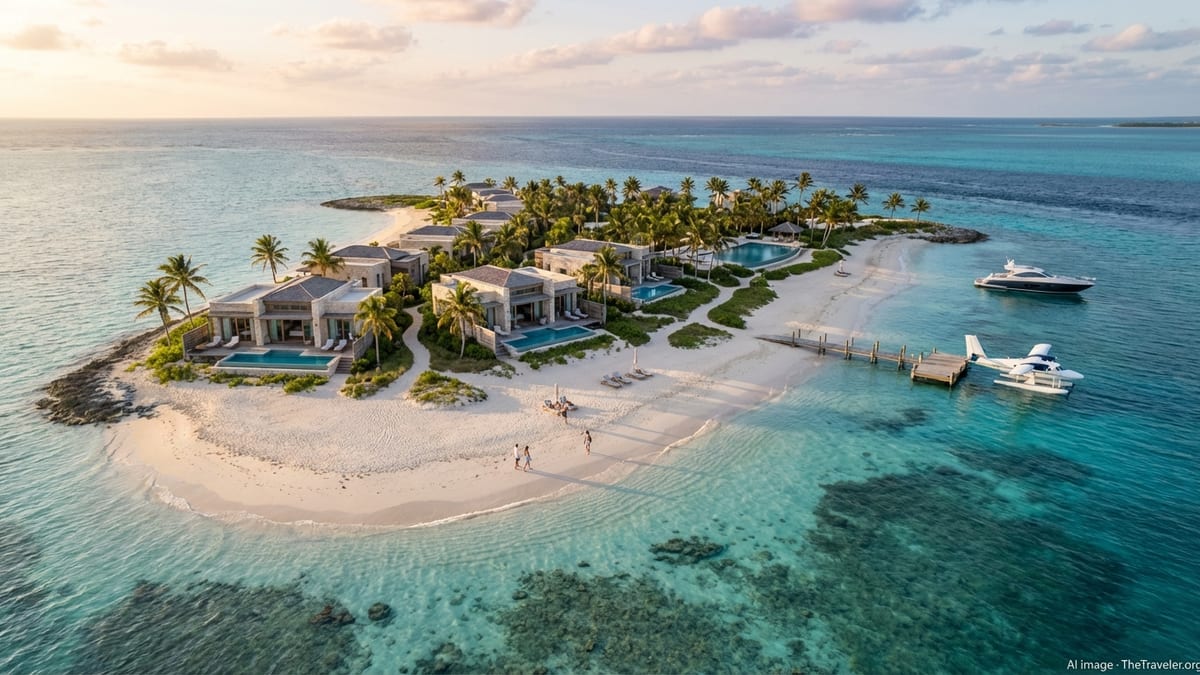
A New Chapter For Caribbean Travel In 2026
Regional discussions on a shared visa have accelerated in recent years as Caribbean governments look for practical ways to deepen integration, share tourism revenues more evenly and compete with other multi country destinations. Publicly available information on CARICOM and Organisation of Eastern Caribbean States policy work indicates that visa harmonisation and a modern version of the Single Domestic Space concept are back on the table, this time with a clear tourism and economic growth focus.
The Bahamas signalling intent to come on board is widely viewed in regional commentary as significant. Historically, the country has opted out of deeper elements of the CARICOM Single Market and Economy, particularly in relation to labour movement. Its willingness to align on a shared visitor visa is therefore being interpreted by analysts as a calculated move to safeguard and grow high value tourism while maintaining its more cautious approach to wider integration.
The broad outline emerging from policy papers, ministerial statements and tourism industry briefings points to a system where visitors would apply once for a time limited Caribbean visa, pay a single fee and then move between participating islands without repeated immigration processing. While operational details are still being refined, the goal that is repeatedly highlighted across regional forums is to have the first phase in place ahead of the peak 2026 2027 winter tourism season.
Commentary from regional tourism organisations also stresses that the shared visa is intended to complement, not replace, existing national entry policies. Each government is expected to retain control over security screening and admissibility criteria, but within a common framework that allows for mutual recognition of checks and clearer rules for airlines, cruise lines and tour operators.
How The Shared Visa Could Work For Visitors
The emerging model draws heavily on lessons from the Schengen area and from the Caribbean’s own experience with the Single Domestic Space used around the 2007 Cricket World Cup. Travel experts following the file suggest that a modernised version is likely to be digital first, with online applications, biometric capture where required, and automated risk assessment tools feeding into national border systems.
Under the concept publicly described to date, a traveller arriving first in The Bahamas, Jamaica or Barbados, for example, would complete entry formalities at that initial port and then be free to fly or sail to other participating islands without further visa applications. Additional document checks could still take place at airports and seaports, but the visa itself would remain valid across the shared zone for the duration of the authorised stay.
This design is expected to be especially attractive for cruise passengers, yacht owners and long haul visitors from Europe, Latin America, the Middle East and Asia who increasingly seek multi stop itineraries. Analysts note that arranging separate visas and navigating varying rules has long been a barrier to stitching together island hopping trips across multiple jurisdictions, despite the geographic proximity of many Caribbean destinations.
Travel industry commentary also highlights potential benefits for the region’s growing diaspora tourism segment. Caribbean nationals living in North America and Europe often travel with relatives who are subject to visa requirements. A single application covering a circuit that might include The Bahamas, Saint Lucia and Trinidad and Tobago could reduce cost, uncertainty and last minute itinerary changes.
Economic Stakes For The Bahamas And Its Neighbours
Tourism accounts for a large share of GDP and employment across the Caribbean, and The Bahamas is among the most tourism dependent economies in the region. Economic assessments from multilateral institutions and regional development banks consistently underline the need to increase visitor spending per trip, lengthen stays and spread benefits beyond traditional hot spots.
Proponents of the shared visa argue that multi destination travel is one of the most practical ways to achieve these aims. If a long haul visitor can easily combine The Bahamas with Dominica’s nature tourism, Saint Lucia’s resorts and Trinidad and Tobago’s events calendar in a single trip, total spending is likely to rise across the bloc. This could, in turn, support new inter island air routes, small ferry operators, joint marketing campaigns and a wider range of niche products such as sailing rallies, culinary trails and cultural festivals.
For The Bahamas specifically, marketing itself as a primary entry point into a wider Caribbean travel space could reinforce plans to upgrade ports and airports and attract fresh investment into hotels and attractions in less visited islands. Analysts link this positioning to broader efforts to diversify away from an over reliance on a handful of major cruise and resort hubs and to create more resilient tourism income streams.
Regional economists also suggest that a successful shared visa regime could strengthen the case for closer cooperation in aviation, digital customs processing and tourism statistics. Better data on how visitors move between islands, how long they stay and what they spend could help governments fine tune policies, adjust taxes and fees and make a stronger argument for infrastructure finance.
Implementation Challenges And Security Considerations
Despite broad political support for the concept, significant implementation hurdles remain. Publicly available policy discussions highlight persistent gaps in border management capacity, information technology systems and harmonised legal frameworks across the Caribbean. For a shared visa to function effectively, participating states must be able to share information securely, apply similar risk criteria and respond jointly to emerging threats.
Security agencies and migration specialists caution that a poorly designed scheme could be vulnerable to abuse, especially at a time when several Caribbean countries are navigating heightened external scrutiny of their own visa policies and citizenship by investment programmes. This has led to an emphasis on common standards for background checks, document authenticity, and visa issuance procedures, along with clear mechanisms for suspending or excluding travellers or states where necessary.
There are also practical questions around revenue allocation and cost sharing. Visa fees are an important income line for some governments, and shifting to a shared system requires agreement on how proceeds will be divided and how the expenses of new technology, training and joint operations will be met. Commentators note that these negotiations can be complex, particularly in a region marked by significant economic and population size differences.
Observers further point out that aligning a new visa regime with separate initiatives on air transport liberalisation, cruise regulation and taxation will require careful sequencing. Airlines, cruise lines and tour operators tend to respond best when policy changes are predictable and clearly communicated well in advance, suggesting that 2026 timelines will need disciplined coordination to avoid confusion in the market.
A Step Toward A More Integrated Caribbean Tourism Space
The Bahamas’ move to join the shared visa initiative is being interpreted by regional analysts as part of a slow but notable shift toward more practical forms of Caribbean integration that focus on clear, shared interests. While full economic union remains a long term project, cooperation on matters like tourism mobility is viewed as a relatively low hanging opportunity with tangible benefits for governments and citizens.
Travel trade publications and regional think tanks increasingly describe a vision of the Caribbean as a network of complementary niches rather than a set of isolated competitors. In that context, The Bahamas’ extensive cruise infrastructure, Jamaica’s resort corridors, Saint Lucia’s luxury offerings, Dominica’s eco tourism and Antigua and Barbuda’s yachting and sailing assets can be packaged together more coherently when entry rules are simplified.
Looking ahead to 2026, much will depend on the pace at which legal instruments are finalised, digital platforms are procured and tested, and frontline immigration and customs staff are trained across participating states. The success of early adopter countries, including The Bahamas, is likely to shape whether additional CARICOM members decide to sign on, potentially expanding the visa’s reach over time.
Even in its initial form, however, the shared Caribbean visa is widely seen in policy and industry analysis as a notable experiment in regional cooperation. For travellers, it promises a more fluid experience of one of the world’s most tourism dependent regions. For governments, it represents a bid to turn longstanding discussions about integration and multi destination travel into a concrete, revenue generating reality from 2026 onward.