


More news on this day
Germany is accelerating a green revolution in river travel as the new Amadeus Aurea enters service equipped with a high-capacity hybrid battery system, positioning the vessel as a flagship for lower-emission, next generation European cruises.
Get the latest news straight to your inbox!
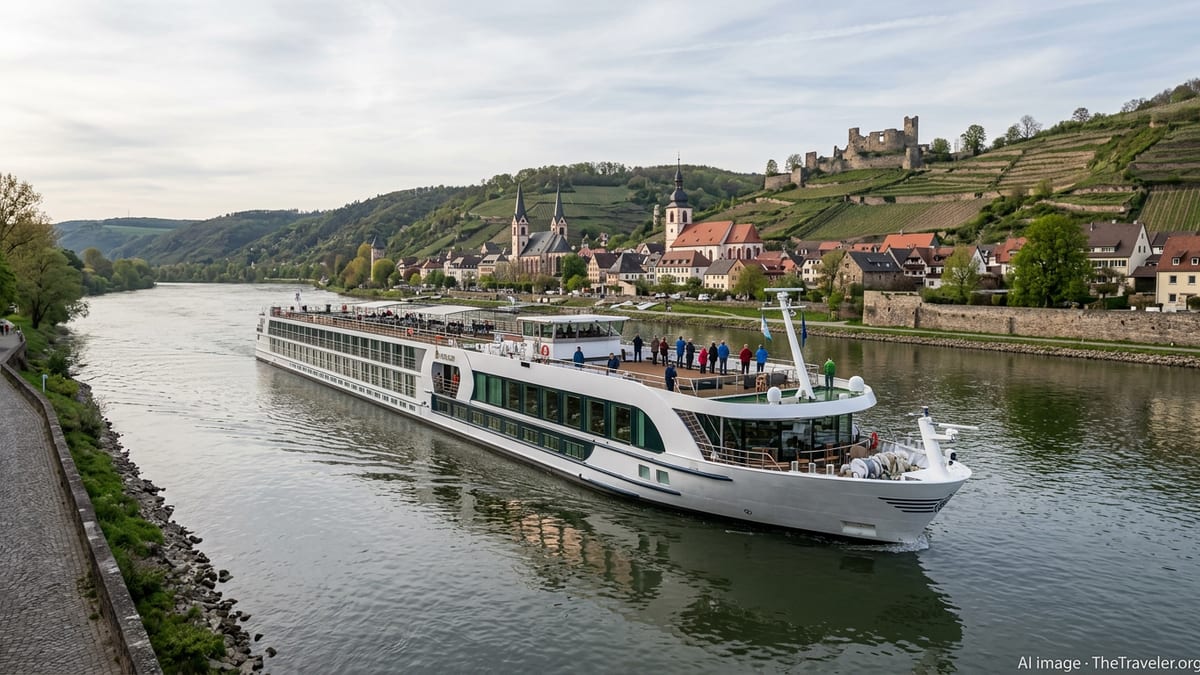
Hybrid Battery Delivery Marks a Milestone for River Travel
The recent delivery and integration of a 520 kWh Octopus Series battery pack from Dutch supplier EST-Floattech on the Amadeus Aurea is being highlighted across the maritime sector as a turning point for inland cruising. According to published coverage, the system has been installed as part of a hybrid diesel electric configuration and is designed to manage power peaks while the ship is underway, reducing the need for additional generators.
The Amadeus Aurea, built at TeamCo Shipyard in Heusden and now entering regular service on Europe’s major waterways, uses the battery bank as the core of its hybrid propulsion concept. Publicly available information indicates that the energy storage system supports propulsion and hotel loads during high demand periods, enabling smoother power management and measurable cuts in fuel consumption.
Reports indicate that the vessel began operations in April 2026, ahead of a full 2026 season on the Rhine and Danube. For Germany, which serves as a key hub and flag state for much of the European river cruise market, the ship’s hybrid package is being presented as a concrete example of how established cruise brands can align with stricter emissions expectations on inland waters.
Industry observers note that the delivery of the hybrid battery pack for Amadeus Aurea arrives as European regulators and ports intensify pressure on operators to curb noise, air pollution, and carbon output along heavily traveled river corridors.
A German Flagship for Sustainable River Cruising
Registered under the German flag and designed to operate extensively on German stretches of the Rhine and its tributaries, the Amadeus Aurea is being framed as a showcase for how technology and hospitality can be combined in a lower impact package. The vessel accommodates around 158 passengers and is laid out across four decks, with suites featuring balconies and cabins offering panoramic windows over Europe’s waterways.
Company material describes the ship as incorporating a hybrid propulsion plant, an efficient heat recovery system, and solar panels on the sun deck to supplement electrical power. Together, these technologies are intended to limit exhaust emissions, optimize energy use, and reduce reliance on diesel generators in sensitive urban and natural environments along the riverbanks.
Germany’s central role in the project extends beyond the flag on the stern. The country is a key departure and transit region for itineraries that will feature the Amadeus Aurea, including classic Rhine routes linking cities such as Basel, Koblenz, Cologne, and Amsterdam, and Danube voyages connecting German ports to Austria and Central and Eastern Europe. For travelers embarking in German river gateways, the new ship offers a more efficient alternative to traditional diesel driven vessels.
Travel trade publications have pointed out that the Amadeus Aurea continues a series of increasingly sustainable river ships from the same operator, which previously introduced hybrid capable systems on earlier vessels. By scaling up battery capacity and integrating advanced controls, the German flagged newcomer is positioned as the most ambitious iteration of that strategy to date.
How the Hybrid System Changes the Onboard Experience
While the hybrid battery system is primarily an engineering upgrade, its impact is expected to be directly felt by passengers. The energy storage solution allows the ship to cover power surges during maneuvers, in locks, or when hotel loads spike, without immediately starting supplementary diesel generators. This reduces vibrations and engine noise at key moments of the journey, particularly during docking and early morning or late night operations in port.
According to technical descriptions released by the partners involved, the Octopus Series battery pack works in concert with the vessel’s diesel electric drive to keep engines running within their most efficient range. The system can absorb excess energy and release it as needed, smoothing out the power curve and helping to maintain stable conditions for heating, cooling, and onboard services.
For guests, the benefits are likely to be experienced in subtler ways, from quieter cabins and public areas to fewer engine start ups during scenic cruising segments. Marketing material for the ship emphasizes a relaxed, resort style atmosphere, supported by features such as a heated outdoor pool, an open air River Terrace, and modern fitness and wellness spaces.
The combination of comfort and cleaner operation reflects a broader shift within the river cruise segment, where environmental performance is increasingly part of the product story. As travelers weigh the footprint of their trips, operators are positioning hybrid ships such as Amadeus Aurea as a more responsible way to experience iconic European rivers.
Part of a Wider European Push for Cleaner Inland Shipping
The debut of the Amadeus Aurea’s hybrid battery system aligns with a wider move across Europe to modernize inland fleets. Policy frameworks at European and national level are encouraging a shift to lower emission propulsion, including battery augmented systems, shore power connections, and alternative fuels, particularly on heavily trafficked corridors like the Rhine and Danube.
Industry analysts highlight that Germany has been at the center of these developments because so many itineraries pass through its rivers and ports. Operators have been upgrading vessels or ordering newbuilds to maintain access to environmentally sensitive regions and comply with tightening local rules on air quality and noise along city waterfronts.
The Amadeus Aurea builds on earlier hybrid initiatives within the same fleet, which introduced diesel electric drives with battery support and heat recovery on predecessor ships. By expanding energy storage capacity and integrating solar generation and advanced automation, the new vessel signals that hybrid solutions are quickly moving from pilot projects into mainstream deployment on European river cruises.
Observers expect that the visibility of a fully booked 2026 program for the ship will help normalize battery assisted propulsion for consumers. As more travelers become familiar with quieter, lower emission cruising, pressure may increase on rival operators to accelerate their own sustainable upgrade plans.
What the New Era Means for River Cruise Travelers
For prospective passengers, the delivery of the hybrid battery pack for Amadeus Aurea is ultimately about choice. Travelers booking Rhine or Danube itineraries in 2026 will be able to select a ship that has been engineered from the keel up to reduce emissions and noise while still offering the upscale amenities that define modern river cruising.
Brochures and advance marketing materials position the vessel as part of a new generation of ships where environmental technology is not an afterthought but a core design principle. Features such as panoramic windows, balcony suites, contemporary interiors, and regionally inspired cuisine are presented alongside references to hybrid propulsion, energy recovery, and automated navigation support.
Travel advisors report growing interest in sustainability features when clients compare itineraries and fleets. For visitors drawn to Germany’s riverside towns, vineyards, and cultural centers, the prospect of sailing on a quieter, more efficient ship can be a deciding factor, particularly among younger travelers and repeat cruisers who have experienced older tonnage in the past.
As the Amadeus Aurea embarks on its maiden season, the successful delivery and integration of its hybrid battery pack underscores how quickly the river cruise landscape is evolving. Germany’s role in bringing this technology to high profile passenger service suggests that similar projects are likely to follow, advancing a greener future for river travel across Europe.