


More news on this day
A freight train derailment in Repentigny, Quebec, during a stretch of intense summer heat has renewed scrutiny of how rising temperatures and stressed rail infrastructure can combine to create dangerous conditions on busy freight corridors.
Get the latest news straight to your inbox!
Derailment Near Montreal Sparks Safety Questions
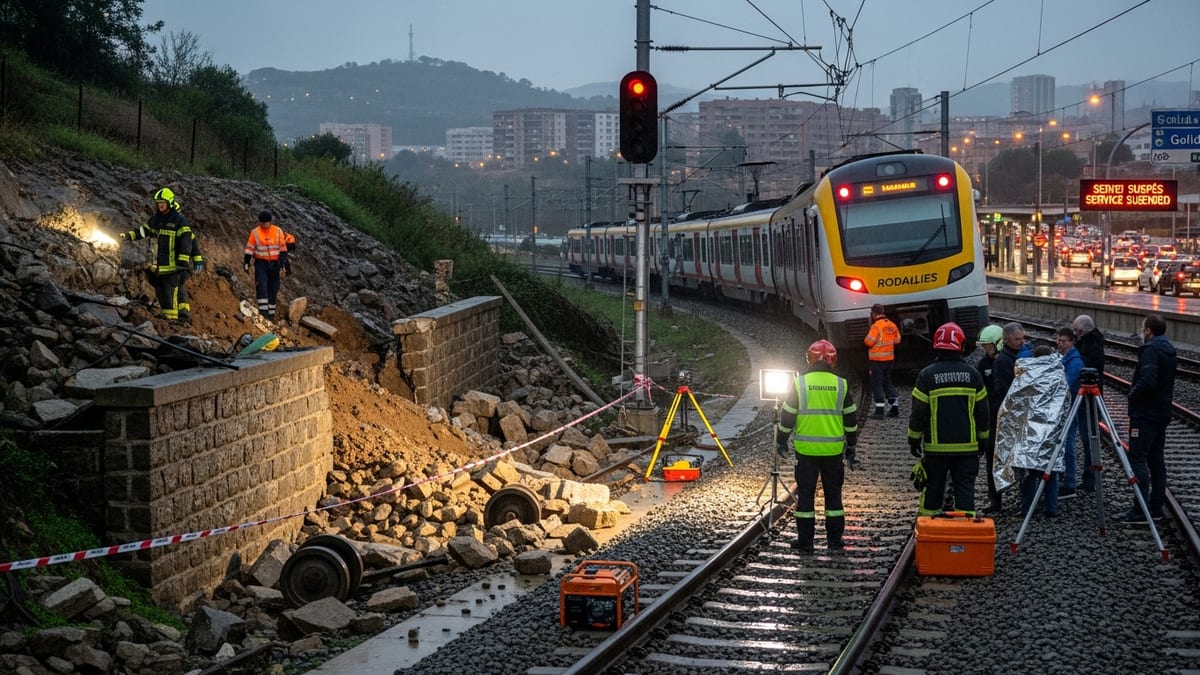
According to publicly available information from Canadian National Railway and federal transportation agencies, a southbound CN freight train derailed on July 5, 2026, in Repentigny, a suburban community northeast of Montreal. Several cars left the tracks near a public road crossing on the Joliette Subdivision, disrupting traffic on a key freight route and prompting an on-site response by emergency teams and rail specialists.
Reports indicate that no serious injuries were recorded, but the incident alarmed local residents, who saw freight traffic halted while damaged cars were removed and track infrastructure was rebuilt. CN has stated in public notices that it reconstructed the damaged section of track and track bed before any trains were allowed to pass through the area again.
Transport Canada, in a statement issued after the incident, noted that temporary speed restrictions were imposed on trains moving through the site, limiting operations to approximately 15 kilometers per hour, well below the usual regulated maximum for that stretch of track. The agency emphasized that it is monitoring compliance with federal rules as service resumes on the reconstructed alignment.
The Transportation Safety Board of Canada has deployed investigators to examine the site, equipment and operating data. While the full investigation is expected to take months, early advisories and background material are already focusing attention on the interplay between hot weather, track stability and rail maintenance practices.
Heat, Rail Stress and the Risk of Track Buckling
The derailment occurred during a spell of elevated temperatures in southern Quebec, part of a broader heat wave that has affected rail services across eastern Canada this summer. In similar conditions, passenger and freight operators have routinely slowed trains or warned of delays when air temperatures climb well above seasonal norms.
Technical literature from the Transportation Safety Board describes how continuous welded rail is designed to perform within a defined temperature range. When steel rails heat up, they expand; if that expansion is constrained by ballast, fastenings and anchors, large compressive forces can build along the track. In extreme cases, those forces can lead to lateral misalignment, commonly known as “sun kinks,” which can cause trains to derail if not detected in time.
Rail safety advisories issued in recent years highlight the role of missing or displaced rail anchors, deteriorated ties or insufficient ballast in reducing a track’s resistance to those longitudinal and lateral forces. In some investigations, the Board has noted that imperfect anchoring and stressed rail conditions increased the risk of heat-related buckling, especially where traffic levels and axle loads are high.
In response, Canadian regulations and company rules provide for heat-related speed restrictions and additional visual inspections during hot weather. Crews may patrol vulnerable sections more frequently, and dispatchers can order temporary slow orders when ambient or rail temperatures reach specified thresholds. These practices are designed to lower the dynamic forces that trains impart to the track while temperatures are at their peak.
What Investigators Are Examining in Repentigny
Publicly available summaries of the Repentigny occurrence indicate that investigators are collecting data on train handling, rolling stock condition and detailed track geometry in the days and weeks leading up to the derailment. Particular attention is typically paid to whether the rail in the area had been properly de-stressed, whether rail anchors and fastenings were intact, and whether any prior measurements had identified alignment or surfacing defects.
The Transportation Safety Board’s early advisory on the case notes that heat-related speed restrictions were already in effect on the Joliette Subdivision at the time of the derailment. That detail suggests that both the railway and regulators were aware of elevated temperature risks across the network and had adjusted operations accordingly.
Investigators also routinely review automated inspection records, such as track geometry car runs and rail flaw detection, to determine if any defects were logged but not yet addressed. Maintenance logs can show whether tie replacement, surfacing or ballast work had recently taken place near the derailment site, activity that can affect how rails respond to temperature swings if not carefully managed.
Until a full report is released, analysts caution against drawing firm conclusions about the relative influence of heat, maintenance and train handling in this specific occurrence. However, the line of inquiry mirrors earlier Canadian derailment cases where a combination of stressed rail, inadequate anchoring and high temperatures contributed to sudden track buckling under a passing train.
Climate Change and Growing Pressure on Rail Infrastructure
The Repentigny derailment is unfolding against a backdrop of more frequent and intense heat events across North America. Rail operators have reported increasing use of “heat slow” orders that require trains to operate below normal track speeds during the hottest hours of the day, which can ripple through passenger timetables and freight schedules.
In public forums and technical conferences, rail engineers have pointed to climate projections showing longer stretches of very hot weather in regions that historically experienced only occasional spikes. That trend is prompting discussions about whether current design assumptions, including the neutral temperature at which rails are fastened, are sufficient for the conditions that trains will see over coming decades.
Some railways have tested mitigation measures such as adjusting rail neutral temperatures, improving ballast profiles and tie conditions, or experimenting with surface treatments that reflect more sunlight and keep railheads cooler. These measures come with costs and logistical challenges, particularly on long freight corridors with dense traffic and constrained windows for maintenance work.
For communities along busy rail lines in Quebec and elsewhere, the Repentigny derailment underscores how climate and infrastructure concerns intersect with local worries about hazardous materials, noise and disruptions. While the immediate focus is on restoring safe operations and understanding what happened on July 5, the broader debate is shifting toward how rail networks can adapt to a hotter, more volatile climate while maintaining reliability.
What Travelers and Communities Can Expect Next
In the short term, travelers in the Montreal–Quebec City corridor and nearby regions may experience slower freight and passenger trains as heat-related restrictions and post-derailment speed limits remain in place. Published advisories from passenger operators in eastern Canada have already warned of potential delays tied directly to high temperatures and safety-related slow orders imposed by host freight railways.
For Repentigny residents, CN has indicated in public updates that noise and vibration from operations through the rebuilt section may differ as temporary speed limits and monitoring regimes remain active. Additional inspections and track patrols are likely as the railway and regulators seek reassurance that the reconstructed infrastructure is performing as intended under varying weather conditions.
The Transportation Safety Board’s final report on the Repentigny derailment will likely examine whether existing rules and practices for managing heat and track stress were adequate, and whether changes to standards or company procedures are warranted. Previous reports have sometimes led to safety advisories, rule revisions or targeted infrastructure improvements where similar risks were identified.
Until those findings are released, the incident is serving as a case study in how extreme weather can stress rail infrastructure that is already operating under high traffic and tight schedules. For a province with a long history of both heavy rail use and high-profile rail accidents, the question of how heat and track conditions aligned in Repentigny is emerging as a central concern in the months ahead.