


More news on this day
Travel conditions across the Gulf are shifting as Bahrain moves into line with Saudi Arabia, the United Arab Emirates, Qatar and Kuwait in a broad easing of Middle East risk assessments by Western governments following a new United States–Iran diplomatic understanding that seeks to end months of regional escalation.
Get the latest news straight to your inbox!
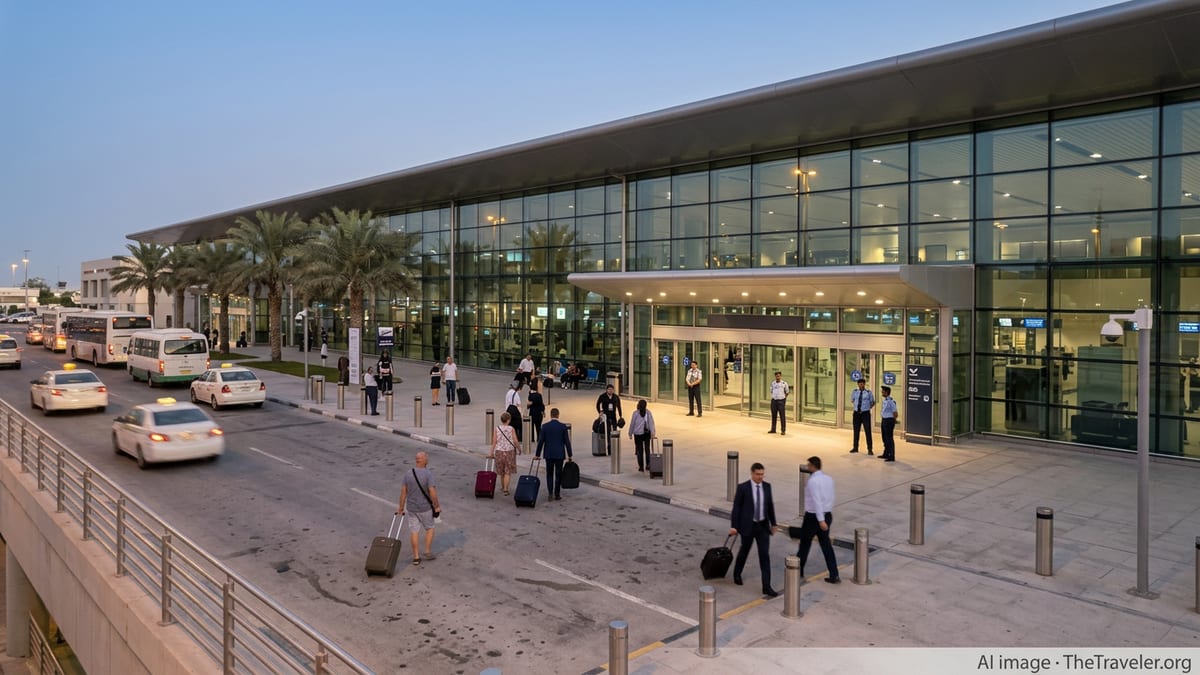
UK Travel Advice Signals First Turn in Middle East Risk Cycle
Publicly available UK government guidance shows that Bahrain has recently moved out of the highest risk category into a more calibrated advisory that distinguishes between general travel and specific areas or behaviors of concern. This places the island kingdom in a similar advisory tier to Saudi Arabia, the United Arab Emirates, Qatar and Kuwait, where previous sweeping warnings linked to regional conflict and airspace disruption are being narrowed as conditions stabilise.
The change follows a period in early 2026 when the Foreign, Commonwealth and Development Office applied broad cautionary language across a large part of the Middle East, reflecting live conflict, missile and drone activity, and uncertainty around the safety of Gulf air and maritime corridors. That language is now being partially unwound, particularly for states that were not front-line actors in the fighting but were exposed to spillover risk because of their geography and role as transport hubs.
For the travel and aviation sectors, the updated wording is interpreted as an early indicator that UK officials consider the immediate threat to commercial routes and tourism infrastructure in Bahrain and its Gulf neighbours to have eased from the peak of the crisis, even as residual caution remains.
The advisory shift does not amount to a blanket green light. Current wording continues to stress that security conditions can change with little notice and that travellers should maintain high awareness, but the removal or softening of broad-based warnings is viewed in the industry as a critical threshold for rebuilding demand.
US–Iran Memorandum Reshapes Security Calculus in the Gulf
The recalibration of UK travel advice is unfolding in parallel with a landmark memorandum of understanding between the United States and Iran that has brought an official halt to hostilities and set out terms for reopening the Strait of Hormuz. The document, published in summary form by several outlets, commits both sides to end military operations and refrain from new uses of force, and sets a timetable for restoring commercial shipping through one of the world’s most important energy chokepoints.
For months, war and naval confrontation around the strait had driven insurance costs sharply higher and forced airlines and shipping companies to reroute aircraft and vessels away from traditional Gulf corridors. Industry assessments described a risk environment that extended well beyond Iran itself, with Bahrain, Qatar, the United Arab Emirates and eastern Saudi Arabia exposed to potential strikes or collateral disruption.
By creating a framework to reopen sea lanes and formalise a ceasefire, the new US–Iran understanding reduces the probability of sudden escalation that would threaten Gulf airports, seaports and overflight routes. Analytical commentary from think tanks and maritime risk firms describes the agreement as a turning point that allows governments and operators to move from crisis response toward structured risk management.
The impact on official travel advice tends to lag such diplomatic milestones, as governments seek confirmation that ceasefire terms are holding in practice. The recent easing affecting Bahrain and several other Gulf Cooperation Council states suggests that UK risk assessments are now catching up with the new security landscape.
Bahrain’s Strategic Role and Tourism Prospects
Bahrain’s inclusion alongside Saudi Arabia, the UAE, Qatar and Kuwait in the latest advisory trend is significant given its proximity to key maritime infrastructure and earlier reports of concern about the vulnerability of energy facilities in the kingdom. During the height of the crisis, analysts pointed to the risk that any attack or miscalculation in the northern Gulf could have immediate implications for Bahrain’s aviation and logistics operations.
With the ceasefire taking hold and the memorandum between Washington and Tehran in force, such worst-case scenarios are now considered less likely, although they have not disappeared entirely. Risk specialists note that de-escalation at the state-to-state level tends to support more predictable conditions for civil aviation and tourism, encouraging carriers to restore suspended services and tour operators to reconsider previously shelved Gulf itineraries.
Bahrain enters this new phase with a tourism strategy that leans heavily on regional connectivity, Formula One events, and short-break leisure visits from neighbouring Gulf markets. The alignment of its advisory profile with that of Saudi Arabia, the UAE, Qatar and Kuwait provides an important signalling effect to consumers who may not track regional politics closely but do pay attention to whether a destination is grouped with higher-risk states.
Industry observers expect Bahrain International Airport and the country’s hotel sector to benefit gradually as confidence returns. However, most forecasts emphasise a staggered recovery that depends on airlines’ capacity decisions, travel insurance policies and the absence of further shocks in the wider region.
Regional Travel Map: Diverging Paths Within the Middle East
The easing of advice for Bahrain and key Gulf neighbours stands in contrast to the continued severity of warnings for conflict-affected countries such as Iran, Iraq, Lebanon, Syria and Yemen. Government advisories from the United Kingdom and other Western states continue to classify those destinations at the highest risk levels, reflecting ongoing instability, damage to infrastructure and the presence of armed groups.
This divergence underscores the emergence of a two-speed Middle East travel environment. On one track sit Gulf Cooperation Council states that were exposed to regional shock but retained functioning institutions and high-grade infrastructure. On the other are states directly involved in or adjacent to the core conflict, where the new US–Iran deal has yet to translate into conditions suitable for the return of mainstream tourism.
Travel analysts note that airlines and cruise operators are likely to respond first in the Gulf, where they can redeploy capacity to established hubs such as Dubai, Doha, Manama, Riyadh and Kuwait City with comparatively limited additional investment. These hubs in turn serve as gateways for business and leisure traffic to the wider region, magnifying the impact of any advisory change relating to them.
For travel planners and multinational companies, the mixed pattern of advisories presents a more complex picture than the broad warnings issued at the height of the crisis. It will require granular, country-by-country risk assessments, but it also offers new opportunities for partial resumption of suspended itineraries that focus on lower-risk Gulf markets.
What Travellers Should Watch in the Coming Weeks
While the latest changes to UK guidance on Bahrain and its neighbours mark a notable shift, travel risk experts caution that the situation remains dynamic. The implementation phase of the US–Iran memorandum involves steps such as maritime deconfliction, mine clearance and detailed arrangements for future administration of the Strait of Hormuz, any of which could encounter delays or disputes.
Travellers are therefore being advised, in public guidance and industry briefings, to monitor government advisories closely before departure and during their stay, particularly where itineraries involve regional connections through multiple Gulf hubs. Insurance underwriters and corporate security departments are similarly updating their models to reflect the new baseline while preserving contingency plans for renewed tension.
Over the near term, further incremental adjustments to official travel advice are possible if the ceasefire continues to hold and commercial shipping and aviation patterns normalise. Any fresh incident involving drones, missiles or naval forces in the Gulf could trigger a rapid reassessment.
For now, however, the decision to bring Bahrain into alignment with Saudi Arabia, the UAE, Qatar and Kuwait in the latest UK travel advisory language illustrates how the US–Iran diplomatic understanding is beginning to reshape the practical travel map of the Middle East, opening the door for a cautious but potentially significant rebound in Gulf tourism and business travel.