


More news on this day
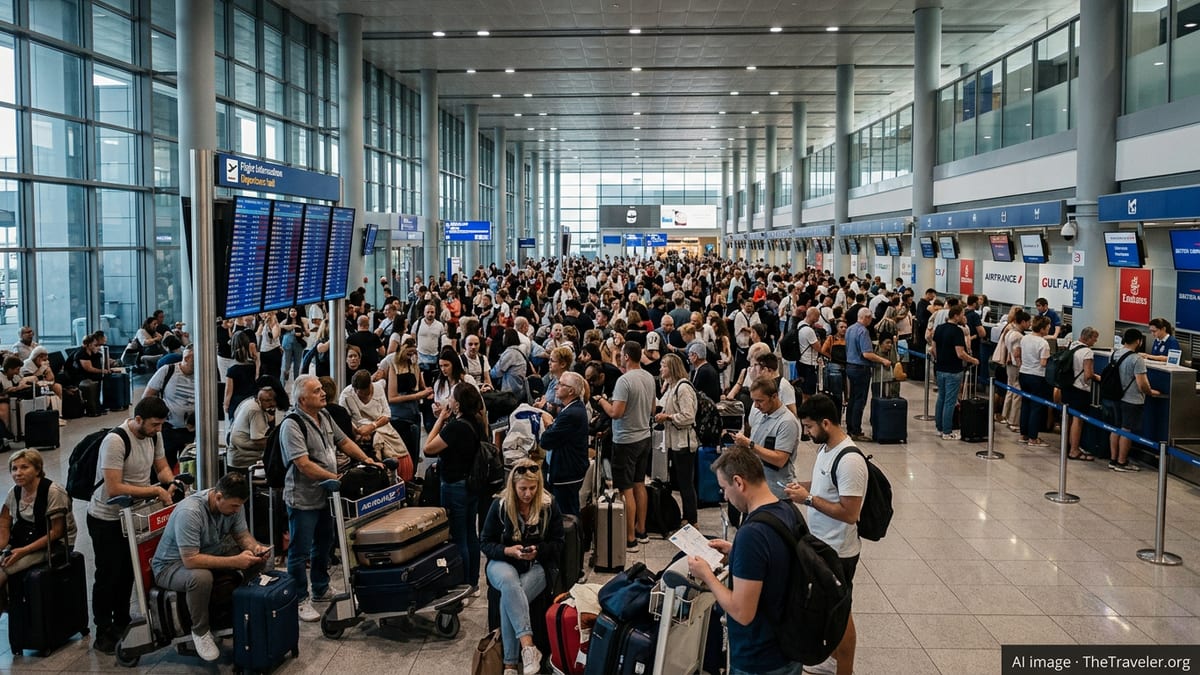
Holidaymakers heading to Greece this summer are encountering growing flight delays and cancellations, as conflict-driven airspace restrictions in the Middle East force widespread rerouting across the eastern Mediterranean at the height of the tourist season.
Get the latest news straight to your inbox!
Rerouted corridors squeeze Greek airspace
Greece sits on a key crossroads between Europe, the Middle East and Asia, and this position is turning into a pressure point as airlines adjust routes to avoid conflict zones further east. European network assessments indicate that around 1,150 flights a day across the wider region are affected by reroutings linked to Middle East airspace closures, pushing more traffic into already busy south and southeast European corridors.
Publicly available data from Eurocontrol show that the loss or restriction of traditional overflight paths over Iran, Iraq and parts of the Levant has redirected flows either north via the Caucasus or south across Egypt and Saudi Arabia. The eastern Mediterranean, including Greece and Cyprus, has emerged as a major alternative corridor, increasing complexity for air traffic controllers and raising the likelihood of knock‑on delays when thunderstorms, local congestion or staffing constraints occur.
Greek tourism operators report that peak weekend rotations into islands such as Rhodes, Kos and Santorini are particularly vulnerable. When long‑haul flights from northern Europe or North America are forced into longer routes around closed airspace, even small timetable slippages can cascade through the tightly planned afternoon and evening wave of holiday charters and low‑cost services serving Greek destinations.
Analysts note that while overall traffic levels in Europe remain higher than last year, the pattern of flights has shifted. Routes that previously crossed the Middle East directly now bend around restricted zones and intersect more frequently with southbound leisure flows to Greece, magnifying operational strain during the July and August rush.
Sharp drop in Greece–Middle East links, but more overflights
While skies above Greece are busier with through‑traffic, direct connectivity between Greek airports and Middle Eastern destinations has fallen markedly since hostilities intensified. Industry monitoring published in Greek travel media shows daily departures to and from the Middle East down by nearly 40 percent compared with the pre‑crisis period earlier in the year, with Athens International Airport recording an even steeper reduction.
Airlines serving Israel, Lebanon and Iraq have cut or suspended services at various points, citing security concerns, volatile demand and operational constraints from airspace closures. Reports from Athens in March and April highlighted sequences of cancellations to Tel Aviv, Beirut and Gulf hubs, alongside repatriation flights for stranded passengers when fighting first escalated.
At the same time, Eurocontrol route statistics indicate that overflights skirting Greek and Cypriot airspace have increased as carriers seek safe, predictable paths between Europe and Asia. Neighboring states such as Georgia and Azerbaijan have also reported higher traffic levels, reflecting a broad reshaping of the continent’s air map as airlines work around both the Middle East crisis and the long‑running closure of much of Russian and Ukrainian airspace.
This combination of fewer point‑to‑point flights and denser overflight patterns presents a mixed picture for Greece. Airports lose some direct tourism and business traffic from the Middle East, but the national airspace and air navigation system must handle more complex traffic flows, especially on days when weather or technical constraints narrow available routes.
Navigation interference and technical strains add to delays
The regional disruption is not only about closed corridors. Aviation safety notices from European and Greek authorities point to a sharp rise in navigation signal interference across the eastern Mediterranean, linked to jamming and spoofing associated with nearby conflict zones. The Hellenic Civil Aviation Authority has warned operators about Global Navigation Satellite System outages and anomalies that can degrade onboard systems and increase cockpit workload.
Industry studies released this year suggest that reports of navigation disruptions and GPS spoofing in the wider Middle East region have surged compared with previous years. Although commercial aircraft operating to and from Greece rely on multiple navigation aids and backup procedures, even intermittent signal problems can slow approaches, trigger route deviations or require more conservative separation, all of which contribute to small but cumulative delays.
Greek aviation has also faced its own technical challenges. Local media coverage earlier this year described communication and radar issues that temporarily constrained air traffic management capacity, prompting rerouting through neighboring flight information regions and holding patterns around Athens. While contingency plans prevented safety incidents, the events underlined how fragile systems can become when national infrastructure stress coincides with wider regional shocks.
Air traffic controllers and pilot associations across Europe have repeatedly highlighted that coping with rerouted traffic, navigation anomalies and summer storms simultaneously raises the risk of schedule disruption. For passengers, that often translates into longer waits on the tarmac, missed connections and last‑minute diversions, even when their own flight path does not cross an active conflict zone.
Tourism surge collides with constrained capacity
The timing of these pressures is particularly sensitive for Greece, where tourism remains a major pillar of the economy and summer schedules are calibrated to carry record numbers of visitors. Forward booking data and early season results indicate strong demand from northern Europe and North America, with many island destinations expecting another near‑record year in arrivals.
Yet capacity in the European air traffic network has not expanded at the same pace as demand. Eurocontrol’s most recent annual review identifies weather‑related restrictions, staffing gaps and limited airspace capacity in parts of southeast Europe as key contributors to rising delay minutes per flight. Greece, sitting at the intersection of Mediterranean holiday traffic and rerouted long‑haul flows, is particularly exposed when these constraints bite.
Airlines serving Greek destinations are attempting to build more slack into schedules and rotate aircraft carefully to avoid systemic breakdowns, but commercial pressures limit how much buffer can be added. When flights from Asia and the Gulf arrive late after longer detours around restricted Middle East airspace, the knock‑on effect can stretch into late‑night departures back to European cities, compressing rest times for crews and narrowing options for recovery the following day.
Local tourism businesses are urging travelers to factor in possible delays, especially on tight itineraries that involve island hops or cruise departures. Advisors recommend allowing extra connection time in Athens or Thessaloniki, booking the earliest feasible flights on critical travel days and remaining flexible on routing if airlines reconfigure schedules at short notice in response to shifting airspace conditions.
Outlook: persistent rerouting and a fragile summer
Aviation outlook reports from international organizations suggest that the structural drivers of current disruption will not disappear quickly. Analysts expect some level of Middle East airspace restriction and defensive GPS interference to persist through the summer season and potentially beyond, even if periods of acute tension subside.
As a result, the eastern Mediterranean is likely to remain a high‑traffic detour zone, with Greece absorbing additional overflights on top of heavy leisure demand. Network planners anticipate that rerouting via northern and southern corridors around the Gulf will continue to extend average flight times, add fuel costs and compress turnaround windows at European airports, keeping punctuality under pressure.
For travelers heading to Greece between now and the end of the peak season, the practical implication is a higher probability of disruption compared with pre‑crisis summers. While most flights are still operating, the combination of constrained airspace, technical strains and strong demand leaves limited room for error when storms roll through or new security advisories are issued at short notice.
Industry observers emphasize that this is less a temporary shock and more a reconfiguration of how global east‑west traffic moves. For Greece, the challenge will be to continue accommodating its booming visitor economy while investing in resilient air traffic management systems that can handle a permanently more complex neighborhood in the skies.