


More news on this day
As regional tensions continue to unsettle the Gulf, multiple governments are advising against or to reconsider non essential travel to Bahrain in October 2026, highlighting elevated security risks, disrupted aviation routes and the potential for further attacks linked to the wider Middle East conflict.
Get the latest news straight to your inbox!
Heightened Security Warnings and Advisory Levels
Publicly available government advisories show a consistently cautious stance toward Bahrain as of late October 2026. The United States lists Bahrain at Level 3, meaning “reconsider travel,” in guidance dated 27 August 2026, citing risks related to terrorism and armed conflict. The advisory notes that travel of U.S. government personnel is tightly controlled and that dependants must meet specific conditions to accompany staff.
Canada updated its Bahrain travel page in August 2026 to advise against non essential travel, pointing to the risk of military strikes and regional spillover from the broader Middle East conflict. Similar language appears in Australian and Irish government advisories, which reference the potential for military and reprisal attacks in or near Bahrain, as well as security alerts aimed at foreign interests.
The United Kingdom’s Foreign, Commonwealth & Development Office continues to list Bahrain under active travel advice, last updated on 8 October 2026, with warnings about regional tensions and the possibility of further attacks by Iran or aligned groups. The UK guidance highlights that locations connected with foreign military or diplomatic activity could be at particular risk and encourages travelers to keep departure options under constant review.
German foreign ministry information also stresses that, although Bahrain itself has not seen a domestic terrorist attack in several years, the regional security environment remains fragile. Taken together, these advisories indicate that Bahrain, while still accessible for many travelers, is considered an elevated risk destination in October 2026 compared with the pre conflict period.
Impact of Regional Conflict on Airspace and Transport
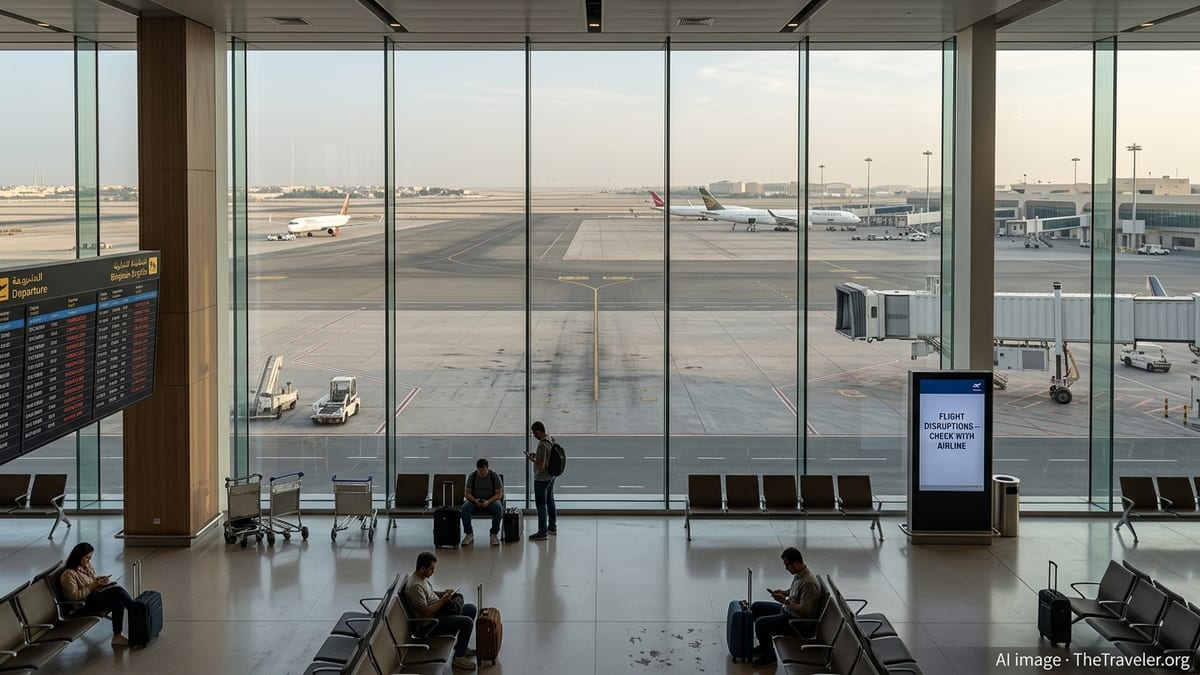
The most visible consequence for visitors has been disruption to air routes and airport operations. During earlier peaks in the Middle East crisis in 2026, specialist risk briefings documented periods when commercial operations at Bahrain International Airport were severely curtailed or mostly halted due to nearby strikes and airspace restrictions. While scheduled flights have since resumed, advisories from several governments and aviation safety bodies caution that airspace closures could reoccur at short notice.
The European Union Aviation Safety Agency issued an advisory in July 2026 recommending that air operators avoid or exercise extreme caution in the airspace over Bahrain and several neighboring states. Irish travel guidance, updated in October 2026, echoes that notice and warns that airlines may reroute or suspend services rapidly if the security picture deteriorates.
Travelers are also urged to consider the potential closure of key land links. UK travel advice records that in April 2026 both Bahraini airspace and the King Fahd Causeway to Saudi Arabia closed simultaneously during a bout of heightened regional tension, leaving some travelers temporarily unable to depart. Current guidance emphasizes the need for flexible bookings, contingency plans and adequate travel insurance that covers security related disruption.
Within Bahrain, authorities have expanded visible security measures around sensitive sites, including energy infrastructure and foreign military facilities. Foreign ministries in Australia, Canada and the UK all recommend that visitors avoid areas around military bases, government buildings and critical infrastructure, and that they follow any shelter in place instructions broadcast through sirens, media or mobile alerts during an incident.
Entry Rules, Visas and Documentation
Despite the elevated security posture, Bahrain continues to receive foreign visitors, and its immigration system remains open. Official airport and tourism portals state that many nationalities are eligible for short term visas on arrival or electronic visas obtained in advance. These services are linked to a centralized eVisa platform managed by Bahrain’s Nationality, Passport and Residence Affairs authority, which allows travelers to check eligibility, submit online applications and review conditions before departure.
Information prepared for visitors to Bahrain International Airport notes that visa counters are located near immigration in the arrivals area and that passports must generally be valid for at least six months beyond the date of entry. Tourism marketing materials and investment briefings indicate that a wide range of visitors, including business travelers, event delegates and cruise passengers, continue to use these facilities.
However, foreign travel advisories stress that travelers should verify their status directly with Bahrain’s official eVisa service or local Bahraini embassies before booking. Government guidance from several countries warns that eligibility for visas on arrival can vary by nationality, previous travel history and immigration status, and that airlines may deny boarding if documentation is not clearly in order.
Prospective visitors are also advised to check whether transit routes through neighboring Gulf hubs are affected by security advisories. Some states advise air carriers not to enter certain portions of regional airspace, which can influence connection times, routing options and, in some cases, insurance cover for flights into Bahrain.
Safety, Health and Seasonal Conditions in October
Travel advice services point to several practical considerations for anyone who chooses to visit Bahrain in October 2026 despite the elevated risk level. First, October still falls at the tail end of the country’s long hot season. Government climate and health notes describe very high temperatures combined with humidity from April through October, with heat stress a particular concern for those unaccustomed to Gulf conditions.
Canadian and UK guidance recommend limiting outdoor activity during the middle of the day, ensuring adequate hydration and using sun protection, especially for children, older travelers and anyone with underlying health conditions. Travelers with cardiovascular or respiratory issues are also urged to monitor local information on air quality; UK travel advice introduced a specific reference to air pollution in its October 2026 update.
Medical infrastructure in Bahrain is generally assessed as of good standard, but foreign ministries advise travelers to carry comprehensive travel health insurance that includes medical evacuation, given the potential for sudden airspace restrictions in a crisis. Visitors are encouraged to bring an adequate supply of prescription medicines and to carry copies of essential medical documents, as well as to check vaccination recommendations before travel.
Security focused advisories emphasize situational awareness. Governments recommend avoiding demonstrations, monitoring local media and official announcements, and familiarizing oneself with the layout of accommodation, including emergency exits and shelter areas. Travelers are also encouraged to maintain regular contact with family or friends outside Bahrain and to register contact details with their own foreign ministry where such a service exists.
Planning and Risk Management for Prospective Visitors
Given the elevated risk environment, foreign travel guidance consistently frames trips to Bahrain in October 2026 as a personal risk decision that should be taken with current information and contingency planning. Travelers are encouraged to review their government’s latest advice immediately before departure, as advisory levels and recommended actions can change quickly in response to new incidents or diplomatic developments.
Many official advisories recommend that travelers maintain flexible itineraries and avoid non refundable arrangements where possible. Some also note that travel and health insurance policies may be invalidated if a traveler enters a country while an official warning against non essential travel or a “reconsider travel” notice is in force. Prospective visitors are urged to confirm coverage directly with insurers, paying attention to exclusions for war, terrorism and civil unrest.
Travel risk consultancies and professional associations in the tourism industry advise companies sending staff to Bahrain to undertake formal risk assessments. Suggested measures include detailed pre travel briefings, clear communication plans, and identification of alternative exit routes via neighboring countries, subject to their own security conditions and border policies.
For independent travelers, foreign ministries highlight basic preparation steps such as keeping digital and paper copies of travel documents, ensuring that mobile phones can receive local alerts, and having access to emergency funds in case of sudden itinerary changes. While Bahrain continues to promote itself as a regional hub for business and events, the current wave of government advisories indicates that visits in October 2026 require a more cautious and well prepared approach than in previous years.