


More news on this day
Lebanon remains under strict “do not travel” warnings in October 2026, as governments cite ongoing conflict, sporadic security incidents and fragile infrastructure that together pose serious risks for international visitors.
Get the latest news straight to your inbox!
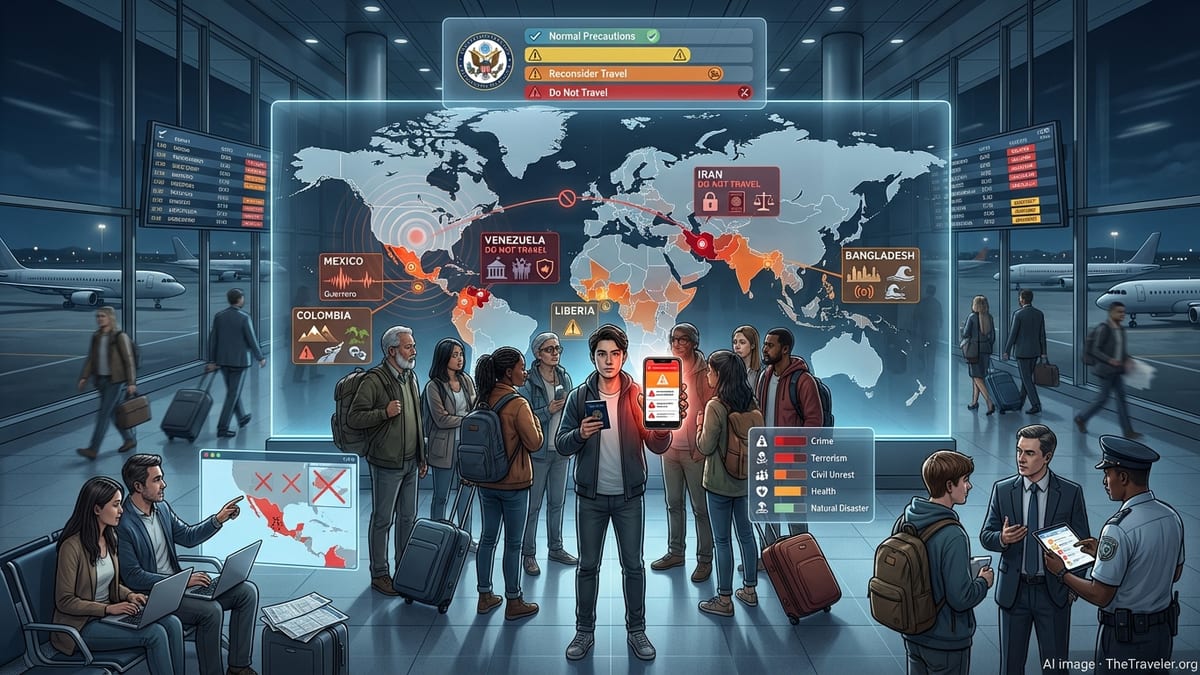
Latest Government Advisories and Risk Levels
Publicly available information from multiple governments shows Lebanon remains rated at the highest warning tier in October 2026. The United States updated its Lebanon advisory on October 23, 2026, keeping the country at Level 4, “Do not travel,” citing crime, terrorism, civil unrest, kidnapping, landmines, armed conflict and limited access to emergency services. The update highlighted a heightened risk of armed attacks connected to regional tensions and efforts to target US interests.
Australia’s Smartraveller service continues to advise “Do not travel” to Lebanon as of late October 2026, citing an unpredictable security environment, armed clashes and the possibility of military strikes. The advisory warns that the situation can deteriorate with little notice and stresses that those who choose to remain should have robust personal security plans and contingency options if routes out of the country are disrupted.
Canada and New Zealand maintain parallel warnings against all travel, pointing to the volatile situation along Lebanon’s borders, especially in the south and in areas adjacent to Syria. Their guidance underlines the presence of armed groups, the risk of cross-border fire and the possibility of roadblocks or sudden access restrictions in certain regions.
These advisories collectively emphasize that foreign embassies in Beirut have limited ability to assist their citizens in an emergency. Some have reduced staffing, and many warn that evacuation operations might not be possible if the security or airspace situation worsens.
Security Environment and Conflict Dynamics
The broader context for October 2026 advisories is Lebanon’s exposure to regional conflict and internal security incidents. Public reporting on the 2026 Lebanon war notes that exchanges of fire, airstrikes and rocket launches have periodically affected areas in the south since March, leading to casualties, displacement and damage to infrastructure. While the intensity has fluctuated over the year, forecasts for October indicate that underlying triggers for new escalations remain present.
Humanitarian planning documents for Lebanon in 2026 describe a strained protection environment in districts close to the southern border and parts of Baalbek-El Hermel, where insecurity and the presence of non-state armed actors complicate civilian movement. Border areas with Syria also remain sensitive, with past shelling incidents and intermittent clashes reported. These dynamics contribute directly to foreign governments’ assessments that travel within Lebanon can quickly become unsafe, even for short journeys.
Reports in early October 2026 of a large explosives seizure on the Beqaa–Beirut highway underscore ongoing concerns about internal security threats. While Lebanese security forces have periodically disrupted planned attacks, the discovery of significant quantities of explosives on a major route feeding into the capital illustrates why many advisories warn against road travel outside well-known urban corridors and discourage any non-essential movement after dark.
The presence of designated terrorist organizations such as Hezbollah, along with other armed groups, is routinely cited in international assessments as a core driver of risk. Governments flag the possibility of targeted or opportunistic attacks against political, military or foreign-linked sites, as well as the chance of travelers being unintentionally caught near such incidents.
Airspace Warnings and the Status of Beirut Airport
For travelers monitoring exit options, the status of Beirut–Rafic Hariri International Airport is a central concern. As of October 24, 2026, flight-information platforms and the airport’s own schedules indicate that the airport remains operational, with a mix of national carrier and foreign airline services. However, past months have seen delays, rescheduling and capacity reductions, and travel-industry operational updates stress that changes can occur on very short notice.
The European Union Aviation Safety Agency has extended an airspace warning covering Lebanese skies until mid-November 2026. The notice allows operations to and from Beirut when approaches and departures are conducted over the sea and subject to continuous risk assessment. This framework reflects ongoing concern about potential conflict-related hazards in the wider flight information region, even as commercial services continue.
Foreign government advisories advise travelers who are already in Lebanon to depart while commercial flights remain available, provided it is safe to reach the airport. Guidance emphasizes the need to check both local security conditions on routes to the airport and the status of individual flights directly with airlines shortly before travel, as schedules alone do not guarantee that a service will operate.
Some logistical reports from early and mid-2026 noted that while the airport remained open during previous spikes in tension, airlines adjusted frequencies or temporarily suspended routes. Passenger-traffic data discussed in public forums during 2026 show a decline in overall numbers, reflecting both security-related cancellations and traveler hesitancy amid the crisis.
Internal Movement, Border Crossings and Essential Services
Official travel advice stresses that overland travel in Lebanon is highly constrained. Roads in and out of certain regions can close suddenly due to clashes, protests, or checkpoints. The south, areas near the Syrian border and some parts of the Beqaa Valley are repeatedly identified as high-risk zones because of active or potential hostilities and the presence of unexploded ordnance.
While some border crossings with Syria have at times remained technically open, foreign ministries caution that conditions there are unpredictable and can involve long waits, intensive security checks or closure with little warning. Travelers are urged to consider that crossing into neighboring conflict-affected areas may significantly increase personal risk and complicate any future consular assistance.
Publicly available humanitarian and government assessments also highlight strains on basic services inside Lebanon. Power cuts, limited fuel supplies, pressures on healthcare facilities and disruptions to telecommunications have been recurring themes through 2026. Several advisories recommend that those who are already in the country maintain stocks of essential items, ensure backup communications where possible, and identify safe shelter locations away from government, military, or energy infrastructure that could become targets in an escalation.
International guidance also notes that landmines and unexploded ordnance remain a concern in parts of the country, particularly in former conflict zones and rural border areas. Travelers who nonetheless decide to move around Lebanon are urged to stay on paved roads, avoid unmarked open countryside and heed local signage and community warnings.
Implications for Trip Planning and Insurance
For prospective visitors, the current combination of Level 4 and equivalent “do not travel” advisories has concrete implications beyond personal safety. Many travel insurance policies exclude coverage for destinations under the highest-level warnings or for losses connected to war, terrorism or civil unrest. Industry digests tracking the Middle East in 2026 point out that travelers may find emergency medical evacuation, trip cancellation and interruption coverage unavailable or heavily restricted for Lebanon at present.
Airlines and tour operators have, in previous months, adjusted their schedules, rerouted connections or suspended some services in response to the security picture and regional airspace constraints. This pattern means that even travelers willing to accept elevated risk may face limited route options, last-minute cancellations or additional costs to rebook through alternative hubs.
Public-facing guidance from foreign ministries generally urges citizens not to rely on organized evacuations if conditions deteriorate further. Instead, individuals are encouraged to register with their embassy where that service exists, maintain updated contact details and follow local news and official advisories closely. Travelers are also advised to keep travel documents easily accessible and to have flexible plans that allow rapid departure if windows of relative calm open.
For October 2026, the overall message from official advisories and operational reports remains consistent: Lebanon’s security, political and economic challenges create a highly unstable environment for foreign travel. Those who are already in the country are advised to review their exit options regularly, while those considering a new trip are urged to defer plans until conditions and travel warnings show a sustained and clearly documented improvement.