


More news on this day
Severe disruption on routes from London Waterloo on Thursday 22 October 2026 left thousands of evening peak passengers stranded in the capital, pushing many to abandon trains and turn to long taxi rides home.
Get the latest news straight to your inbox!
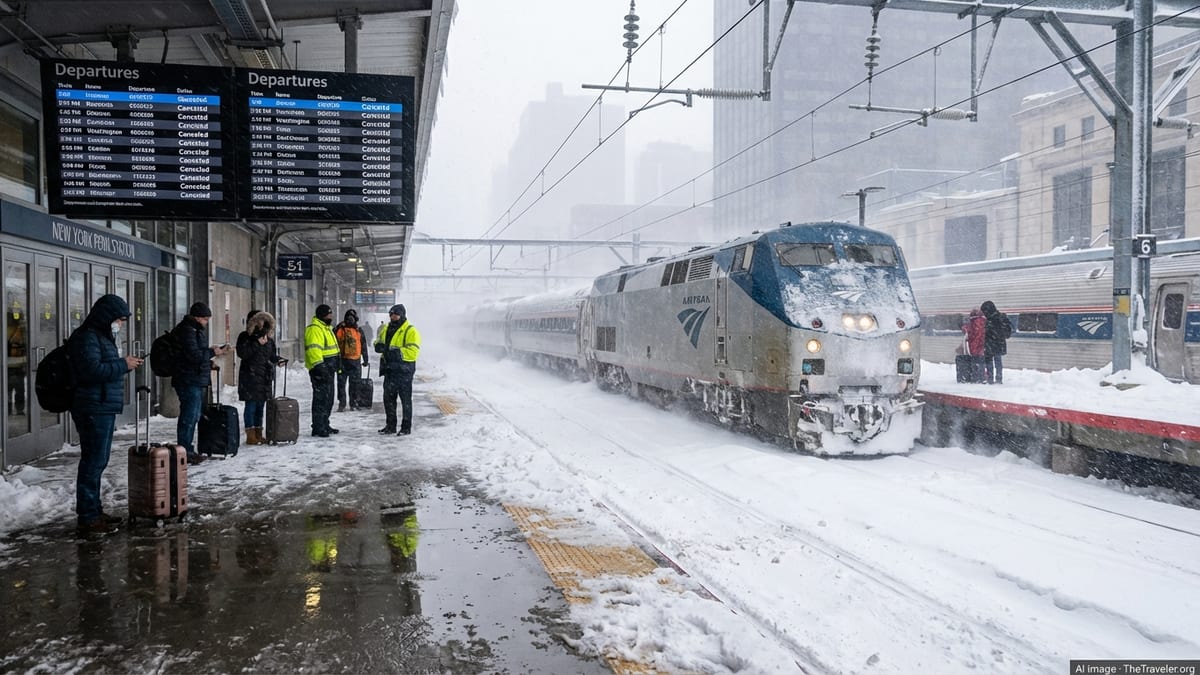
Police incident near Woking triggers evening meltdown
According to publicly available information from rail operators and British Transport Police reports, services on the busy South Western Main Line were brought to a standstill on Thursday after a police-led safety incident near Woking in Surrey. Power was isolated on sections of track and trains were held in place, halting services between London Waterloo and key destinations across the South West network.
London Waterloo, normally one of Europe’s busiest commuter terminals with hundreds of thousands of passenger movements on a typical weekday, quickly became overwhelmed as peak services stacked up and departure boards filled with cancellations. Reports from passengers on social media and user forums described “gridlock” on concourses and restricted access to platforms as staff tried to manage crowding.
National Rail’s disruption updates show that lines through the affected area did not fully reopen until the early hours of Friday 23 October, leaving the evening peak and much of the late-night timetable severely curtailed. For many commuters heading home to Surrey, Hampshire, Dorset, Wiltshire and beyond, the result was a choice between waiting for uncertain replacement services or finding their own way home.
Conditions were complicated further by recent weather-related disruption and earlier infrastructure issues on the wider South Western Railway network, which had already left timetables fragile in the days leading up to the incident. Combined, these factors contributed to lengthy knock-on delays even on routes not directly blocked by the incident near Woking.
South Western Railway authorises long-distance taxi claims
In a highly unusual move highlighted in multiple news reports, South Western Railway issued guidance allowing stranded passengers to book their own taxis from London Waterloo and reclaim the fares. Coverage in London-based outlets indicates that the operator explicitly authorised claims for journeys as far as Exeter St Davids in Devon, roughly 170 miles from the London terminus.
Messages shared by passengers show that eligible destinations for reimbursement included major stops on the South Western Railway network such as Woking, Guildford, Alton, Basingstoke, Salisbury, Southampton Central, Bournemouth, Exeter St Davids and Weymouth. The arrangement applied to customers whose journeys were directly affected by the suspension of services following the incident near Woking.
Published reports indicate that the decision to allow taxi use on this scale reflected the sheer volume of disruption and the limited availability of late evening rail alternatives. For some passengers, the authorisation effectively turned Waterloo’s traditional black cab ranks and app-based private hire pick-up zones into their only realistic route home.
Details of how passengers can claim back taxi costs are being handled through South Western Railway’s usual compensation channels, with receipts required and eligibility linked to disrupted tickets. Public information available at the time of writing indicates that the authorisation was specific to the evening of Thursday 22 October and the immediate aftermath of that incident, rather than a standing policy.
Overcrowding and diversions reshape journeys across the South West
As trains were held outside London and lines south of the capital shut down, reports from travellers describe concourses at Waterloo reaching such high densities that access to parts of the station was periodically restricted to control crowding. Some passengers reported waiting on board stationary trains at platforms for extended periods before being told to disembark and seek alternative options.
In addition to taxi use, many commuters attempted to re-route via other rail operators. Published coverage and first-hand accounts describe journeys from Waterloo towards Salisbury, Southampton and the West Country being re-planned via London Paddington and Reading using Great Western Railway services, adding several hours to door-to-door travel times.
Others used the London Underground, Elizabeth line and buses to reach alternative mainline stations or outer suburban stops where limited South Western Railway services were still operating. Information shared by National Rail and Transport for London during the disruption encouraged passengers to check real-time status updates and consider alternative London terminals where possible.
Despite these efforts, anecdotal reports collected across social media suggest that many travellers arrived home close to or after midnight, having left central London in the early evening. Some opted to stay overnight in the capital or with friends rather than attempt complex multi-leg replacement journeys late at night.
Renewed scrutiny of resilience and passenger rights
The scale of the taxi authorisation and the images of crowded concourses at London Waterloo have reignited debate about the resilience of Britain’s busiest commuter hub and the wider South Western network. Public discussions in transport forums and local media comment pieces point to a succession of recent incidents, including storm damage to trees near the railway and infrastructure faults, which have repeatedly tested timetables.
Passenger groups and regular commuters are using the latest disruption to highlight concerns about contingency planning, communication during fast-moving incidents and the practicalities of getting home when lines are suddenly closed. Particular criticism has focused on how quickly detailed advice on alternatives reaches those already on trains or inside busy stations.
The incident has also drawn attention to the interplay between rail operators, policing and safety protocols when a person is reported to be at risk near the tracks. Publicly available information about previous cases shows that lines are now routinely held until emergency services confirm it is safe to resume movements, a policy that prioritises life safety but can result in widespread knock-on disruption at peak times.
At the same time, consumer advice outlets are pointing affected travellers towards existing delay-repay schemes and additional rights when overnight accommodation or onward travel is required. While the Waterloo taxi offer has been widely described as unusually generous in geographic scope, campaigners are using the moment to call for clearer, consistently applied standards on alternative transport during severe disruption.
What the chaos means for future travellers through Waterloo
For visitors and regular commuters alike, the events at London Waterloo this week underline the importance of planning for contingencies when relying on long-distance commuter routes into and out of the capital. Travel advisories currently recommend that passengers using South Western Railway check National Rail and operator-specific disruption pages before leaving home, particularly during periods of unsettled weather or when major engineering work is already underway on nearby routes.
The incident near Woking also illustrates how quickly a localised problem can cascade across the network, turning a single blocked section of track into widespread disruption from inner-suburban stops to destinations deep in the South West. In these scenarios, having up-to-date information on bus links, other London terminals and potential taxi-sharing arrangements can significantly affect how quickly travellers are able to improvise new routes.
For now, services through Waterloo have resumed, with status boards indicating that trains are running but with continued emphasis on checking for short-notice alterations. While the likelihood of another large-scale taxi authorisation remains uncertain, the experience of 22 October is likely to linger in the minds of commuters weighing the cost, time and reliability of their regular journeys.
As rail operators and infrastructure managers review what happened, passengers passing through London Waterloo in the coming weeks can expect continuing public discussion about how future incidents are managed, what level of disruption is considered acceptable and how far rail companies should go in funding alternative ways home when the network grinds to a halt.