


More news on this day
Severe disruption on South Western Railway services from London Waterloo on Thursday 22 October 2026 left thousands of evening peak passengers stranded, pushing many to abandon trains in favour of long taxi journeys home and reigniting debate over how the rail industry looks after disrupted travellers.
Get the latest news straight to your inbox!
Police incident near Woking triggers network-wide disruption
According to published live updates and media coverage, the disruption began during the Thursday evening peak when a police incident between Woking and Brookwood in Surrey brought all lines on this busy stretch of the South Western Railway network to a halt. Services between London Waterloo and key commuter destinations including Woking, Guildford, Basingstoke, Salisbury, Southampton, Bournemouth and Exeter were severely affected as trains stacked up on the main line and surrounding routes.
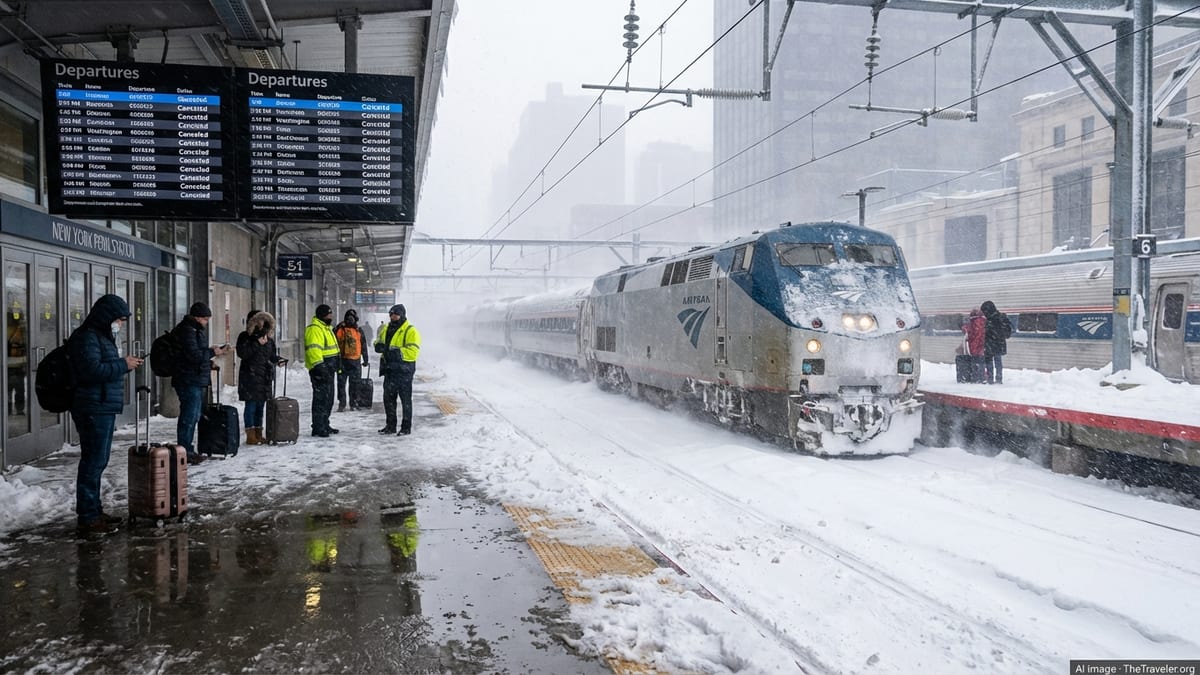
As the incident unfolded, trains already on the move were held at intermediate stations or outside key junctions, while services waiting to depart Waterloo were cancelled or delayed. Information screens at the terminus filled with rolling cancellations and major delays, and announcements advised passengers to check journey planners before attempting to travel.
The knock-on impact extended well beyond the immediate area around Woking. National rail information showed disruption spreading across the wider South Western network through the evening, with some services diverted via alternative routes and others terminated short of their destinations. Passengers heading for the south and south west of England faced extensive detours or found no viable rail route home at all on Thursday night.
Crowded concourses and a temporary closure at London Waterloo
With outbound trains towards Surrey and the south coast heavily disrupted, thousands of commuters remained stuck inside London Waterloo, one of the busiest railway terminals in the United Kingdom. Publicly available reports indicate that the evening rush hour crowd quickly built up across the concourse as passengers waited for news on departed and departing services.
As platforms filled and queues lengthened, station managers halted access to parts of the station for crowd-control reasons. Media coverage and social media posts from passengers described the main concourse being temporarily closed to incoming passengers, with staff directing people to wait outside the ticket barriers until congestion eased.
Some travellers attempted to reroute via other London terminals, heading for Paddington or Victoria in the hope of reaching Reading, Basingstoke or coastal destinations through different operators. Others chose to wait inside Waterloo in the expectation that services would restart once the line at Woking reopened. For many, however, the wait stretched to several hours as disruption continued into late evening and the backlog of delayed trains proved hard to clear.
South Western Railway authorises long-distance taxi journeys
In an unusually expansive response, South Western Railway advised passengers caught up in the disruption that they were authorised to book taxis from London Waterloo and claim back the cost where no reasonable rail alternative was available. According to coverage of the incident, guidance shared on customer information channels stated that affected travellers could use taxis for journeys to major destinations including Woking, Guildford, Alton, Basingstoke, Salisbury, Southampton Central, Bournemouth, Exeter St Davids and Weymouth.
The offer meant that, in principle, passengers who would normally complete their commute or long-distance journey by train were able to switch to road transport for trips of well over 100 miles. Reports highlight that South Western Railway indicated it would reimburse taxi journeys as far as Exeter, roughly 170 miles from London, when passengers had been unable to complete their journeys by rail because of the disruption.
The scale of the taxi authorisation stood out compared with the more common approach during rail disruption, where operators focus on rail replacement buses, ticket acceptance on other train companies, or telling passengers to travel the following day. In this case, publicly available commentary notes that the combination of a busy weekday peak, limited diversionary options and the location of the incident on a key main line left few quick alternatives, contributing to the decision to support taxi use on an exceptional basis.
Passenger rights, Delay Repay and what disrupted travellers can claim
The events at Waterloo have drawn renewed attention to the rules that govern what compensation passengers can expect when trains are heavily delayed or cancelled. South Western Railway participates in the national Delay Repay scheme, under which passengers can claim a portion or all of their fare back depending on how late they arrive at their destination. Under published policies, a delay of 15 to 29 minutes on many services can lead to a refund of 25 percent of the single fare, with higher payouts for longer delays, and a full refund typically available when delays reach an hour or more.
Separate from Delay Repay, the guidance to book taxis during this incident relied on the wider obligation for operators to provide reasonable onward travel when disruption leaves passengers stranded without a practical route home. Industry-facing information explains that in some circumstances this can include paying for taxis or hotels, especially late at night when there are no further trains.
Travel rights campaigners regularly point out that these obligations are not unlimited and are often applied case by case, which can lead to uncertainty for passengers during fast-moving disruption. The Waterloo incident has highlighted how quickly the cost of supporting stranded travellers can rise when thousands are affected at once and taxi journeys stretch far beyond the immediate commuter belt.
Broader questions for London’s commuters and the South Western network
The disruption has also prompted broader questions about resilience on the South Western route into London. The line from Waterloo through Surrey towards Hampshire, Dorset and Devon carries hundreds of trains and large numbers of commuters every weekday, making it particularly vulnerable to bottlenecks when incidents occur at key junctions such as Woking or Brookwood.
Transport analysis published in recent years has already underscored the challenges of running dense timetables on ageing infrastructure across southern England, including the limited capacity to reroute trains when a section of line is blocked. The events of Thursday evening underline how an incident at a single location can cascade into hours of disruption over a large area, especially when combined with high passenger demand at the end of the working day.
For regular travellers on the Waterloo routes, the episode is likely to reinforce the value of checking live information before leaving home or the office, exploring alternative routes across London and understanding the scope of Delay Repay and other entitlements in advance. While the authorisation of long-distance taxis from London Waterloo offered a lifeline to many this week, it also serves as a reminder that when things go wrong at one of the capital’s busiest rail hubs, the consequences can be felt far beyond the city.