


More news on this day
Barclays has opened a new office in Riyadh’s King Abdullah Financial District, deepening its push into Saudi Arabia even as a wave of updated travel alerts and disrupted flight schedules reshapes how international visitors approach the kingdom.
Get the latest news straight to your inbox!
Barclays returns to Saudi market with Riyadh hub
Publicly available information shows that Barclays has re-established a physical presence in Saudi Arabia after more than a decade away, opening an office in Riyadh to anchor its regional ambitions. The new hub is located in the King Abdullah Financial District, a flagship business zone that Saudi authorities have promoted as the capital’s primary center for global finance and professional services.
According to published coverage, the bank has secured regulatory approvals from the Saudi Capital Market Authority to conduct investment banking and global markets activities through a locally regulated entity. Earlier disclosures indicated that the lender received its investment banking license in 2025, paving the way for operational approval and the launch of its Riyadh base in 2026.
Reports indicate that Barclays has appointed senior leadership in the kingdom to oversee the new office and develop deal flow tied to Saudi Arabia’s large pipeline of sovereign, corporate, and project finance transactions. The Riyadh hub is expected to support advisory work on mergers and acquisitions, capital markets issuance, and risk management products linked to the Saudi riyal and regional currencies.
The move aligns with a broader industry trend of global banks expanding in Saudi Arabia to capture opportunities created by the country’s privatization plans, megaprojects and capital markets development. Riyadh has been competing with Dubai and other Gulf cities to attract regional headquarters, offering regulatory incentives and contract access to firms that commit to a substantive on-the-ground presence.
Expansion drive set against heightened security and travel alerts
Barclays’ opening comes at a moment when international travel advisories for Saudi Arabia have become more restrictive. In late October 2026, the United States elevated its advisory for the kingdom to Level 3, “Reconsider travel,” citing security risks and ordering the departure of non-emergency government personnel and family members from Saudi Arabia. The advisory highlights the potential for missile and drone attacks, as well as the risk of sudden disruptions to commercial air links.
Other governments have issued similarly cautious guidance. Australia’s Smartraveller service currently advises “do not travel” to Saudi Arabia, referencing a volatile regional security environment and the prospect of further attacks affecting major cities and energy infrastructure. Ireland’s Department of Foreign Affairs strongly advises against all but essential travel to Saudi Arabia, also pointing to regional tensions and the possibility of rapidly changing conditions.
The United Kingdom’s Foreign, Commonwealth and Development Office has updated its Saudi Arabia travel advice repeatedly in recent weeks, advising against all travel to certain border areas and urging heightened vigilance elsewhere in the country. Publicly available guidance emphasizes the risk from long-range missile and drone attacks and notes that organizations, businesses and facilities with perceived links to Western interests could be considered potential targets.
Risk consultancies and university mobility offices have echoed those warnings, flagging that travel insurance cover may be affected if travelers enter areas that fall under “do not travel” or equivalent advisories. Corporate travel managers are being urged to review security protocols, contingency plans and evacuation options for staff already in the kingdom.
Flight disruptions reshape access to Riyadh and beyond
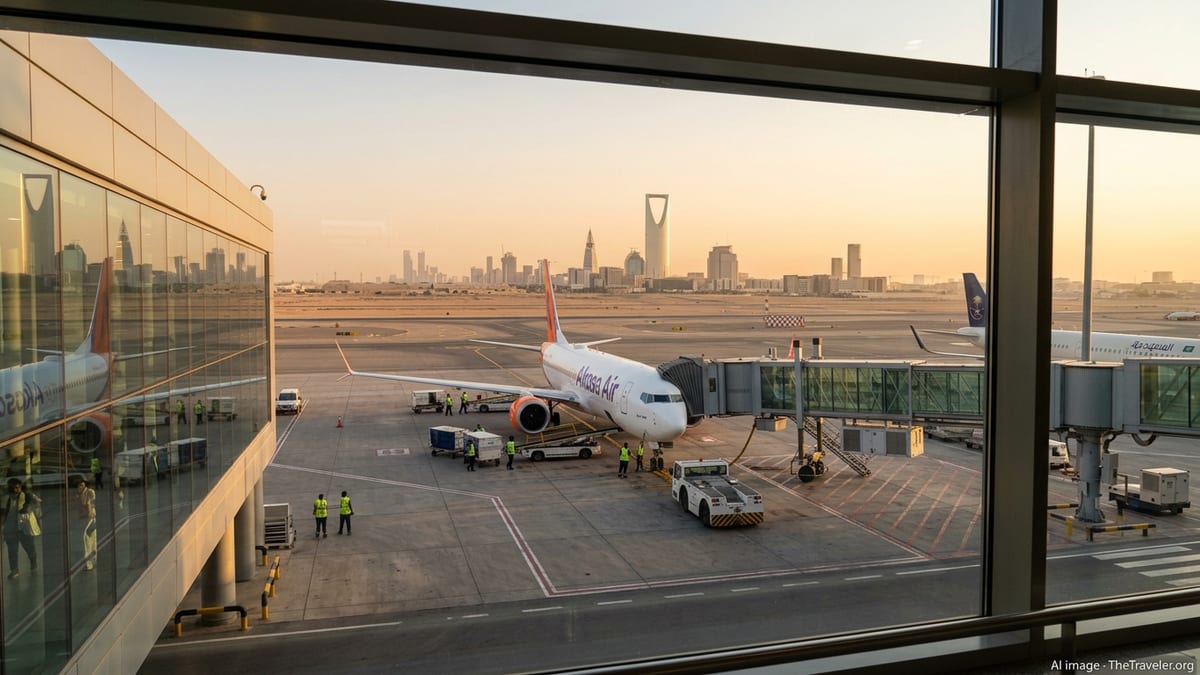
The security backdrop has translated into notable changes in air connectivity. Travel-safety briefings compiled in early November 2026 report ongoing missile and drone incidents affecting Saudi airspace, including near Riyadh, Jeddah and Dammam. Some international carriers have temporarily suspended or reduced services into the kingdom while they reassess routing and demand.
According to travel-industry updates summarizing airline schedules, certain European carriers have removed Riyadh or Jeddah from their winter 2026 to 2027 timetables, with at least one major airline publicly indicating it does not expect to resume Riyadh flights until January 2027. These schedule changes follow earlier periods of disruption affecting airports across the wider Middle East, as carriers re-routed aircraft and adjusted crew plans in response to elevated regional risk assessments.
Government advisories and university travel notices stress that those whose trips to Saudi Arabia are essential should confirm flight status directly with airlines before departing for the airport, as same-day cancellations and re-routings remain possible. Travelers are also encouraged to build in additional time for security checks and potential delays on arrival or departure, particularly during periods of heightened alert.
For leisure travelers, specialist risk analysts describing the situation in November 2026 broadly recommend postponing non-essential visits. The combination of evolving security conditions, varying airline policies and the potential for sudden airport closures or restricted airspace has made forward planning more complex, especially for multi-stop itineraries around the Gulf.
Implications for business travel and corporate mobility
Despite the tougher travel environment, financial institutions, energy companies and professional-services firms continue to send staff to Saudi Arabia to support long-term projects and client relationships. Barclays’ decision to proceed with its Riyadh office reflects the calculus that the commercial upside of doing business in the kingdom remains considerable, particularly in investment banking and capital markets linked to Saudi Arabia’s Vision 2030 transformation agenda.
Corporate mobility teams are responding by tightening internal approvals for trips, implementing more detailed pre-travel briefings, and requiring employees to register itineraries with dedicated security providers or embassy alert systems where available. Publicly available guidance from several governments encourages foreign nationals to enroll in traveler enrollment programs that provide real-time updates on security developments, protests, and changes to local regulations.
Organizations with significant exposure to Saudi Arabia are also reviewing accommodation choices, local transportation options and crisis-response providers. Travel-security firms advise favoring hotels and compounds with robust visible security, controlled vehicle access and established emergency procedures, particularly in major hubs such as Riyadh’s business districts and the Eastern Province’s industrial centers.
Some companies are shifting shorter assignments and meetings to virtual formats where possible, reserving on-the-ground travel for work that explicitly requires a physical presence. In parallel, insurers and risk advisers are reassessing coverage, premiums and exclusions for travelers entering high-alert destinations, meaning employees may need to familiarize themselves with new policy terms before departure.
What prospective visitors to Saudi Arabia should watch now
For independent travelers monitoring developments around Riyadh’s new financial hub and broader tourism offerings, the central message from official advisories and risk analyses is to treat plans as highly provisional. Governments are updating guidance frequently, sometimes within days, to reflect new security incidents, shifts in regional tensions or changes in airline operations.
Those who must travel are urged in public guidance to track multiple information sources, including their home country’s foreign ministry advice, airline notifications and reputable international news outlets. In the event of missile or drone warnings, emergency-management briefings stress that travelers should follow local civil defense instructions, avoid attempting to film interceptions or debris, and move to designated shelter areas where available.
Published advice for travelers already in Saudi Arabia also emphasizes practical steps such as maintaining charged communication devices, carrying identification, and confirming transportation arrangements ahead of time, particularly for journeys to and from airports. Visitors are encouraged to keep copies of key documents securely stored and to have contingency funds accessible in case of abrupt itinerary changes.
Against this complex backdrop, Barclays’ new Riyadh hub underscores the dual narrative shaping Saudi Arabia’s international profile in late 2026: sustained efforts to position the kingdom as a magnet for global capital and high-profile projects, alongside a security environment that demands careful, continually updated risk assessment from anyone planning to travel.