


More news on this day
Rail passengers on the Midland Main Line faced major disruption on Friday evening after train services between Bedford and Luton were cancelled following a collision involving two passenger services north of Luton, according to early reports and live rail data.
Get the latest news straight to your inbox!
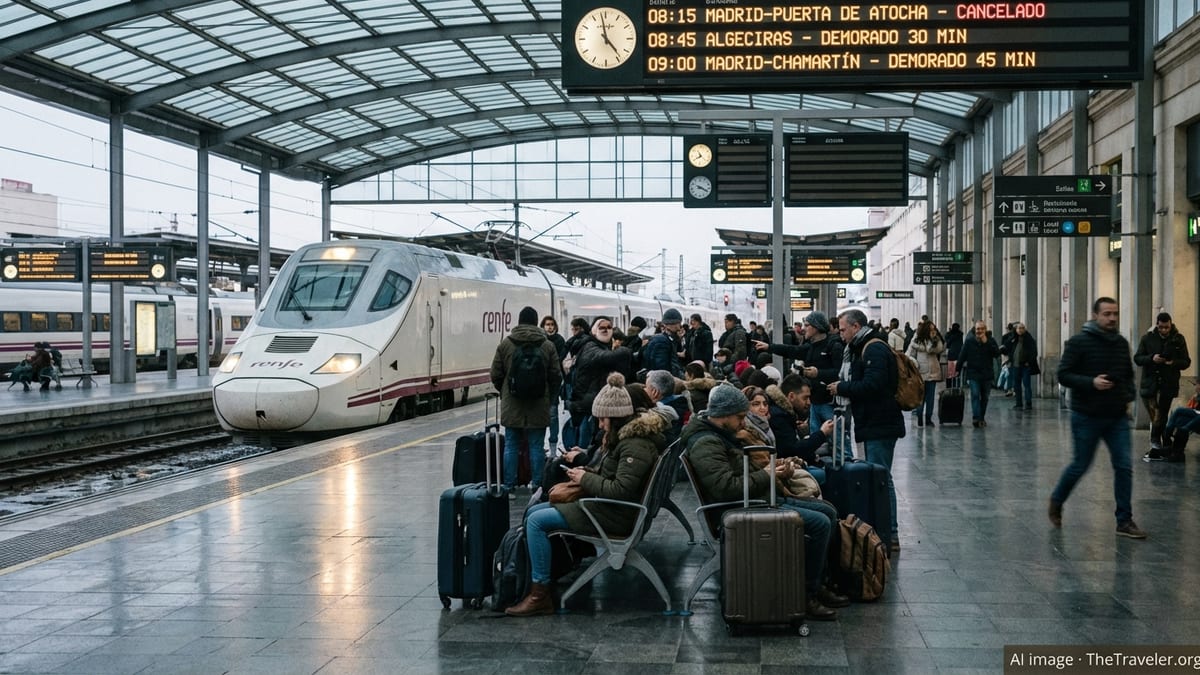
Collision Near Bedford Brings Services to a Standstill
Published coverage indicates that two trains operating on the Midland Main Line collided near Bedford on the evening of 19 June 2026, leading to the suspension of services between Bedford and Luton as emergency teams attended the scene. Initial accounts shared by national broadcasters and rail-focused outlets describe a rear-end collision involving a Luton Airport Express service and an East Midlands Railway intercity train on the southbound route toward London St Pancras.
Live journey planners and rail information feeds for the Bedford to Luton corridor showed trains being cancelled or heavily delayed in both directions following the incident. Services branded as Luton Airport Express and other regional trains were either terminated short of the affected section or removed from the timetable, with passengers advised to seek alternative routes where possible.
Social-media posts and user-generated reports from the scene describe at least one train remaining upright on the tracks while passengers were led to safety along the railway. Images circulating online show travellers waiting in adjacent fields and embankments as emergency vehicles and rail staff worked trackside into the evening.
Impact on Bedford–Luton and Wider Midland Main Line Journeys
The immediate effect for travellers was the loss of direct rail connectivity between Bedford and Luton, a key stretch for both local commuters and air passengers heading to London Luton Airport. According to publicly available timetable data, the route is normally served by a mix of East Midlands Railway services and Luton Airport Express trains linking the Midlands and London, with frequent stopping patterns through Bedford, Luton and Luton Airport Parkway.
Following the collision, journey planners for operators on the Midland Main Line showed cancellations not only between Bedford and Luton but also on longer-distance services running between London St Pancras, Nottingham, Sheffield and Corby. Some trains were diverted or terminated at alternative stations north of the affected area, while others were removed from service entirely as the incident unfolded.
Passengers already en route reported extended delays, missed onward connections and uncertainty over how long the disruption would last. Online journey advice suggested that tickets were being accepted on alternative routes where available, though capacity constraints and the time of day limited options for many travellers attempting to reach London or the airport.
What Early Reports Say About the Trains Involved
Rail enthusiast communities and early press reports point to a collision involving an East Midlands Railway Aurora-class intercity train and a Class 360 electric multiple unit operating a Luton Airport Express service. Initial rail performance logs reviewed by specialist outlets suggest both trains were travelling south when the rear train came into contact with the one ahead near Bedford.
Descriptions shared publicly indicate that the leading train had come to a halt or was moving slowly when it was struck from behind, though the precise sequence of events remains the subject of formal investigation. Video clips and still images posted online show visible damage to the front of one unit, alongside emergency lighting and staff working in low evening light.
Passenger accounts referenced by national and regional media describe crowded trains, sudden braking and some injuries among those on board, although full details about the number and severity of casualties had not been comprehensively confirmed in the immediate aftermath. Rail safety bodies are expected to review on-board data recorders, signalling logs and driver testimonies to establish what led to the collision.
Disruption for Airport-Bound Travellers
The incident came at a busy time of day for people making evening flights from London Luton Airport, many of whom depend on fast rail links from Bedford and central London. Luton Airport Express services normally provide a frequent connection between London St Pancras, Luton Airport Parkway and the airport’s dedicated shuttle link, forming an important part of the airport’s surface access network.
With trains cancelled between Bedford and Luton, travellers aiming for late departures faced longer and more complex journeys by road. Publicly accessible travel alerts suggested that some passengers diverted to road coaches or taxis from Bedford, Luton and surrounding towns, while others attempted to rebook flights when it became clear they would not reach the airport in time.
Travel information providers advised would-be passengers to check live departure boards and consult with airlines before leaving for the airport, noting that journey times from the Midlands and northern England to Luton could be significantly extended while the railway remained closed. For some, the fastest alternative involved travelling via London by different main lines and then continuing by road to Luton, adding substantial time and cost.
Ongoing Response and What Passengers Should Expect Next
As with all significant rail incidents in the United Kingdom, a detailed investigation is expected to follow, focusing on signalling, train operation and any technical issues with rolling stock or infrastructure. According to previous practice in comparable events, specialist investigators are likely to assess whether the spacing between trains, adherence to signals and the functioning of train protection systems were in line with established standards.
In the short term, passengers planning to travel between Bedford and Luton, or along the wider Midland Main Line, are being urged by travel information services to assume short-notice changes to timetables. Replacement road transport may be arranged once the immediate emergency response has concluded, but published advice stresses that such services can be limited and subject to congestion on parallel roads such as the A6 and M1.
Rail users with advance tickets for affected journeys are typically able to use them on later services or alternative routes, and refund and compensation arrangements are expected to follow once the scale and duration of the disruption are fully known. For now, the focus on the ground remains on clearing the line, assessing the infrastructure and trains involved, and restoring at least a limited service between Bedford and Luton as soon as conditions allow.