


Within a 30-minute train ride of each other, the New Jersey Performing Arts Center in Newark and Lincoln Center for the Performing Arts in Manhattan offer two very different ways to experience world-class culture. One is an anchor of a resurging downtown with a distinctly local, community-first feel. The other is a global icon, home to the New York Philharmonic, the Metropolitan Opera and New York City Ballet. Deciding which fits your style better can shape not only your evening’s entertainment but your entire trip to the New York region.
Get the latest updates straight to your inbox!
The Big Picture: Campus Versus Cultural Anchor
Lincoln Center is a full urban campus dedicated to the performing arts, spanning more than 16 acres on Manhattan’s Upper West Side. It houses major institutions such as the New York Philharmonic, the Metropolitan Opera, New York City Ballet, the Juilliard School and Jazz at Lincoln Center, and collectively stages thousands of performances and events each year. Visitors experience a constellation of venues around a central plaza with its famous fountain, marble steps and dramatic nighttime lighting, which makes simply walking through the campus feel like a quintessential New York moment.
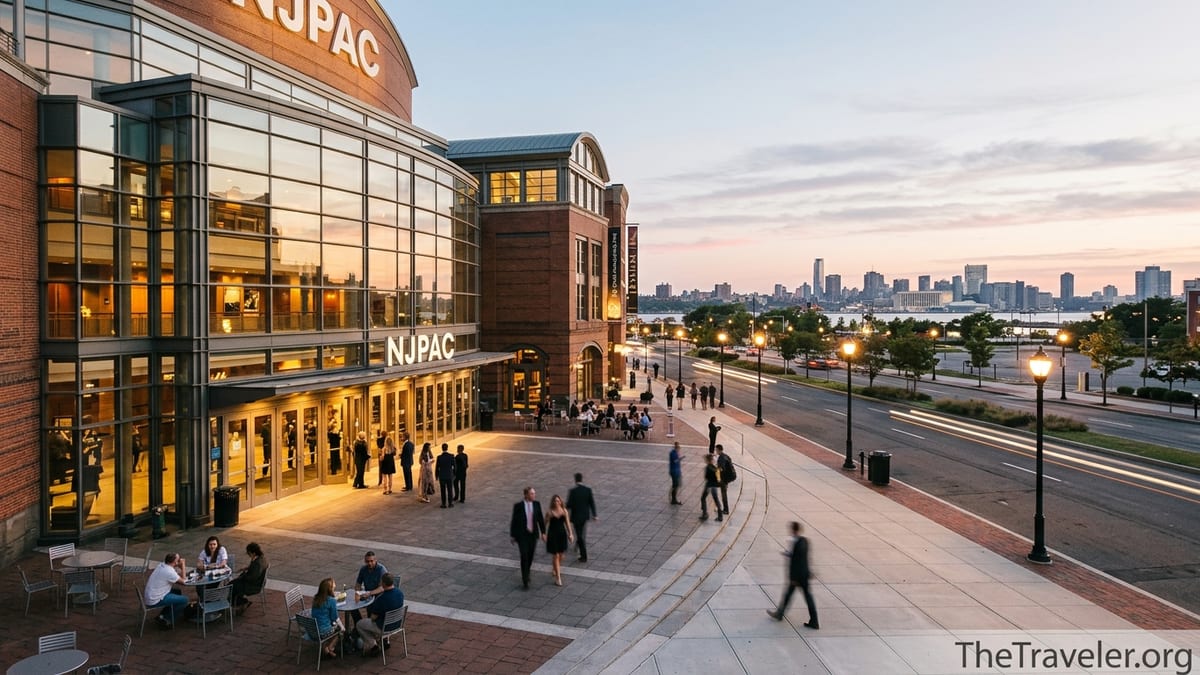
By contrast, the New Jersey Performing Arts Center, or NJPAC, is a single but substantial complex that serves as the cultural heart of downtown Newark. Opened in the late 1990s and expanded over time, it was designed to bring top-tier performance to New Jersey while helping to revitalize the city center. The main buildings sit a short walk from Newark Penn Station, surrounded by new restaurants, residential towers and riverfront development. Instead of a multi-venue campus, NJPAC focuses its energy into a few flexible performance spaces that host everything from classical concerts to comedy tours and multicultural festivals.
If you imagine an evening where you drift between theaters, outdoor installations and possibly a pre-show talk in a library devoted to the performing arts, Lincoln Center’s campus model will likely resonate with you. If your ideal night out is more streamlined, with a convenient arrival, a strong sense of being in the middle of a local crowd and an easy return to your hotel or car, NJPAC’s role as a concentrated cultural anchor might be a better match.
For travelers planning a longer stay, Lincoln Center can become a recurring destination, with matinees, evening shows and free public programs spread across venues. NJPAC, on the other hand, often becomes the focal point of a specific night or weekend in New Jersey, perhaps combined with a meal in Newark’s Ironbound neighborhood or a visit to nearby museums.
Architecture, Atmosphere and Acoustics
Lincoln Center’s architecture is part of its appeal. The campus blends mid-20th-century modernist buildings with contemporary updates, including the 2022 completion of a 550 million dollar renovation of David Geffen Hall, home of the New York Philharmonic. The redesigned main auditorium, now known as the Wu Tsai Theater, wraps the audience around the stage in a vineyard-style arrangement, improving sightlines and creating a more intimate feel in a roughly 2,200-seat space. Warm beech-wood surfaces and sculpted walls are used not only for visual impact but also to enhance acoustics, aiming to give symphonic performances greater clarity and presence.
Elsewhere on the campus, the Metropolitan Opera House impresses with its soaring lobby, crystal chandeliers and iconic Marc Chagall murals, while the smaller Alice Tully Hall and the theaters inside the Lincoln Center Theater complex offer more contemporary interiors. Outdoors, the plaza’s reflecting pools, broad steps and terraces invite visitors to linger before and after shows, turning performance nights into social events. Even if you do not hold a ticket, the atmosphere around curtain time is electric, with dressed-up patrons, street photographers and music drifting from open doors.
NJPAC’s design focuses on welcoming audiences who may be arriving by car, train or on foot from nearby offices and homes. The main venue, Prudential Hall, seats close to 2,700 people in a traditional horseshoe configuration and is known for its clear acoustics, designed to handle both orchestral music and amplified performances. A second, more intimate space, the Victoria Theater, seats just over 500 and is popular for jazz, dance and spoken word events. Public areas are warm and approachable, with large glass facades that connect the lobby to an outdoor plaza, making the building feel open to the city.
The atmosphere at NJPAC often feels more relaxed and neighborhood-oriented than the grand, institutional experience at Lincoln Center. At a typical Friday night concert, you might see multigenerational families, office workers in business-casual attire and local college students all mixing in the lobby. Pre-show music in the atrium or outdoor festivals on the plaza during summer programming can turn the space into a lively street party. Travelers who appreciate a strong sense of place and community engagement often find NJPAC’s vibe especially rewarding.
Programming: What Will You Actually See?
When it comes to programming, Lincoln Center is hard to match. Within a single week, you might find a full-length Wagner opera at the Met, a New York Philharmonic subscription concert in David Geffen Hall, a contemporary dance company performing in the Koch Theater and a late-night jazz set at Dizzy’s Club overlooking Central Park South. Seasonal festivals bring additional variety, such as summer outdoor concerts, film series and cross-disciplinary collaborations that pair classical music with visual arts or technology. Tickets can range widely, from standing-room opera seats under 40 dollars to premium orchestra seats for major events that exceed 300 dollars.
NJPAC’s strength lies in its eclectic, audience-friendly mix. One month might feature a touring Broadway musical, a major stand-up comedian, a Latin music festival, a tribute to classic soul, a family-friendly orchestra concert, and a visiting ballet company. The venue also routinely hosts community events, educational performances for school groups and partnerships with local organizations. For example, a weekend could include a gospel brunch in the lobby, a hip-hop dance showcase in the Victoria Theater, and a headlining R&B concert in Prudential Hall, giving travelers a snapshot of contemporary American performance culture with a strong New Jersey flavor.
In practical terms, this means that travelers who prioritize seeing flagship companies and canonical repertoire will gravitate toward Lincoln Center. If you are dreaming of hearing the New York Philharmonic perform Mahler, watching a repertory classic like Swan Lake danced by New York City Ballet or attending a high-profile new production at the Metropolitan Opera, the Manhattan campus is the natural choice. If your interests skew toward mainstream touring shows, comedy, pop and world music, or if you are traveling with a mixed-age group seeking something broadly accessible, NJPAC’s booking style is often more flexible and less formal.
Both venues also offer free or low-cost programs that can enrich a trip. Lincoln Center’s public spaces host regular free events, from small-ensemble concerts in the David Rubenstein Atrium to outdoor dance parties and community festivals. NJPAC frequently schedules free summer concerts in Military Park across the street and low-cost tickets for selected performances, particularly those aimed at students and families. Checking calendars in advance is essential, as popular free events can reach capacity quickly even without ticket prices as a barrier.
Location, Access and Safety Considerations
Lincoln Center sits in a prime Manhattan location at the edge of the Upper West Side, a neighborhood known for its tree-lined streets, prewar apartment buildings and easy access to Central Park. The complex is served by multiple subway lines, crosstown buses and plentiful taxis and ride-hail vehicles. For most visitors staying in midtown or downtown hotels, travel time to Lincoln Center is typically 10 to 25 minutes by subway or taxi, traffic permitting. Side streets around the campus are generally busy before and after performances, and many theatergoers choose to walk to nearby restaurants on Columbus Avenue or Amsterdam Avenue for pre- and post-show dining.
NJPAC is located in downtown Newark, a few blocks from Newark Penn Station, which is served by Amtrak, New Jersey Transit commuter lines and the PATH system from Manhattan. Many New York visitors reach NJPAC by taking a PATH train from the World Trade Center area or a New Jersey Transit train from New York Penn Station; typical travel time is 20 to 30 minutes station-to-station, plus a 5 to 8 minute walk. For those driving, the venue is just off several major highways, and multiple parking garages and lots serve eventgoers, although congestion can build up right after shows.
Visitor safety perceptions between Newark and Manhattan can differ, but both venues maintain visible security and crowd management during events. Around NJPAC, performance nights usually bring increased foot traffic, event staff and police presence. Travelers unfamiliar with Newark often feel more comfortable sticking to the well-lit routes between the station, the venue and known dining areas, especially late in the evening, and planning parking or rides in advance to avoid last-minute searching. At Lincoln Center, the combination of residential density, nightlife and regular event crowds keeps the area lively into the late evening, which many visitors find reassuring.
Ultimately, location may come down to where you are already staying and how comfortable you feel navigating different transit systems. If you are based in Manhattan and want to minimize variables, Lincoln Center is the straightforward choice. If you are staying in New Jersey suburbs, at Newark Airport hotels or along New Jersey Transit lines, NJPAC may be logistically easier than heading into the city, particularly for families or groups traveling by car.
Budget, Dress Code and Overall Vibe
For many travelers, the choice between NJPAC and Lincoln Center also comes down to budget and how formal they want their night out to feel. Lincoln Center, with its world-famous resident companies, often commands higher prices for flagship performances. A prime orchestra seat at the Met Opera or a premiere concert by the New York Philharmonic can be a major splurge, while balcony or partial-view seats offer more modest options but still may outpace mid-market theaters in smaller cities. Dynamic pricing can push costs higher for in-demand events, especially on weekends.
NJPAC generally offers a wider band of mid-range pricing, particularly for touring concerts and comedy shows. While top-tier seats for popular acts can still be expensive, there tend to be more sections in the 50 to 120 dollar range where you can secure a good view without feeling that you are committing to a once-a-year luxury. Ticketing practices also lean heavily on promotions, including discounts for New Jersey residents, subscribers and students, which can make last-minute plans more affordable.
Dress codes differ more by audience culture than by official rules, since both venues welcome a range of attire from jeans to evening wear. At Lincoln Center, especially for opera and gala nights, you will see more formal outfits, cocktail dresses and suits, which can be a fun opportunity to dress up if that appeals to you. At NJPAC, even on big nights, the prevailing style usually leans business-casual or smart casual, with plenty of people coming straight from work or arriving in jeans and a nice shirt. If you prefer not to worry about wardrobe at all, NJPAC’s atmosphere may feel more forgiving.
In terms of overall vibe, think of Lincoln Center as a global cultural institution where you are one of many visitors sharing space with New Yorkers and international tourists alike. You may find yourself discussing a performance with a music student from Juilliard or a visitor from overseas. NJPAC, by contrast, often feels more rooted in local and regional identity, with audiences that include New Jersey residents who attend regularly and treat the venue as an extension of their community. Travelers seeking a sense of being briefly adopted into a local arts scene may particularly appreciate that dynamic.
Food, Drinks and Neighborhood Experiences
Food and drink can shape how a performance night feels, and in this respect Lincoln Center and NJPAC offer distinct experiences. Around Lincoln Center, you are within walking distance of a dense cluster of restaurants that range from casual pizza spots and ramen bars to upscale bistros and classic New York steak houses. It is easy to plan a pre-theater prix-fixe dinner, grab a glass of wine afterward, or wander a few blocks to find late-night dessert. On the plaza itself, seasonal outdoor bars and cafes sometimes operate before performances, letting you sip a drink with a view of the lit-up fountain and the Met Opera’s grand facade.
Inside Lincoln Center’s venues, concession stands typically offer wine, cocktails, soft drinks and light snacks during intermission. Prices reflect the premium location but are broadly in line with other major New York cultural institutions. Many visitors choose to arrive early to enjoy a drink in the lobby bars, especially at the Metropolitan Opera House, where the view out over the plaza can be as memorable as the performance.
NJPAC features its own on-site dining options that change over time, often emphasizing approachable American fare and bar service that pairs with the evening’s programming. The venue’s plaza sometimes hosts food trucks and outdoor vendors during festivals and summer concerts, creating a casual, street-fair feeling. One of NJPAC’s biggest culinary advantages, however, is its proximity to the Ironbound district, about a 15 to 20 minute walk or a short ride away, renowned for its Portuguese, Brazilian and Spanish restaurants. Many locals make a night of it by enjoying grilled seafood, rodizio or tapas in Ironbound before returning to NJPAC for a show.
Travelers staying in Newark or nearby suburbs may also pair NJPAC with daytime activities such as a visit to the Newark Museum of Art, walks along the Passaic River waterfront, or events at nearby universities. Lincoln Center, meanwhile, dovetails naturally with broader New York sightseeing: a matinee followed by a stroll through Central Park, or a performance capped by a nighttime walk down Broadway toward midtown’s lights.
The Takeaway
Choosing between the New Jersey Performing Arts Center and Lincoln Center is less about which venue is objectively better and more about which better matches your travel style, budget and cultural priorities. Lincoln Center offers a dense concentration of world-renowned institutions in one architecturally striking Manhattan campus, ideal for travelers who want a classic New York cultural experience anchored by flagship opera, ballet, symphony and jazz. It excels if you enjoy dressing up, exploring multiple venues in a single area and surrounding your performance with big-city dining and sightseeing.
NJPAC, by contrast, shines as an accessible, community-rooted destination that brings a wide range of performances to a single, thoughtfully designed complex in downtown Newark. Its programming emphasizes breadth and approachability, from touring concerts and comedy to multicultural festivals and family shows, often at price points and in an atmosphere that feel less intimidating than New York’s most famous stages. For travelers staying in New Jersey, driving to shows or looking to experience the region beyond Manhattan, NJPAC can be the more convenient and relaxed option.
If you have time and budget for both, experiencing Lincoln Center and NJPAC on the same trip offers a revealing contrast: two leading performing arts destinations within one metropolitan area, each embodying a different vision of what a cultural night out can be. Start with what matters most to you, whether that is a particular type of performance, a preferred neighborhood, or a target ticket price, and let that guide your choice. Either way, you will be tapping into one of the richest performing arts ecosystems in the United States.
FAQ
Q1. Is NJPAC or Lincoln Center easier to reach from New York City hotels?
Lincoln Center is usually easier if you are staying in Manhattan, since it is directly served by multiple subway lines and is a short taxi ride from midtown hotels. NJPAC is straightforward as well but requires a New Jersey Transit or PATH train ride to Newark Penn Station, followed by a brief walk or taxi.
Q2. Which venue is better for travelers on a tighter budget?
NJPAC often offers more mid-range pricing and promotions for touring shows, comedy and concerts, which can be friendlier to tighter budgets. Lincoln Center has some affordable options, especially in upper tiers or for select programs, but premium events can be significantly more expensive.
Q3. Where will I find more formal, dressy nights out?
Lincoln Center, particularly the Metropolitan Opera and major gala events, tends to attract more formal attire, with many guests choosing suits and cocktail dresses. NJPAC audiences are generally more casual or business-casual, though you can certainly dress up for special performances.
Q4. Which venue is better for families with children?
Both venues offer family-friendly programming, but NJPAC’s mix of touring shows, kids’ concerts and shorter performances can be easier for younger audiences. Lincoln Center is excellent for older children and teens interested in ballet, classical music or opera, especially if they already have an interest in the arts.
Q5. How do the acoustics compare between NJPAC and Lincoln Center?
Lincoln Center’s David Geffen Hall underwent a major renovation completed in 2022 to improve acoustics for the New York Philharmonic, and other halls like Alice Tully Hall are highly regarded. NJPAC’s Prudential Hall is known for clear sound that works well for both acoustic and amplified events, making it popular with touring artists.
Q6. Is Newark safe for visitors attending an evening performance at NJPAC?
Downtown Newark around NJPAC is well-patrolled and especially busy on show nights, with staff and police presence. As in any city, visitors are wise to stay on well-lit routes, plan their parking or train connections in advance, and remain aware of their surroundings, particularly late at night.
Q7. Can I visit either venue without buying a performance ticket?
Yes. At Lincoln Center, you can walk the plaza, visit publicly accessible indoor spaces and often attend free events in the David Rubenstein Atrium or outdoor areas. At NJPAC, you can explore the exterior plaza, attend public festivals and sometimes enter the lobby during open community programs without a ticket.
Q8. Which venue offers more dining choices nearby?
Lincoln Center benefits from a dense concentration of restaurants on the Upper West Side, from casual spots to upscale dining within a short walk. NJPAC has on-site food and is a short ride from Newark’s Ironbound neighborhood, which is known for excellent Portuguese and Brazilian restaurants.
Q9. If I only have one night in the region, which should I choose?
If you want a bucket-list New York experience with opera, ballet or a major orchestra, choose Lincoln Center. If you prefer a relaxed, community-focused night with a touring concert, comedy or multicultural program, and especially if you are based in New Jersey, NJPAC is often the better fit.
Q10. Do either of the venues offer free or low-cost cultural events?
Both do. Lincoln Center regularly hosts free concerts, dance events and talks in public spaces, while NJPAC presents free outdoor concerts in nearby parks and low-cost performances for students and families. Checking each venue’s calendar before your trip can reveal budget-friendly ways to experience their programming.