


More news on this day
Rail passengers on one of Britain’s busiest north–south corridors are facing prolonged disruption after a fatal collision between two East Midlands Railway passenger services near Bedford left one driver dead and scores of people injured.
Get the latest news straight to your inbox!
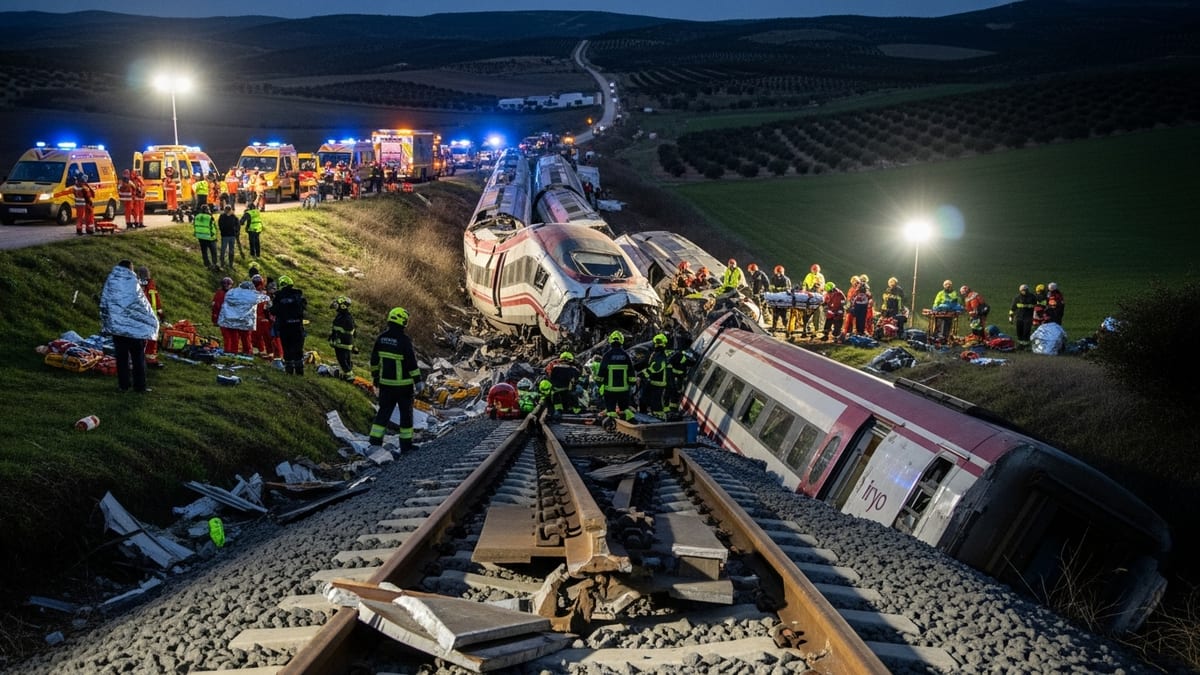
Major incident near Bedford severs key route
The crash occurred in the early evening of 19 June on the Midland Main Line at Elstow, a short distance south of Bedford. Two southbound East Midlands Railway services bound for London St Pancras were involved, with one train running from Corby and the other from Nottingham. The impact caused significant damage to carriages and track infrastructure, prompting a large emergency response and an immediate shutdown of the affected section of line.
Publicly available information indicates that the driver of the rear train was killed at the scene, while more than 80 passengers and crew sustained injuries ranging from minor to critical. British Transport Police statements and subsequent updates from rail operators describe a complex rescue effort, with dozens of people taken to hospitals across the region and many more treated for shock and minor wounds at the lineside.
The collision took place at the height of the evening peak, affecting commuters, long-distance travellers and airport-bound passengers using the corridor between the East Midlands, Bedfordshire and central London. Images and footage carried by broadcasters and news outlets showed crumpled carriages, buckled track and extensive debris, underscoring the severity of an incident on a route that ordinarily carries thousands of passengers each hour.
Rail industry bodies have characterised the crash as a rare but serious event on a network that generally records high safety levels. The combination of a fatality, large numbers of casualties and a complete closure of a main line has drawn national attention and prompted scrutiny of operational practices and protection systems along the Bedford corridor.
Investigation focuses on signal overrun and braking
Early findings published by the Rail Accident Investigation Branch indicate that the moving train struck the rear of a stationary East Midlands Railway service after passing a red signal shortly before the point of impact. Technical data cited in interim reports suggest that the brakes on the moving train were applied only a few seconds before the collision, limiting the scope to reduce speed and mitigate the force of the crash.
Investigators are examining the sequence of signalling aspects shown to the driver, the condition and positioning of both trains, and the performance of train protection systems designed to intervene when a signal is passed at danger. Specialist teams are also retrieving and analysing data from on-train recorders, lineside equipment and communications systems to build a second-by-second timeline of the events leading up to the crash.
Commentary in national newspapers and broadcast bulletins has highlighted questions around where train protection systems were installed on this stretch of line and whether additional safeguards might have prevented a high-speed rear-end collision. Rail safety experts quoted across multiple outlets have noted that modern systems are generally designed to provide a final layer of defence when human error occurs, and that investigators are likely to explore how those defences functioned on the day.
The full investigation is expected to take many months, with the Rail Accident Investigation Branch due to publish a detailed report setting out causal factors and recommendations for the wider rail industry. For now, interim updates are providing only a preliminary picture, while engineering and operations teams work to clear the site and restore a safe, fully inspected railway.
Severe disruption between Bedford, Luton and London
The collision has led to an extended closure of the line between Bedford and Luton, cutting one of the principal rail arteries connecting the East Midlands and northern Home Counties with London. National Rail service updates indicate that no East Midlands Railway trains are operating south of Bedford while recovery, repairs and inspections continue, with knock-on impacts for Thameslink and other operators that share parts of the corridor.
Passengers travelling between the Midlands and London have been advised to seek alternative routes, including diverted services via alternative main lines and replacement bus links between affected stations. Timetables have been heavily amended, with reduced frequencies, extended journey times and in some cases cancellations throughout the day as operators replan stock and crew movements around the blocked section.
Travel reports show that disruption has spilled over into neighbouring routes and road networks, as displaced rail passengers turn to long-distance coach services and motorways. Congestion around Bedford, Luton and nearby junctions on the A421 and M1 has been reported on subsequent days, particularly during peak periods when regular rail commuters attempt to reach London and regional employment centres by car.
Industry forecasts and statements from Network Rail and train companies suggest that full services on the Bedford corridor are unlikely to resume until extensive track, signalling and overhead line repairs are completed, followed by detailed safety checks. The closure window initially indicated a shutdown lasting at least a week, with further adjustments possible depending on the condition of infrastructure once both trains are removed.
Ongoing repairs and passenger advice
Network Rail engineering teams have been working around the clock at the crash site to recover damaged rolling stock, repair track and signalling equipment, and inspect supporting structures. Rail industry updates describe a multi-stage process in which the derailed vehicles are first stabilised and moved to secure sidings, after which permanent way specialists can replace twisted rails, sleepers and ballast over a considerable length of line.
Overhead line equipment has also required inspection and repair, as impact and subsequent recovery operations can affect masts, wiring and tensioning systems critical to the safe operation of electric trains. Only once all affected assets have been certified as safe will test trains be allowed to traverse the section at low speed, gradually stepping up to normal line speeds if no faults are detected.
Passenger-facing information from rail operators and National Rail has stressed the importance of checking live journey planners on the day of travel, as timetables may change at short notice while the line remains partially or fully closed. Travellers holding advance or season tickets are generally being offered flexible travel options, including acceptance on alternative operators and rerouting without additional charges, although specific provisions vary by carrier.
Consumer advice columns in national and regional media have reminded passengers that they may be entitled to compensation under delay and disruption schemes once services resume, subject to eligibility rules. However, commentators also note that the priority in the immediate aftermath remains the welfare of those injured, the support offered to the family of the driver who lost his life, and the safe restoration of this critical section of the rail network.
Safety implications for the wider UK rail network
The Bedford collision has reignited debate about rail safety, particularly regarding protection against signal overruns on busy mixed-traffic routes. Comparisons have been drawn in analysis pieces to previous rear-end and signal-related collisions in the UK and overseas, with experts assessing how lessons from earlier accidents have shaped today’s standards and what further changes might now be considered.
Observers point out that the UK rail system has seen a long-term decline in serious passenger train accidents, in part due to investment in train protection technology, modern rolling stock and better training. Nevertheless, the Bedford crash is being cited as a reminder that residual risks remain, especially on corridors where high-speed intercity services share infrastructure with commuter and airport trains.
Policy commentators are already speculating that the Rail Accident Investigation Branch findings could influence future decisions on signal protection, driver training, traffic management systems and the pace of digital signalling upgrades on the Midland Main Line and other routes. Any recommendations are likely to feed into broader discussions about rail investment priorities, including how best to balance capacity, punctuality and safety as passenger numbers continue to recover.
For now, the focus remains on understanding precisely how a modern passenger railway experienced such a severe rear-end collision, while thousands of travellers adapt their journeys around a severely disrupted main line. The consequences for safety policy, technology deployment and public confidence in rail travel will become clearer as the investigation progresses and services through Bedford gradually return to normal levels.