


The JetBlue Plus Card from Barclays can look like an easy win for frequent travelers: a chunky welcome bonus, free checked bags and extra points on flights. But before you hit "apply" in the middle of a booking or on your next JetBlue flight, it is worth pausing to run the numbers and understand how this card fits into your real travel habits. For some travelers it easily pays for itself. For others, it adds a $99 annual fee without delivering much real-world value.
Get the latest updates straight to your inbox!
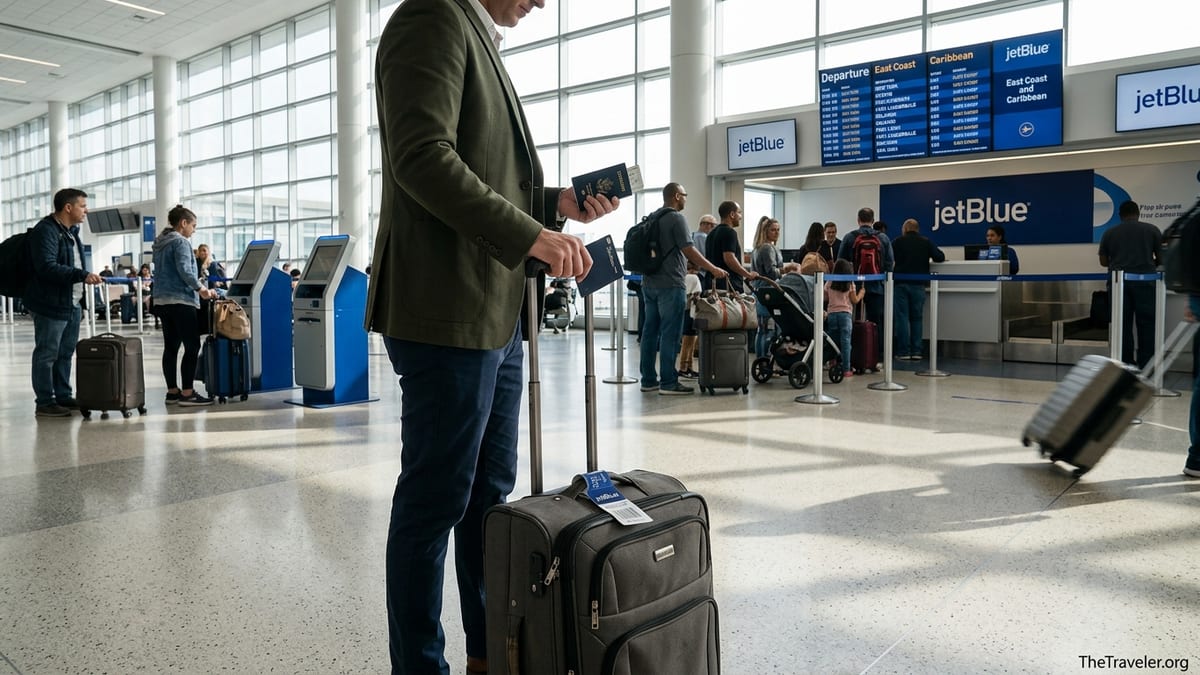
What the JetBlue Plus Card Actually Offers Today
The JetBlue Plus Card is a co-branded credit card issued by Barclays, designed around JetBlue’s TrueBlue loyalty program. As of mid 2026, the card charges a $99 annual fee and typically offers a welcome bonus that may appear in several versions: for example, some travelers report targeted offers of around 70,000 TrueBlue points after a minimum spend, while others see a mix of a cash statement credit for JetBlue purchases plus additional points after spending a set amount in the first 90 days. Public and in-flight offers can change frequently, so the headline bonus you see while booking a ticket may differ from what is on the issuer’s main application page.
On an ongoing basis, the card earns elevated rewards on JetBlue and everyday travel spending. Recent issuer materials and card reviews describe a structure of 6 points per dollar on JetBlue and Paisly purchases, 2 points per dollar at restaurants and eligible grocery stores, and 1 point per dollar on everything else. That 6x category applies when you pay for flights, seat upgrades, Even More Space seats and other extras directly with JetBlue, as well as certain packages on JetBlue’s vacation platform.
The Plus Card also builds in a handful of airline-style perks. The most visible one for most travelers is the free first checked bag for the primary cardholder and up to three travel companions on the same JetBlue reservation, as long as the reservation is paid with the card number on file. Cardholders also receive 10 percent of their points back after redeeming them for JetBlue-operated award flights, and an annual bonus of 5,000 TrueBlue points each card anniversary. These benefits combine with the status-earning “tiles” system in JetBlue’s revamped program, though the Plus Card does not offer as many shortcuts toward Mosaic status as JetBlue’s newer top-tier Premier product.
How Rising JetBlue Baggage Fees Change the Math
In 2026, checked baggage fees became one of the biggest arguments in favor of the JetBlue Plus Card. After several increases, reports from outlets that track airline pricing show JetBlue’s first checked bag now often costs around 39 to 49 dollars each way on off-peak dates when prepaid online, and can reach 59 dollars or more on peak days or if you wait until check-in. On many domestic routes, the first checked bag for economy fares that do not include bags now sits squarely near, or above, the 50 dollar mark each way, placing JetBlue among the pricier US airlines for luggage.
For a typical round-trip domestic journey, that means a traveler without status could pay roughly 80 to 120 dollars in checked bag fees for just one suitcase, depending on when they pay and how busy their travel dates are. Add a second bag and the total can easily double. The Plus Card’s free first checked bag benefit can wipe out that cost for the primary cardholder and up to three companions, as long as the JetBlue reservation is correctly linked to the card. For a family of four flying Boston to Orlando with one checked suitcase each, it is now common to see potential round-trip bag charges of more than 300 dollars. In cases like this, using a JetBlue Plus Card and saving those bag fees just one or two times per year can more than cover the 99 dollar annual fee.
Consider a simpler example: a solo traveler flying New York to San Juan twice a year with one checked bag each time. If their typical prepaid first-bag fee is around 45 dollars each way, they are paying about 180 dollars per year in baggage alone. Holding the JetBlue Plus Card and using it properly on those tickets could cut that 180 dollars to zero while also earning 6x points on the airfare. For a traveler who only uses a carry-on and rarely checks luggage, however, this bag benefit may be worth almost nothing in practice, making the annual fee much harder to justify.
Understanding the Real Value of TrueBlue Points
Unlike some legacy carriers that price awards in rigid charts, JetBlue uses a dynamic system where the number of TrueBlue points required for a flight roughly tracks the cash fare. The airline confirms that award pricing depends on the published base fare, destination, season and booking window, and that taxes and fees remain a separate cash component that travelers must pay at the time of booking. For many domestic routes, government taxes on award tickets start at around 5.60 dollars each way, while international awards can carry significantly higher departure taxes and local fees.
In practice, travelers often find TrueBlue points worth somewhere around 1.3 to 1.6 cents per point when redeemed for “Blue” or “Blue Plus” fares on JetBlue-operated flights, though the exact value can swing higher or lower. For instance, a 300 dollar one-way flight from New York JFK to Los Angeles might price out at roughly 18,000 to 22,000 TrueBlue points plus taxes. That would equate to a value in the range of 1.3 to 1.7 cents per point. On peak holiday dates, where the same route can climb to 600 dollars or more in cash, the points price generally rises in tandem, so the cents-per-point value may stay similar.
This matters when you look at welcome bonuses. If you receive an offer of 70,000 TrueBlue points after meeting the spending requirement, those points might be realistically worth roughly 900 to 1,000 dollars in JetBlue flights if you redeem them efficiently. On the other hand, some promotions mix a statement credit for JetBlue purchases, such as 400 dollars, plus a smaller points bonus, for example 30,000 points after spending 1,000 dollars. In that scenario, the combined value might still land around 800 to 900 dollars for a traveler who routinely flies JetBlue, but it will depend heavily on how you redeem the points and whether you would have bought those flights anyway.
The card’s 10 percent rebate on redeemed points also nudges up the effective value. If you book a 20,000-point flight, JetBlue returns 2,000 points after your trip, which can be worth the equivalent of 25 to 30 dollars on a future ticket. Over a year of frequent redemptions, this rebate can quietly generate an extra short domestic hop or discount a Caribbean fare without any extra effort on your part.
When the JetBlue Plus Card Makes Sense for Travelers
To decide whether to apply, it helps to match the card’s sweet spots to your personal travel patterns. The Plus Card tends to shine for travelers who fly JetBlue at least a couple of times per year, frequently check bags and are comfortable concentrating a significant share of their airline loyalty with one carrier. If your home airport is a JetBlue focus city such as New York JFK, Boston, Fort Lauderdale or Orlando, and most of your leisure trips already lean toward JetBlue-friendly destinations, the combination of free bags, anniversary points and elevated earning on flights can feel very natural.
Imagine a Boston-based couple that takes three JetBlue trips per year: a winter escape to Cancún, a spring visit to Florida family and a fall long weekend in Denver, each with one checked bag per person. Without a cobranded card or elite status, they could easily face more than 400 dollars in annual checked bag fees across those six segments. With the JetBlue Plus Card, those first bags would be included for both travelers, and the pair would earn 6x points on the airfare as well as 2x at restaurants on their trips. Those savings plus the 5,000-point anniversary bonus could comfortably outweigh the 99 dollar annual fee.
The card can also make sense if you occasionally redeem points for premium offerings such as Even More Space seats on busy routes or Mint on select transcontinental and Caribbean flights. While the Plus Card does not directly discount these cabins, earning 6x points on high-priced tickets and clawing back 10 percent of redeemed points can help you rebuild your balance more quickly after splurging on a flat-bed seat from New York to Los Angeles or a roomier section on a full holiday flight to San Juan.
Situations Where You Should Think Twice Before Applying
The JetBlue Plus Card is far from a universal recommendation. One of the clearest signs you should proceed cautiously is if JetBlue is not your main airline, or if your home airport is dominated by another carrier. A traveler based in Dallas who flies American for most work trips and only occasionally uses JetBlue for a single leisure route may struggle to use the card’s perks enough to justify the fee. In that case, a general travel card that earns flexible points, or an airline card tied to your primary carrier, is likely to deliver more total value.
You should also pause if you rarely, if ever, check a bag. Many frequent flyers have adapted to modern luggage fees by investing in a quality carry-on, packing lighter and avoiding checked bags entirely. If that sounds like you, the JetBlue Plus Card’s most tangible perk loses much of its value. In that scenario, your decision hinges more on the welcome bonus and elevated points on flights and dining. Compare this with no-annual-fee cards that offer solid cash-back or travel rewards on everyday spending. If you would only fly JetBlue once a year with carry-on only and do not plan to chase Mosaic status, a simpler card may be a better fit.
Finally, credit health and long-term strategy matter. Applying for any new card will generate a hard inquiry on your credit report and temporarily trim the average age of your accounts. If you are planning a mortgage or large loan within the next year, or if you already carry balances at high interest rates, it may be wiser to hold off on new airline cards. JetBlue cobranded products are at their best for travelers who pay statements in full and treat the card as a tool for earning and saving on travel, not as a vehicle for long-term debt.
How to Evaluate Current Welcome Offers and Fine Print
One of the most confusing aspects of the JetBlue Plus Card in 2026 is the sheer variety of offers floating around. Travelers report seeing one set of terms when they receive a mailer at home, another when they log in to their TrueBlue accounts, and a third when a flight attendant pitches the card in the cabin with a paper application. These promotions can differ in both size and structure. Some highlight a large points bonus, such as 70,000 points after spending a specific amount and paying the first annual fee. Others frame the offer around a statement credit for JetBlue purchases during the first 90 days, paired with a smaller points bonus. There have even been instances where the in-flight pitch mentions a higher number of points than the written legal terms ultimately deliver, leading to confusion and calls to Barclays customer service.
Because of this inconsistency, travelers should carefully read the full terms of whichever offer they intend to accept before submitting an application. Take a screenshot of the bonus details and minimum-spend requirement on the application screen, especially if you are responding to an in-flight or booking-path promotion that may not be easy to pull up later. Check whether the annual fee is charged on the first statement, whether it is refundable if you cancel within a certain timeframe, and how long you have to meet the spending requirement. Some cardholders have reported that their advertised welcome bonus was split between two components, such as a 400 dollar travel credit and a 30,000-point bonus, rather than being delivered entirely in points.
It is also worth considering the value of points versus a statement credit for your own travel style. A 400 dollar credit that only applies to JetBlue purchases within a short 90-day window may be fantastic if you already have a high-value trip to Aruba or San Diego planned. For a traveler without immediate JetBlue plans, a larger pure points bonus might be more flexible, allowing them to book flights throughout the year. Remember that statement credits usually reduce your out-of-pocket cost but do not typically earn points on the rebated portion, while flights booked with points still require you to pay taxes and fees in cash.
Comparing the JetBlue Plus to Other Card Options
Before committing, it helps to look at what you are giving up by choosing a niche airline card instead of a general travel or cash-back product. Many no-fee cash-back cards now offer around 1.5 to 2 percent back on all purchases, with some bonus categories for dining, groceries or gas. Over a year of everyday spending, that straightforward cash value can outpace the benefit you would receive from earning 1x TrueBlue points on non-travel charges and 2x on restaurants, especially if you only occasionally redeem points for flights. If your main goal is to reduce travel costs broadly across different airlines and hotels, a flexible currency card may be more strategic.
For dedicated JetBlue flyers, it can also be worth comparing the Plus Card with the issuer’s other cobranded options. The no-annual-fee version gives up the free checked bag and anniversary points but still earns TrueBlue points on purchases, which may be sufficient for a casual traveler who values simplicity and wants to avoid extra fees. At the other extreme, the newer JetBlue Premier card introduces a higher annual fee but adds richer perks, including a larger welcome bonus, an annual travel credit for hotels or car rentals booked through JetBlue’s portal and more generous boosts toward Mosaic status. Some loyalists have even chosen to upgrade from Plus to Premier mainly to accelerate their status goals, especially if they routinely book Mint or long-haul routes.
Think concretely about the next 12 to 24 months. If you know you will fly JetBlue three or more times per year from a hub city, check at least one bag on most trips and do not plan to juggle multiple reward ecosystems, the Plus Card can be an efficient core card. If you split travel across Southwest, Delta and foreign low-cost carriers, or if your dream trips involve airlines outside the JetBlue network, diverting spending toward a bank program that transfers to multiple partners may align better with your bucket list.
The Takeaway
The JetBlue Plus Card can be a powerful tool for the right traveler, but it is not an automatic “yes” just because you like JetBlue’s inflight snacks and seatback screens. Its real strength sits at the intersection of rising checked bag fees, dynamic award pricing and JetBlue’s growing route map. For travelers who live near a JetBlue focus city, check bags regularly and are happy to fly the airline for most domestic and Caribbean trips, the combination of free first bags for the family, a recurring anniversary points bonus and accelerated earnings on JetBlue flights can make the 99 dollar fee feel like a bargain after only a couple of trips.
On the other hand, if you largely travel carry-on only, hop between airlines based on price and schedule, or prefer flexible points you can move between different partners, the Plus Card’s perks may not outweigh its costs. The welcome bonus can still be lucrative, but you should weigh it against alternative cards that earn broadly useful rewards. Before you apply, take a few minutes to price out your likely bag fees for the next year, estimate how often you will redeem JetBlue points and compare the current welcome offers carefully. Approached thoughtfully, the JetBlue Plus Card can either become a valuable anchor in your travel wallet or a card you skip in favor of more versatile options.
FAQ
Q1. Does the JetBlue Plus Card always give a free checked bag?
The JetBlue Plus Card includes the first checked bag free for the primary cardholder and up to three companions on the same reservation, as long as the JetBlue booking is properly linked to the card. You still need to follow JetBlue’s standard weight and size rules, and oversize or overweight bags can incur extra charges.
Q2. How many flights do I need each year to justify the annual fee?
If you check a bag on even two round-trip JetBlue flights per year, the savings from avoided bag fees can often cover or exceed the 99 dollar annual fee. Travelers who fly more frequently or with family members usually see value more quickly, while carry-on-only travelers may struggle to justify the cost.
Q3. Are JetBlue Plus Card welcome offers the same everywhere?
No. Travelers report different welcome offers when applying online, in flight or through targeted emails. Some offers emphasize a large points bonus, while others blend a JetBlue statement credit with a smaller points amount. Always read the specific terms on the application you use and keep a copy for your records.
Q4. How valuable are TrueBlue points from the Plus Card in real travel?
TrueBlue points typically track the cash price of JetBlue flights, and many travelers see roughly 1.3 to 1.6 cents of value per point on domestic and near-international routes. That means a 70,000-point bonus can often be worth around 900 to 1,000 dollars in flights if you redeem strategically.
Q5. Do I need to pay for my ticket with the JetBlue Plus Card to get the bag benefit?
JetBlue generally requires that the Plus Card be on file with your TrueBlue profile and associated with the reservation in order to trigger the free first checked bag. In practice, most travelers either pay with the card directly or ensure it is linked to their account before check-in.
Q6. Does the JetBlue Plus Card help me earn Mosaic status faster?
The Plus Card participates in JetBlue’s tile-based loyalty system, and spending on the card can contribute to your progress, though not as aggressively as the higher-fee Premier card. If elite status is your main goal, compare the specific tile-earning and bonus structures of both products before choosing.
Q7. What happens if bag fees change after I get the card?
Airlines can update bag fees at any time, and JetBlue has already raised checked bag prices in 2026. If fees continue to rise, the free first bag perk from the Plus Card could become even more valuable, but you should periodically recheck JetBlue’s official baggage page to understand current charges.
Q8. Is the JetBlue Plus Card good for everyday non-travel spending?
The card offers 2x points at restaurants and eligible grocery stores and 1x on most other purchases. That can be attractive if you prioritize JetBlue flights and want to build a large TrueBlue balance, but pure cash-back cards or flexible rewards programs may deliver higher overall value on general spending for many travelers.
Q9. Can I downgrade or upgrade from the JetBlue Plus Card later?
In many cases, Barclays allows product changes between JetBlue cards, such as moving from Plus to a no-fee version or to a higher-tier product, though terms can vary. If you are unsure about long-term value, you could start with one version and reassess once you see how often you use the benefits.
Q10. Will holding the JetBlue Plus Card hurt my credit score?
Like any new credit line, applying for the JetBlue Plus Card will create a hard inquiry and may temporarily lower your score by a few points. Over time, responsible use, on-time payments and a higher overall credit limit can help your credit profile, but you should avoid new applications if you expect to apply for a major loan soon.