


More news on this day
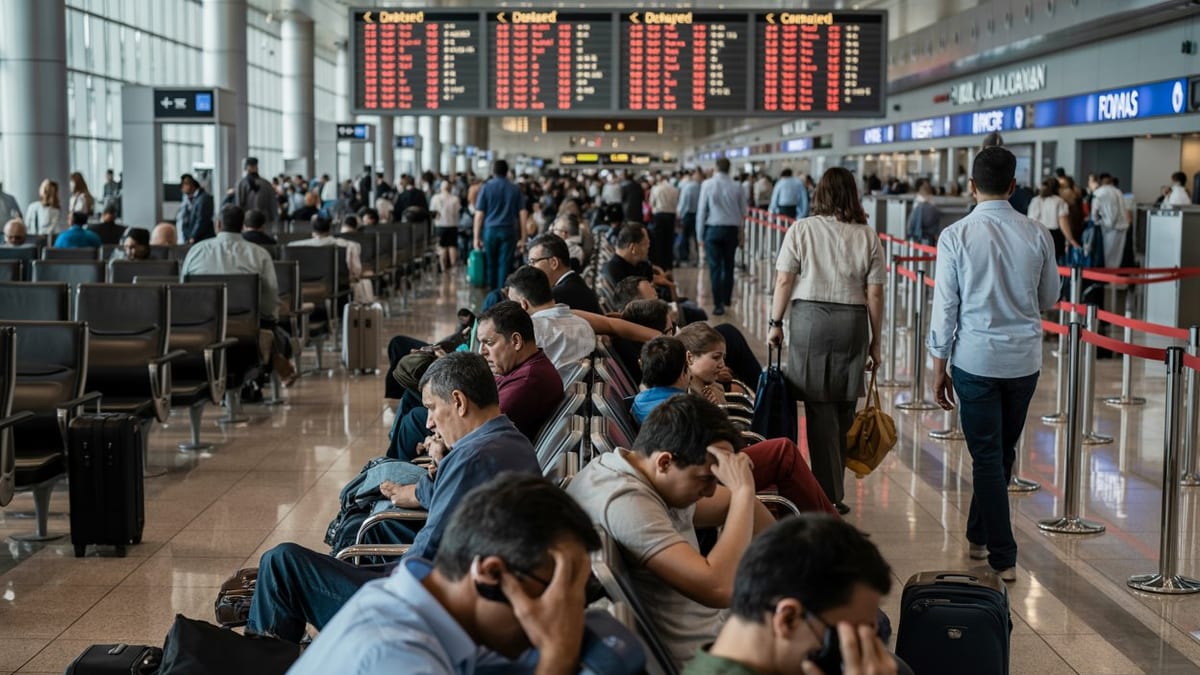
Travelers at Ben Gurion International Airport in Israel faced hours of uncertainty as at least 122 flights were delayed and 15 canceled, disrupting operations for El Al, Arkia, Israir, Lufthansa, United Airlines and other carriers on busy routes to New York, London, Paris, Dubai and Rome.
Get the latest news straight to your inbox!
Delays and Cancellations Ripple Across Key International Routes
Publicly available flight-board data and airline schedule trackers show that the latest disruption at Ben Gurion has concentrated on high-demand long-haul and European routes. Services linking Tel Aviv with New York, London, Paris, Dubai and Rome saw rolling delays, extended ground holds and several outright cancellations as the operating day progressed.
El Al, Israel’s flag carrier, appears to have borne a significant share of the impact on transatlantic services, including departures to New York–area airports. Tracking data indicates multiple El Al departures pushed back by hours beyond their scheduled times, with knock-on effects for aircraft rotations later in the day. United Airlines and Lufthansa, which normally provide additional capacity on Israel–Europe and Israel–United States corridors, were also affected, with selected flights removed from schedules or listed as canceled.
On European sectors, publicly available information indicates disruption on London and Paris routes in particular, where joint capacity from El Al and European partners such as Lufthansa and codeshare allies is central to Israel’s connectivity. Passengers connecting onward to North America from these hubs faced missed connections and rebookings, compounding the disruption beyond Ben Gurion itself.
In the Gulf and Mediterranean region, routes to Dubai and major Italian gateways, including Rome, also encountered extensive delays. Regional carriers and Israeli airlines serving these markets showed irregular departure patterns, with some services departing significantly behind schedule while others were withdrawn from the day’s operations altogether.
Israeli Carriers Under Strain Amid Reduced Airport Throughput
Local airlines El Al, Arkia and Israir have been operating in an already constrained environment following months of reduced traffic at Ben Gurion. Reports on airport capacity in recent weeks describe a system running below normal throughput, with fewer passengers allowed per departing flight and a limited number of hourly movements compared with pre-crisis conditions.
Within this context, the sudden spike to 122 delays and 15 cancellations has placed additional strain on Israeli carriers that have been central to maintaining Israel’s air links while many foreign airlines scaled back or suspended service. Arkia and Israir, which operate a mix of domestic and short- to medium-haul international routes, have had to juggle aircraft and crew to keep essential services running, particularly to Israeli domestic destinations and nearby leisure markets.
Operational data from recent weeks suggests these airlines have generally attempted to maintain scheduled operations where possible, adjusting timings rather than cutting entire routes. The current pattern of widespread delays but a more limited number of cancellations fits this approach, reflecting a preference to operate flights even with extended ground delays when safety and airspace conditions allow.
However, high levels of day-of-operation disruption tend to cascade quickly through small and mid-sized fleets. As aircraft and crews time out or are left out of position, subsequent legs can be delayed or canceled, which helps explain the progressively worsening picture on Ben Gurion’s departure and arrival boards over the course of the day.
Foreign Airlines Navigate Security Concerns and Schedule Volatility
For foreign airlines such as Lufthansa and United Airlines, operations to Israel in 2025 and 2026 have already been highly sensitive to security assessments and regulatory guidance. Industry coverage over the past year has documented repeated periods in which North American and European carriers reduced or suspended flights to Tel Aviv, only gradually rebuilding schedules as conditions permitted.
The fresh wave of delays and cancellations at Ben Gurion illustrates how quickly those fragile schedules can unravel. Publicly available airline timetables and booking interfaces indicate that some foreign carriers continue to operate only a fraction of their pre-2023 frequencies. When a disruption hits on a day with limited scheduled service, a single cancellation can remove an entire day’s capacity on a particular route, leaving passengers with few same-day alternatives.
Reports on the broader regional airspace picture show that carriers are also making last-minute routing changes to avoid sensitive areas, which can increase flight times and reduce schedule resilience. Longer routings consume additional fuel, compress turnaround times at crowded hubs such as Frankfurt, London and Newark, and leave limited room to recover from even minor delays.
In this environment, airlines have tended to prioritize flexibility in rebooking and waivers for affected passengers rather than aggressively adding extra sections. With uncertainty surrounding future operational conditions, adding capacity carries commercial and operational risks that many foreign carriers appear reluctant to take on.
Passengers Face Overnight Stays, Missed Connections and Rebookings
For passengers caught in the disruption at Ben Gurion, the operational details translate into long hours in terminal halls, unplanned overnight stays and complex rebooking journeys. With 122 delayed flights on the departure and arrival boards, even modest schedule changes can create long queues at check-in, ticketing desks and security checkpoints, adding to frustration and confusion.
Travel advisories from airlines and travel companies in recent days have emphasized the importance of checking flight status repeatedly before leaving for the airport, monitoring app notifications and allowing extra time for security and check-in. Many passengers on affected El Al, Arkia and Israir flights have reportedly been offered rebookings on later services or alternative routings via European hubs where space is available.
For those traveling onward to North America, particularly New York, the combination of limited frequencies and heavy demand has made same-day or even next-day rebooking challenging. Travelers bound for London, Paris or Rome are in a somewhat better position due to the larger number of carriers and connections serving those cities, but they still face the risk of overnight connections or extended layovers.
Families and leisure travelers at the height of the early summer travel period are especially exposed, as tight holiday schedules leave little flexibility to absorb multi-day disruptions. Business travelers, by contrast, may be better able to reconfigure itineraries or shift meetings to remote formats, but remain vulnerable to last-minute changes when flying into or out of Israel.
What Travelers Should Do if Flying Through Ben Gurion
Consumer-facing guidance emerging from the latest disruption stresses preparation and flexibility for anyone scheduled to travel via Ben Gurion in the coming days. Airlines and travel platforms advise passengers to verify their flight’s status directly with the operating carrier before heading to the airport and to keep contact details updated within airline profiles for real-time alerts.
Travel experts also recommend building in longer connection times when itineraries involve Tel Aviv, especially for long-haul journeys to New York and other North American gateways. Where possible, travelers are being encouraged to hold confirmed bookings on a single ticket rather than piecing together separate tickets, in order to benefit from protected connections and through-checking of baggage when delays occur.
Some frequent travelers to Israel note that, given the current volatility, choosing carriers with a demonstrated track record of maintaining service in challenging circumstances may improve the chances of operating as scheduled, even if not at the exact planned time. However, as the present episode at Ben Gurion shows, no airline is fully insulated from regional tensions, capacity restrictions and airspace adjustments that can generate large numbers of delays and cancellations in a single day.
With peak summer travel approaching, the latest wave of disruption at Ben Gurion underlines the degree to which Israel’s air connectivity remains vulnerable to sudden operational shocks. For now, publicly available information suggests that flight operations continue at reduced reliability, and passengers transiting the country’s main international gateway are likely to face an elevated risk of disruption in the short term.