


More news on this day
Ben Gurion Airport is confronting a fresh wave of operational disruption in early July 2026, with aggregated schedule data indicating 207 delayed flights and four cancellations affecting El Al, Emirates and Lufthansa services on key international routes.
Get the latest news straight to your inbox!
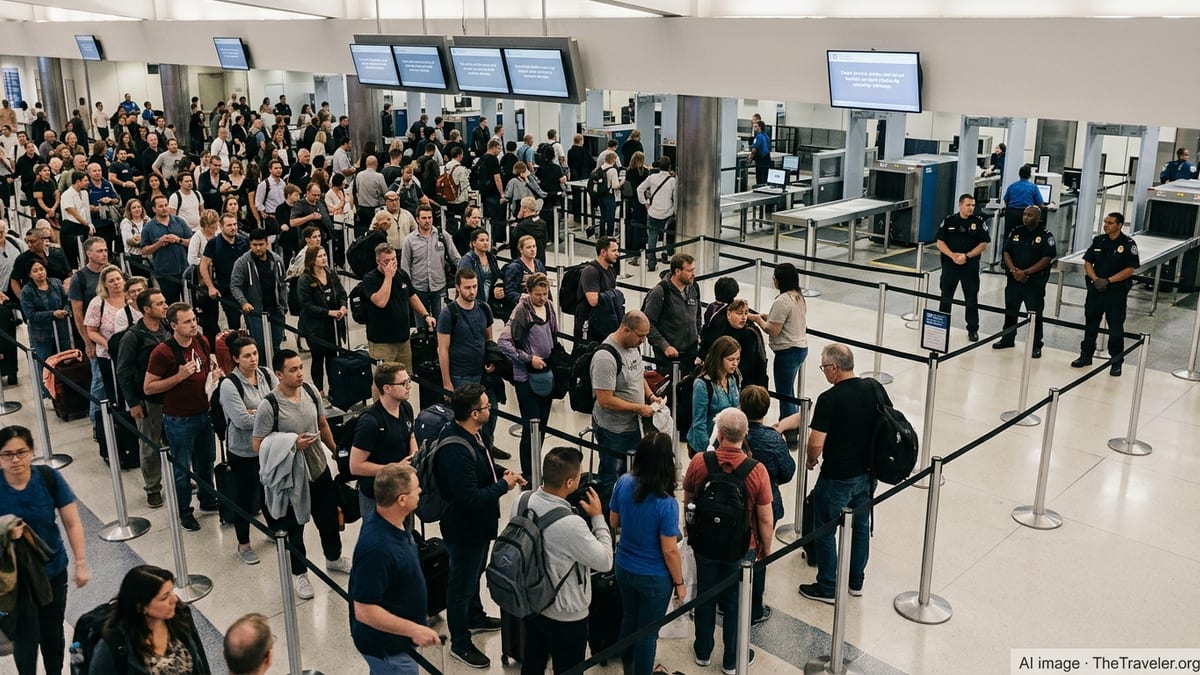
Early July Brings Noticeable Strain on Timetables
The opening days of July 2026 have seen Ben Gurion Airport’s schedule come under visible strain, with delay tallies climbing across both departures and arrivals. Publicly available flight-tracking and airport information services show an elevated number of services operating behind schedule compared with typical midsummer patterns.
The 207 delayed flights attributed to the first phase of July encompass both short-haul and long-haul routes, reflecting congestion on popular European and North American corridors as well as regional links. While the majority of services ultimately departed or arrived on the same calendar day, delay durations frequently extended beyond half an hour, complicating connections and onward travel for passengers.
In addition to the delays, four cancellations involving services operated by or scheduled under the flight codes of El Al, Emirates and Lufthansa have been recorded. Although these represent a small share of total movements at Israel’s main international gateway, they contribute to a broader picture of operational friction at the height of the summer peak.
Historically, July is one of Ben Gurion’s busiest months, and previous published statistics for the airport highlight how heavy traffic can magnify the impact of even modest disruptions. This year’s early July performance is drawing particular attention because it follows several months in which airlines serving Tel Aviv have already been operating with tight schedules and limited spare capacity.
El Al Services Show Higher Frequency of Knock-On Delays
National carrier El Al, which accounts for a significant share of traffic at Ben Gurion, appears prominently in the list of flights affected by delays. Monitoring of real-time schedules indicates that a notable proportion of El Al’s long-haul departures to North American destinations, such as New York and Miami, have been subject to schedule slippage, in some cases leaving Tel Aviv later than originally planned.
Short- and medium-haul routes within Europe and the Mediterranean basin have also seen disruption. El Al services operating to major hubs including Frankfurt, Vienna and various Eastern European cities have recorded late departures or arrivals, amplifying the possibility of missed connections on partner airlines and code-share services.
Industry observers note that once a long-haul aircraft leaves late from Tel Aviv at the start of the day, it can be difficult for an airline to recover the timetable without swapping equipment or crews. As a result, a single early-morning delay can cascade across multiple rotations, contributing to the overall count of 207 disrupted flight movements at Ben Gurion.
El Al’s performance at Ben Gurion has been closely watched throughout 2026, particularly after earlier monthly data from the airport showed a pattern of relatively high average delay minutes for some carriers serving the hub. The heightened summer demand now appears to be testing the resilience of revised schedules and operational adjustments.
Emirates and Lufthansa Cancellations Highlight Network Vulnerabilities
The four cancellations recorded so far in July include flights tied to Emirates and Lufthansa services connecting Tel Aviv with their respective long-haul hubs. These routes are central to global connectivity for passengers traveling between Israel, Europe, Asia and the Americas, which means even a small number of cancellations can trigger widespread itinerary changes.
For Emirates, Tel Aviv links into a large bank of onward connections at Dubai, particularly to destinations in East Asia, the Indian subcontinent and Australasia. When a Dubai service to or from Ben Gurion is canceled, passengers can face significant rebooking challenges because alternative departures may already be heavily booked during the peak holiday season.
Lufthansa’s operations between Tel Aviv, Frankfurt and Munich play a similar role for travelers heading to or from Western and Central Europe, as well as transatlantic destinations via German hubs. Published historical statistics have previously noted that Lufthansa’s Tel Aviv operations can be more exposed to cancellations and schedule variability than some competitors, reflecting the tight integration of these flights into broader European networks.
The July cancellations appear so far to be dispersed across dates and carriers rather than concentrated in a single weather or technical event. This pattern suggests a combination of local operational issues, airspace constraints and resource limitations across different parts of the network rather than one systemic failure.
Airport Operations Adjust as Terminal 1 Activity Resumes
The disruptions are unfolding as Ben Gurion implements operational changes for the summer, including a renewed use of Terminal 1 for certain international flights. Recent notices from the Israel Airports Authority highlight that passengers must pay close attention to departure-terminal information, as some services that previously operated exclusively from Terminal 3 are now being split between the two facilities.
The adjustment is intended to ease pressure on Terminal 3 during peak hours by reallocating selected carriers and routes. However, such transitions can introduce complexity into ground handling, security screening and passenger flows, especially when airlines adjust check-in procedures and gate allocations at short notice.
Operational experts note that when an airport redistributes traffic between terminals, even small mismatches between staffing, infrastructure and the timing of flight waves can contribute to delays. Factors such as longer transfer times between terminals, unfamiliar wayfinding for passengers and revised security routines may all lengthen the time needed to board and dispatch aircraft.
These structural changes, combined with high summer demand and regional air traffic congestion, form the backdrop to July’s elevated delay statistics. While Ben Gurion’s core infrastructure remains capable of handling substantial volumes, the current figures underscore how finely balanced airport operations can become when several stressors coincide.
What Passengers Can Expect Through the Rest of July
With July only just underway, the tally of 207 delays and four cancellations at Ben Gurion is likely to evolve as airlines continue to adjust their schedules. Travel industry analysts expect that carriers including El Al, Emirates and Lufthansa will keep refining departure times, aircraft rotations and crew planning in an effort to stabilize punctuality during the remaining weeks of the holiday season.
Passengers using Ben Gurion in the coming days are being encouraged by travel agents and aviation information services to monitor flight status more closely than usual, particularly for early-morning departures and late-night arrivals. Same-day schedule checks are increasingly viewed as essential, as delays can accumulate over the course of the day even when flights appear on time at booking.
Where possible, travelers are also being advised to allow extra time for security screening and terminal transfers, given the renewed activity at Terminal 1 and ongoing crowding at Terminal 3. Longer connection windows, especially on itineraries involving hub transfers in Dubai, Frankfurt or Munich, may offer additional protection against missed onward flights if upstream services from Tel Aviv encounter further disruption.
As airlines and airport operators move deeper into the summer peak, the situation at Ben Gurion will serve as a barometer for how well global networks are coping with sustained high demand and limited spare capacity. The early July figures of 207 delays and four cancellations highlight the sensitivity of tightly timed schedules and the growing importance of real-time information for travelers navigating one of the region’s busiest hubs.