


More news on this day
Air travel across the Middle East faced another day of severe disruption as tracking data indicated 754 delayed flights and at least 26 cancellations across Saudi Arabia, the United Arab Emirates, Egypt and Israel, snarling operations for Saudia, flyadeal, FlyDubai, Air Arabia, Ethiopian Airlines and other carriers at major hubs including Jeddah, Dammam, Riyadh, Dubai and Sharjah.
Get the latest news straight to your inbox!
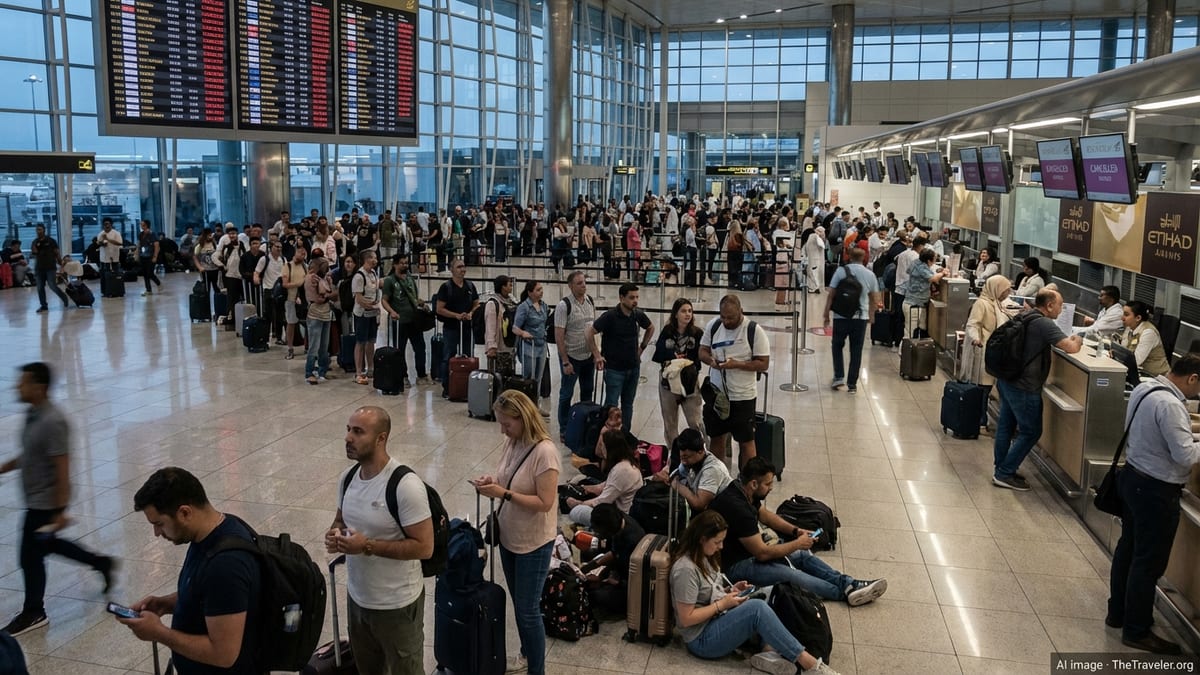
Wave of Delays Across Saudi, UAE, Egypt and Israel
Publicly available flight-tracking boards and airport information services on Tuesday showed an intense build-up of delays across the region, with services bunching through the morning and into the evening peaks. The combined tally of 754 delayed and 26 grounded flights reflects pressure on airspace, crew availability and airport handling capacity from the Gulf to the Eastern Mediterranean.
Saudi Arabia’s main gateways in Jeddah, Riyadh and Dammam were among the hardest hit. Reports indicate that Saudia and low cost affiliate flyadeal saw growing queues of late-running departures and arrivals, with knock-on effects for domestic connections and onward links to Asia, Africa and Europe. Live dashboards showed clusters of services operating well behind schedule, particularly on busy trunk routes.
In the United Arab Emirates, disruption at Dubai International and Sharjah compounded an already fragile operating environment following months of intermittent airspace and operational issues. Airlines such as FlyDubai and Air Arabia, both heavily reliant on fast aircraft turnarounds, were forced to reshuffle rotations as delays mounted, affecting flights across the Gulf, the Indian subcontinent and North Africa.
Further west, services touching Egypt and Israel also registered elevated disruption. Cairo and Tel Aviv reported late-running regional and international flights, with the ripple effects feeding back into Gulf hubs as aircraft and crews struggled to return to position in time for subsequent departures.
Carriers Struggle to Protect Schedules
The latest wave of disruption has placed particular strain on Saudia and flyadeal in Saudi Arabia, FlyDubai and Air Arabia in the UAE, and Ethiopian Airlines on key connecting routes through the region. Publicly available information shows these airlines juggling aircraft swaps, rolling delays and selective cancellations to keep core routes operating.
For Saudia and flyadeal, delays at Jeddah’s King Abdulaziz International Airport and Riyadh’s King Khalid International Airport created challenges for banked departure waves, in which multiple flights are scheduled to arrive and depart within tight windows. When a significant share of those services depart late, connecting passengers risk missing onward flights, forcing airlines to arrange rebookings and, in some cases, overnight accommodation.
FlyDubai and Air Arabia, both operating dense networks out of Dubai and Sharjah respectively, faced similar headaches. According to recent operational overviews, these carriers had already been trimming schedules and rerouting flights in response to earlier episodes of airspace restrictions and airport bottlenecks. The latest figures on delays and cancellations suggest that recovery remains fragile, with even modest new disruptions quickly propagating across their networks.
Ethiopian Airlines and other African, European and Asian carriers that rely on Middle Eastern hubs for transfer traffic also encountered schedule shocks. When flights into Jeddah, Riyadh, Dubai or Sharjah run late, onward services to Addis Ababa, Nairobi or European capitals can be forced to wait for connecting passengers or depart without them, complicating capacity planning and customer service.
Airspace Constraints and Operational Bottlenecks
While precise causes vary by route and airport, regional aviation coverage points to a combination of lingering airspace constraints, tight turnarounds and localized operational breakdowns as key drivers of the current disruption. Over recent months, closures and restrictions affecting sectors of Middle Eastern airspace have forced airlines to adopt longer routings, increasing flight times and leaving less margin for delay.
At airports, dense schedules and high summer demand mean that ground handling, security screening and air traffic control can all become choke points. When a rush of flights arrives behind schedule, everything from baggage offloading to refuelling and catering comes under strain. This in turn pushes back departure times for the next wave of flights, creating a cascading effect that can take days to unwind fully.
Analysts note that low cost carriers, which rely on rapid aircraft turnarounds and high aircraft utilization, are especially exposed. Even a short delay can throw off an entire day’s rotation for a single aircraft, particularly on routes that already require extended flight times because of airspace restrictions or weather diversions.
Across Saudi Arabia, the UAE, Egypt and Israel, the concentration of delays at major hubs also reflects the region’s role as a connector between Europe, Asia and Africa. When schedules falter in one geography, the impacts are quickly felt thousands of kilometres away, as missed slots and crew duty limits force airlines to reshuffle operations on short notice.
Passenger Impact and Growing Knock-on Effects
For travellers, the immediate consequences of the latest disruptions included long waits at check-in and transfer desks, rebookings onto later flights and in some cases extended stays in transit hotels. Social media posts and local coverage highlighted queues at ticket counters in Jeddah, Riyadh and Dubai as passengers sought updated information and alternative routings.
Publicly available consumer guidance from travel rights organisations underscores that options depend heavily on the cause of a delay or cancellation and the jurisdiction under which a given flight falls. In parts of the Middle East, compensation rules differ significantly from those in the European Union, placing more emphasis on airline-provided rebooking and care, such as meals and accommodation, rather than statutory cash payments.
The operational knock-on effects are likely to extend beyond the immediate 24-hour window. When aircraft and crew are left out of position by one day of heavy disruption, airlines typically need several schedule cycles to restore normal rotations. This can mean further rolling delays and isolated cancellations across the week, even if headline disruption figures later decline.
Travel advisers monitoring the situation are urging passengers to plan for longer connection times through affected hubs, avoid tight self-connecting itineraries that rely on separate tickets, and keep essential items such as medication and chargers in cabin baggage in case checked bags are delayed.
How Travellers Can Navigate the Turbulence
With conditions in flux, publicly available guidance consistently points to proactive monitoring as the most important step for travellers using hubs in Saudi Arabia, the UAE, Egypt or Israel. Airline apps and websites typically update departure and arrival times in near real time, and many carriers offer notifications by text message or email when flights are rescheduled.
Passengers holding tickets on Saudia, flyadeal, FlyDubai, Air Arabia, Ethiopian Airlines or other affected carriers are advised to check flight status repeatedly in the 24 hours before departure and again before setting out for the airport. Where possible, adding contact details to bookings and enrolling in airline notification programmes can help ensure that schedule changes are received quickly.
For those yet to book, allowing generous connection windows through regional hubs can reduce the risk of missed onward flights. Some travellers may also wish to consider routing options that provide flexibility, such as fares permitting date or time changes for a modest fee, or itineraries that maintain a buffer night in a gateway city during periods of heightened disruption.
Industry observers suggest that while the current tally of 754 delayed and 26 cancelled flights underscores significant ongoing turbulence in Middle Eastern air travel, the region’s major airports and airlines have become accustomed to operating in a challenging environment. For passengers, staying informed, building in extra time and understanding the basic contours of their rights remain the most effective tools for navigating the latest wave of disruption.