


More news on this day
Western Balkan countries are accelerating efforts to modernise and climate-proof their railways, deploying fresh European Union funding and regional initiatives to strengthen a network long seen as a weak link in Europe’s transport system.
Get the latest news straight to your inbox!
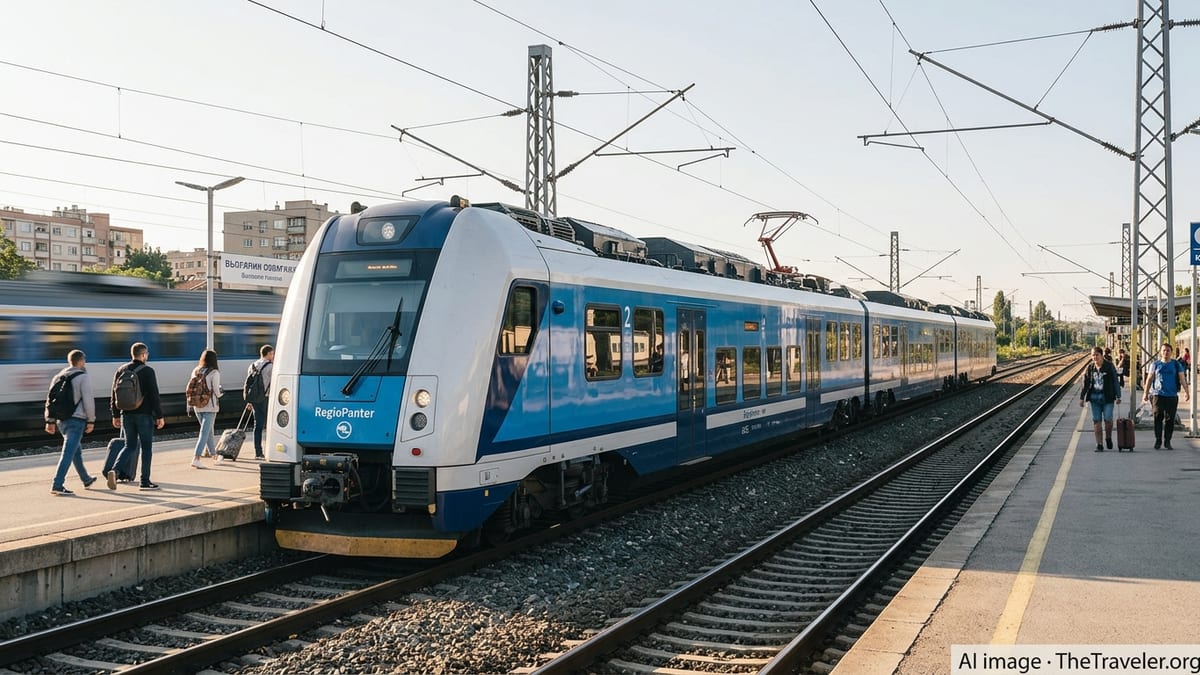
EU investment drives a new phase of rail upgrades
Publicly available information shows that the Western Balkans are entering a new phase of railway investment, backed by substantial European Union support. The EU’s Economic and Investment Plan for the region has already mobilised billions of euros for strategic infrastructure, with rail singled out as a priority for green and resilient connectivity. The Western Balkans Investment Framework has channelled grants and loans into more than 260 infrastructure projects, including key rail corridors that connect the region with EU member states.
Recent EU decisions indicate that this pipeline is expanding. A support package adopted in early 2026 includes funding for rail electrification in Albania and additional technical assistance for projects in Montenegro, Bosnia and Herzegovina and North Macedonia. These measures are being reinforced by the Reform and Growth Facility for the Western Balkans, a 6 billion euro instrument for 2024 to 2027 that links reform progress with targeted investments, including transport infrastructure.
Earlier investment decisions continue to shape the region’s rail map. An EU package worth around 1.2 billion euros approved under the Western Balkans Investment Framework has been described in regional coverage as pivotal for upgrading railway infrastructure in Serbia and improving related infrastructure in Bosnia and Herzegovina and Montenegro. Analysts note that these long term programmes are now converging, giving governments the means to tackle long delayed modernisation and maintenance of critical lines.
Regional reports underline that this support is closely tied to the extension of the Trans European Transport Network into the Western Balkans. Priority corridors such as Corridor X, which links Central Europe with Greece through Serbia and North Macedonia, and Corridor VIII, stretching from the Adriatic coast across Albania and North Macedonia towards Bulgaria, are being framed as central spines for both economic development and resilience.
Strategic corridors targeted for resilience and connectivity
Core international corridors are at the heart of current railway upgrades. Information released by European institutions highlights reconstruction of lines along Corridor VIII in Albania, aimed at bringing infrastructure up to European technical standards and enabling more reliable cross border freight and passenger services. In Montenegro, a programme to rehabilitate the Bar to Vrbnica line, part of a wider Bar to Podgorica to Vrbnica axis, is backed by European Investment Bank lending and EU grants, covering the vast majority of project costs.
These lines connect Adriatic ports with inland markets and landlocked neighbours, so their reliability is seen as crucial for supply chain resilience. The Bar route is particularly significant, carrying freight between the coast and Serbia and serving as an alternative outlet when other corridors are disrupted. Upgrades include modern signalling, renewed track, and improved safety systems intended to reduce derailments and weather related incidents on a line that traverses challenging mountainous terrain.
On Corridor X, new funding has been directed to a joint border railway station at Tabanovce on the frontier between North Macedonia and Serbia. According to information from the European Bank for Reconstruction and Development, this investment is designed to consolidate procedures on one site, easing freight and passenger movements and cutting waiting times. Streamlined border operations are considered a key “soft measure” for resilience, enabling trains to recover more quickly from delays and helping the network to absorb peaks in demand.
Officials and analysts within regional platforms have also stressed that these investments are coordinated with upgrades on the European side of shared corridors, including works on links from Greek ports towards North Macedonia and further north. This approach is intended to avoid bottlenecks at the EU border and to create continuous, interoperable routes that can be used as reliable alternatives to congested road corridors or maritime routes.
From underinvestment to resilience focused modernisation
For decades, the Western Balkans rail network was marked by underinvestment, low service levels and a gradual shift of passengers and freight to roads. Reports produced by international organisations in 2024 and 2025 describe a network with significantly lower rail density than neighbouring EU states, ageing rolling stock and infrastructure that often falls short of modern safety and interoperability standards. This legacy left railways poorly equipped to handle climate related shocks, cross border disruptions or sudden surges in cargo volumes.
Recent policy documents and regional assessments indicate that governments are now reframing rail as a resilience asset rather than a relic. Investment priorities emphasise electrification, digital signalling, better maintenance and modern traffic management, all of which can improve reliability and reduce vulnerability to extreme weather. In Albania, for example, EU backed projects to rehabilitate and electrify lines between key nodes such as Durrës and Tirana, and towards the borders with Montenegro and North Macedonia, are presented as part of a broader decarbonisation and resilience strategy.
In Montenegro and other coastal economies, emphasis is placed on strengthening links to ports that can function as alternative gateways when maritime or land routes elsewhere in Europe face disruption. Upgraded inland railways, combined with port improvements, are expected to provide contingency pathways for energy supplies, agricultural exports and manufactured goods. Analysts point out that such redundancy is increasingly valued after recent crises exposed vulnerabilities in global supply chains.
International financial institutions active in the region also connect rail rehabilitation with broader economic measures, such as improving logistics services and aligning regulations with European norms. This combination aims to ensure that new infrastructure is used efficiently and that rail can capture a larger share of freight, reducing pressure on roads and lowering overall emissions while making the transport system more robust.
Cross border cooperation and operational reforms
Strengthening railway resilience in the Western Balkans is not limited to construction sites. European Commission material on the region’s transport agenda highlights the importance of “soft” measures such as harmonising technical standards, simplifying border procedures, and reforming rail governance. These steps are seen as essential to ensure that upgraded tracks translate into faster, more reliable services across multiple jurisdictions.
Examples of this approach include the development of joint border facilities, such as the planned integrated station on the North Macedonia Serbia frontier, and agreements on shared control of rail traffic. Regional reports on competitiveness note that several Western Balkan partners have begun implementing arrangements to concentrate border controls at single locations, reducing duplication and limiting time lost during inspections.
Reforms of national railway companies and infrastructure managers are also underway, often linked to conditions in EU financial instruments. Published information on the Reform and Growth Facility indicates that disbursements are tied to progress on market opening, transparent governance and maintenance planning. This is intended to reduce operational bottlenecks, improve safety performance and ensure that new assets are adequately maintained over their life cycle.
Transport community initiatives further encourage alignment with European rail legislation, covering areas such as interoperability, digital data exchange and passenger rights. Observers argue that these reforms, while less visible than track works or new rolling stock, are central to building a network that can respond flexibly to disruptions, reroute trains efficiently and coordinate recovery after extreme weather or infrastructure failures.
Balancing ambition with implementation challenges
Despite the surge in funding and the growing emphasis on resilience, implementation challenges remain significant. Assessments by international organisations refer to slow project preparation, complex land and permitting procedures, and limited administrative capacity in some Western Balkan administrations. These issues can delay construction and risk cost overruns, potentially weakening the impact of planned investments on network reliability.
Regional analyses also underline that, while major corridors are receiving substantial attention, many secondary lines continue to suffer from inadequate maintenance and low traffic volumes. This raises questions about how to prioritise routes that are vital for local communities but less central to international trade. Some experts argue that building resilience will require not only flagship projects but also systematic maintenance programmes and targeted support for feeder lines that connect smaller cities and industrial zones to the main corridors.
Nevertheless, observers note a clear shift in strategic thinking compared with a decade ago. Railways, once sidelined in favour of highways, are now framed as indispensable for meeting climate targets, enhancing regional integration and providing redundancy in the face of crises. As new trains, modernised tracks and digital systems come into service over the next few years, the Western Balkans network is expected to play a more prominent role in linking Southeast Europe with the rest of the continent.
Whether these ambitions translate into fully resilient rail corridors will depend on sustained political commitment, continued access to European financing and the capacity to implement complex, multi country projects. For now, however, the direction of travel is clear: Western Balkan countries are placing rail at the centre of their plans to build a stronger, more shock resistant transport system.