


More news on this day
Two people were killed when a pickup truck was struck by a passenger train near Bessemer, intensifying concern over rail crossing safety in communities where highways and busy rail corridors intersect.
Get the latest news straight to your inbox!
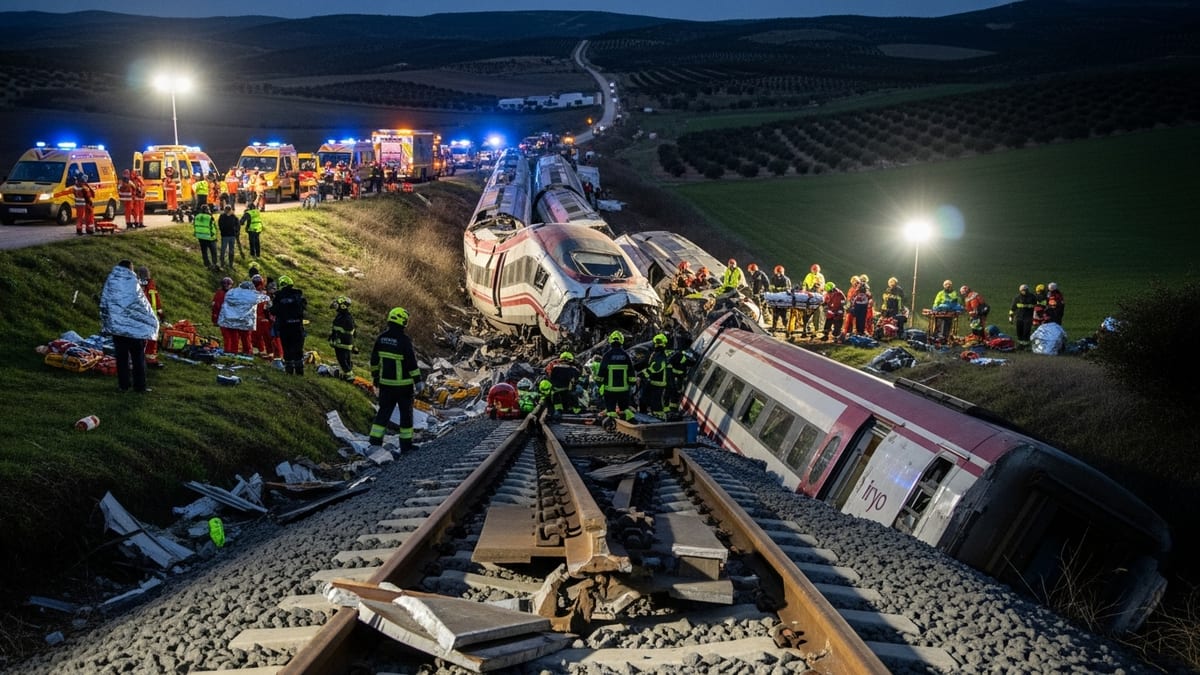
Collision Near Bessemer Leaves Pickup Occupants Dead
Initial reports from regional news outlets and rail incident summaries indicate that a pickup truck carrying two people entered a rail crossing near Bessemer and was hit by a passing passenger train. Both occupants of the truck were killed in the crash, while no life-threatening injuries were reported among passengers or crew on the train.
Publicly available information describes the incident as a high-impact side collision, with the train striking the truck on the roadway crossing. The force of the crash heavily damaged the vehicle and forced the train to stop on the line while emergency responders secured the scene and evaluated passengers for injuries.
Rail operations on the affected line were temporarily suspended while investigators documented damage to the locomotive and checked track conditions. Subsequent updates in local coverage indicate that passenger service later resumed after inspections and clearance from rail safety personnel.
Rail Crossing Risks in a High-Traffic Corridor
The Bessemer area sits amid a dense rail network that serves both passenger and freight operations, with multiple grade crossings intersecting local and regional roads. Published reports on recent incidents in and around Bessemer and elsewhere in the United States highlight how quickly a routine crossing can become dangerous when a vehicle and train occupy the same space.
Analyses from federal rail safety documents and previous crash investigations show that collisions between trains and road vehicles often occur at or near public crossings, where drivers may misjudge train speed, attempt to cross after warning signals activate, or be distracted as they approach the tracks. Even at moderate speeds, a passenger train can require considerable distance to stop, leaving locomotive engineers with little opportunity to avoid a vehicle on the rails.
Available federal data on collisions between pickup trucks and trains, including past fatal crashes where all occupants of a truck were killed, underscore the vulnerability of smaller vehicles in these situations. The mass and momentum of a passenger train far exceed those of a road vehicle, meaning the outcome of a direct impact is rarely survivable for those in the smaller vehicle.
Ongoing Investigation and Safety Review
According to publicly accessible transportation safety records, fatal train-vehicle crashes of this type typically trigger a multi-layered investigation. Local crash reconstruction teams document vehicle position, sight lines, and the status of warning devices, while federal rail safety agencies review train event recorder data, signal logic, and compliance with operating rules.
Inquiries often focus on whether crossing arms, lights, and bells were functioning properly, whether the train’s horn and brakes were used as required, and whether the driver of the road vehicle had adequate visibility and time to react. Investigators also examine environmental conditions, such as weather, lighting, and track curvature near the crossing.
Past federal reports into collisions involving pickup trucks and trains show that findings can lead to recommendations such as improved signage, upgrades to active warning systems, or changes in roadway design near tracks. In some cases, results support programs to close redundant crossings or separate road and rail traffic through bridges or underpasses to reduce the risk of similar tragedies.
Impact on Rail Travelers and Local Communities
Passenger train collisions with road vehicles, even when most people on board escape serious injury, can be deeply unsettling for travelers. News coverage of previous events shows that passengers may experience sudden stops, power interruptions, and long delays while emergency crews respond and inspectors assess rail equipment. Some travelers report lingering anxiety about future train journeys after being involved in such incidents.
For communities near Bessemer and along other busy rail corridors, fatal crashes at crossings often prompt renewed debate about how to balance convenient road access with the need for stronger protections. Residents and local leaders may press for added crossing gates, clearer markings, or rerouted traffic patterns in places where rail lines run close to homes, schools, or commercial areas.
At the same time, rail operators and safety agencies regularly promote public awareness campaigns emphasizing that trains have the right of way at crossings and cannot stop quickly. Education efforts encourage drivers to approach tracks cautiously, obey warning devices, and avoid trying to “beat the train,” a behavior that has been cited in numerous past fatal collisions involving pickup trucks and other vehicles.
Renewed Focus on Driver Awareness and Infrastructure
While the full picture of the latest Bessemer-area crash remains under review, the deaths of the two people in the pickup truck add to a national pattern of deadly encounters between vehicles and trains. Safety advocates often point out that a single moment of inattention or miscalculation at a crossing can have irreversible consequences.
Transportation safety analyses frequently recommend a combination of infrastructure investment and driver education to reduce these incidents. On the infrastructure side, possible measures include upgrading passive crossings with active gates and lights, enhancing visibility through vegetation clearing and better lighting, and prioritizing grade-separation projects on routes with heavy train and vehicle traffic.
On the behavioral side, public campaigns stress simple but critical steps for drivers: slowing down as they approach tracks, never stopping on the rails, and treating each crossing as active even if a train is not immediately visible. Incidents like the one involving the pickup truck near Bessemer reinforce that when trains and vehicles meet at speed, the outcome is almost always most severe for those on the road.