


More news on this day
Bensalem Township is providing updated information after a freight train derailed near the Neshaminy Falls area of Bucks County, Pennsylvania, with widely shared video showing multiple freight cars off the tracks and emergency crews responding to an incident that briefly prompted shelter-in-place and evacuation advisories.
Get the latest news straight to your inbox!
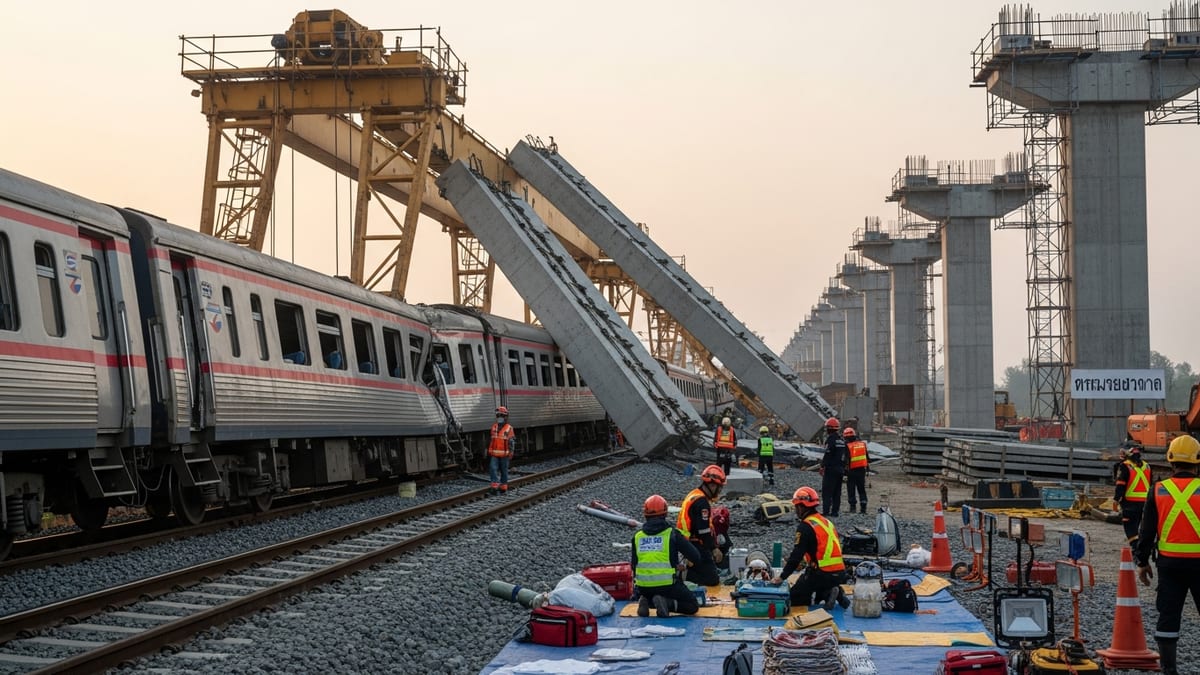
Derailment near Neshaminy Falls captured in dramatic video
Publicly available coverage indicates that the freight train left the tracks on Tuesday afternoon, June 30, 2026, between Street Road and the Neshaminy Falls train station in Bensalem Township. Initial reports described between 10 and 16 cars derailing, with images and aerial video showing several cars jackknifed and scattered along the right-of-way.
Regional television footage and online clips show a long string of freight cars piled at angles, some partially overturned, while others remain upright but off the rails. The derailment occurred on a freight corridor that runs close to residential neighborhoods and commercial properties, drawing immediate attention from local travelers and commuters.
Additional video from local news helicopters highlights the proximity of the derailed cars to nearby streets and the Neshaminy Creek corridor, context that helped explain the rapid and highly visible emergency response. Early social media posts from residents described hearing a loud grinding noise, followed by the sight of dust and debris rising from the tracks.
Reports compiled from regional outlets also note that the incident did not involve passenger trains, although nearby regional rail operations experienced indirect disruption while crews assessed the scene and established a safety perimeter.
Shelter-in-place and evacuations lifted as hazmat checks clear
According to published accounts from local news organizations, Bensalem Township initially issued a shelter-in-place directive and ordered targeted evacuations for homes and businesses closest to the derailment. These steps were taken because several derailed cars were reported to be carrying materials that warranted a hazardous materials assessment.
Subsequent briefings reported in regional coverage state that hazmat teams conducted air monitoring and visual inspections around the affected rail cars. By early evening on June 30, public updates cited by multiple outlets indicated that no hazardous material leaks had been detected.
With those findings, evacuation and shelter-in-place advisories in the immediate area were lifted, and residents were allowed to return. However, authorities continued to ask the public to avoid the derailment zone itself to allow rail operators, contractors, and investigators to work safely near the damaged cars and track.
For travelers in and around Bensalem, the all-clear on hazardous materials reduced concern about longer-term impacts on air quality or public health. Nonetheless, the visibility of hazmat crews in protective gear, captured clearly in network news video and shared widely online, reinforced how seriously potential risks were treated in the first hours after the crash.
Impact on regional travel and rail operations
Public transportation updates referenced in local reporting show that the affected freight line runs adjacent to, but is distinct from, the nearby West Trenton commuter rail corridor. Even though the derailment occurred on freight tracks, regional service experienced delays and temporary suspensions as rail dispatchers and transportation agencies coordinated around the emergency response.
Travel advisories reported by area broadcasters urged drivers to avoid key connectors such as East Bristol Road and Grove Avenue, where emergency vehicles, tow trucks, and railway cranes converged. Traffic detours added time to local journeys, and some visitors arriving in Bucks County by car reported longer-than-usual congestion near Bensalem’s commercial zones.
For travelers using rail to reach or transit through the Philadelphia region, the incident served as a reminder of how freight disruptions can spill over into passenger schedules. Transportation-focused coverage notes that crews needed to stage heavy equipment along the corridor to re-rail or remove damaged cars, an operation that often extends into the night and can constrain nearby rail movements even after immediate safety concerns ease.
While long-haul passenger routes were not directly involved in the derailment, trip-planning guidance from regional outlets recommended that visitors check service alerts and allow extra time when connecting through nearby stations in the aftermath of the incident.
What investigators are focusing on next
Published reports indicate that federal and railroad investigators are expected to review track conditions, train speed, recent maintenance records, and weather at the time of the derailment. Some early commentary circulating in rail-focused forums and local discussions has pointed to the possibility of heat-related track stress, reflecting broader national concerns about how extreme temperatures can affect rail infrastructure.
As of the latest public updates, no official cause has been assigned. Coverage of similar incidents elsewhere in the United States suggests that investigators will examine whether track geometry, equipment failures, or issues with the train’s consist played a role, a process that can take weeks or months before formal findings are released.
Rail safety statistics frequently cited in industry and government summaries show that overall derailment rates have trended downward over the past decade, even as recent high-profile events have sharpened scrutiny on hazardous materials transport through populated areas. The Bensalem derailment, with its prominent video evidence and proximity to residential streets, is likely to feature in those ongoing policy discussions.
For now, the priority described in regional coverage remains clearing the damaged cars, inspecting the right-of-way, and restoring full freight traffic along the corridor while monitoring for any delayed effects on surrounding neighborhoods.
Traveler takeaways after the Bensalem derailment
For travelers moving through Bucks County and the wider Philadelphia region, the Bensalem derailment underscores the value of checking real-time advisories for both road and rail routes. Local news outlets and transit agencies were central in relaying when shelter-in-place orders were issued and later lifted, as well as when rail service and nearby roads began to reopen.
Those planning rail journeys that rely on connections near Bensalem may wish to monitor schedule adjustments in the days following the incident, particularly as crews complete track repairs and equipment recovery. Freight-focused disruptions can cascade into minor timing changes on passenger services, even when those services use separate rights-of-way.
For road travelers, mapping apps and traffic alerts provide an additional layer of situational awareness when major incidents occur near key junctions such as Street Road or I-95 access points. As video from the Bensalem derailment illustrates, emergency responses can quickly narrow local routes, and giving crews space to operate helps accelerate the return to normal travel patterns.
While no injuries or hazardous leaks have been reported in connection with this derailment, its highly visible images and footage are likely to influence how visitors and residents alike think about freight activity moving through Bucks County’s growing suburban landscape.