


More news on this day
Australian travellers heading to Europe are being urged to brace for hours-long airport queues, as the European Union’s new biometric Entry Exit System triggers widespread disruption across major hubs in France, Italy, Spain, Germany and Portugal.
Get the latest news straight to your inbox!
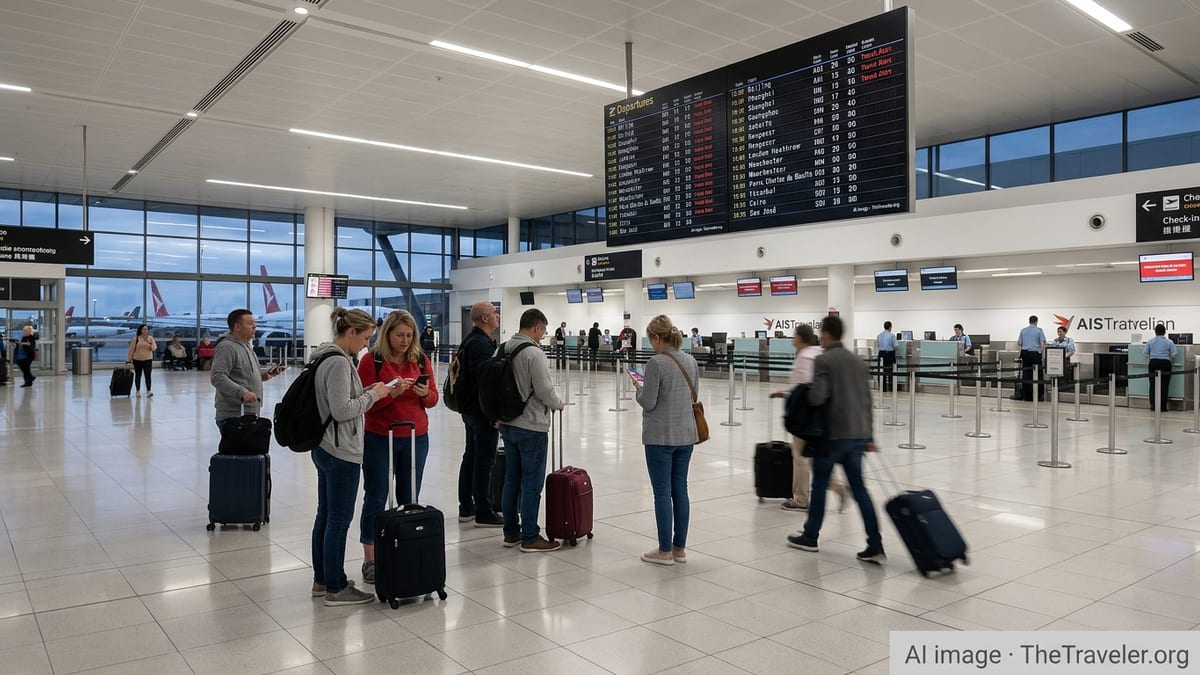
New EU Border System Drives Hours-Long Queues
The European Union’s Entry Exit System, a long-planned digital border regime, is now fully operational across the Schengen Area and is reshaping the arrival experience for non-EU visitors. The system records fingerprints, facial images and passport details for third-country nationals at external borders, replacing the old practice of manual passport stamping.
Reports from aviation and travel industry sources indicate that the rollout, which began in October 2025 and was significantly intensified in April 2026, has led to severe congestion at passport control in some of Europe’s busiest gateways. Air travel intelligence and passenger-rights organisations describe scenes of snaking queues and processing times stretching into several hours, particularly at peak arrival periods.
Data compiled by industry groups suggests that the heaviest disruption is occurring at large Schengen entry points where high volumes of long-haul arrivals converge with short-haul traffic. With EES checks now required for travellers from visa-exempt countries such as Australia, the United States, Canada and the United Kingdom, pressure on front-line border facilities has grown faster than many airports’ ability to adapt.
In addition to pressure at border control, airlines and airport operators are warning that knock-on effects are being felt across baggage reclaim, security transfer channels and flight connections. Missed onward flights and extended time on the ground are emerging as recurring issues, particularly for passengers transiting through a single European hub to onward destinations.
Australia Issues Targeted Warnings for Europe-Bound Travellers
Australia’s official travel advisory service has updated its guidance to highlight the impact of EES, noting that delays of four to six hours have been reported at some European airports. The advisory, which was refreshed in late May 2026, specifically links the long waits to the digital border checks now required on first entry to the Schengen Area.
The Australian guidance urges travellers to build in substantial extra time at the start of their European journeys. Passengers are advised to arrive at departure airports earlier than usual and to avoid tight connections on arrival in Europe, particularly where a change of terminal or security screening is required before boarding a second flight.
Publicly available information from Australian and European travel bodies stresses that the first crossing into the Schengen zone is likely to be the slowest, as biometric data must be captured in full. Subsequent trips should, in principle, be faster, but reports indicate that some passengers are still being asked to repeat the full process, raising concerns about inconsistent implementation and data-handling problems.
Travel planners in Australia are responding by recommending longer minimum connection times and, where possible, direct flights into final destinations rather than itineraries requiring multiple Schengen entries and exits. Some are advising travellers with mobility or health issues that make prolonged standing difficult to notify airlines and airports in advance to arrange assistance.
France, Italy, Spain, Germany and Portugal Emerge as Hotspots
Among the 29 countries now using EES, congestion has been most heavily reported at airports in France, Italy, Spain, Germany and Portugal. These nations are not only major tourism destinations for Australians but also key transit points for long-haul flights arriving from the Asia-Pacific region.
Travel disruption trackers and passenger accounts point to particularly severe delays at high-traffic hubs such as Paris Charles de Gaulle, Frankfurt, Munich, Madrid Barajas, Barcelona, Rome Fiumicino, Milan’s airports and Lisbon. In Portugal, reports from late May described queues of several hours at Lisbon Airport after the system was fully activated for arriving non-EU passengers.
In Italy and Spain, local media and international travel outlets have highlighted cases of travellers missing flights after waiting in immigration lines that far exceeded the capacity of existing facilities. Similar scenes have been documented in France and Germany, where border-control areas originally designed for manual passport checks are struggling to handle the extra time needed for biometric registration.
Airport and airline industry associations in Europe have publicly called for adjustments to how EES is being operated, warning that without changes the combination of summer holiday peaks and ongoing technical bedding-in could result in systemic disruption. While some airports have introduced additional staffing, temporary queuing areas and communication campaigns, passenger experiences remain highly variable from one terminal and time of day to another.
What Australia-Bound and Returning Travellers Should Do
For Australians planning trips to Europe, experts recommend treating EES as a new, mandatory layer in the travel process that can significantly extend journey times. Passengers are being encouraged to check airline communications carefully in the weeks before departure, as some carriers are already advising travellers to arrive at airports earlier than standard recommendations.
Practical steps suggested by travel organisations include scheduling longer layovers when connecting through European hubs, especially when flying on separate tickets, and avoiding the final late-evening flights of the day where a missed connection could mean an unplanned overnight stay. Travellers are also advised to keep essential items and medications in their carry-on luggage in case they are delayed in queues longer than anticipated.
Australian travellers returning home via Europe should be aware that EES checks also apply on exit from the Schengen Area. While outward queues have generally been shorter than arrival queues, congestion can build quickly at peak times, particularly at popular holiday airports at the end of school holiday periods.
Passengers concerned about their rights in the event of missed flights or significant delays are being directed to consult publicly available information from consumer and passenger-rights bodies. These resources explain how existing European regulations on flight disruptions interact with the additional strain being created by EES and offer guidance on compensation, rebooking and care obligations when journeys are severely affected.
Summer Peak Set to Test Europe’s Border Overhaul
The timing of the full-scale activation of the Entry Exit System means that Europe’s airports are facing their busiest months of the year just as border-control procedures are undergoing a major transformation. Aviation traffic across the continent has largely recovered to, and in some cases surpassed, pre-pandemic levels, leaving little margin for operational experimentation.
Analysts note that while EES is intended to strengthen border management and better track overstays, the short-term impact is being felt most acutely by ordinary holidaymakers and business travellers. With passenger volumes forecast to rise further through July and August, there is growing concern that delays could become more entrenched unless processes are streamlined and technical issues resolved quickly.
For now, the clear message to Australians and other long-haul travellers heading to Europe is to plan for queues, allow extra time at every stage of the journey and stay informed about evolving conditions at their chosen entry airports. As the new system beds in, experiences are likely to vary widely, but preparation and flexibility are emerging as essential tools for navigating Europe’s digitised borders in the 2026 travel season.