


More news on this day
Travelers across the United States faced fresh disruption as New York’s LaGuardia Airport recorded 163 delays and 10 cancelled flights, snarling operations for carriers including Endeavor Air, Republic Airways, American Airlines and Southwest on key routes to Toronto, Miami, Orlando, Chicago and beyond.
Get the latest news straight to your inbox!
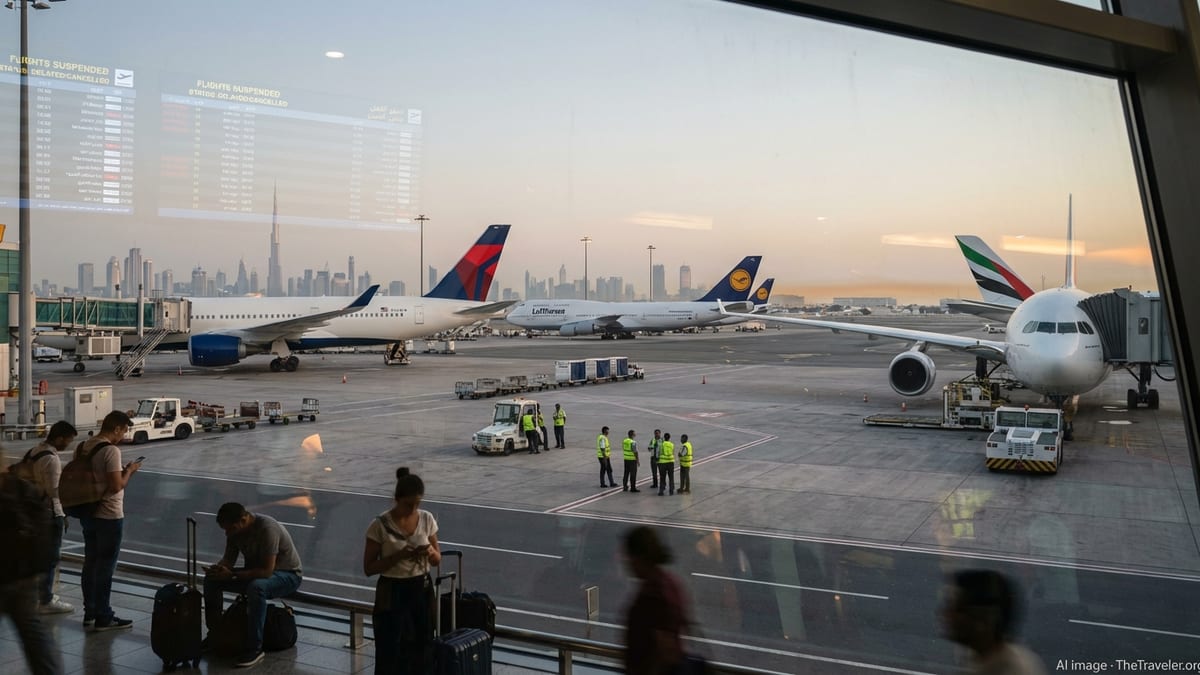
Latest Disruptions at a Strained New York Hub
The latest operational data from LaGuardia underscores how fragile the airport’s recovery remains after a difficult spring. Publicly available flight-tracking information indicates that, within a single operating day, 163 departures and arrivals were delayed and 10 flights were cancelled, concentrating pressure on regional and domestic networks that funnel through the Queens hub.
The disruptions hit a cross-section of U.S. carriers. Regional operators such as Endeavor Air and Republic, which run many of the branded feeder flights for major airlines, saw multiple departures pushed back. Mainline carriers including American and Southwest also experienced schedule knock-on effects, particularly on business-heavy corridors to major East Coast and Midwestern cities.
Although LaGuardia is no stranger to congestion, the scale of the latest delays added to a season of already heightened disruption in the New York region. Recent weeks have seen the airport coping with the aftermath of a deadly runway collision, ongoing construction work and repeated periods of adverse weather, all of which have eroded the limited buffer in its tightly packed schedule.
Travel-industry coverage notes that nationwide disruption remains elevated this spring, with New York–area airports frequently ranking among the most affected. LaGuardia’s latest figures align with that broader pattern, highlighting how even modest operational strains can cascade into significant travel problems for passengers.
Carriers and Routes Most Affected
The day’s 163 delays and 10 cancellations were not confined to one airline or route. Endeavor Air and Republic, which operate extensive networks of regional jets into LaGuardia, appeared prominently in delay tallies, reflecting their role in linking smaller U.S. and Canadian cities into New York’s aviation system.
American Airlines and its regional partners saw interruptions on staple domestic routes, including links to Chicago and various Florida destinations. Southwest, which connects LaGuardia with cities such as Chicago and key leisure markets, also posted delayed departures and arrivals, contributing to crowded gate areas and rolling rebooking efforts across its network.
Transborder travel into Canada was affected as delays built on flights to and from Toronto. These routes often rely on precise timing to maintain onward connections, meaning even short holds at LaGuardia can trigger missed links further along a passenger’s journey.
Sun and leisure routes were not spared. Flights to Miami and Orlando, already popular at this time of year, faced schedule slippage that stranded holidaymakers and families in terminals on both ends. Reports from airline operations dashboards and consumer flight-tracking apps show that some of these delays stretched into multiple hours, compressing turnaround times and complicating aircraft and crew rotations.
Weather, Capacity Limits and a Recent Safety Crisis
Several overlapping factors are feeding the current bout of travel chaos. Recent online commentary from pilots and passengers points to recurring thunderstorm activity around the New York region, which prompts the Federal Aviation Administration to implement traffic management initiatives that slow arrivals into LaGuardia. When these restrictions are active, flights may be held at origin airports or placed into extended ground-delay programs.
At the same time, LaGuardia is still grappling with the operational fallout from a fatal collision between an Air Canada regional jet and an emergency vehicle on March 22. Aviation news outlets report that at least one runway has faced intermittent closures or restrictions during the ongoing investigation, cutting into the airport’s capacity and increasing average delay times for arrivals.
Broader staffing pressures within the air traffic system and at airport security checkpoints have also come under scrutiny. Coverage of New York–area operations this spring has highlighted how controller staffing levels and federal budget uncertainties can constrain the ability to handle traffic during busy periods, especially when bad weather or incidents remove any margin for error.
National aviation data released in recent months shows how quickly such constraints can translate into delays and cancellations once schedules are disrupted. When a high-frequency airport such as LaGuardia loses a runway, faces storm cells in its approach paths or must slow operations for safety reviews, the knock-on effect can ripple for hours across airline networks.
Knock-On Effects for Passengers Nationwide
Because LaGuardia functions as both an origin point and a critical connection hub, travel chaos in Queens rarely stays local. Passengers in cities as far away as Orlando, Miami, Chicago and Toronto reported missed onward flights and unexpected overnight stays as aircraft and crews failed to make their planned rotations.
Travel-analysis sites note that regional carriers such as Endeavor and Republic are particularly exposed when hubs back up, since a single delayed aircraft may be scheduled to operate multiple short segments in one day. Once delayed out of LaGuardia, that aircraft’s subsequent flights can depart late from other airports, spreading disruption long after conditions in New York begin to improve.
The broader U.S. airline system has also been under seasonal strain from strong leisure demand and residual weather-related backlogs after major storms earlier in the spring. Industry trackers report that the New York region, including LaGuardia, has consistently ranked among the country’s top airports for daily delays, reinforcing its reputation as one of the most challenging hubs for on-time performance.
For travelers, the practical impact is a heightened risk of last-minute schedule shifts. Data from popular flight-tracking platforms shows that departure times for LaGuardia services are often revised multiple times in the hours leading up to boarding, making it difficult for passengers to plan ground transportation and onward connections with confidence.
What Travelers Can Do as Disruptions Persist
With LaGuardia still operating under capacity and weather-related disruptions likely to persist into the summer, travel experts are advising passengers to build more flexibility into itineraries touching New York. Published guidance from airline and airport-focused outlets emphasizes the value of early-morning departures, which are less vulnerable to the compounding delays that typically build throughout the day.
Frequent flyers are also turning to real-time tracking tools to gain earlier insight into potential problems. Several consumer apps now draw on air traffic control data and machine learning to flag likely delays before airlines formally adjust schedules, giving travelers more time to consider rebooking options or alternative routing through other New York–area airports.
Airlines serving LaGuardia have periodically issued travel waivers during the most severe disruption days, allowing passengers to change flights without standard penalties. Recent coverage of these waivers indicates that they are often time-limited and subject to specific origin and destination rules, making it important for travelers to review conditions closely.
For now, the combination of 163 delays and 10 cancellations in a single day at LaGuardia serves as another reminder that U.S. air travel remains vulnerable to cascading disruption. As the busy summer season approaches, the airport’s ability to manage weather, capacity and safety constraints will be a key factor in how smoothly passengers move through one of the country’s most important aviation gateways.