


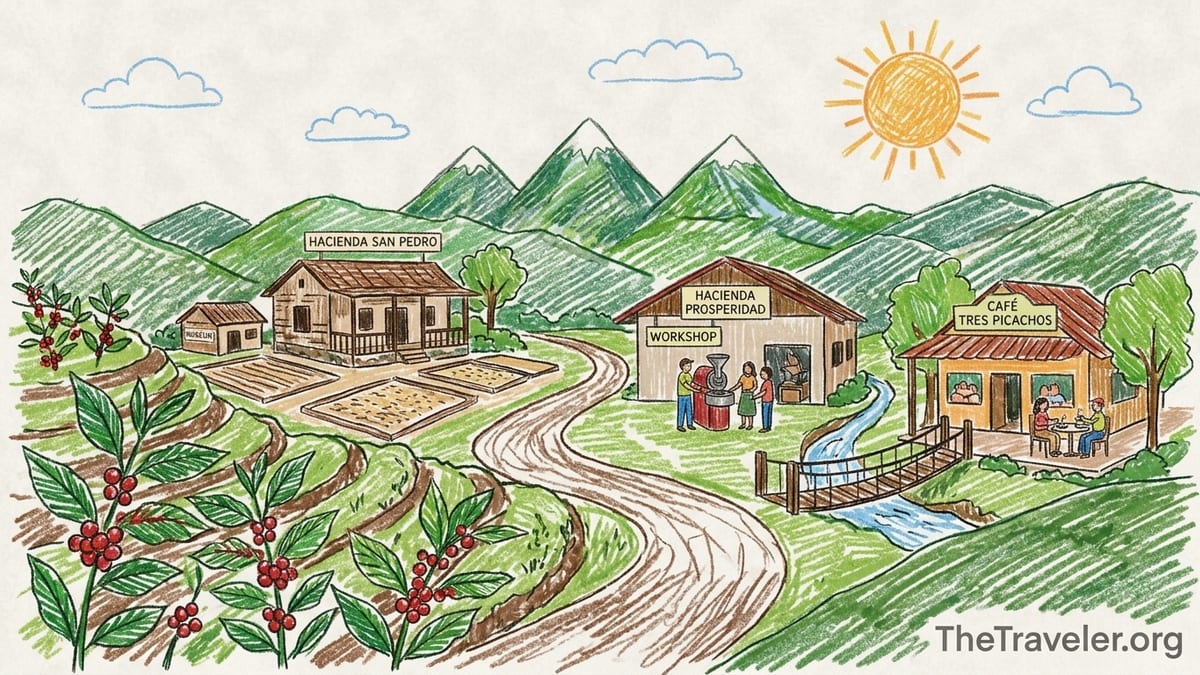
Jayuya sits high in Puerto Rico’s central mountains, where cool air, cloud forest slopes and volcanic soils have supported coffee for more than a century. For travelers, this small municipality has become one of the island’s most rewarding places to book year-round coffee experiences, from walking among trees heavy with red cherries to roasting your own sample or lingering over brunch beside a roasting room. Three farms in particular structure the local scene: Hacienda San Pedro, Hacienda Prosperidad and Hacienda Café Tres Picachos.
Get the latest updates straight to your inbox!
Why Jayuya Is Puerto Rico’s Mountain Coffee Hub
Jayuya’s identity is inseparable from coffee. The municipality is nicknamed “El Pueblo de los Tres Picachos,” a reference to the nearby Tres Picachos peaks, and coffee remains one of its principal crops along with root vegetables. Coffee brands such as Hacienda San Pedro, Café Hacienda Tres Picachos and others cultivate, roast and package their beans in these hills, giving visitors a chance to taste coffee close to where it is grown and processed.
Unlike coastal day trips that depend heavily on weather or season, Jayuya’s coffee haciendas operate as working farms, roasteries and cafés that welcome visitors most of the year. That makes coffee tours one of the municipality’s strongest year-round activities for travelers who are already planning to drive into the central mountains. Even outside of harvest months, there is almost always something to see or taste related to cultivation, processing or roasting.
For trip planning, it helps to understand that each of the three main haciendas emphasizes a different slice of the coffee story. Hacienda San Pedro leans into heritage, agricultural landscape and its small museum. Hacienda Prosperidad offers a certified agrotourism workshop that walks guests from seed to cup with hands-on roasting and brewing. Hacienda Café Tres Picachos focuses more on the social side of coffee with a rustic café, family spaces and access to its roasting operation.
Because these experiences are not interchangeable, many travelers end up combining at least two sites in a single weekend. A couple might schedule the structured “From Seed to Cup” workshop at Prosperidad and then unwind the next day with a relaxed café visit and museum stop at San Pedro. Families, meanwhile, often favor Tres Picachos for breakfast and open-air play, then add a shorter tour elsewhere so older kids and adults can see the agricultural side.
Hacienda San Pedro: Heritage, Museum and Plantation Landscape
Hacienda San Pedro is one of Puerto Rico’s best known specialty coffee brands, and its Jayuya farm is where visitors can see the agricultural roots behind the bags sold in supermarkets and urban cafés. The hacienda occupies a hillside in the rural barrio of Coabey, with coffee trees, a small artificial lake and rustic buildings that hold the roasting and museum spaces. It is a fourth-generation family project, and the narrative of that family history is central to the visit.
Guided coffee farm tours generally run on Saturdays and Sundays, with outings around midday and early afternoon. Recent local tourism information indicates that visits are usually scheduled for about 12:00 pm and 2:00 pm, with advance reservation required by phone. The visit fee is reported at approximately 10 dollars per person, which makes San Pedro one of the more affordable structured experiences in Jayuya. It is realistic to confirm exact times and prices a few days before your trip, since rural operations sometimes adjust hours due to weather or maintenance.
During the tour, guests walk through parts of the plantation, see basic processing areas and hear an overview of cultivation, harvest and the hacienda’s history. Outside the harvest season, the fields still offer a sense of the scale of coffee agriculture, with pruning, shade management and flowering stages often visible. The small museum is a highlight: upstairs, visitors find antique mills, hand-cranked depulpers and old roasting equipment that show how coffee was processed in the early and mid 20th century. For travelers who like context, this museum component sets San Pedro apart from cafés that only showcase finished bags of beans.
San Pedro’s on-site coffee shop completes the experience. Visitors can order espresso drinks, the house cortado, and light café fare such as sandwiches and pastries before or after their tour. It is common for couples to buy at least one bag of whole beans or ground coffee to take home, adding roughly 12 to 18 dollars to their spending depending on size and roast. The terrain around the hacienda includes slopes and uneven paths, so comfortable shoes are important. Those with limited mobility can still enjoy the café and museum, but may need to skip steeper sections of the plantation walk.
Hacienda Prosperidad: From Seed to Cup in a Hands-on Workshop
Hacienda Prosperidad has positioned itself as Jayuya’s most structured and interactive coffee experience. The farm sits at more than 2,000 feet of elevation and has been in the same family for several generations. In recent years they formalized a seed-to-cup tour and workshop that has earned an official agrotourism endorsement from Puerto Rico’s tourism authorities, underscoring its educational focus and consistency.
The flagship activity is typically marketed as a “Coffee Tour and Workshop: From Seed to Cup” or similar name. The published schedule shows tours offered several days per week, often on Tuesdays, Thursdays and Saturdays at 10:00 am, with extra afternoon dates added when demand is high. Reservations are required and are handled via an online booking calendar where guests can see which days are sold out and choose time slots. Promotional material from 2026 describes some dates as fully booked days in advance, which is a good indication that travelers should secure spots at least a week ahead for peak weekends.
Pricing for the seed-to-cup experience is tiered. Official sales pages list adult rates starting around 22 dollars per person, with child or local discounts sometimes available. The cost includes a guided walk through the coffee fields, explanations of pruning and shade, a stop at the washing and drying areas when these are in use, a hands-on roasting activity where each participant toasts a small batch sample, and a guided brewing and tasting session. The roasting and brewing components are what distinguish Prosperidad from more casual farm tours, since visitors leave with both sensory knowledge and a personalized roasted sample.
Group sizes are intentionally kept relatively small, often in the range of 8 to 15 participants per session, to allow each guest to participate in roasting and ask questions. Guides are comfortable in Spanish and English, which makes this a good fit for international visitors who want technical explanations. Terrain during the walk is moderately sloped with some unpaved paths, so closed-toe shoes and basic fitness are recommended. Travelers with limited mobility can sometimes join for the processing, roasting and tasting portions even if they skip the field walk, but that is something to confirm directly with the hacienda.
Café Tres Picachos: Rural Café, Roastery and Family Ambience
Hacienda Café Tres Picachos occupies a scenic site along a rural highway near the base of the Tres Picachos massif. It is both a coffee farm and a torrefacción, meaning that coffee is roasted on site, and the café serves as a gathering spot for locals and visitors. The business has been described in regional guides as a family coffee farm cultivated over roughly 40 years, now run by Doña Marta and her family, who emphasize a serene, rural and family-friendly atmosphere.
Recent social media updates and business listings for Café Tres Picachos highlight its role as a countryside café and roastery with breakfast, hot and cold coffee drinks, prepared meals and photogenic corners such as a small hanging bridge and outdoor seating areas overlooking the greenery. Visitors often come here after hiking, visiting nearby viewpoints or driving in from Ponce and Utuado for a weekend meal. The atmosphere is informal, with children playing, couples lingering over frappés and drivers using the stop as a break in a winding day trip.
The key planning question is whether Café Tres Picachos currently offers formal plantation tours in addition to its café and roasting operation. Regional agrotourism guides and farm directories list the hacienda among coffee farms that receive visitors, and some mention tours of coffee plantations in Jayuya that include Tres Picachos. However, neither recent café posts nor public booking pages clearly advertise a structured, scheduled tour with set times and prices comparable to Hacienda Prosperidad or San Pedro. Information available in late 2026 suggests that while the farm is active and the roastery is open to visitors, any farm walk or explanation of the process is more informal, often depending on staff availability and guest interest.
For travelers, that means it is best to treat Tres Picachos primarily as a rural café and roastery stop unless they directly confirm that full tours are being offered again. A typical visit might involve breakfast plates, a cappuccino made with the house beans, a stroll across the hanging bridge, photos around the property and the purchase of one or two bags of coffee roasted on site. If staff are not busy, some guests may get a quick explanation of the roasting equipment or a peek at nearby coffee trees, but this is not guaranteed in the same way that a pre-booked workshop is. Calling ahead a few days before arrival is the safest way to ask whether any structured visits to the plantation or processing areas are scheduled during your dates.
How the Coffee Process Works and What You Can See Year-Round
Across all three haciendas, the agricultural foundation is similar. Coffee in Jayuya is grown as a perennial crop with trees that flower after the rainy season and bear cherries that gradually ripen from green to red. Harvest in Puerto Rico’s central mountains generally runs from late summer through winter, with peak picking from around November through February depending on altitude and rainfall. During this season, visitors who book tours are more likely to see workers picking cherries and receive demonstrations of fresh depulping and fermentation.
Once harvested, cherries are usually processed using a washed method. That means the outer skin and some pulp are removed mechanically at the beneficio, the seeds are fermented briefly in tanks or channels to loosen remaining mucilage, and then they are washed with clean water. After washing, beans are dried either on patios in the sun or in mechanical dryers, reaching a stable moisture level that allows for storage. On many farms the drying stage can take about two weeks under sun, though timing shifts with weather. Even outside of peak harvest, visitors often see drying patios, raised beds or storage facilities, along with explanations of how moisture is measured and controlled.
Roasting is the final transformation before brewing. In Jayuya, each of the three haciendas roasts its own beans on site. Visitors may see mid-sized drum roasters in operation, hear explanations about how temperature and time affect light, medium and dark roasts, and smell fresh batches coming off the machine. Outside harvest season, roasters are still busy because farm-dried parchment is milled and roasted continuously to supply cafés and retail partners. This makes roasting demonstrations and tastings the most reliably visible stages year-round, even when no cherries are on the trees.
Realistically, travelers who visit in late spring or early summer will not see active picking or wet processing. However, they can still walk through fields, observe flowering or early fruit, and learn how pruning and shade are managed. San Pedro tends to highlight heritage processing in its museum, Prosperidad focuses on hands-on roasting and brewing activities regardless of season, and Tres Picachos offers a sensory experience of rural life through its café, food and roasted products. Watching a barista at Tres Picachos or San Pedro pull an espresso shot with beans roasted that same week is just as much part of the farm-to-cup journey as watching cherries move through a depulper at Prosperidad during harvest.
For serious enthusiasts, the most complete look at the process often comes from combining sites. One itinerary could include a Saturday seed-to-cup workshop at Prosperidad in October, when cherries and drying patios are active, followed by a Sunday morning visit to San Pedro for its mid-day tour and museum before lunch. A Monday breakfast at Tres Picachos then lets travelers see how a family café presents house-roasted coffee in a relaxed, local environment.
Comparing Reservations, Prices, Duration, Language and Accessibility
Reservations work differently across the three haciendas. Hacienda Prosperidad relies on an online calendar and payment system, where guests must pre-book specific dates and times for the seed-to-cup workshop. Spaces often sell out several days in advance for Saturdays and holiday periods, so planning is essential. Hacienda San Pedro, by contrast, currently handles bookings more informally by phone, with visitors calling during the week to reserve for weekend tours at set times like 12:00 pm and 2:00 pm. Café Tres Picachos generally accepts walk-ins for its café, with no evidence of online booking for tours; calling ahead is recommended only if you are hoping for a more in-depth visit beyond food and drinks.
Pricing reflects these differences in structure. At San Pedro, visitors can expect to pay around 10 dollars per person for the guided farm tour, with additional spending for drinks and food. Prosperidad’s hands-on workshop, including field walk, roasting and tasting, typically starts around 22 dollars per participant, reflecting the added time and materials. At Tres Picachos, there is no clear, currently advertised per-person tour fee; instead, costs come from café orders and any bags of coffee you purchase. That means a family could easily spend 30 to 50 dollars on breakfast and drinks at Tres Picachos without ever paying a stand-alone tour admission.
Duration also varies. San Pedro’s guided tours are usually around one hour, after which guests are free to explore the grounds and café at their own pace. Prosperidad’s seed-to-cup workshop tends to run closer to two to three hours, given the depth of explanation and the hands-on roasting and brewing segments. A typical visit to Tres Picachos might last one to two hours, depending on whether you simply stop for coffee and photos or also enjoy a full meal and unstructured time around the property.
Language and accessibility matter for many travelers. Prosperidad explicitly promotes bilingual Spanish and English service in its materials and social media, which is useful for international visitors interested in brewing theory and roast profiles. San Pedro also commonly receives both local and international travelers; while most staff are Spanish-speaking, guides can often accommodate basic explanations in English, though the depth of translation may vary by day. At Tres Picachos, interactions are largely in Spanish with a casual café style; English-speaking visitors usually manage by pointing at the menu, and staff often understand at least essential terms related to drinks.
Terrain, Demonstrations, Food and Take-home Products
The topography of Jayuya means that all three haciendas involve some degree of mountain driving. Roads from Ponce, Utuado or Arecibo climb with frequent curves, and last stretches into the farms themselves may be narrow but paved. Travelers who are not comfortable on mountain roads should allow extra time, avoid driving in the dark and consider pausing at town centers before heading into more rural sectors. Once on site, San Pedro and Prosperidad both require walking on slopes and uneven surfaces, while Tres Picachos has more level areas near the café and roastery but may still include short inclines and steps.
Demonstrations differ in depth. At Prosperidad, the entire visit is structured around demonstration: guests see where trees grow, how cherries are selected, and, when in season, how washing and drying work. Outside harvest, guides use infrastructure like tanks, patios and equipment to explain each step, and visitors roast their own sample on a small roaster before tasting it in a guided brewing session. San Pedro’s tour includes explanations of growing and basic processing, but much of the interpretive weight comes from the museum, where historic grinders, roasters and photographs tell the story of coffee in the region.
Food offerings are most robust at Tres Picachos, where breakfast platters, criollo-style lunches and sweet treats appear frequently in visitor photos and descriptions. Travelers can order eggs, local sausages, plantain dishes and desserts alongside espresso drinks, frappés and house-filtered coffee. San Pedro’s café tends to offer lighter fare such as sandwiches, pastries and possibly local snacks, complementing cappuccinos and pour-over brews. Prosperidad’s focus during the workshop is on coffee itself; any snacks or light bites are often secondary to the tasting segment, and travelers usually plan to eat a more substantial meal elsewhere before or after the visit.
Take-home products reflect each farm’s niche. Prosperidad sells its own roasted coffee in bags that might range around 25 to 29 dollars for 12 to 16 ounces, along with smaller sampler bundles and occasionally branded items. The roasted sample that guests create during the workshop is usually a small bonus rather than a full retail bag. San Pedro’s shop offers branded bags of coffee in various roasts and grinds at moderate prices compared with urban specialty cafés, making it a popular place to stock up. Tres Picachos’ café displays its own roasted beans for sale, with prices that are competitive with other rural roasteries; many visitors purchase one or two bags as souvenirs after enjoying their drinks.
Cost Comparison for Couples and Families
To get a realistic sense of budgeting, consider approximate totals for a weekend visit in late 2026, excluding lodging. A couple booking the seed-to-cup workshop at Hacienda Prosperidad might pay about 44 dollars in admission if each ticket is around 22 dollars. If they purchase one 12-ounce bag of roasted coffee for about 25 dollars and share a small snack or dessert for roughly 10 dollars, their on-site total approaches 79 dollars. Adding round-trip fuel from coastal areas like San Juan or Ponce, which can easily run 20 to 30 dollars depending on rental car efficiency and current gas prices, brings the experience near or slightly above 100 dollars.
The same couple visiting Hacienda San Pedro for a guided tour would likely spend around 20 dollars in admission for two people, given the 10 dollar per-person fee indicated by recent tourism sources. Two espresso drinks and a shared pastry might add another 15 to 20 dollars, and a bag of coffee for home could cost around 14 to 18 dollars. Including fuel, a San Pedro-focused outing could land in the 70 to 90 dollar range, slightly lower than a Prosperidad workshop but heavier on heritage and lighter on hands-on activities.
For families, costs grow but can remain manageable with planning. Imagine a family of four with two school-age children attending the Prosperidad workshop. If tickets are purchased at full adult rates of about 22 dollars each, admission would total roughly 88 dollars. If the family then buys one large bag of coffee at around 29 dollars and spends about 30 to 40 dollars on snacks or a light meal before or after the tour, the hacienda portion of the day might reach 130 to 150 dollars, plus 20 to 30 dollars in fuel. Families often offset this by pairing the workshop with a low-cost nature stop or viewpoint in the same region.
At San Pedro, the same family could expect around 40 dollars in tour admission, plus perhaps 30 to 40 dollars in drinks and café snacks and another 14 to 18 dollars for a bag of beans. Including fuel, that visit might fall around 100 to 120 dollars. A casual breakfast or lunch at Tres Picachos without a formal tour might cost a family of four approximately 40 to 60 dollars, depending on the mix of hot dishes and specialty drinks, plus fuel. Many families weave all three into a weekend: a structured Prosperidad workshop one morning, a shorter San Pedro tour and museum visit the next day, and one relaxed meal at Tres Picachos, spreading costs across two or three days rather than a single outing.
The Takeaway
For travelers planning a coffee-focused trip to Jayuya, the most important thing to understand is that Hacienda San Pedro, Hacienda Prosperidad and Hacienda Café Tres Picachos offer distinct, complementary experiences rather than substitutable versions of the same tour. San Pedro centers on agricultural history, a sense of place and its small but carefully curated museum, ideal for visitors who want to anchor their understanding of Puerto Rican coffee in a multi-generational family story. Prosperidad delivers the most structured, hands-on education, with a certified seed-to-cup workshop that appeals to those who care about roast profiles, brewing variables and agronomy in detail.
Tres Picachos rounds out the picture by providing a welcoming rural café and roastery where families and casual coffee drinkers can soak in the atmosphere, enjoy hearty meals and leave with a tangible taste of the mountains in the form of house-roasted beans. Its current public presentation emphasizes hospitality and roasted coffee more than formal field tours, so travelers seeking a guaranteed plantation walk and processing demonstration should still book with San Pedro or Prosperidad. Together, the three haciendas showcase cultivation, processing, roasting and the social ritual of drinking coffee in ways that no single stop can fully replicate.
For serious coffee enthusiasts, Hacienda Prosperidad is the first booking to secure thanks to its interactive roasting and brewing focus, followed closely by Hacienda San Pedro for heritage context and its museum. Families are often happiest when they mix a Prosperidad or San Pedro tour with a relaxed breakfast and playtime at Café Tres Picachos, where kids can wander safe outdoor spaces while adults linger over cappuccinos. Casual coffee drinkers who mainly want scenic views, good food and a sense of rural life may prioritize Tres Picachos and San Pedro’s café, adding a formal tour only if time and budget allow.
Travelers in search of locally operated experiences with meaningful agricultural context will find that all three haciendas are tied closely to Jayuya’s community and landscape. The key is to align each visit with your interests and stamina for mountain driving. Book Prosperidad early if education and hands-on roasting are priorities, call San Pedro during the week to reserve a weekend tour and museum visit, and treat Tres Picachos as the unhurried café stop that gives flavor and warmth to any central mountain itinerary. With thoughtful planning, Jayuya’s coffee farms can fill an entire weekend with some of Puerto Rico’s richest, most grounded travel memories.
FAQ
Q1. Do I need reservations for coffee tours in Jayuya?
Most structured tours require reservations. Hacienda Prosperidad uses an online booking calendar and often sells out popular dates, while Hacienda San Pedro typically requests that visitors call ahead during the week to reserve weekend tour slots. Café Tres Picachos operates primarily as a walk-in café and roastery, so reservations are less common unless you arrange a special visit directly.
Q2. What are current prices for coffee farm experiences in Jayuya?
As of late 2026, Hacienda San Pedro’s guided tour is commonly reported around 10 dollars per person. Hacienda Prosperidad’s seed-to-cup workshop usually starts near 22 dollars per participant, reflecting its interactive nature. At Café Tres Picachos, there is no widely advertised tour fee; spending is based on food, drinks and any bags of coffee you purchase.
Q3. How long do the tours and workshops last?
Guided tours at Hacienda San Pedro typically run around one hour, with extra time afterward to explore the museum and café. Hacienda Prosperidad’s seed-to-cup experience often lasts two to three hours, including field walk, roasting and tasting. A visit to Café Tres Picachos can be as short as a quick coffee stop or extend to one or two hours if you stay for a full meal and time outdoors.
Q4. Can I visit these haciendas outside the coffee harvest season?
Yes. All three operate year-round, though what you see in the fields changes with the season. Outside harvest, you are less likely to witness active picking or fresh wet processing, but you can still walk among trees, learn about cultivation, see drying or storage infrastructure and watch roasting and brewing demonstrations, which occur throughout the year.
Q5. Are the tours suitable for children and families?
Families regularly visit all three sites. Hacienda Prosperidad’s structured workshop can engage older children and teenagers who enjoy hands-on activities like roasting. Hacienda San Pedro’s shorter tour and small museum work well for mixed-age groups. Café Tres Picachos is especially family-friendly, with hearty meals, outdoor seating and informal play spaces that suit younger kids.
Q6. What language are the tours offered in?
Hacienda Prosperidad explicitly promotes bilingual Spanish and English service and can explain roasting and brewing concepts in both languages. Hacienda San Pedro generally conducts tours in Spanish but often accommodates English-speaking visitors, especially on weekends. At Café Tres Picachos, most interaction is in Spanish, although staff can usually manage basic communication with English speakers for orders and simple questions.
Q7. How challenging is the terrain and driving to these farms?
Reaching Jayuya involves winding mountain roads with frequent curves and elevation changes. The last stretches to each hacienda are usually paved but narrow. Within the farms, San Pedro and Prosperidad require walking on uneven, sloped paths, so sturdy shoes and reasonable mobility are important. Café Tres Picachos has more level areas near the café, though some paths and viewpoints still involve mild inclines or steps.
Q8. What parts of the coffee process will I actually see?
During harvest, you may see ripe cherries on the trees, picking in progress and fresh washing or drying. Throughout the year, you can observe plantations, hear explanations of cultivation, view drying patios or storage facilities and watch roasting in action. Hacienda Prosperidad focuses on live demonstrations and hands-on roasting, San Pedro emphasizes history and its museum, and Tres Picachos showcases roasting and coffee service in a rural café setting.
Q9. How much should a couple or family budget for a coffee-focused day?
A couple might spend around 70 to 100 dollars for a visit to San Pedro or about 100 to 120 dollars for a Prosperidad workshop when including admission, café purchases, take-home coffee and fuel. A family of four could budget roughly 100 to 120 dollars for San Pedro or 130 to 150 dollars for Prosperidad, plus transportation. A casual café stop with a meal at Tres Picachos for a family may fall in the 40 to 60 dollar range, not counting driving costs.
Q10. Which hacienda is best for serious coffee geeks versus casual visitors?
Serious enthusiasts usually prioritize Hacienda Prosperidad for its seed-to-cup workshop and hands-on roasting, then visit Hacienda San Pedro for historical and cultural context. Casual visitors and families often gravitate to Café Tres Picachos for its relaxed atmosphere, meals and roasted coffee, adding a shorter tour at San Pedro if they want a glimpse of plantations and processing without a long workshop.