


More news on this day
Indian travellers heading to the United Arab Emirates are being urged to recheck what they carry in their bags and wallets, as recent advisories highlight strict controls on banned items, medicines and cash declarations at UAE airports.
Get the latest news straight to your inbox!
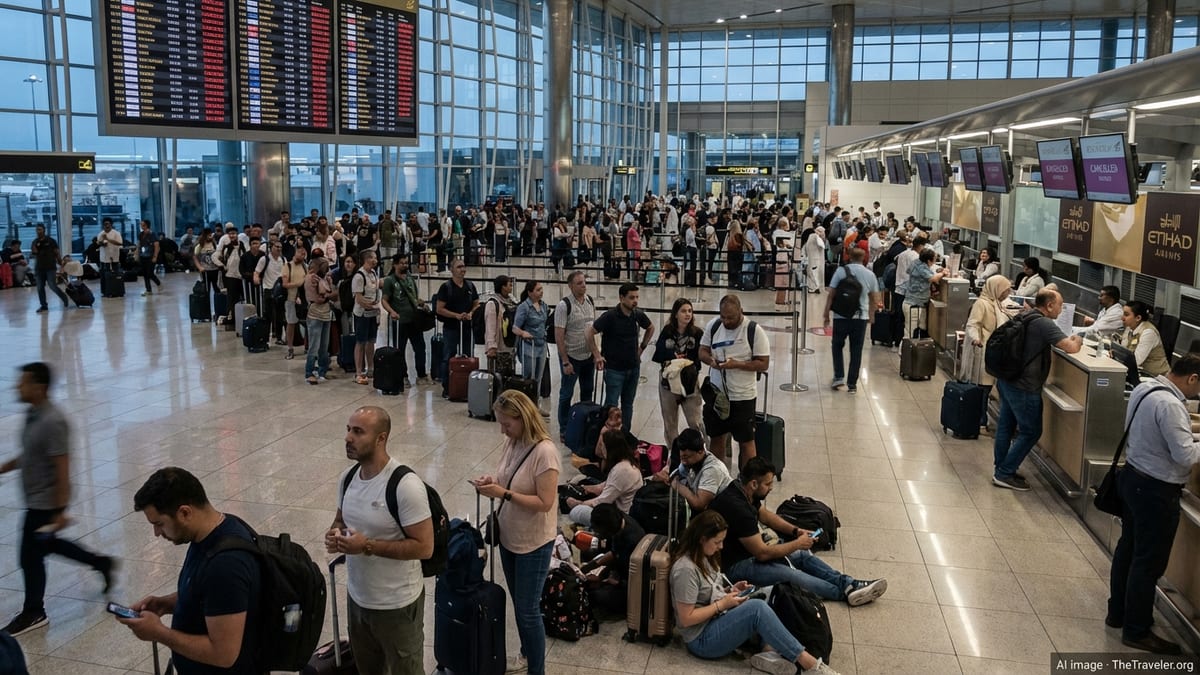
Fresh advisory focuses on Indians flying into UAE hubs
Publicly available guidance from UAE customs authorities and a new advisory from the Indian Embassy in Abu Dhabi are drawing renewed attention to what passengers from India can and cannot bring into the United Arab Emirates. The reminders come as travel between India and the UAE remains one of the busiest air corridors, increasing the likelihood of inspections at major gateways such as Dubai, Abu Dhabi and Sharjah.
The Indian Embassy’s latest public advisory on prohibited, restricted and controlled items, issued in October 2026, urges passengers to familiarise themselves with UAE entry rules before departure, especially when carrying medicines, food products or cash. The notice points travellers to UAE federal regulations on customs, narcotics control and anti money laundering, and highlights that violations can lead to seizure of goods, fines or legal action.
UAE government portals and Dubai Customs passenger guides updated for 2024 and 2025 reiterate similar messages. Travellers are reminded that customs officers have broad powers to inspect luggage, question passengers and detain goods that appear to breach national security, public health, moral or financial crime laws. Indian travellers, who frequently carry cash, jewellery, traditional food items and medicines, are advised to pay particular attention to the categories flagged as banned or restricted.
The renewed focus has followed a series of incidents reported in regional media where passengers arriving from South Asia were stopped for carrying undeclared cash, paan products, or medicines that fell under controlled drug classifications. While such cases represent a fraction of total arrivals, officials and consular advisories stress that lack of awareness remains a key cause of problems at the border.
Banned items: from paan and nasvaar to pornographic content
Dubai Customs’ latest passenger guide, covering 2024 and 2025, lists a number of items that cannot be imported by passengers under any circumstances. These include narcotics of all kinds, indecent or obscene materials, gambling tools and machines, counterfeit currency and goods, and a range of products considered harmful to public health or morals.
For Indian travellers, one of the most relevant prohibitions concerns paan and related products. Passenger guides from Dubai and Abu Dhabi customs specifically state that paan leaves and preparations, including nasvaar and betel leaves, are not allowed to be brought into the UAE in passenger baggage. Airport experiences shared by travellers indicate that these products are frequently confiscated during baggage screening, and in some instances have triggered further questioning of passengers.
Printed, recorded or digital material considered pornographic or offensive to public morals is also banned. This includes physical media such as magazines and discs, but can extend to certain items carried on electronic devices if discovered during screening tied to separate investigations. Travellers are also warned against bringing in items that promote gambling, extremist ideology or materials considered offensive to religious sensibilities.
Recent customs guidance further underlines that counterfeit branded items, fake currency and goods that infringe intellectual property rights are prohibited. Indian passengers purchasing low priced designer knock offs or pirated digital media in other markets before connecting through the UAE risk having such items seized and may face questioning about commercial intent if quantities are considered excessive for personal use.
Cash rules: 60,000 dirham disclosure and 100,000 dirham checks
One of the most important updates for Indian travellers concerns how much cash can be carried without declaration. The UAE’s federal customs information platform and Dubai Customs mobile guidance explain that passengers entering or leaving the UAE with more than 60,000 UAE dirhams in cash, or an equivalent amount in other currencies, financial instruments, precious metals or stones, must submit a declaration to customs.
The declaration requirement applies to both residents and visitors, and covers cash, travellers cheques and similar bearer instruments. For passengers under 18 years of age, any cash they carry is added to the limit of their accompanying parent or guardian, rather than being treated separately. The declaration can be made online through the federal customs system or on forms available at the airport, and failure to declare can lead to seizure of funds and investigation under anti money laundering regulations.
Dubai Customs also states in its public passenger procedure pages that all passengers arriving in the country must declare cash or travellers cheques exceeding 100,000 dirhams or equivalent, highlighting how different thresholds appear in parallel guidance. Federal portals tie the 60,000 dirham figure to inbound and outbound traveller declarations, while some emirate level pages still reference 100,000 dirhams for specific cash on arrival procedures.
Travel and consular advisories recommend that Indian passengers treat 60,000 dirhams, or roughly 1.3 million Indian rupees at current exchange rates, as the key threshold for advance disclosure and be prepared to declare higher amounts again on arrival if requested. Experts quoted across public information campaigns emphasise that declaring cash is not itself an offence, but failing to disclose or providing inconsistent information can trigger scrutiny, delay and possible penalties.
Medicines, controlled substances and duty free limits
Medicines are a particular focus of the Indian Embassy’s October 2026 advisory on travel to the UAE. Publicly available information from Dubai Customs indicates that passengers may bring a maximum of three months’ supply of medicines for personal use, provided they carry an original prescription from a registered medical practitioner. The prescription should specify the patient’s details, diagnosis and treatment plan, and travellers are encouraged to keep medicines in original packaging.
UAE regulations treat certain medications used in India, including some painkillers, psychiatric drugs and cough syrups, as controlled or psychotropic substances. Where a drug is not included in the UAE’s list of pre approved medicines for personal import, travellers must seek a special permit through the UAE’s health authorities before travel, according to international travel health guidance and UAE government portals. The Indian advisory stresses that medicines containing banned or heavily controlled substances may be confiscated and could lead to legal consequences if carried without documentation.
Aside from medicines, the general customs allowance for arriving passengers includes personal effects and gifts within specified weight and value limits, as well as limited quantities of cigarettes and alcohol for non Muslim adults, where permitted by local emirate rules. Dubai Customs’ passenger guide sets a duty free ceiling of 4,000 dirhams in value for accompanying baggage items and outlines standard allowances for tobacco and alcohol that align with federal rules.
Travellers exceeding these allowances may be asked to pay customs duty or have excess quantities held for a period, after which goods can be sold at auction if duties are not settled. Publicly available customs procedures describe how seized items are stored for at least 30 days and may be retained for up to 60 days upon a written request, before being disposed of according to internal regulations.
Practical steps for Indian travellers before departure
Given the mix of federal rules, emirate level procedures and evolving advisories, Indian travellers are being urged in public information campaigns to prepare well before boarding flights to Abu Dhabi, Dubai, Sharjah or other UAE airports. Consular notices recommend that passengers cross check what they plan to carry against the latest banned and restricted items lists published on UAE government portals, paying special attention to paan products, herbal or Ayurvedic medicines and high value items such as gold and watches.
For those travelling with significant cash, jewellery or other valuables, completing online customs declaration forms in advance is widely encouraged. Keeping clear records, such as bank withdrawal slips or invoices, can help explain the origin of funds if questions arise at the border. Families travelling together may wish to consolidate declarations so that amounts carried by minors are clearly reflected in the accompanying adult’s paperwork.
Indian passengers are also advised to retain purchase receipts and prescriptions in hand baggage rather than checked luggage, to facilitate on the spot checks. Repacking at the airport to move food items, tobacco or medicines into a single easily accessible bag can reduce delays during inspection. Travellers with doubts about a particular product are encouraged by advisories to err on the side of caution, either leaving the item behind or seeking written clarification from relevant UAE authorities before travel.
With flights between India and the UAE remaining heavily booked across business, tourism and family visits, customs agencies in both countries continue to sharpen screening of high risk categories such as large cash movements, paan and tobacco products, and certain medicines. For Indian visitors, understanding the latest rules on banned items and cash declarations is emerging as an essential part of pre departure planning, alongside visas, tickets and hotel bookings.