

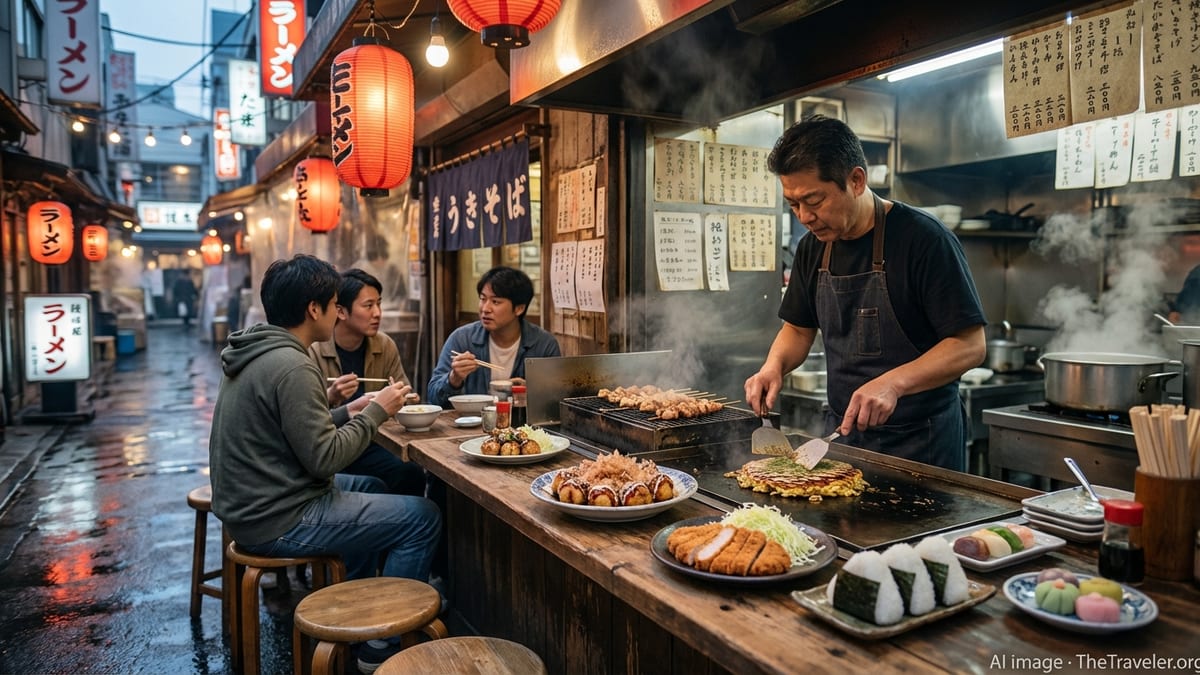
For many travelers, Japanese food begins and ends with sushi and steaming bowls of ramen. Yet step away from the conveyor belts and noodle counters, and an entirely different Japan appears on the table. From charcoal‑kissed skewers and Kansai street snacks to seasonal hotpots and jewel‑like sweets, the country’s most revealing flavors often hide in plain sight in backstreets, train stations, and everyday family kitchens.
Why Looking Beyond Sushi and Ramen Matters
Japan’s food culture is far broader than the global icons that dominate social media feeds. Sushi and ramen are only two expressions of a culinary tradition that stretches from rural farmhouses to urban street stalls, each with its own history, etiquette, and regional character. By seeking out other dishes, travelers get closer to how people in Japan actually eat on a daily basis, from quick snacks grabbed at a convenience store to slow, celebratory meals shared with family.
Recent visitor surveys from Japanese tourism authorities show that eating local food is the top expectation for a large majority of inbound travelers, and food is now one of the biggest drivers of trips to Japan. At the same time, domestic food trends highlight humble staples such as onigiri rice balls and rice bowl dishes, which attract growing attention on television and social media. Together, these patterns suggest that travelers who look beyond headline dishes will find a food culture that is evolving quickly while remaining deeply rooted in everyday life.
Exploring this broader landscape also spreads your spending beyond the busiest ramen alleys and sushi districts, supporting small family businesses and regional producers. As Japan welcomes record numbers of visitors and debates how to manage overtourism, choosing lesser known dishes and neighborhoods becomes a quiet way to travel more thoughtfully. It is an opportunity to experience the country’s culinary creativity without adding to the pressure on a handful of famous hotspots.
Skewers, Cutlets and Crispy Bites: Japan’s Love of Fried and Grilled Foods
One of the most accessible entries into Japanese food beyond sushi and ramen is yakitori, skewers of bite‑sized chicken grilled over charcoal. Specialty yakitori bars range from narrow counters seating a handful of regulars to polished restaurants with curated sake lists. Instead of generic “chicken on a stick,” menus are often organized by cut, offering everything from thigh and breast to hearts, skin, and cartilage. Salt or a glossy soy‑based tare sauce are the default seasonings, and the smoke from the grill perfumes tiny alleys across Tokyo and regional cities alike.
Another staple of the Japanese dining table is karaage, marinated pieces of chicken coated in starch and deep‑fried until crackling on the outside and juicy within. Karaage appears in countless everyday contexts: tucked into bento lunch boxes, served at neighborhood festivals, and sold by convenience stores as a hot snack. Variations include citrus‑spiked versions in Kyushu, garlic‑heavy recipes in working‑class districts, and modern takes that incorporate rice flour or different oils in response to health and allergy concerns.
For travelers drawn to heartier fare, tonkatsu offers a satisfying alternative to ramen broth. This breaded and fried pork cutlet, typically served with finely shredded cabbage, rice, and miso soup, is a perfect example of how Japan adopted Western influences and made them its own. Originally introduced in the late nineteenth and early twentieth centuries, the dish evolved into a comfort food classic. Many specialist shops now focus obsessively on pork provenance, frying temperature, and crumb texture, turning a simple cutlet into a studied craft.
In Osaka and other Kansai cities, kushikatsu takes the love of fried food in a more playful direction. These are skewers of meat, vegetables, or seafood, dipped in batter and breadcrumbs, then fried and plunged into a shared container of tangy brown sauce. Street‑side kushikatsu bars are casual, noisy, and governed by one clear rule: no double dipping. It is social dining designed for sharing plates, chatting with strangers at the counter, and lingering over glasses of beer.
Osaka, Hiroshima and the Joy of Street‑Side Batter
If ramen is Tokyo’s late‑night staple, the soul of Osaka is arguably found in okonomiyaki and takoyaki, two batter‑based dishes that showcase the region’s “eat until you drop” reputation. Okonomiyaki is often described as a savory pancake, but that hardly captures its appeal. A mixture of shredded cabbage, flour, egg, and dashi is cooked on a griddle with toppings like pork belly, squid, or cheese, then brushed with a dark, sweet‑savory sauce, drizzled with mayonnaise, and dusted with seaweed and bonito flakes. In many restaurants, diners grill the batter themselves at tabletop hotplates, turning dinner into a collaborative performance.
Tried side by side, Hiroshima‑style okonomiyaki offers a revealing contrast. There, ingredients are layered rather than mixed, typically beginning with a thin crepe, followed by cabbage, bean sprouts, pork, and yakisoba noodles, crowned with an egg. This version reflects local history and postwar ingenuity, and Hiroshima’s okonomiyaki districts remain major draws for domestic and international visitors. Exploring both styles gives travelers a quick lesson in how regional identities shape even shared national dishes.
Takoyaki, meanwhile, are small spheres of batter filled with pieces of octopus, cooked in special cast‑iron pans with half‑round molds. Vendors use metal picks to flip the batter rapidly as it cooks, creating a crisp exterior and a molten interior that demands a moment of patience before the first bite. Originally a street snack, takoyaki today appears everywhere from festivals and shopping arcades to convenience stores and highway rest areas. The familiar squiggle of sauce and mayonnaise across each serving has become a visual icon of Osaka’s food culture.
Beyond these classics, visitors will notice a growing variety of regional batter‑based dishes and modern interpretations, from stuffed taiyaki fish‑shaped cakes filled with custard or sweet bean paste to fusion pancakes that incorporate local vegetables and artisanal cheeses. Seeking out small, independent stalls rather than only the most photographed chains can lead to surprising variations and conversations with the people behind the griddle.
Rice at the Center: Onigiri, Donburi and Comforting One‑Bowl Meals
Rice sits quietly at the heart of Japanese cuisine, and some of the most revealing food experiences revolve around simple bowls rather than elaborate courses. Onigiri, the triangular or cylindrical rice balls wrapped partly in nori seaweed, are a case in point. For residents, these are everyday snacks and portable meals, filled with salted salmon, pickled plum, kombu, or tuna mayo. Recent surveys of domestic food trends place onigiri among the country’s most talked‑about foods, reflecting both nostalgia and clever new fillings that appeal to younger eaters and arriving tourists.
Donburi, rice bowls topped with meat, seafood, or vegetables, offer another angle on how Japan eats beyond noodles. Gyudon features thinly sliced beef simmered with onions in a gently sweet soy broth, while oyakodon pairs chicken and egg in a silky mixture poured over hot rice. In coastal areas, kaisendon presents an array of raw fish and shellfish on rice, offering a different way to experience pristine seafood without sitting at a sushi counter. These bowls are fast, filling, and widely available in station restaurants, chain outlets, and independent shops.
Travelers looking for something especially comforting in colder months might encounter okayu, a soft rice porridge, and zosui, a rice soup enriched with dashi, vegetables, and sometimes leftover hotpot broth. Traditionally associated with illness or winter evenings, these dishes are appearing more often on casual restaurant menus in response to interest in gentle, easily digestible meals. They are also a window into how Japanese households handle leftovers and seasonal shifts, using rice as a canvas for whatever ingredients are at hand.
Bento culture, too, highlights rice at the center of the meal. Makunouchi bento, a style developed during the Edo period and now common at train stations, typically combines a neat rectangle of rice with an assortment of grilled fish, pickles, simmered vegetables, egg, and small bites of fried foods. For visitors riding long‑distance trains, choosing an ekiben bento from station kiosks becomes an edible tour of regional specialties, each compartment telling a small story of local ingredients and tastes.
Hotpots, Home Cooking and the Flavors of the Living Room
While restaurant meals dominate travel itineraries, some of the most meaningful Japanese foods are those designed to be shared from a single pot at home. Nabe, or hotpot, covers a wide range of dishes where ingredients are simmered together at the table. In winter you will find bubbling pots of yosenabe, chanko nabe associated with sumo wrestlers, or regional styles that showcase local seafood and vegetables. Diners add pieces throughout the meal, fishing them out with chopsticks and ladles in an easy rhythm of conversation and cooking.
At the end of many hotpot meals, rice or noodles are added to the remaining broth to create a final course. This is where zosui often appears, transforming the concentrated flavors at the bottom of the pot into a gentle rice soup. The practice reflects a cultural reluctance to waste food as well as an appreciation for layers of flavor built over time. For visitors who join a home‑cooking class or stay in a family‑run inn, participating in this simple ritual can feel more memorable than ticking off a list of famous restaurants.
Other dishes that define home cooking rarely appear on glossy posters but play an outsize role in everyday life. Nikujaga, a stew of meat, potatoes, and onions simmered in a soy‑based broth, is a classic example of yōshoku, Western‑influenced dishes reinterpreted in Japanese style. Served with rice and miso soup, it is a staple of weeknight dinners. Simmered dishes known collectively as nimono, such as root vegetables cooked with fish cakes or tofu, shift with the seasons and the contents of the local market.
For travelers, the most direct way to encounter these flavors is through guesthouses, cooking workshops, or small eateries that advertise teishoku set meals. A typical set might include grilled fish or a main dish, a small nimono, pickles, rice, and soup, approximating what a balanced home meal looks like. While the presentation can be modest, these combinations of plates provide a clear sense of how Japanese diners think about nutrition, seasonality, and variety.
Wagashi, Street Sweets and Japan’s Dessert Evolution
No exploration of Japanese food beyond sushi and ramen is complete without considering sweets. Traditional wagashi sweets, often paired with tea, are crafted to reflect the season through color, shape, and ingredients. Delicate nerikiri shaped like maple leaves in autumn, translucent jelly yokan infused with citrus in winter, and strawberry‑filled daifuku in spring all express a sensitivity to nature that is central to Japanese aesthetics. Many wagashi shops have long histories, and watching artisans form each piece by hand can be as compelling as tasting the final product.
Alongside these time‑honored sweets, modern Japanese desserts are spreading worldwide and evolving rapidly. Mochi, dorayaki pancakes, and taiyaki are being filled with new flavors from chocolate and custard to international spreads, reflecting a broader trend of globalization in Japanese confectionery. Food industry observers note that in recent years, Japanese desserts have gained momentum overseas, with matcha‑based cakes, roll cakes, and hybrid creations appearing in cafes from North America to Europe and Southeast Asia.
On the street, taiyaki stands, crepe kiosks, and soft‑serve counters give travelers an excuse to snack between sights. Regional soft‑serve flavors highlight local specialties, from lavender in Hokkaido to roasted green tea in Kyoto. Convenience stores play a surprisingly important role in dessert culture as well, stocking seasonal puddings, parfaits, and bite‑size sweets that change frequently enough to attract devoted fans who check for new releases.
Together, traditional wagashi and contemporary sweets illustrate how Japan balances preservation and innovation. For visitors, sampling both is a way to understand the country’s relationship with ceremony and everyday indulgence, from formal tea rooms to a quick ice cream enjoyed on a station platform.
Konbini Culture and Everyday Eating
Japan’s convenience stores, or konbini, have quietly become global legends. Travelers increasingly include them on their must‑visit lists, drawn by social media videos that showcase shelves stocked with onigiri, chilled noodles, salads, hot snacks, and an almost bewildering range of drinks and desserts. Tour operators now report demand for guided experiences that introduce visitors to the unwritten rules and underrated items of konbini culture, underscoring how these stores have transformed from simple pit stops into food destinations.
Beyond the novelty, konbini offer a realistic snapshot of how people in Japan eat on the move. Freshly prepared rice balls, sandwiches layered with whipped cream and fruit, bento boxes with grilled fish or hamburg steak, and seasonal limited‑edition items make it easy to construct a balanced meal for a train ride or a late‑night office shift. Even hot offerings such as oden, the simmered one‑pot dish of daikon radish, eggs, and fish cakes, appear in simmering vats near the register during colder months.
This everyday side of Japanese food culture is particularly important as tourism grows. With record visitor numbers in recent years and ambitious targets set for the coming decade, authorities and businesses are looking for ways to spread travelers across regions and reduce pressure on a handful of sightseeing districts. Choosing a picnic assembled from a local supermarket or konbini can be both budget friendly and sustainable, allowing travelers to eat well without crowding small restaurants at peak hours.
For visitors willing to experiment, the key is to approach these stores not as curiosities but as dynamic, constantly changing food stages. Pay attention to seasonal markers, try a few unfamiliar flavors in smaller portions, and do not hesitate to ask staff for basic guidance if you are unsure how to handle items like oden or hot drinks from the self‑service machines.
The Takeaway
Looking beyond sushi and ramen does not mean abandoning them. Instead, it is an invitation to understand Japanese food as a web of interconnected dishes that span street stalls, home kitchens, train platforms, and refined specialty shops. Skewers of yakitori, bubbling nabe hotpots, okonomiyaki sizzling on a griddle, and jewel‑like wagashi all contribute to a more complete picture of what and how Japan eats.
As food‑driven travel grows worldwide and Japan welcomes record numbers of visitors, the most rewarding meals are often those that take place slightly off the main tourist trail. Trying kushikatsu in a neighborhood bar, grabbing onigiri before an early train, or sharing a simple teishoku set with office workers at lunch can reveal as much about the country as an elaborate tasting menu. Each bite, however humble, reflects layers of history, climate, and local preference.
For travelers planning a trip, the most valuable preparation may be curiosity rather than a strict checklist of famous restaurant names. Learn a few key phrases to read basic menus, remain open to regional specialties, and allow space in your itinerary for spontaneous discoveries. By doing so, you will experience Japan not only as a land of iconic sushi counters and ramen shops but as a living, evolving food culture that reaches far beyond the familiar bowl.
FAQ
Q1. What are some must‑try Japanese dishes beyond sushi and ramen for first‑time visitors?
For a first trip, consider yakitori skewers, okonomiyaki, takoyaki, tonkatsu, onigiri, a simple nabe hotpot, and at least one traditional wagashi sweet with tea.
Q2. Where can I find good local food if I do not speak Japanese?
Train station restaurant floors, department store food halls, convenience stores, and small teishoku lunch spots near office districts usually have photo menus or displays that make ordering straightforward.
Q3. Are regional specialties really that different from city to city?
Yes, regional variation is one of the pleasures of eating in Japan. Okonomiyaki, tempura accompaniments, hotpot styles, rice bowl toppings, and even convenience store snacks can change noticeably between areas.
Q4. How can I eat more like a local and less like a tourist?
Try visiting busy but ordinary places at typical mealtimes, order daily set menus, choose seasonal specials, and be open to simpler dishes such as grilled fish, rice bowls, or home‑style stews rather than only famous signature bowls.
Q5. Is it acceptable to rely on convenience stores for proper meals?
Absolutely. Many residents use convenience stores for quick breakfasts, lunches, or late‑night dinners. Combining onigiri, salad, a hot dish, and fruit can create a balanced, good‑value meal.
Q6. What should I know about etiquette when eating street food and skewers?
Follow any signs, avoid blocking walkways, use provided bins or carry your trash with you, respect “no double dipping” rules for shared sauces, and keep conversation at a moderate volume.
Q7. How can vegetarians and vegans enjoy Japanese food beyond sushi and ramen?
Look for shojin ryori temple cuisine, tofu‑focused restaurants, vegetable‑heavy hotpots, rice dishes with seasonal vegetables, and wagashi sweets, and ask about fish stock in broths and sauces whenever possible.
Q8. Are traditional sweets very sugary compared with Western desserts?
Most wagashi are less intensely sweet than many Western cakes and rely on the natural flavor of beans, fruit, and rice. Portions are usually small, designed to complement rather than overwhelm green tea.
Q9. Do I need to book far in advance to try these foods?
Top sushi counters and certain ramen shops may require planning, but many of the dishes described, such as yakitori, okonomiyaki, tonkatsu, and donburi, can be enjoyed at walk‑in restaurants, especially outside peak hours.
Q10. What is the best way to discover new dishes while traveling around Japan?
Check seasonal and regional recommendations at tourist information centers, browse station bento shops, glance at what locals are ordering, and be willing to ask staff for one or two house specialties to try.