


Set on the wind‑sculpted north coast of Mykonos, Ftelia Beach has a very different personality from the more polished southern shores of the island. You still get that trademark Cycladic mix of whitewashed architecture and luminous Aegean water, but here the Meltemi wind rules the scene. Rather than endless rows of tightly packed loungers, Ftelia is about wild energy, big skies, bohemian beach clubs and a surprisingly rich history. If you come only to lie on a sunbed, you will miss some of the best reasons to make the trip out here. From world‑class windsurfing to barefoot sunset sessions and Neolithic ruins, this is how to experience Ftelia Beach beyond basic sunbathing.
Get the latest updates straight to your inbox!
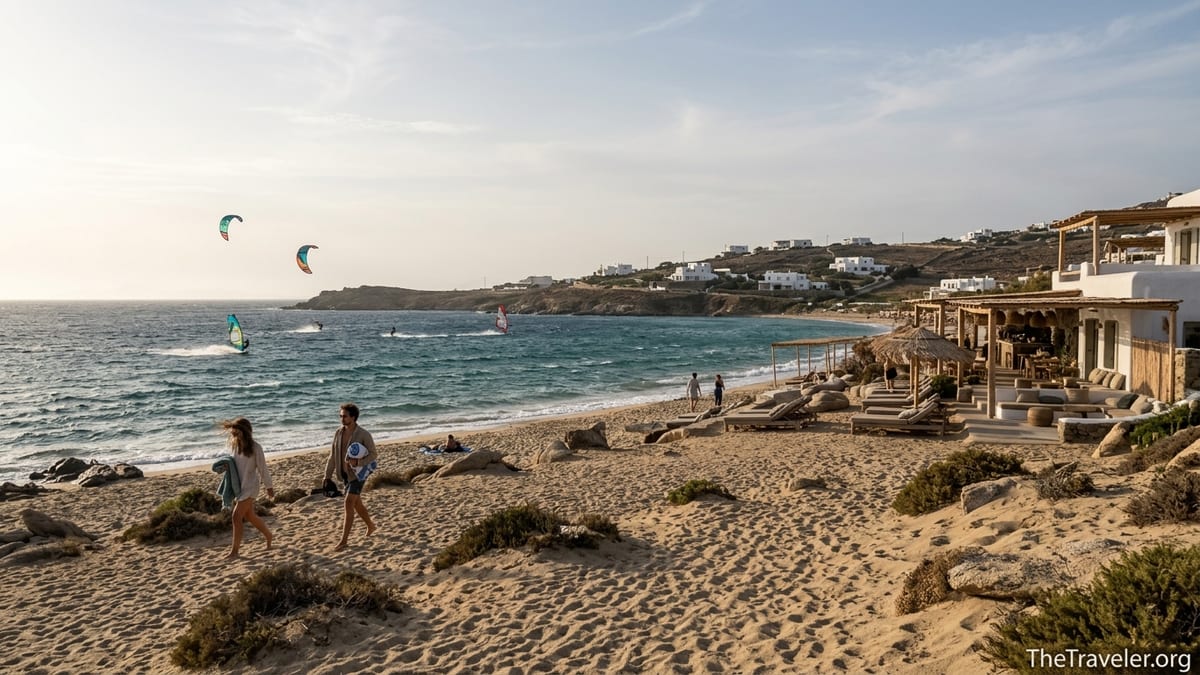
Feel the Meltemi: Windsurfing and Kitesurfing in the Bay
Ftelia is one of the windiest beaches on Mykonos, and that is exactly why board riders love it. Sheltered beaches on the south coast can look like infinity pools at midday, but Ftelia often has whitecaps and one‑metre wind waves in high summer, especially when the Meltemi blows from the north. Intermediate and advanced windsurfers treat these conditions as a feature, not a bug, timing their sessions for late morning and afternoon when the wind typically peaks. You will often see a small fleet of sails carving back and forth across the bay while the south coast remains glassy.
If you do not travel with your own equipment, several local operators arrange rentals and lessons at Ftelia during the main season, usually from June to early September. Most set up van‑style bases near the main parking areas and coordinate via messaging apps or hotel concierges. Expect to pay in the region of 70 to 90 euros for a couple of hours of supervised windsurfing, and more for private kitesurf lessons which often run close to 120 to 150 euros for a two‑hour beginner session. Conditions can change fast, so reputable instructors will check the day’s forecast and only send newcomers out when the wind is manageable.
Even if you prefer to stay on the sand, watching the action is part of the appeal here. Bring a light windbreaker and sunglasses with a good strap; the sand can pick up during gusty afternoons. Many visitors sit on the rocky edges of the bay with a coffee from a nearby beach bar and treat the passing kites and windsurfers like a living theatre. On particularly blustery days, the dramatic spray blowing off the wave crests gives the bay a wild, untamed feel you will not find on Mykonos’ more manicured shores.
For those curious to try a first windsurf or kite session, it helps to schedule two or three days on the island to allow flexibility. If Ftelia is too windy on arrival, instructors sometimes redirect absolute beginners to slightly more forgiving beaches such as Kalafatis, then bring them back to Ftelia once they are ready for stronger wind and more open water.
Experience Bohemian Beach Clubs and Laid‑Back Parties
Ftelia has developed a reputation as the bohemian, barefoot answer to Mykonos’ high‑gloss beach club scene. The best known name along the sand is Alemagou, a rustic Cycladic beach bar and restaurant with bleached timber pergolas, woven reed roofs and low cushioned seating that almost disappears into the dune landscape. Rather than pounding all‑day party anthems, the soundtrack on most days is an evolving mix of mellow electronic, organic house and Balearic‑style sets that build gradually toward sunset.
Closer to the centre of the bay, Ftelia Beach Club offers another take on the north‑coast vibe, combining a multi‑level restaurant, lounge areas and resident DJs. In high season, the energy typically ramps up from late afternoon. It is common for daybeds to be reserved by couples and small groups who arrive after 3 pm to swim, snack and linger into the evening as the music lifts. Some reviewers note that staff may start clearing the beach area or reconfiguring seating around 4 or 5 pm to prepare for evening events, so if your priority is a long, quiet beach day, it is better to arrive earlier.
Prices at these venues reflect Mykonos’ status as one of the most expensive islands in Greece. A cocktail at a beach club bar can easily reach 18 to 22 euros, while sunbeds typically start around 40 to 60 euros per person in peak summer, often with a minimum spend attached. To keep costs under control, many travellers treat Ftelia’s beach clubs as a special afternoon or sunset outing rather than an every‑day habit, arriving for a shared bottle of wine and a couple of small plates instead of a full day of ordering food and drinks from a lounger.
What sets Ftelia apart from the busier southern beaches is that there is still room to step away from the curated scene. The further you walk from the main club clusters, the more the atmosphere softens into simple beach towels, coolers and small groups of friends sharing snacks from the supermarket in Ano Mera. You can enjoy the music as a distant soundtrack while keeping the focus on the natural bay and the changing light.
Explore the Neolithic Past at the Archaeological Site of Ftelia
Just behind the beach, partly concealed by low scrub and dunes, lies one of the oldest known settlements on Mykonos. The Neolithic site of Ftelia dates from roughly 5100 to 4500 BC and is associated with the Saliagos culture, an early farming and seafaring community of the central Aegean. Archaeologists working here since the 1990s have uncovered stone building foundations, pottery fragments, stone tools and small figurines that suggest a permanent settlement of around 150 to 200 inhabitants.
The idea that this windswept bay once sheltered some of the earliest residents of the Cyclades adds a different dimension to your visit. As you walk along the beach, look inland for fenced areas and low stone walls set back slightly from the sand. The site itself is modest and not heavily developed as a visitor attraction, with basic protective structures rather than extensive signage, but simply knowing you are standing by a settlement that predates the classical temples of Athens by millennia can change how you see the landscape.
Because much of the material from Ftelia is fragile, key finds are housed in the Archaeological Museum of Mykonos near the old port in town. Combine a morning swim or windsurf session at Ftelia with an afternoon museum visit to connect the dots: you might see Neolithic pottery and figurines from the site displayed in glass cases, then return to the bay another day and imagine the daily life of the people who crafted them. The contrast between high‑energy beach clubs and deep prehistory is one of the most intriguing juxtapositions on the island.
If you are especially interested in archaeology, it is worth checking locally whether any temporary information boards or small guided tours are running during your stay. Occasionally, local guides and independent historians offer small‑group walks that cover the wider Panormos Bay area, including Ftelia’s Neolithic remains, nearby chapels and traditional farm terraces that hint at how the interior of Mykonos was used before tourism.
Eat Slow: From Beachfront Seafood to Village Taverns
Ftelia is a rewarding place to explore Mykonian food beyond the quick beach snack. At the higher‑end beach clubs and restaurants, you will find menus that blend Greek and international influences, often with a focus on seafood. Think grilled octopus served with fava purée, whole local fish baked in a salt crust for two, or shrimp saganaki with tomatoes and feta, alongside dishes like ceviche or tuna tartare. Main courses in these settings often sit in the 30 to 50 euro range, with starters around 15 to 25 euros, so it makes sense to share plates family‑style to sample more without overspending.
To get a more traditional and often more affordable taste of the island, pair your beach time with a meal in the nearby inland village of Ano Mera, around a 10 to 15 minute drive from Ftelia. Here, simple taverns on and around the central square serve grilled meats, horiatiki village salads loaded with tomatoes and local capers, and specialties like louza, the island’s cured pork, or tyrovolia, a soft local cheese. In these spots, you can often enjoy a full meal with house wine for 20 to 30 euros per person, especially at lunch.
A practical way to structure the day is to spend the windier afternoon hours at Ftelia, then drive up to Ano Mera as the light softens for dinner, avoiding the rush and parking challenges of Mykonos Town. If you have a rental car, confirm that your chosen taverna has a small parking area or side street options, as the village square itself can be busy in high season. Drivers should keep in mind Greece’s strict blood alcohol limits and consider sharing a car with a designated sober driver or arranging a taxi for the return journey if you plan to linger over ouzo or local wine.
For self‑caterers staying in villas around Panormos Bay or inland farmhouses, Ftelia can also serve as a picnic base. Stop at a minimarket in Ano Mera for fresh bread, olives, cheese and seasonal fruit, pack everything in a small cooler and claim a quiet patch of sand on the less developed part of the beach. You will still hear the murmur of music from the clubs, but your experience will revolve more around simple, slow food and the sound of the wind.
Walk, Photograph and Observe the Wild Side of Mykonos
Because Ftelia faces north and remains relatively raw in parts, it offers photography and walking opportunities that are hard to find on busier, fully serviced beaches. The wide horseshoe of sand, rocky headlands and low dunes create shifting textures as the light changes. In the early morning, before the beach clubs fully wake up, you might have long stretches almost to yourself, apart from a few joggers and dog walkers from nearby villas.
Bring a camera or smartphone with a good wide‑angle lens to capture the sweep of the bay and the contrast between pale sand, deep blue waves and the white scatter of buildings up on the hillsides. On slightly hazy days, the distant islands appear as soft silhouettes on the horizon, which can make for atmospheric shots, especially if you include foreground elements like driftwood, low shrubs or wind‑bent umbrellas. Sunset can also be spectacular here on days when the sky picks up colour over the central Aegean, though cloudless evenings often produce more subtle, pastel tones than the fiery displays you might see on the west coast of other islands.
Short exploratory walks in each direction from the main beach reveal quieter corners. Toward the eastern end, rocky outcrops provide elevated vantage points where you can sit and watch the changing patterns of waves and sails. Sturdy sandals or trainers are preferable to flip‑flops on this terrain, as some rocks are sharp and exposed roots can catch unwary feet. To the west, a more open stretch of sand and shingle attracts dog owners and locals who prefer to stay slightly removed from the organized sections.
Because of the constant wind, Ftelia also offers excellent people‑watching. You will see a mix of kitesurfers inspecting their lines, fashion‑conscious visitors using the textured backdrop for photoshoots, and Greek families who time their beach outing for late afternoon once the sun moderates. For a more meditative experience, come in shoulder season months like late May or late September. Water temperatures are still comfortable for a quick swim, but there are fewer organized loungers and more open space, and the soundscape is dominated by waves and wind rather than music.
Practical Tips: Getting to Ftelia and Making the Most of It
Unlike many of Mykonos’ southern beaches, Ftelia is not currently served by direct public bus routes, which is part of why it retains a less crowded, more independent feel. The most straightforward way to reach it is by rental car, quad bike or scooter, following the well‑marked road from Mykonos Town toward Ano Mera, then branching off toward Panormos Bay and Ftelia. The drive from town typically takes around 15 to 20 minutes in normal traffic. Several informal parking areas sit just behind the beach, often on packed dirt rather than paved lots, so you should avoid very low‑clearance vehicles and be cautious after heavy rain.
Taxis and pre‑booked transfers are another option, particularly in the evenings when people head to Alemagou or other venues for sunset sessions and dinners. On recent visitor reports, daytime taxi fares from Mykonos Town to more distant southern beaches like Elia can run around 45 to 50 euros each way in high season, so you can expect similar or slightly lower pricing for Ftelia depending on traffic and time of day. It is wise to confirm the approximate fare with the driver before departing, especially at night when demand spikes.
Once at the beach, there is no ticketed entry; access to the sand and sea remains free. You pay only for services such as sunbeds, umbrellas, food and drinks. Travellers on a tighter budget often bring their own towels, shade umbrellas and snacks to use in the unorganized sections. Because the beach is exposed, pack more layers and sun protection than you might for south‑facing bays: a light jacket or hoodie for wind chill, a hat that secures under the chin, and a dry bag to keep your phone and valuables safe from blowing sand.
Finally, give yourself permission to adjust your plan to the weather rather than fighting it. Some days, Ftelia is simply too choppy for relaxed swimming but perfect for a long, energizing walk and an early dinner in Ano Mera. On rare calm days, when the wind dies and the water turns glassy, you can enjoy long swims in some of the clearest water on the island, watching fish in the shallows and seeing the bay in an entirely different mood.
The Takeaway
Ftelia Beach is not the place to come if your dream of Mykonos is a sheltered cove with still water and tightly packed rows of luxury loungers. It is a beach for movement, weather and contrast. One day the bay is filled with windsurfers and kites in full flight; the next it is almost still, revealing how transparent the water can be when the Meltemi rests. Between the bohemian beach clubs, the Neolithic ruins just behind the sand and the village taverns up the hill, Ftelia rewards travellers who are curious enough to look beyond the obvious.
Plan your visit with flexibility, check the wind forecast, and decide whether you want a high‑energy afternoon with DJs and cocktails, a historical detour that reaches back 7,000 years, or a quiet, windswept walk at the margins of the island’s party circuit. Treated this way, Ftelia becomes one of the most memorable corners of Mykonos, precisely because it refuses to be polished into something it is not. If you come ready to embrace its wildness, you will leave with a richer sense of the island than sunbathing alone could ever provide.
FAQ
Q1. Is Ftelia Beach suitable for swimming, or is it mainly for windsurfing?
Ftelia can be excellent for swimming on calmer days when the north wind eases and the waves drop, but it is often choppy due to the Meltemi. Confident swimmers usually enjoy the movement and clarity of the water, while families with young children may prefer more sheltered beaches on the south coast for long, relaxed swims.
Q2. How do I get to Ftelia Beach if there is no direct bus?
The most practical options are a rental car, quad bike or scooter following the road from Mykonos Town toward Ano Mera and then down to Ftelia, or a taxi arranged through your hotel or a local app. The drive from town takes around 15 to 20 minutes in normal traffic, and there are informal parking areas behind the beach where you can leave your vehicle.
Q3. Do I need to reserve a sunbed or table at the Ftelia beach clubs in advance?
In July and August it is strongly advisable to reserve ahead, especially for sunset or dinner at well known venues like Alemagou or Ftelia Beach Club. Outside peak season, walk‑ins are more often accepted, but for front‑row loungers or large groups it still pays to contact the venue in advance through your hotel concierge or a local booking service.
Q4. What should I wear and bring for a day at Ftelia Beach?
Beyond standard beachwear, pack a light windbreaker or hoodie, a hat that will not easily blow off, secure sunglasses and plenty of sunscreen, as the wind can disguise how strong the sun is. Footwear with a bit of grip is useful if you plan to walk on the rocky sections, and a dry bag or zip‑lock pouches help protect phones and cameras from sand.
Q5. Are there budget‑friendly ways to enjoy Ftelia without paying for expensive loungers?
Yes. Large parts of Ftelia remain unorganized, so you can simply bring your own towel, umbrella and picnic and settle away from the beach club clusters. Buying snacks and drinks in Ano Mera or Mykonos Town before you arrive can significantly reduce costs compared to ordering everything from a bar on the sand.
Q6. Can beginners take windsurfing or kitesurfing lessons at Ftelia?
Several local operators use Ftelia as a base during the main summer months and can arrange beginner lessons when conditions allow. Absolute beginners may sometimes be directed to slightly calmer spots such as Kalafatis on very windy days, then progress to Ftelia once they have basic control. Always check that your instructor is certified and that safety equipment, including helmets and impact vests, is provided.
Q7. Is Ftelia Beach family‑friendly?
Ftelia can be family‑friendly if you are prepared for wind and occasional waves. Older children who enjoy active beaches and watching surfers often love it, while very young kids may be more comfortable on calmer shores. Families often visit earlier in the day before the music gets louder at the clubs, and bring their own simple beach toys, snacks and shade.
Q8. What is the best time of year to visit Ftelia Beach?
June to September offers warm water and consistent winds for board sports, with July and August being the busiest and windiest months. For a quieter, more contemplative experience with milder crowds and slightly softer conditions, late May and late September are excellent, though some beach club services may be reduced at the very start and end of the season.
Q9. Are there any cultural or historical sights near Ftelia worth visiting?
Yes. The Neolithic archaeological site just behind the beach preserves remains of one of the oldest known settlements on Mykonos, and artefacts from the excavations are displayed at the Archaeological Museum of Mykonos near the old port in town. Combining a beach visit with time in nearby Ano Mera village, with its traditional square and monastery, also gives a taste of the island beyond the main tourist zones.
Q10. Is Ftelia a good alternative to the more famous party beaches of Mykonos?
Ftelia is ideal if you want a balance between atmosphere and space. It has stylish beach clubs with DJs and sunset sessions, but the north‑facing bay remains less densely developed than hotspots like Paradise or Super Paradise. You can dip into the party scene for a few hours, then retreat to quieter stretches of sand or to the inland villages without leaving the general area.