


Ftelia Beach on the north coast of Mykonos is famous for two things: wild wind and wide open space. On some days it feels like a tranquil turquoise bay with just a few loungers and a relaxed taverna soundtrack. On others, it turns into a whitecapped playground where kites and sails carve across the chop from morning to sunset. Choosing when to visit is less about high season versus low season and more about matching your own comfort level with wind, waves, temperature, and budget. This guide breaks down the best months, times of day, and conditions so you can pick the right moment to meet Ftelia at its best for you.
Get the latest updates straight to your inbox!
Understanding Ftelia’s Windy Personality
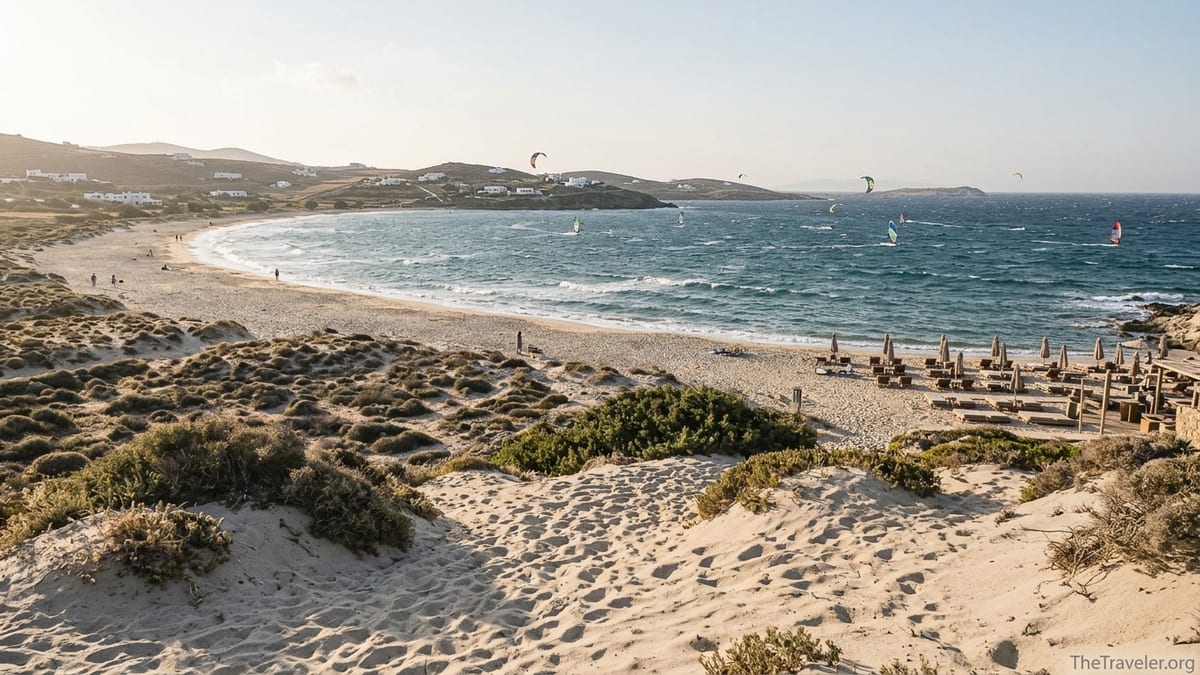
Ftelia sits on the exposed northern side of Mykonos, facing the open Aegean. That geography puts it directly in the path of the famous Meltemi, the dry seasonal north wind that shapes summer across the Cyclades. Locals will tell you that if there is wind anywhere on the island, you will feel it at Ftelia. That is exactly why windsurfers and kitesurfers treat it as their home base, while sunbathers often default to the more sheltered south-coast beaches.
From roughly late May to late September, the Meltemi can blow on most days, with a peak in consistency and strength between mid July and mid August. In that core summer window, it is normal to find steady winds that easily reach levels experienced as strong by casual beachgoers. Forecast tools used by riders highlight Ftelia as one of the windiest spots on Mykonos and show that the afternoon hours often see the strongest gusts, especially on clear, hot days when the land heats quickly.
The result is a dual personality. On a calmer day in June, you may arrive to find only a moderate breeze, clear water, and sand that is comfortable to lie on with a simple towel. A couple of days later, under stronger Meltemi, you might see whitecaps across the bay, sand moving in visible swirls along the shore, and lines of kites and sails stacked across the water. When planning your visit, it helps to decide in advance whether you are chasing that energetic wind scene or trying to avoid it.
Ftelia’s two sides of the bay also experience the wind slightly differently. The western end tends to remain more raw and unorganized, while the eastern side, where you find beach clubs such as Alemagou and a small cluster of facilities, feels a bit more sheltered by low dunes and built structures. If conditions are borderline for your comfort, simply shifting a few hundred meters toward the club zone can make a noticeable difference in how much wind you feel on your sunbed.
The Best Months for Swimming, Sunbathing, and Quiet Escapes
If your priority is swimming in comfortable water, lying on the sand without being sandblasted, and enjoying the emptier, more contemplative side of Ftelia, shoulder season is your ally. Late May, early June, late September, and early October often strike the best balance between pleasant temperatures, manageable wind, and lower prices on Mykonos in general. Sea temperatures by early June are usually warm enough for most swimmers to stay in comfortably, and by late September the water is often at or near its annual warm peak.
In late May and early June, beaches across Mykonos are coming back to life but are not yet at full summer intensity. At Ftelia, you are likely to find fewer people, more space between umbrellas at the organized section, and easier last-minute availability for a front-row sunbed at a beach club. Typical sunbed sets here run cheaper than the most fashionable south-coast names in July and August, and in shoulder months prices may be more negotiable, especially midweek. On a calm morning you might pay a moderate fee for two loungers and an umbrella, order a Greek coffee and a plate of fruit, and watch only a handful of riders rigging their sails further down the shore.
Late September and early October are particularly appealing for travelers who prefer soft light, warm water, and a more local feel. Many of the island’s clubs are still open, but the energy has shifted. You may share the sand with Athenians on quick escapes, digital nomads based out of Mykonos Town, and families taking advantage of back-to-school airfares. Winds can still appear, and some days remain gusty, but the extreme, relentless Meltemi of high summer eases in frequency. Planning two or three possible beach days and picking the calmest forecast for Ftelia usually works well in this period.
Winter and early spring, from November through March, are generally too cool and unsettled for a classic beach day, and many services at or near Ftelia close for the season. While a rental car stop to admire the wild winter landscape can be rewarding for repeat visitors, most first-time travelers will be better served focusing beach time between late May and early October when Ftelia’s mix of color, light, and water temperature is at its most inviting.
Peak Summer: Prime Time for Windsurfers and Kitesurfers
For riders, the very weeks that casual beachgoers may find challenging are often the main draw. From mid June through early September, and especially from mid July to mid August, Ftelia’s wind statistics look extremely attractive to intermediate and advanced windsurfers and kitesurfers. In this peak window the Meltemi frequently blows on consecutive days, building from late morning and often maintaining strong, steady conditions through late afternoon.
On a typical high-summer Meltemi day, Ftelia might start with a moderate breeze around breakfast time, pick up noticeably around 11 am, and hit its stride between 1 pm and 5 pm. That rhythm allows experienced riders to plan two focused water sessions with a relaxed lunch break at the beach club in between. Many local schools and rental outfits suggest that visiting kitesurfers arrive no later than mid morning to check the spot, rig in a calm, organized way, and secure a parking space before the afternoon rush of both riders and curious spectators.
Peak summer also brings the most energetic version of Ftelia’s social scene. Beach clubs on the eastern side of the bay weave together the sporting atmosphere with a bohemian dining and music program. It is common to see tables of non-riders booking shaded spots primarily for the spectacle of watching kites launch and land. For these visitors, the best time to arrive is often late afternoon, when the light softens, the wind peaks, and the golden hour over the bay frames dozens of colorful kites against the Aegean.
However, visitors with small children or those sensitive to wind should be realistic about July and August at Ftelia. Even on beautiful sunny days, the constant gusts can make it difficult to keep beach toys and towels in place, and sand can feel abrasive. Families often choose to stop here for a shorter look around and then continue to a more sheltered option such as Ornos or Agios Ioannis for actual swimming and sand play, saving Ftelia for a more specialized return visit focused on water sports.
Morning vs Afternoon: Choosing Your Ideal Time of Day
Aside from picking the right month, the time of day you visit Ftelia has an outsized impact on your experience. The general pattern through the warmer half of the year is that mornings tend to be gentler and afternoons bring stronger, more sustained wind. That is why even many windsurfers prefer to launch earlier in the day, when the sea state has not yet fully built up and there is more space on the water.
For non-riders, aiming to arrive between about 9 am and noon during the main season can make Ftelia feel dramatically more accessible. At this time, sand is less likely to be whipping, the sea may show only light chop, and sunbeds at the organized section are often still available without a firm reservation. You can take a swim, enjoy a late breakfast or early lunch, and then decide whether to stay as the breeze intensifies or move on to another part of the island for the afternoon.
In contrast, arriving after 2 pm in July or August almost guarantees meeting Ftelia in full wind mode. The plus side is a lively visual spectacle, cooler air temperature compared with the more sheltered south, and the buzz of an international kitesurfing crowd. The downside for casual beachgoers is more noise from flapping kites, more movement on the water, and a surface chop that makes gentle bobbing swims more effortful. For those who are curious but cautious, a good compromise is to spend the morning at a calmer south-coast beach, then drive up to Ftelia in late afternoon just to watch the scene with a drink at a beachfront bar.
Evening, especially outside of the core July and August period, offers a third, quieter experience. As the wind sometimes softens, the beach empties, and the sky transitions through soft blues and pinks, Ftelia can feel almost meditative. Some visitors time a drive from Mykonos Town to arrive around sunset, park above the bay for photographs, then descend only briefly to the shore before heading back to town for dinner. Others stretch the day by booking a late table at a beach restaurant, staying until the music eases and the staff begins to pack away cushions for the night.
Matching Ftelia to Your Travel Style and Budget
Because Ftelia is less built up than headline south-coast beaches such as Psarou or Paraga, the cost of enjoying a day here can be more flexible. On the western, more natural side of the bay you can still spread out a simple towel and bring your own water and snacks, paying only for transport. This appeals to independent travelers and couples on a mid-range or backpacker budget, especially in shoulder months when you may share the wide sandy arc with only a handful of other visitors.
On the eastern side, organized sections offer sunbeds, umbrellas, and table service from beach clubs that blend rustic Cycladic architecture with contemporary design. In July and August, expect to pay mid-range to upper mid-range prices for a pair of loungers and an umbrella, often with a minimum spend on food and drinks. A typical setup might involve reserving two sunbeds for the afternoon, ordering a light lunch such as grilled octopus or a dakos salad, and then lingering over cocktails as the kite session peaks in front of you.
Visiting in late May, early June, or late September often makes it easier to experience this more upscale side of Ftelia without committing to peak-season rates or minimums. Beach clubs may be more relaxed about guests sharing plates, skipping bottle service, or moving from loungers to bar seating as the day cools. Last-minute same-day reservations by phone usually work in these periods, whereas in late July it is safer to arrange your spot a day in advance if you want a specific row or proximity to the water.
Transport costs also change subtly with the season. In early summer, taxis and rideshare-style transfers from Mykonos Town to Ftelia are often easier to hail at standard island rates, and rental car availability is higher. In August, demand across the island spikes, which can translate into longer waits and higher per-trip costs. Renting a small car for a few days and combining Ftelia with nearby Panormos or Ano Mera village visits can be a cost-effective strategy in that peak period, as long as you are comfortable driving on narrow island roads and parking on gravel near the beach.
Planning Around Weather, Waves, and Practical Comfort
Even within the same month, conditions at Ftelia can swing from inviting to challenging depending on daily weather patterns. Before committing a precious vacation day, it pays to check a dedicated wind and wave forecast for Ftelia itself rather than relying on a generic Mykonos Town weather summary. Tools aimed at sailors and kitesurfers offer a more precise picture of expected wind strength and direction by the hour, along with wave height predictions just offshore.
If you see a day with lighter north winds and modest wave heights, that is your cue if you are a swimmer or sunbather. Pack a beach bag with a light jacket for the wind, a sarong or extra towel to shield from any gusts, and footwear suitable for the mix of sand and occasional small stones underfoot. Bringing your own reusable water bottle and a small dry bag or zippered pouch for phones and valuables protects them from stray sand when the breeze picks up slightly.
On days with stronger predicted winds, riders should think about their skill level and safety. While Ftelia’s consistent wind is a major draw, it also demands respect. The bay opens toward the north, so equipment failures or fatigue can push inexperienced riders further from shore than expected. Visiting kitesurfers often connect with a local school or rental center for spot orientation, safety guidelines, and rescue options before going out alone. If you are a beginner, choosing a slightly calmer day or a school session with supervision can turn a potentially stressful outing into a memorable highlight.
Another practical factor is how wind and waves affect different traveler profiles. Older children and teenagers sometimes thrive in Ftelia’s energy, enjoying boogie boards in the shore break and watching riders up close. Toddlers and very young children, on the other hand, may be more comfortable and safer at a sheltered south-coast beach where the sand is less likely to blow into eyes and the water entry is gentler. For mixed-age family groups, planning an exploratory stop at Ftelia rather than committing the whole day often keeps everyone happy.
The Takeaway
There is no single best time to visit Ftelia Beach that works for every traveler. Instead, the right moment depends on whether you are chasing wind or hiding from it. For swimmers, sunbathers, photographers, and travelers who enjoy a quieter, more spacious atmosphere, late May, early June, late September, and early October, especially in the morning hours, usually offer the most comfortable blend of temperature, light, and manageable breeze.
For windsurfers, kitesurfers, and those who want to experience Ftelia at its most iconic, the peak Meltemi period from mid June through August, particularly in the afternoon, delivers the consistent wind and lively water that have made the bay famous. Just be prepared for a wilder sea, more energy on the beach, and higher prices for sunbeds and services.
Whichever profile fits you, building a little flexibility into your Mykonos itinerary is key. Plan two or three potential Ftelia windows over your stay, keep an eye on a spot-specific wind forecast, and be ready to swap days with a calmer south-coast beach if the Meltemi overachieves. Approach Ftelia on its own terms, and it rewards you with a distinctly different side of Mykonos: raw, windswept, and unforgettable.
FAQ
Q1. What is the best month overall to visit Ftelia Beach?
June is often the best overall month, combining warm water, active but not extreme wind, and lower crowds and prices than July and August.
Q2. When is Ftelia Beach best for kitesurfing and windsurfing?
The main kitesurfing and windsurfing season at Ftelia runs from late May to September, with the most consistent strong wind from mid July to mid August.
Q3. Is Ftelia Beach good for families with young children?
Ftelia can be challenging for toddlers because of strong wind and occasional waves. Families with very young children usually prefer calmer beaches such as Ornos, visiting Ftelia briefly for the view.
Q4. What time of day is most comfortable for non-surfers?
Morning, roughly between 9 am and noon, is typically the most comfortable time for non-surfers, before the afternoon Meltemi wind reaches full strength.
Q5. Can I visit Ftelia Beach in April or early May?
You can physically visit, but the water is cool, some services may still be closed, and wind can feel chilly. It suits walkers and repeat visitors more than first-time beach vacationers.
Q6. Do I need to reserve a sunbed at Ftelia in advance?
In July and August, especially on weekends or during events, advance reservations at beach clubs are recommended. In late May, June, and late September, same-day or walk-in usually works.
Q7. Is Ftelia ever calm, or is it always windy?
Ftelia is often windy, but not every day is extreme. Shoulder-season mornings and the occasional lull between Meltemi systems can bring relatively calm conditions suitable for relaxed swimming.
Q8. How does Ftelia compare with south-coast beaches in summer?
In summer, Ftelia is windier, wilder, and less crowded than many south-coast beaches. Those southern bays are typically better for flat-water swimming and classic sunbed days.
Q9. What should I pack for a day at Ftelia Beach?
Pack good sunscreen, sunglasses that block windblown sand, a light windproof layer, secure sandals, and a dry bag or pouch to protect phones and cameras from sand.
Q10. Is Ftelia Beach open to the public year-round?
The beach itself is always accessible, but organized services like sunbeds and beach clubs generally operate from late spring through early autumn, with a core season from June to September.