

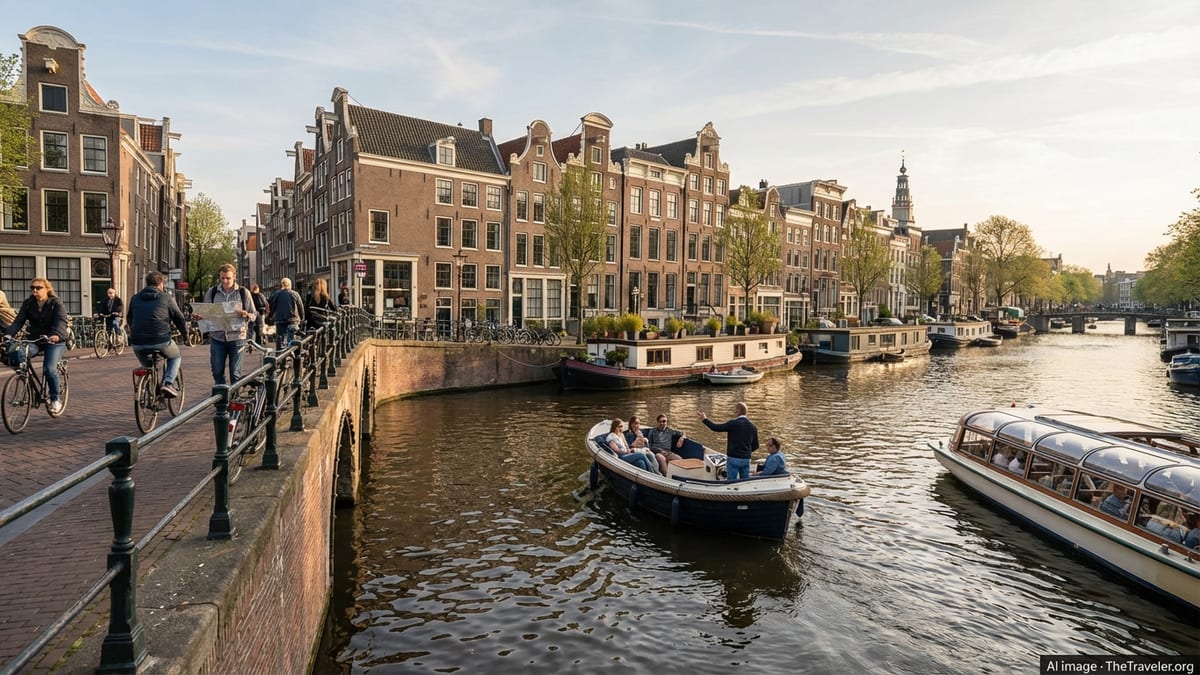
Amsterdam is one of Europe’s most visited cities, and it shows. Canals brim with tour boats, bikes whiz past on every corner and the most famous sights are booked out weeks ahead. To make the most of a trip in 2026, it helps to know not only what is genuinely worth your time and money, but also which experiences are overcrowded, overhyped or easily replaced with better alternatives.
Knowing where attractions are located helps when choosing among the best hotels in Amsterdam. This guide walks through the best things to do in Amsterdam, what to see, and what you can confidently skip, with an eye on the city’s latest rules around tourism, cannabis and the Red Light District.
Get Your Bearings on the Water: Canals and Boat Tours
The 17th century Canal Ring is Amsterdam’s defining feature and a UNESCO World Heritage site. Many first impressions of the city happen from a boat, and that is still one of the best ways to understand its layout, history and architecture.
Some sights are best experienced through well-chosen Amsterdam tours. Yet not all canal cruises are equal. Some pack in large groups with canned commentary, while others offer small-scale, atmospheric experiences that feel closer to sailing with a local friend. If you are unsure what to prioritize, this overview of Amsterdam worth visiting provides context. If you are short on time compare Amsterdam vs Paris before finalizing plans.
Take a Smaller, Open-Boat Cruise Rather Than a Mega-Barge
Standard one-hour canal tours departing from Central Station and Damrak are convenient, but they can feel anonymous, with pre-recorded audio and crowded seating. Smaller electric sloops and open boats, which usually depart from quieter spots on the Herengracht or Prinsengracht, give you better views of the canal houses, low bridges and houseboats. Many offer live commentary from skippers who actually live in the city and can answer questions about daily life and new regulations around tourism.
Look for boats that limit passenger numbers and advertise flexible, weather-dependent routes. These can divert to less congested canals when the main arteries become crowded, which has been a growing issue as Amsterdam has tried to curb overtourism in its historic core.
Explore the Canal Ring on Foot or by Bike
You do not have to be on the water to appreciate the grandeur of Amsterdam’s canal belt. Walking or cycling along the Herengracht, Keizersgracht and Prinsengracht reveals intricate gables, hidden courtyards and small museums that you miss from a boat. The Canal Ring neighborhood includes standout attractions like the Anne Frank House and several canal-house museums, but it is equally rewarding simply to wander and watch daily life unfold along the water.
If you cycle, remember that the canals are working streets, not a theme park. Keep to bike lanes, signal turns and never stop suddenly for photos on narrow bridges. Amsterdam residents have grown vocal about visitors blocking paths and creating hazards, and the city is increasingly enforcing traffic and nuisance rules.
Skip the Cheapest Mass-Market Cruises
Ultra-cheap cruises that board enormous numbers of passengers from the busiest jetties often provide the least satisfying experiences. Windows fog, seats face the wrong direction and the commentary is hard to follow. In high season, queues can be long and boarding chaotic. Given the limited time many travelers have in the city, it is worth paying a bit more for a smaller, better managed operator rather than chasing the rock-bottom price that delivers a forgettable ride.
Art and History: Choosing the Right Museums to Visit
Amsterdam’s Museum Quarter concentrates some of Europe’s best art institutions, but trying to see everything in one trip can be overwhelming and expensive. The city also has a growing constellation of smaller, more focused museums that are less crowded and often more memorable. Planning ahead is essential, as timed-entry tickets for headline attractions frequently sell out days in advance.
Prioritize the Rijksmuseum for Dutch Masters
The Rijksmuseum remains the essential introduction to Dutch Golden Age art and history. Its galleries showcase works by Rembrandt, Vermeer and Hals, as well as decorative arts, ship models and historical artifacts. A renovation completed in the last decade modernized the layout and lighting while preserving the 19th century building’s grandeur.
Timed tickets are now the norm, particularly in 2026’s busy spring and summer periods. Visiting early in the morning or in the later afternoon window can help avoid peak crowds around star pieces like The Night Watch. For many visitors, two to three hours with a focus on key highlights is more rewarding than a forced march through every room.
Visit the Van Gogh Museum, but Time It Carefully
The Van Gogh Museum holds the world’s largest collection of works by Vincent van Gogh. It traces his life and development from early Dutch landscapes to the explosive color of his final years. Because of its popularity and limited capacity, same-day tickets are often unavailable in high season. Booking several days ahead has become necessary for popular slots.
Inside, the museum is well organized and interpretive texts are strong, but the intensity of the crowds can detract from the emotional impact of the paintings. If your schedule allows, pick mid-week and off-peak hours, and consider going straight to the upper floors to work your way down opposite the main flow.
Explore the Stedelijk for Modern and Contemporary Art
For modern and contemporary art, the Stedelijk Museum on Museumplein is the city’s key institution, with a collection of around 90,000 works, including pieces by Mondrian, Malevich and numerous post-war and contemporary artists. Visitor numbers have grown significantly in recent years, but they remain lower than the Rijksmuseum and Van Gogh Museum, which makes the Stedelijk a more relaxed experience even in busy months.
Its combination of a 19th century building and a striking contemporary wing has turned the museum into an architectural landmark in its own right. Travelers who enjoy design and conceptual art will find this a worthwhile half day, and it is often easier to secure same-week entry compared with the blockbuster neighbors.
Seek Out Smaller Museums and Skip a Museum Overload
Beyond the main trio, Amsterdam’s smaller institutions provide more intimate windows into the city. The Amsterdam Museum (currently housed in a temporary location during the renovation of its main site) delves into the city’s urban history. Canal-house museums along the Grachtengordel reveal how wealthy families lived, while niche museums focus on photography, religious history and more.
Trying to pack four or five museums into a two-day visit, however, almost guarantees fatigue. Consider skipping at least one major museum if art is not your top priority. Many travelers report that rushing through multiple collections in a single day blurs them together and leaves little energy for enjoying the city’s streets and cafes.
Neighborhoods to Explore: Beyond the Overcrowded Core
Most tourists stay within a tight circle around Dam Square, the Red Light District and the Jordaan. While these areas have justifiable appeal, they now shoulder extreme visitor numbers. For a more balanced picture of Amsterdam, mix iconic districts with neighborhoods that still feel lived-in, such as Noord, De Pijp and the Eastern Docklands.
Wander the Jordaan, but Step Off the Main Routes
Once a working-class quarter, the Jordaan is now a desirable residential neighborhood known for narrow canals, courtyard gardens and independent shops. Streets like the Nine Streets cluster have become busy, especially on weekends, but turning just a few corners quickly leads to quieter stretches with traditional brown cafes, specialty food shops and local galleries.
The Jordaan is also home to several smaller museums and historic courtyards that open to the public at set times. Visiting earlier in the day or on weekdays delivers more of the atmosphere that made the neighborhood famous long before it became an Instagram backdrop.
Take the Ferry to Amsterdam Noord
Across the IJ River, Amsterdam Noord has evolved from an industrial zone to one of the city’s most interesting districts. A short free ferry ride from Central Station leads to former shipyards like NDSM, now filled with open-air artworks, studios and event spaces. In recent reporting, international travel media have highlighted Noord as a laid-back, artsy antidote to the crowds of the historic center, with waterside cafes, small breweries and even an urban winery.
Because Noord is less saturated with hotels and souvenir shops, its public spaces still feel primarily local. Spending an afternoon here, whether at a canal-side cafe, a cultural venue or an improvised urban beach, shows a different side of Amsterdam’s identity as a creative, forward-looking city.
Eat and Shop in De Pijp
De Pijp, just south of the Canal Ring, has long been a favored neighborhood for students, young professionals and new arrivals to the city. Anchored by the Albert Cuyp Market, it offers a dense mix of cafes, bars, small restaurants and design shops. Compared with the narrow lanes of the old center, its streets are wider and slightly less chaotic, though still lively.
Recent years have brought more upscale dining and boutique hotels to De Pijp, but it remains one of the best places to sample global food scenes, from Dutch snacks and Indonesian rijsttafel to Middle Eastern and Surinamese specialties. For travelers who want to experience everyday Amsterdam rather than only the postcard canals, De Pijp is a smart base or at least a must-visit half day.
Skip Spending All Your Time Around Dam Square
Dam Square and the streets radiating from it, including Damrak and Nieuwendijk, are crowded with chain stores, fast-food outlets and tour group meeting points. While the square has historic significance and is home to royal and civic buildings, it increasingly functions as a transit zone rather than a rewarding place to linger.
Using Dam as your main reference point means spending a disproportionate amount of time in the city’s most congested and least distinctive area. After a quick look, it is better to move into adjacent neighborhoods where the architecture is just as striking but life feels more authentic and less dominated by large tour groups.
The Red Light District: See with Respect, Skip the Spectacle
Few places in Amsterdam trigger more curiosity than De Wallen, the central Red Light District. It is simultaneously a historic quarter, a residential area and a regulated zone for sex work. Local authorities have spent the last few years tightening rules here in response to complaints about nuisance behavior, stag parties and disrespect toward workers and residents. Visitors need to understand these changes and adjust expectations accordingly.
Understand the New Rules and Etiquette
Recent measures in and around the Red Light District include bans on guided group tours past prostitution windows, restrictions on public drinking and a prohibition on smoking cannabis on certain central streets. Group sizes for permitted tours elsewhere have been reduced, and night-time behavior is under closer surveillance. Regulatory changes have been meant to make the area safer and more livable, not to turn it into a spectacle.
Key rules to follow when you visit include:
- No photography or filming of sex workers or their windows.
- No alcohol or cannabis consumption on the street in designated zones.
- Keep noise levels down, especially late at night.
- Do not block narrow alleys or stand staring at windows for extended periods.
Police, stewards and local business staff actively enforce these norms, and fines for violations can be significant. Respecting the rules is not only a legal obligation but also a sign of basic courtesy in a neighborhood where people live and work.
Visit Early Evening or in Daylight
Daytime and early evening are the best times for visitors who are curious about the area’s history and urban fabric rather than its party reputation. In daylight, architectural details, small churches and hidden courtyards stand out, and the atmosphere around the canals is more akin to other historic quarters of the city. Early evening offers a middle ground, when the windows are active and the lights reflected in the canals are vivid, but before the rowdiest crowds arrive.
Local safety experts now recommend avoiding the narrowest alleys in the district between about 10 p.m. and 2 a.m., especially on weekend nights. Late-night crowds are more likely to be heavily intoxicated, and petty crime such as pickpocketing is more common when visitors are distracted.
Skip Large Nighttime Pub Crawls and Voyeuristic Tours
Organized pub crawls and informal “shock tours” that treat the district as a spectacle contribute heavily to the problems that have driven the city’s new regulations. Many are now tightly controlled or banned from certain streets, but some are still marketed informally. These are best avoided. They provide little cultural context, encourage irresponsible drinking and frequently ignore local codes of conduct.
Instead, if you want to understand the district’s history and debates around sex work and urban regulation, look for educational exhibitions, documentaries or guided activities that have adapted to the rules and focus on policy, health and human stories rather than voyeurism. Or simply take a short, respectful walk to see the canals and architecture and then enjoy your evening in another neighborhood.
Cannabis, Nightlife and “Stay Away” Warnings
Amsterdam’s tolerant reputation around cannabis and nightlife has long been part of its global image. In the last few years, however, the city has explicitly tried to discourage visitors who arrive only to party hard for a weekend. “Stay Away” campaigns target disruptive behavior, and municipal rules have tightened around alcohol sales, cannabis use and noisy group activities in certain areas.
Enjoy Coffeeshops Responsibly and Know the Limits
Cannabis remains legal to buy and consume in licensed coffeeshops for adults 18 and over, but street smoking in parts of the old center, including the Red Light District, is now prohibited. Police and stewards in these zones have been empowered to issue fines to violators. Coffeeshops also operate within stricter closing times and advertising regulations than in the past.
If you choose to visit a coffeeshop, treat it like a bar or wine bar in another country. Start slowly, especially with edibles, which have a delayed effect. Avoid combining heavy cannabis use with alcohol and late-night canal walks. And remember that bringing cannabis across borders remains illegal, even within the European Union.
Seek Out Live Music and Local Bars Over Party Strips
Traditional nightlife hubs like Leidseplein and Rembrandtplein are still active, but in recent years they have seen closer policing of noise, closing times and alcohol promotions. Many of the venues in these squares target short-stay visitors with generic offerings and aggressive touts.
For a more grounded experience, look for live music venues, jazz clubs, neighborhood bars and small theaters elsewhere in the city. These tend to attract a mix of locals and visitors and are less prone to the kind of atmosphere that has prompted the city to warn “party tourists” to stay away. Reserving tables ahead of time, especially on weekends, is increasingly wise as Amsterdam works to keep nightlife manageable without shutting it down entirely.
Skip Public Drinking and Street Parties
Public drinking has been curtailed in much of the central city, with time-limited bans on alcohol sales in certain shops and explicit no-drinking zones. Street parties, amplified music and loud groups moving between bars have drawn fines and, in some cases, early closing orders for venues seen as encouraging disruptive behavior.
For visitors, this means that a low-key drink on a terrace or inside a bar is acceptable, but walking the streets with open containers or gathering noisily in residential squares is not. Beyond the risk of fines, this kind of behavior is exactly what has fueled the backlash against tourism. Skipping street drinking is both courteous and practical.
Practical Experiences Worth Your Time
Beyond the headline attractions, some simple, everyday activities in Amsterdam provide a strong sense of place and are often more enjoyable than chasing yet another “must-see.” A well-chosen bike ride, time in a park or a visit to a local market can balance out museum and nightlife experiences and make a short trip feel more complete.
Cycle, but Consider a Guided or Self-Guided Route
Amsterdam’s cycling culture is legendary, but the learning curve for visitors can be steep. The city’s bike lanes are busy commuter routes, and misunderstanding right-of-way or stopping suddenly in the path of traffic can cause accidents. For those who are not confident urban cyclists, a short guided ride on less hectic streets or marked recreational routes is a good introduction.
Self-guided routes to parks like Vondelpark or along the Amstel River are also appealing. These paths are more forgiving than the tight, multi-modal intersections near Central Station or around Dam Square. Renting bikes from reputable shops, adjusting the seat properly and asking staff for recommended routes all increase safety and enjoyment.
Spend Time in Vondelpark and Other Green Spaces
Vondelpark, adjacent to the Museum Quarter, is Amsterdam’s best-known park and a classic place to walk, picnic or people-watch. On sunny days it fills with locals and visitors, but its size usually allows space to relax. Smaller city parks, such as those in Noord and the eastern neighborhoods, offer quieter alternatives and give a sense of everyday life far from the most touristed canals.
Spending an afternoon in the park can be just as rewarding as adding another attraction to your list, particularly if you have already seen the main museums and neighborhoods. For families and long-weekend visitors, this downtime helps balance busy sightseeing schedules.
Visit Street Markets and Food Halls
Markets remain central to Amsterdam’s food and social life. The Albert Cuyp Market in De Pijp is one of the most famous, selling everything from fresh produce and fish to clothing and street food. Nearby, smaller farmers’ markets and organic markets run on specific days, particularly on weekends, in various neighborhoods.
Indoor food halls and modern market concepts give another option in poor weather, offering a mix of local and international dishes in casual settings. These spaces are ideal for trying Dutch snacks such as bitterballen and stroopwafels alongside more contemporary specialties.
Skip Overpriced “Experience” Attractions Unless They Truly Interest You
In response to tourism demand, Amsterdam has seen a rise in branded “experience” venues themed around specific foods, drinks or historic figures. While some are well produced, many are expensive for the content they provide and rely heavily on marketing. They can consume precious hours of a short trip and often add less insight than a smaller, more focused museum or a guided walking tour.
Before booking, consider whether you are genuinely interested in the subject or simply reacting to heavy promotion. In many cases, a traditional tasting in a local bar, a visit to a real working business or a free city exhibition may offer more substance and atmosphere.
The Takeaway
Amsterdam in 2026 is still the city of canals, Golden Age art and tolerant attitudes that has drawn travelers for decades, but it is also a place actively grappling with overtourism. The best experiences now combine classic sights with respectful engagement in everyday neighborhoods: a smaller canal cruise instead of a megaboat, a morning at the Rijksmuseum followed by an afternoon in Noord, a walk through the Red Light District conducted with discretion and curiosity rather than voyeurism.
Being selective about what to see and what to skip is essential. You can safely bypass some crowded central streets, mass-market cruises, late-night pub crawls and mediocre “experiences” without missing the essence of the city. In their place, prioritize time on the water, key museums, local markets, parks and creative districts away from the densest crowds. Approach cannabis and nightlife with moderation and an awareness of the city’s current rules, and you will find a welcoming, complex Amsterdam that rewards both first-time and repeat visitors.
FAQ
Q1: Do I still need to book tickets in advance for Amsterdam’s major museums?
Yes. Timed-entry tickets for the Rijksmuseum and Van Gogh Museum are now standard and often sell out days in advance, especially from spring through early autumn. Booking online before you travel is strongly recommended to avoid disappointment or long waits.
Q2: Is the Red Light District safe to visit in 2026?
For most visitors, the Red Light District is safe, particularly in daylight and early evening when streets are busy and well patrolled. Late at night, especially on weekends, crowds become rowdier and petty crime is more common. Following local rules, avoiding street dealers and staying on main, well-lit routes significantly reduces risk.
Q3: Can tourists still smoke cannabis in public in Amsterdam?
Tourists can legally purchase and consume cannabis in licensed coffeeshops, but smoking on the street is now banned in parts of the city center, including the Red Light District. Violations can lead to fines. To stay within the rules, consume cannabis only inside designated venues and follow posted signs and staff advice.
Q4: Is it worth taking a canal cruise if I plan to walk a lot?
Yes. A canal cruise gives a unique vantage point on the city’s architecture and layout, even if you also explore on foot. The key is to choose a smaller, high-quality operator rather than the cheapest mass-market option. Many travelers find that one well-timed one-hour cruise is a highlight of their visit.
Q5: Which Amsterdam neighborhoods are best if I want to avoid heavy crowds?
Areas like Amsterdam Noord, De Pijp, the Eastern Docklands and many parts of the Jordaan away from the main routes offer a more local feel and fewer large tour groups. They still have plenty of cafes, parks and cultural venues, but the pace is calmer than around Dam Square, Damrak and the busiest canals.
Q6: Is cycling in Amsterdam suitable for first-time visitors?
It can be, but it depends on your confidence as a cyclist. Traffic in the center is intense and fast-moving. First-time visitors are often better off starting with a guided ride on quieter streets or using bikes mainly for routes to parks and along the river rather than through the busiest intersections near Central Station or Dam Square.
Q7: Are guided tours still allowed in the Red Light District?
Large group tours past prostitution windows have been banned to reduce nuisance and protect sex workers and residents. Some guided activities focusing on history and urban policy remain possible under strict rules and away from the most sensitive streets. However, most visitors now explore the area independently, keeping visits short and respectful.
Q8: How has Amsterdam’s “Stay Away” campaign affected tourists?
The campaign targets visitors who come primarily to binge drink or cause trouble. In practice, it has led to stricter enforcement of rules on street drinking, noise and cannabis use in central areas, as well as earlier closing times for some venues. Travelers who behave considerately and follow local regulations are still very welcome and largely unaffected beyond enjoying a calmer atmosphere.
Q9: What should I skip if I only have two days in Amsterdam?
With limited time, you can skip long shopping sessions around Dam Square, the cheapest large canal cruises, generic nightlife strips and most heavily marketed “experience” attractions. Focus instead on one or two major museums, a quality canal cruise, a canal-ring walk, a visit to a neighborhood like Noord or De Pijp and unhurried time in a park or market.
Q10: Is Amsterdam still a good destination for families?
Yes. Families can enjoy canal cruises, parks like Vondelpark, interactive museums and boat trips to quieter neighborhoods. The key is to be selective about areas and times: avoid the Red Light District at night, steer clear of very late nightlife zones and choose accommodations in calmer districts. With thoughtful planning, Amsterdam works well for travelers of all ages.