


San Francisco’s Golden Gate Bridge earns its fame, but it hardly tells the whole story of the city. Step away from the classic postcard view and you find a patchwork of neighborhoods, markets, parks, and nighttime experiences that feel far more local than the usual checklist of attractions. Whether you are a first-time visitor or returning for a deeper dive, these are the best things to do in San Francisco beyond the Golden Gate Bridge.
Get the latest updates straight to your inbox!
Explore the Mission District’s Murals, Food, and Nightlife
The Mission District is where many locals will send you when you ask what to do beyond the bridge. It is one of San Francisco’s warmest, flattest neighborhoods and long considered the city’s historic Latino cultural heart, centered along Mission Street and Valencia Street. Here, mural-covered alleys, panaderías selling conchas and bolillos, and independent galleries share the blocks with cocktail bars and contemporary restaurants. Plan to spend at least half a day wandering and another evening if you want to see how the nightlife transforms the streets.
Start with the murals, which are as central to the Mission as cable cars are to downtown. Balmy Alley and Clarion Alley are two of the best-known stretches, with walls covered in colorful works that often speak to immigration, social justice, and neighborhood history. Many travelers simply stroll through on their own, but if you want context about the artists and movements behind the paintings, consider a walking tour with local guides or nonprofits that focus on Mission muralismo. You will see everything from decades-old political pieces to freshly painted works that change year to year.
Save time to eat your way down the corridor between Mission and Valencia. A Mission-style burrito from a classic taqueria will usually cost somewhere around 10 to 15 dollars depending on fillings, and you can still find simple, cash-only taco counters serving plates for just a few dollars. A short walk away, Valencia Street lines up contemporary restaurants, natural wine bars, and small-batch ice cream shops, making it easy to build an informal food crawl as you go. Many places now accept tap-to-pay and online reservations, but you can still stumble into hole-in-the-wall spots that operate almost entirely by word of mouth.
After dark, the Mission shifts into one of the city’s liveliest nightlife zones. Small music venues, LGBTQ-friendly bars, and cocktail lounges often run into the early hours on weekends. It is common to see people moving between a taqueria, a neighborhood bar, and a late-night bakery on the same block. As always in a big city, keep an eye on your belongings and avoid flashing expensive electronics, but the Mission remains one of the best places to feel San Francisco’s creative and community energy away from the bridge views.
Shop, Snack, and People-Watch at the Ferry Building
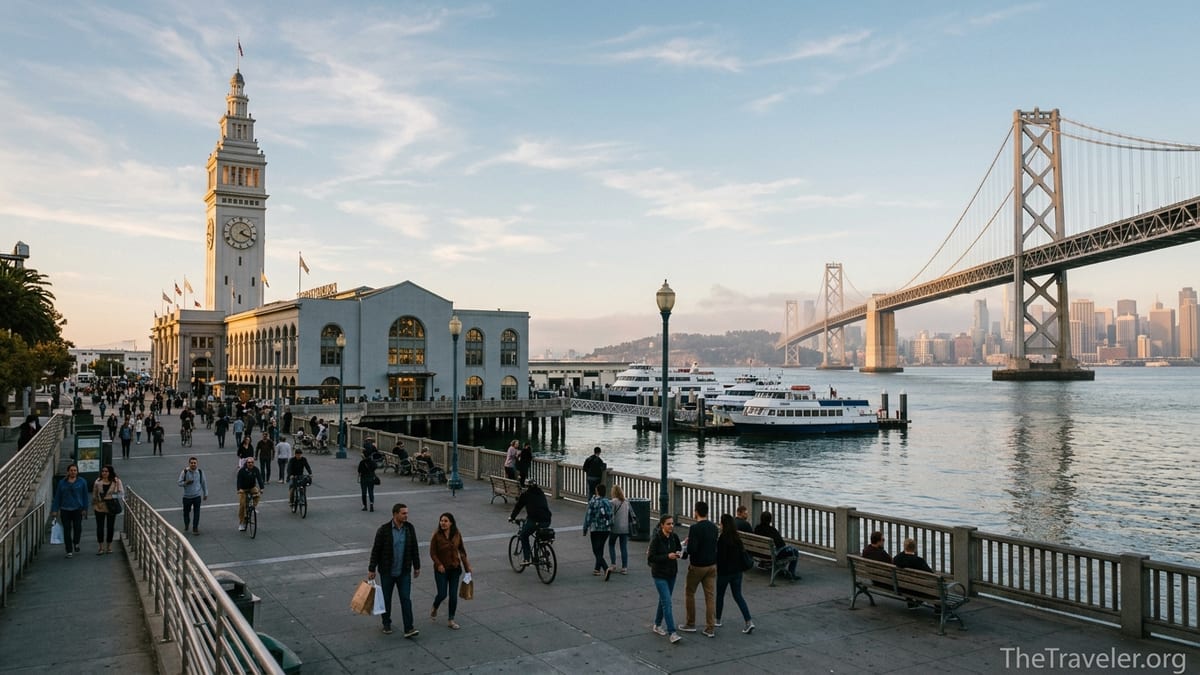
On the edge of the bay at the foot of Market Street, the historic Ferry Building is another essential stop that has nothing to do with the Golden Gate Bridge. The clock tower and arched windows mark a terminal that once handled tens of thousands of ferry commuters a day. Today, the building holds an indoor marketplace of local food producers, coffee bars, wine shops, and specialty grocers, along with one of the region’s most respected farmers markets on select days.
Inside, you can build a progressive brunch or lunch from stall to stall. Start with a specialty coffee or a cup of single-origin drip from one of the roasters, move on to oysters at a counter overlooking the water, then pick up a wedge of local cheese and a loaf of sourdough from a bakery that still uses natural starters. Prices reflect the central location and quality, so expect to pay around 4 to 6 dollars for a pastry, 5 to 7 dollars for a coffee drink, and market prices for seafood. If you enjoy tinned fish, charcuterie, or small-batch chocolate, many vendors stock brands that are difficult to find outside the Bay Area.
The outdoor farmers market, held several mornings a week, gives a sense of Northern California agriculture in a compact space. Depending on the season, you can browse tables piled with citrus, stone fruit, and heirloom tomatoes, or sample almonds, olive oil, and jams from small producers. It is an ideal place to assemble a picnic if you are heading to a park later in the day. Bring a reusable tote and some small bills; while almost every vendor accepts cards, lines move faster if you can pay quickly.
Beyond the food, the Ferry Building is a natural people-watching spot. Office workers on their coffee breaks, families with strollers, and travelers waiting for ferries to Oakland or Sausalito all blend together under the high ceilings. If you are staying in downtown or along the Embarcadero, it is worth visiting early in the morning for a quieter experience and softer light on the bay, then returning at the end of the day when the tower glows in the sunset.
Take an Alcatraz Night Tour Across the Bay
Alcatraz Island sits in the center of the bay, and visiting it is one of the city’s signature experiences that does not involve the Golden Gate Bridge at all. The standard daytime tour is popular, but if you want something that feels more atmospheric and less hurried, aim for a night tour. Ferries typically depart from Pier 33 in the late afternoon and early evening on most days between spring and fall, with ticket prices starting in the 70 to 80 dollar range for adults. Because sailings often sell out weeks ahead, particularly in summer and around holidays, booking early is wise.
The night departure gives you a sunset or twilight ride across the bay, with downtown’s skyline lighting up behind you and the island gradually coming into view ahead. Once on Alcatraz, you receive a timed audio tour that leads you through the cell blocks, mess hall, and other key areas while former guards and inmates narrate stories through headphones. After dark, staff often offer additional short talks or open areas not always accessible during the day, such as the hospital wing, though exact programming can change by season.
The experience feels different from daytime visits in simple but important ways. Corridors are more shadowed, the city views sparkle instead of glare, and the overall crowd is smaller, which leaves more room to linger over exhibits or peer into cells without a crush of people behind you. Bring a light jacket or windbreaker even in summer, as temperatures on the bay can drop quickly once the sun goes down. Comfortable shoes are essential too; the steep, paved path from the dock to the prison building can feel like a short hike.
Keep in mind that the island is a protected national site, so you will not find restaurants or snack bars beyond a simple concession area on the boat. Eat beforehand or pack a snack to eat on the ferry. After returning to Pier 33, it is easy to walk to nearby late-night spots in North Beach or along the Embarcadero for a meal or drink while you process the stories you have just heard.
Stroll Neighborhoods Like North Beach, Chinatown, and Hayes Valley
Some of San Francisco’s most rewarding moments come from walking without a strict checklist. North Beach, Chinatown, and Hayes Valley are three compact neighborhoods where you can wander on foot and still feel you have seen something specific and local at the end of a single afternoon. None of them require crossing the Golden Gate Bridge, and each has a distinct character worth exploring at street level.
North Beach, historically known as the city’s Little Italy, sits between Telegraph Hill and the waterfront. Sidewalk cafes serve strong espresso, red-sauce institutions display platters of pasta and Chianti bottles, and independent bookstores still thrive. You might pay 4 to 6 dollars for a cappuccino, 20 to 30 dollars for a plate of house-made pasta, and a few dollars for a scoop of gelato. Climb the steps toward Coit Tower for sweeping city views or simply sit at a cafe table and watch the neighborhood flow around you.
Adjacent Chinatown is one of the oldest and largest Chinese communities in North America. Grant Avenue and Stockton Street make good starting points, with lantern-strung tourist storefronts a block or two away from everyday markets where locals buy produce and dried goods. Dim sum houses range from modest takeout counters selling dumplings by the piece to large dining rooms where rolling carts circulate. Many travelers build a light lunch by ordering potstickers, har gow, and steamed buns, usually spending around 15 to 25 dollars per person.
On the other side of the downtown core, Hayes Valley has transformed into a small but stylish neighborhood of boutiques, wine bars, and dessert shops. A former freeway corridor is now a lively street lined with clothing stores from local designers, ice cream shops serving inventive flavors, and small parks where residents sit with coffee or takeout. This is a convenient place to browse for gifts like ceramics, small-batch skincare, or art books, with price points ranging from under 20 dollars to high-end pieces. In the evening, pre-show dinners are common here because the district sits within walking distance of the city’s symphony and opera houses.
Unwind in Parks from Dolores Park to Lands End
San Francisco may be a dense city, but it is threaded with parks that show off how close urban streets sit to the bay and ocean. Dolores Park, perched on a hill at the edge of the Mission District, is the city’s unofficial outdoor living room whenever the weather cooperates. On a clear weekend afternoon, you will see groups spread out on blankets with picnic baskets, portable speakers, and bakery boxes filled with pastries or empanadas picked up from nearby shops. From the north side of the park, downtown’s skyline forms a backdrop that reminds you how compact the city really is.
If you prefer a quieter walk, head to Lands End on the city’s western edge. Trails wind along cliffs overlooking the mouth of the bay, with viewpoints that frame the Pacific Ocean, the Marin Headlands, and, in the distance, the Golden Gate Bridge itself, though the bridge is not the focus of the experience. The path is well-marked and has a mix of dirt and paved sections, along with staircases that can feel strenuous if you are not used to hills. Good walking shoes and a light jacket are recommended year-round; coastal fog can roll in quickly even on days that start out sunny.
Closer to downtown, the Yerba Buena Gardens and smaller neighborhood parks offer easier access if you only have an hour to spare. Office workers often eat lunch on the grass or on benches here, and travelers can do the same with takeaway from nearby food trucks or cafes. If you are traveling with children, look for playgrounds that have been updated with modern equipment and soft ground surfaces, which are scattered across many neighborhoods including Noe Valley, the Richmond, and the Sunset. Parks in San Francisco are generally free to enter, making them a budget-friendly way to experience the city like a local.
For longer stays, consider building a rotating routine of parks. One day might start with a morning walk at Crissy Field’s shoreline paths, another with a hill climb up Bernal Heights for panoramic views, and another with a picnic in the lesser-known Glen Canyon Park. By the end of a week, you will have a sense of how much open space sits within a relatively small city footprint.
Discover Local Arts, Galleries, and Live Performances
San Francisco’s reputation as an arts city is rooted as much in its neighborhood spaces as in its major museums. While institutions like the San Francisco Museum of Modern Art and the Asian Art Museum can fill an afternoon, smaller galleries, community theaters, and music venues often provide a more intimate picture of the city’s creative life. Many of these spaces sit in or near the Mission, SoMa, and the Tenderloin, which makes it easy to pair a gallery visit with a meal or bar stop nearby.
In the Mission, you will find non-profit art centers and galleries housed in repurposed industrial buildings, including studios that open their doors for monthly or seasonal art walks. You may see exhibitions focused on local muralists, photography documenting neighborhood change, or installations by emerging artists who live within a few blocks. Entry fees are often suggested donations rather than fixed tickets, keeping the spaces accessible. Check current show calendars shortly before your trip, as lineups can change monthly.
Elsewhere in the city, community theaters and performance spaces host everything from small plays and stand-up comedy nights to experimental dance. Tickets can range from pay-what-you-can for workshop performances to 30 or 60 dollars for more established productions. For live music, look to venues that program local bands alongside touring acts, with genres spanning indie rock, jazz, hip-hop, and electronic music. Many spots keep their bar menus reasonably priced by big-city standards, with local draft beers commonly around 8 to 10 dollars.
Even if you do not buy a ticket, walking past these venues on a show night can be part of the experience. Lines curl down the sidewalks, posters for upcoming events wallpaper utility poles, and street vendors sometimes set up with hot dogs or late-night snacks near the busiest blocks. If you plan to attend, buying tickets online ahead of time is common, but some smaller shows still reserve a portion for walk-up sales at the door.
The Takeaway
San Francisco rewards travelers who look past its most photographed landmark and let the city’s neighborhoods, markets, and public spaces set the pace. From mural-lined alleys and Mission burrito counters to Ferry Building food stalls, North Beach cafes, and cliffside trails at Lands End, the most memorable experiences often unfold at street level or over a shared meal.
Building a trip around these activities keeps you rooted in real, everyday San Francisco rather than racing from one iconic viewpoint to the next. You can still admire the Golden Gate Bridge from a distance, but by the time you leave, your strongest memories may be of fresh tortillas on 24th Street, live music drifting out of a Mission bar, or the quiet of the bay on the Alcatraz ferry ride back to shore.
FAQ
Q1. How many days should I spend in San Francisco if I want to go beyond the Golden Gate Bridge?
Most travelers find that three to four full days gives enough time to explore neighborhoods like the Mission, North Beach, Chinatown, and Hayes Valley, visit the Ferry Building, take an Alcatraz tour, and still enjoy a few parks without rushing.
Q2. Is the Mission District safe for visitors at night?
The Mission is a popular nightlife area and many visitors enjoy evenings there, but like any urban neighborhood it has pockets that feel less comfortable after dark. Stay on busier streets such as Valencia and Mission, keep an eye on your belongings, use licensed rideshare or taxis late at night, and follow the same precautions you would in any major city.
Q3. Do I need to book Alcatraz tickets in advance?
Yes, especially for night tours and peak seasons. Tickets often sell out several weeks ahead in summer and around holidays, so reserving as early as you can is strongly recommended to get your preferred date and time.
Q4. What is a realistic daily budget for food in San Francisco?
Food costs vary, but a midrange budget of around 60 to 90 dollars per person per day is common if you mix coffee shops, casual lunches, and sit-down dinners. You can reduce costs by choosing street food, taquerias, and picnic supplies from markets for some meals.
Q5. Which days are best for visiting the Ferry Building?
Weekday mornings are usually calmer inside the marketplace, while farmers market days bring more energy and more vendors but also larger crowds. If you want a quieter experience, aim for early morning; if you enjoy a lively atmosphere, plan for late morning to midday on market days.
Q6. Can I explore most neighborhoods on foot, or do I need a car?
Many central neighborhoods, including the Mission, North Beach, Chinatown, and Hayes Valley, are very walkable once you arrive. Public transit, rideshares, and taxis usually make more sense than renting a car, as parking is limited and expensive in much of the city.
Q7. What should I wear for a day out in San Francisco?
Layers are essential. The city’s microclimates mean you might experience fog, wind, and warm sun in a single afternoon. Comfortable walking shoes, a light jacket, and a small daypack for adding or removing layers will serve you well.
Q8. Are there kid-friendly things to do beyond the Golden Gate Bridge?
Yes. Families often enjoy the Ferry Building, Alcatraz tours, neighborhood playgrounds, and parks like Dolores Park and Crissy Field. Many cafes and restaurants in these areas are used to children and have casual, flexible seating that works well for families.
Q9. How hilly are the neighborhoods mentioned, and will that affect my plans?
Some neighborhoods, such as North Beach and areas near Coit Tower, have steep streets and staircases, while others like the Mission and Hayes Valley are relatively flat. If hills are a concern, plan your days around the flatter areas and use transit or rideshares for steeper viewpoints.
Q10. Is it easy to combine several of these activities in one day?
It can be, as distances are shorter than they look on a map. For example, you might spend a morning at the Ferry Building, walk or take transit to Chinatown and North Beach in the afternoon, then head to the Mission for dinner. Just remember to allow extra time for hills, transit waits, and lingering in spots you enjoy.