


San Francisco rewards a bit of advance planning. The city is compact but hilly, packed with world-famous sights, and stitched together by an often confusing mix of streetcars, buses, cable cars, and regional trains. With a smart itinerary, the right transit passes, and realistic expectations about time and cost, you can see the Golden Gate Bridge, ride a cable car, explore Alcatraz, and still have time for neighborhoods, parks, and food that make the city memorable long after the fog rolls in.
Get the latest updates straight to your inbox!
Decide How Long to Stay and When to Go
For a first-time visit focused on major highlights, three full days in San Francisco is the practical minimum, with four or five days giving you time to slow down. In three days you can typically fit in the Golden Gate Bridge area, Fisherman’s Wharf and Alcatraz, a cable car ride, one or two major museums, and a couple of distinctive neighborhoods like Chinatown or the Mission. With five days you can add a half-day detour to Sausalito by ferry, a deeper food walk through the Mission or North Beach, and lingering time in parks like Golden Gate Park or the Presidio.
Weather is mild year-round, but it rarely matches the postcard image. Summer along the waterfront can mean fog, strong wind, and temperatures that feel closer to a chilly spring than a beach day. If you want higher odds of clear bridge views, the shoulder seasons of late April to June and September to mid-October tend to offer more sun inland while the coast still sees fog. Winter can be pleasantly quiet and often cheaper for hotels, but you should expect rain bursts, especially from December through February.
Weekdays are generally calmer at many attractions, especially museums like the California Academy of Sciences or SFMOMA. Weekends feel busier at Fisherman’s Wharf, Pier 39, and along the Embarcadero where both locals and visitors converge. If you are planning to visit during major events like Pride in late June or big games at Oracle Park, book accommodation early and build buffer time into your daily schedule because transit and roads around downtown can become crowded.
When you lock in your dates, think not only about flights and hotels but also about key timed experiences like Alcatraz. Popular morning departures can sell out days in advance in peak seasons. Building your itinerary backward from these fixed points helps you avoid the disappointment of missing one of the city’s signature experiences.
Choose the Right Base: Where to Stay for Easy Sightseeing
Your neighborhood base will shape how you experience the city. Many first-time visitors default to Union Square because it is a dense hotel district and a transit hub for buses, Muni Metro, and cable cars. Staying near Union Square or along Market Street between Powell and Embarcadero stations makes it easy to reach most highlights without a car, and you can walk to the Powell Street cable car turnaround early in the morning before lines swell.
If you prefer a more waterfront feel, look at hotels along the Embarcadero or around Fisherman’s Wharf. A Wharf hotel puts you within walking distance of Pier 39, the ferry piers, and the classic sea lion viewing area, and makes early morning departures to Alcatraz less stressful. The trade-off is that these areas feel more overtly touristy and can be windier and cooler, especially in summer. Prices here can also be higher than comparable properties a short Muni ride away.
Travelers who prioritize neighborhood character often split their stay or base themselves in areas like Hayes Valley, North Beach, or the Mission District, then rely on Muni and the occasional ride-hail trip to reach the main sights. For example, a small boutique hotel near Hayes Valley gives you walkable access to local restaurants and cafes while still being one or two bus rides from Golden Gate Park and the Civic Center museums. This approach works best if you are comfortable using public transit and do not mind transferring once or twice in a day.
Wherever you stay, confirm that you are near at least one frequent transit line. In practical terms, that means being within a few blocks of a Muni Metro station or a major bus corridor like lines running along Market Street, Van Ness Avenue, or Geary Boulevard. Being able to walk out the door and quickly board a bus or train will save you from long uphill walks back to your hotel after a full day of sightseeing.
Mastering Transit: Getting Around Without a Car
San Francisco is one of the few U.S. cities where you can comfortably explore the main attractions without renting a car. From San Francisco International Airport, many visitors ride BART, the regional rapid transit system, directly into the city center. You can tap a contactless bank card or mobile wallet at the BART fare gates or use a reloadable Clipper transit card, which works on almost all Bay Area transit agencies including Muni buses, Muni Metro light rail, historic streetcars, and many ferries.
For within-city travel, the most flexible tool for visitors is Clipper, which can be loaded into Apple Wallet or Google Pay or obtained as a physical card at airport and major station vending machines. A single adult bus or Muni Metro ride typically costs a few dollars, but paying with Clipper rather than cash or paper tickets can give you modest transfer discounts, such as reduced fares when you transfer between BART and a Muni bus within a set time window. This can add up if, for example, you commute from a hotel near Powell Street BART to neighborhoods like the Mission or Inner Sunset more than once a day.
Short-stay visitors focused on city highlights often benefit from Muni Visitor Passports, which come in 1, 3, or 7 day versions and provide unlimited rides on Muni buses, historic streetcars, Muni Metro, and the city’s iconic cable cars for the chosen period. While prices vary over time, the cost of a 3 day passport is typically less than the combined price of several individual cable car rides plus daily bus trips. For instance, if a single cable car ride is priced around the cost of a casual restaurant lunch per person, taking two rides per day over a weekend quickly justifies a pass.
To make transit work for you, combine digital tools and physical maps. Transit apps that show real-time arrivals for buses and rail can help you decide whether to wait for the next F Market & Wharves historic streetcar along the Embarcadero or walk instead. Inside stations, follow signage carefully, as multiple lines share platforms and the direction of travel can be confusing the first time. When in doubt, ask operators or station agents; most are used to helping visitors sort out which train or bus will get them to the Golden Gate Park, the Presidio, or the Wharf fastest.
Essential Highlights You Should Not Miss
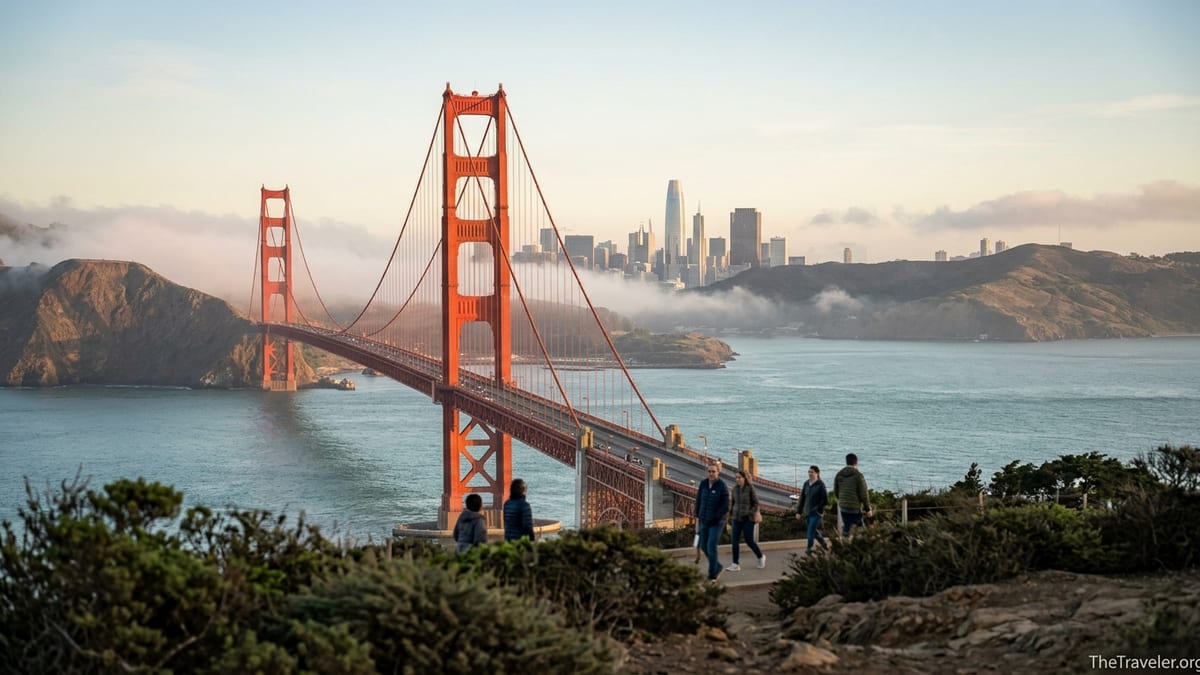
Even in a short stay, some experiences give you a disproportionate feel for the city. The Golden Gate Bridge is at the top of that list. A practical approach is to take a bus or ride-hail to the Golden Gate Bridge Welcome Center on the San Francisco side early in the morning when parking is less congested and the light is soft. From there, you can walk partway across the bridge for views back toward downtown and out to the Pacific, then explore nearby trails in the Presidio or grab coffee from the small cafes in the visitor area.
Alcatraz is another highlight that requires firm planning. Tours to the former federal prison depart from piers near Fisherman’s Wharf and typically sell tickets in timed slots. Morning sailings often offer calmer water and cooler temperatures, with audio tours guiding you through cellblocks and outdoor areas. Many visitors pair Alcatraz with a stroll through Fisherman’s Wharf, where you can watch the sea lions at Pier 39 and sample straightforward fare like clam chowder in sourdough bread bowls or Dungeness crab when in season.
Golden Gate Park offers a contrast to the waterfront. The park stretches for several miles and houses marquee attractions such as the de Young Museum and the California Academy of Sciences. Families often plan a half-day around the Academy, combining its aquarium, rainforest dome, and planetarium shows with simple playground time or a pedal boat rental on Stow Lake. If you prefer art, a timed visit to the de Young or the nearby Legion of Honor pairs well with a stroll through the Japanese Tea Garden or around the park’s meadows and windmills.
Downtown and nearby neighborhoods offer plenty of urban highlights: riding a cable car from Powell Street to Fisherman’s Wharf, walking through the lantern-lined streets of Chinatown, lingering over espresso in Italian-style cafes in North Beach, or touring SFMOMA for modern and contemporary art. Mapping them out in advance helps you link sights together efficiently. For example, you might start in Union Square, ride a cable car to the Wharf, walk along the Embarcadero to the Ferry Building food hall, then continue on foot or via streetcar back toward the Financial District and your hotel.
Sample Itineraries to Hit the Big Sights
For a three day visit focused on core highlights, a simple structure keeps you from zigzagging unnecessarily. On Day 1, stay mostly along the waterfront. After checking in, walk or ride a streetcar down the Embarcadero to the Ferry Building and browse its bakeries and food stalls. Continue to Fisherman’s Wharf, visit Pier 39, and time a late afternoon or sunset bay cruise that sails under the Golden Gate Bridge and circles Alcatraz. Ending the day with a seafood dinner near the Wharf or a casual meal in North Beach lets you experience two very different moods of the city in a single evening.
Day 2 can revolve around Alcatraz and classic city icons. Start with a morning Alcatraz departure, then return to the Wharf for lunch. In the afternoon, ride a cable car back toward Union Square, stopping for a brief wander through Chinatown. Climb up to a viewpoint like Coit Tower by foot or transit in late afternoon for panoramas over the downtown skyline and the Bay Bridge. After sunset, head to the Mission District for dinner at a taqueria or small bistro and a short walk along Valencia Street to sample local ice cream or coffee.
On Day 3, focus on the west side: Golden Gate Park and the Presidio. Depending on your interests, start with the California Academy of Sciences or de Young Museum in the morning, then picnic or grab a casual lunch in the park. In the afternoon, take a bus or rideshare up to the Golden Gate Bridge Welcome Center, walk part of the bridge, and then continue into the Presidio to explore its overlooks and trails. If you still have energy, end your trip with a late afternoon drink or early dinner at one of the Presidio’s restaurants overlooking the bay before heading back downtown.
If you have a fourth or fifth day, consider a ferry ride to Sausalito for waterfront views back to the city, a deeper museum day at SFMOMA and the nearby Contemporary Jewish Museum, or a neighborhood-focused day in the Castro and Haight-Ashbury. The key is to cluster activities by geography and transit routes so you spend more time experiencing the city and less time figuring out which bus or train to take next.
Saving Time and Money on Major Attractions
San Francisco’s top sights can add up quickly, especially for families. One popular strategy is to use an attraction pass that bundles multiple admissions. For example, a current version of the San Francisco CityPASS offers one-time admission to four different attractions such as the California Academy of Sciences, Aquarium of the Bay, Blue & Gold Fleet bay cruises, the Exploratorium, SFMOMA, the Walt Disney Family Museum, the San Francisco Zoo & Gardens, or the de Young Museum and Legion of Honor. At recent pricing, an adult pass costs under one hundred dollars and claims savings approaching half off the combined box office value of the included tickets when used fully.
These passes work best if you already know you want to visit at least two expensive attractions that are part of the package. For instance, pairing the California Academy of Sciences with a bay cruise and Aquarium of the Bay can individually cost more than the bundled ticket, especially for families with school-age children. On the other hand, if your interests lean more toward neighborhoods, parks, and free viewpoints, a pass may not be worthwhile and you are often better served paying for one or two specific museums at the door.
Time is as important as money. Buying timed-entry tickets online in advance for high-demand attractions like Alcatraz and the California Academy of Sciences lets you choose early slots that avoid crowds and free up afternoons. Many museums also offer occasional free or discounted days for residents, which might not apply to you as a visitor but can still influence crowd levels. Checking event calendars before you arrive helps you avoid, for example, planning your only Golden Gate Park day on the same afternoon as a major music festival that will impact transit and park access.
For food, you do not need to spend heavily to eat well. In many central neighborhoods, you can find excellent tacos, dim sum, or casual noodle shops that cost only a bit more than national fast-food chains. In practice, a day might include a bakery breakfast near your hotel, a mid-price lunch at the Ferry Building or a Chinatown cafe, and a more splurge-worthy dinner once per trip at a well-regarded seafood spot or farm-to-table restaurant. Building at least one picnic meal into your itinerary, using provisions from a local supermarket or farmers market, is also an enjoyable way to experience the city’s parks and save on restaurant tabs.
Staying Safe and Setting Realistic Expectations
Like many big cities, San Francisco combines postcard views with visible social challenges. Visitors often notice encampments or open drug use around certain blocks of downtown and the Tenderloin. In practical terms, this means being thoughtful about where you walk at night, especially if you are unfamiliar with the area. Many travelers feel comfortable in well-trafficked neighborhoods like North Beach, the Embarcadero, or the main corridors of the Mission in the early evening, but prefer ride-hail or taxis for late-night returns rather than long walks through quiet areas.
The most common problems visitors encounter are petty theft and car break-ins rather than violent crime. Rental cars that are parked with luggage in view are particularly vulnerable, so if you do choose to rent a car for a side trip, avoid leaving anything visible inside, even for a short stop. When riding crowded buses, cable cars, and streetcars, keep your phone and wallet secure and avoid setting bags down by your feet where you cannot see them. Traveling with a simple cross-body bag worn in front or a small daypack that closes securely is usually sufficient.
Setting realistic expectations about hills and weather can also make your trip more enjoyable. Walking apps may underestimate how tiring a “short” uphill walk can feel after a day of sightseeing. When mapping out distances, remember that climbing from the waterfront up to areas like Coit Tower or Nob Hill can feel more like a hike than a stroll. If mobility or energy is a concern, do not hesitate to use transit for even short segments, such as taking a bus up a steep hill and walking down at a more leisurely pace.
Finally, plan for the city’s microclimates. It is common to feel warm and comfortable in Golden Gate Park in the late morning, then need a jacket and scarf by the time you reach the Golden Gate Bridge or Twin Peaks in the afternoon. Carrying a light, packable layer and a small umbrella or rain shell in winter ensures you can adapt without having to cut your day short. This kind of flexible, realistic planning lets you enjoy the city’s highlights instead of battling its quirks.
The Takeaway
Planning a trip to San Francisco without missing the major highlights comes down to a few concrete choices. Give yourself at least three full days, aim to stay near reliable transit, and decide early which headline experiences like Alcatraz, the Golden Gate Bridge, and Golden Gate Park matter most to you. Use the city’s transit system with tools like Clipper and, where it makes sense, visitor passes to move efficiently between sights without the expense and hassle of a car.
Cluster your days by area so you are not constantly crossing town, and look at attraction passes only if they match the museums and tours you would pay for anyway. Accept that fog, hills, and crowds are part of the experience, and build in a little slack time each day for an unplanned cafe stop, a detour into a neighborhood bookstore, or a sunset that looks promising from a nearby hill. With this kind of grounded, thoughtful planning, you will leave feeling that you have seen the San Francisco you came for, rather than just racing from one attraction queue to another.
FAQ
Q1. How many days do I need in San Francisco to see the main highlights?
Most first-time visitors should plan on at least three full days to comfortably see the Golden Gate Bridge, Alcatraz, Fisherman’s Wharf, a cable car ride, and one or two major museums, with four or five days allowing more neighborhood and park time.
Q2. Is it worth renting a car for a short stay in San Francisco?
For a stay focused on city highlights, a rental car is usually more hassle than help due to traffic, difficult parking, and the risk of car break-ins. Public transit, walking, and occasional ride-hail trips are usually enough unless you are planning day trips to places like Napa or Muir Woods.
Q3. Which neighborhood is best to stay in for sightseeing without a car?
Areas around Union Square, Market Street between Powell and Embarcadero, and the Embarcadero itself are practical bases because you can walk to major transit lines, catch cable cars, and reach the waterfront easily. Fisherman’s Wharf is also convenient for Alcatraz and bay cruises, though it is more tourist-focused.
Q4. Do I need a Clipper card, or can I just tap my credit card on transit?
On many systems you can tap a contactless bank card or mobile wallet to enter, but a Clipper card or Clipper in your phone is often better for visitors who will ride multiple systems, because it can provide transfer discounts and makes it easier to manage fares across buses, Muni Metro, and some ferries.
Q5. Is an attraction pass like San Francisco CityPASS really a good deal?
It can be, if you plan to visit several included high-priced sights such as the California Academy of Sciences, a bay cruise, and another major museum or aquarium. If your itinerary is lighter on paid attractions and heavier on neighborhoods and parks, you may save more by buying individual tickets.
Q6. How far in advance should I book Alcatraz tickets?
In busy seasons, it is wise to book Alcatraz tickets at least several days in advance, and earlier if your dates are fixed or you want a specific morning or evening sailing. Same-day tickets are possible but cannot be relied on during holidays and peak travel times.
Q7. What is the easiest way to get from San Francisco International Airport to downtown?
BART runs directly from the airport to central city stations like Powell and Montgomery, and many visitors find it the simplest, most cost-effective option. Taxis and ride-hail are more expensive but can be convenient if you have heavy luggage or are arriving very late at night.
Q8. Is San Francisco safe to walk around at night?
Many popular areas remain lively and feel generally comfortable in the evening, but it is best to stay on well-lit, busy streets and avoid wandering into unfamiliar, quieter blocks. Using ride-hail or a taxi for late-night returns, especially if you are tired or carrying valuables, is a sensible precaution.
Q9. What should I pack for the weather?
Plan on layers rather than heavy coats. A light sweater or fleece, a windproof or waterproof outer layer, and comfortable walking shoes are essential. Even in summer you may need a jacket near the water or on the Golden Gate Bridge, while inland neighborhoods can feel much warmer.
Q10. Can I see the Golden Gate Bridge well without joining a tour?
Yes. You can take a city bus or ride-hail to the Golden Gate Bridge Welcome Center, walk part of the span, and explore nearby viewpoints in the Presidio or on the Marin side on your own, often with more flexibility and less cost than an organized tour.