


San Francisco and Los Angeles sit just a one-hour flight apart, yet they offer dramatically different versions of California. One is compact, hilly, and walkable, with Victorian homes and fog rolling over the bay. The other sprawls across a vast basin of beaches, freeways, and palm-lined boulevards. If you are planning a California trip and only have time for one, choosing between them comes down to your travel style. This guide breaks down how each city actually feels to visit today, with concrete examples of neighborhoods, prices, and experiences so you can decide where your time and budget will go furthest.
Get the latest updates straight to your inbox!
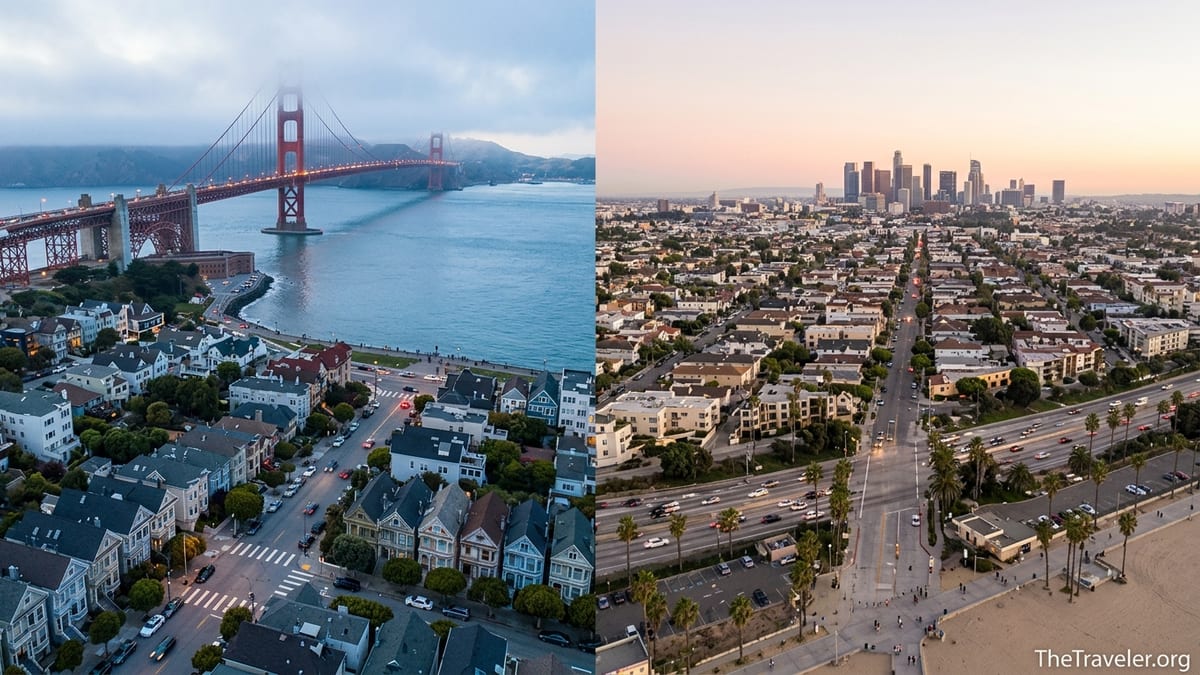
Overall Vibe: Compact Bay City vs Sprawling Megacity
San Francisco feels like a dense European-style city wrapped in West Coast scenery. The core tourist areas from Fisherman’s Wharf to the Ferry Building, the Financial District, North Beach, and Chinatown are close enough that many visitors walk between them in a single day. You might start your morning with coffee in North Beach, stroll through Chinatown, cut across Union Square, and watch the sunset at the Embarcadero without ever getting in a car. The city’s famous hills and frequent fog add drama, but they also mean cooler temperatures and a cozier, more neighborhood-driven experience.
Los Angeles, by contrast, is all about scale. The metro area stretches from Malibu and Santa Monica on the Pacific all the way inland to Pasadena and beyond, with distinct pockets like Hollywood, Downtown, Koreatown, Silver Lake, and Venice separated by miles of freeway. It is entirely possible to spend an hour driving from Santa Monica to Highland Park even outside rush hour. The reward is a huge variety of scenes: surfer mornings in Manhattan Beach, shopping in West Hollywood in the afternoon, and rooftop cocktails in Downtown at night. The trade-off is that you will likely rely heavily on rideshare or a rental car.
If you want a trip where you can drop your bag at a hotel and explore primarily on foot or transit, San Francisco will feel more manageable. If your ideal vacation is about sampling many different neighborhoods and you do not mind time on the road, Los Angeles might feel more exciting.
Weather is another clear differentiator. San Francisco summers often sit in the low 60s Fahrenheit with wind and marine fog, especially around the Golden Gate and the western neighborhoods. You will see tourists in hoodies at Fisherman’s Wharf in July. Los Angeles runs warmer and sunnier, with many beach days in the 70s and 80s from late spring through early fall. Travelers dreaming of guaranteed T-shirt weather and beach time will find LA more reliable.
What Kind of Traveler Are You?
Think about your travel priorities before picking a city. If your dream California experience is classic city-sightseeing with famous landmarks, historic streets, museums, and a strong public transit backbone, San Francisco lines up well. A first-time visitor can easily focus on a tight loop: ride a cable car from Powell Street toward Fisherman’s Wharf, walk to Ghirardelli Square, take a bay cruise with views of Alcatraz and the Golden Gate Bridge, and finish with dinner in North Beach or the Mission District. You will feel like you have “seen the city” in a relatively short stay.
Los Angeles rewards travelers who care more about lifestyle than landmarks. Yes, you can tick off the Hollywood Sign, the Walk of Fame, and the Griffith Observatory, but the city’s real appeal is slipping into local routines. That might mean joining pre-work surfers at Venice Beach at dawn, having tacos at a strip-mall stand in East LA for lunch, and watching a movie at a historic theater in Hollywood in the evening. If you enjoy spending time in coffee shops, people-watching on outdoor patios, and exploring niche interests like street art, specialty shopping, or live music, LA gives you endless options.
Families with young kids might find San Francisco a bit simpler because distances are shorter, and key sights cluster around the waterfront. Trips to the California Academy of Sciences in Golden Gate Park, the Exploratorium on the Embarcadero, or a short ferry ride to Sausalito keep logistics straightforward. Los Angeles, however, is the better choice if your children are fixated on theme parks or movie magic, since Universal Studios Hollywood lies within the metro area and Disneyland Resort in Anaheim is roughly a 45-minute to 1.5-hour drive depending on traffic.
Solo travelers and digital nomads often lean toward Los Angeles if they prioritize diverse nightlife and co-working friendly cafes, especially in areas like Silver Lake, Echo Park, or the Arts District. Those who value walkable neighborhoods and a strong sense of place may prefer basing themselves in San Francisco areas like Hayes Valley, the Mission, or Nob Hill, where you can live without a car and still have dozens of dining and bar options within a few blocks.
Neighborhoods and Experiences: Side-by-Side
In San Francisco, neighborhoods sit close together, each with its own distinct character. The Mission District, for example, combines historic Latino roots with some of the city’s trendiest restaurants and murals stretching down alleys off 24th Street. A typical evening might involve happy hour at a small mezcal bar, a stroll past colorful street art, and dinner at a modern Mexican or Californian restaurant. A short ride away, the Castro offers LGBTQ+ history, bars, and small theaters, while nearby Noe Valley and Bernal Heights feel more residential but still host excellent brunch spots and neighborhood parks with panoramic views.
Just a few miles north, North Beach channels an Italian village atmosphere with old-school cafes and bars that trace their history back to Beat-era writers. From there you can reach Coit Tower or walk down to the waterfront. The compactness of the city means you can realistically experience three or four distinct neighborhoods in one day without spending much time in transit.
Los Angeles neighborhoods are more spread out and self-contained. Santa Monica offers a polished, beach-town feel with the Third Street Promenade, bike rentals for rides along the Marvin Braude Bike Trail, and a range of hotels a short walk from the sand. Twenty to thirty minutes away by car, Venice has a looser, more bohemian energy with its boardwalk performers, skate park, and eclectic Abbot Kinney Boulevard lined with boutiques and cafes. Drive inland and you hit Culver City, which has developed into a solid base with studios nearby, a walkable downtown, and midrange hotels that often cost less than those by the beach.
On the eastern side of LA, areas like Silver Lake and Echo Park attract travelers who prefer independent coffee shops, live music venues, and hillside streets dotted with mid-century homes. Downtown Los Angeles has transformed over the past decade into a district of warehouses converted into galleries, lofts, rooftop bars, and concert halls like the Walt Disney Concert Hall. However, distances add up quickly. A day that includes brunch in Los Feliz, an afternoon at the beach, and an evening show in Downtown will involve significant time in transit, so you will need to plan your days more carefully than in San Francisco.
Costs, Transportation, and Getting Around
Both cities are expensive by US standards, but they impact your budget in different ways. In San Francisco, hotel rates in central areas like Union Square, Fisherman’s Wharf, or the Embarcadero often run at a premium, especially in peak months from late spring through early fall and during big tech conferences. Food can also be pricey, with casual sit-down dinners in popular neighborhoods frequently landing in the 25 to 40 dollar per person range before drinks and tip. That said, the city’s compact size and solid transit options can help you save on transportation.
San Francisco’s public transit system, anchored by Muni buses and light rail, supplemented by regional BART trains, connects most tourist areas reasonably well. Visitors frequently opt for transit passes that allow unlimited rides over a set number of days, and single rides on local transit are usually just a few dollars. If you are staying near a BART or Muni Metro line, you can travel between the airport, downtown, the Mission, and other dense neighborhoods without renting a car. For occasional gaps or late-night returns, rideshare trips across the core city often fall into the 10 to 25 dollar range, depending on distance and demand.
In Los Angeles, nightly hotel rates vary more by location. Beachfront hotels in Santa Monica or a boutique stay in West Hollywood can be as costly as or more expensive than San Francisco, but you will also find a wider selection of midrange chain properties in places like Hollywood, Koreatown, or near LAX that can be more budget-friendly. Dining has an enormous range too. You could spend 15 dollars for a generous plate at a family-run taco stand in Highland Park or 200 dollars for a special-occasion tasting menu in Beverly Hills.
The biggest financial wildcard in LA is transportation. The LA Metro rail and bus system has expanded, and a single ride is priced low with daily fare caps that keep your total spending to roughly the cost of a small number of rides per day. However, coverage and frequency still lag behind traditional transit cities, especially at night or when you want to move between two neighborhoods not well linked by rail. Most visitors either rent a car or rely heavily on rideshare. Renting a compact car for a week, plus fuel and parking fees at hotels and attractions, can significantly add to your total trip cost. Uber or Lyft rides, especially in traffic or during surge pricing, can also stack up; a single cross-town trip from Santa Monica to Downtown might cost as much or more than an entire day of transit in San Francisco.
Food, Culture, and Nightlife
San Francisco punches above its weight in food and culture for a city of under a million residents. You will find high-end tasting menus in neighborhoods like SoMa or Jackson Square, along with inventive casual restaurants in the Mission, Hayes Valley, and the Inner Richmond. The city’s proximity to Napa and Sonoma means strong wine lists and easy options for day trips to vineyards if you are willing to rent a car or join a tour. For budget-conscious travelers, the city still offers classic cheap eats, from burrito shops along Mission Street to dim sum in Chinatown and bánh mì in the Tenderloin and Little Saigon areas.
Culturally, San Francisco offers a dense cluster of museums and performance venues within a relatively small area. You can spend a day at the de Young Museum and the California Academy of Sciences in Golden Gate Park, visit the San Francisco Museum of Modern Art near Yerba Buena Gardens, and catch a performance at the San Francisco Symphony or Opera in the Civic Center, all connected by transit. Nightlife leans more toward intimate cocktail bars, neighborhood pubs, and live music in venues such as those along Valencia Street or in SoMa, rather than mega-clubs.
Los Angeles, as the center of the US entertainment industry, offers sheer variety in culture and nightlife. The city is packed with live music venues, from small indie spaces in Echo Park to major theaters hosting touring acts in Hollywood and Downtown. If you have always wanted to experience a comedy show where up-and-coming performers share the stage with surprise drop-ins from well-known names, LA’s comedy clubs around Hollywood and the Valley deliver that possibility. Film lovers can catch repertory screenings at historic theaters or open-air showings in parks during summer.
On the dining side, Los Angeles is arguably more experimental and wide-ranging, particularly at the midrange price point. Neighborhoods like Koreatown, Thai Town in East Hollywood, Little Tokyo Downtown, and the San Gabriel Valley to the east offer some of the deepest and most diverse ethnic dining in the United States. You might have Korean barbecue one night, hit a strip-mall Szechuan restaurant the next, and grab Oaxacan tlayudas from a street vendor another evening. Late-night options are generally better in LA too, especially in Koreatown and parts of Hollywood, which is useful if you tend to eat or go out later than the typical dinner rush.
Outdoor Access and Scenic Highlights
San Francisco’s compact waterfront location gives it spectacular scenery within minutes of the city center. Walking or biking across the Golden Gate Bridge, exploring the trails in the Presidio, or hiking up Twin Peaks for a sweeping view of the bay does not require a full-day excursion. A short bus ride or rideshare can take you to Lands End, where coastal trails wind along cliffs overlooking the Pacific, or to Ocean Beach, a wide stretch of sand that feels surprisingly wild for being at the city’s western edge.
For day trips, San Francisco puts you close to wine country in Napa and Sonoma, the redwoods of Muir Woods, and coastal towns like Half Moon Bay. These usually require a car or an organized tour, but driving times are often under an hour to ninety minutes each way. Many visitors use San Francisco as a base for a broader Northern California itinerary that includes stops in places like Point Reyes National Seashore or the Monterey Peninsula.
Los Angeles also delivers excellent outdoor access, but in a different pattern. Beach culture is central here: miles of coastline from Malibu to the South Bay offer everything from rugged coves to wide sandy beaches lined with volleyball courts and bike paths. In Santa Monica and Venice you can rent bikes or electric scooters and ride along the ocean for miles, stopping at piers, cafes, and lookout points along the way.
Inland, LA surprises many visitors with its hiking options. Griffith Park, one of the largest urban parks in the country, offers trails to the Griffith Observatory and viewpoints of the Hollywood Sign. Further afield, the Santa Monica Mountains provide hiking with ocean views, while drives into the San Gabriel Mountains can take you into cooler, forested terrain that often sees snow in winter. As with much of life in LA, though, reaching these spots usually requires a car and some patience with traffic.
Trip Length, Itineraries, and When to Go
If you have three or four days, San Francisco is easier to “complete” without feeling rushed. A typical long weekend might look like this: arrival and afternoon exploring the Embarcadero and Ferry Building; a full day dedicated to Alcatraz and Fisherman’s Wharf with a side trip to North Beach; a day in Golden Gate Park and the Haight or Inner Sunset; and a final morning for last-minute shopping around Union Square or Hayes Valley. You could also swap in the Mission and Castro for one of those days, all without needing to rent a car.
Los Angeles benefits from a bit more time. With five to seven days, you can assign each day to a cluster: a beach day in Santa Monica and Venice, a Hollywood and Griffith Park day, a Downtown and Arts District day, a day in Silver Lake and Echo Park, and perhaps another reserved for Universal Studios or a drive to Disneyland. Shorter trips are still worthwhile, but you will need to be more selective, and your experience will depend heavily on where you base yourself. For instance, staying in Santa Monica and focusing on the Westside will feel very different than staying in Downtown and spending more time in the arts and food scenes there.
Seasonality also differs between the two cities. San Francisco’s classic foggy summer often surprises visitors expecting hot weather, while September and October tend to be warmer and clearer, making early fall a sweet spot for views and outdoor dining. Winter can bring rain, but temperatures remain relatively mild. Los Angeles, with its generally sunnier and warmer climate, is comfortable to visit virtually year-round, though midsummer heat waves can push inland temperatures quite high. If you want to hike and enjoy the beach without extreme heat, late spring and early fall are often ideal.
One strategy some travelers use is to fly into one city and out of the other, connecting them by a coastal road trip along Highway 1 or a quick flight. If your schedule allows a week or more, this can give you both experiences: a few days of compact city exploration in San Francisco and then a leisurely drive or train ride down the coast before diving into LA’s neighborhoods and beaches.
The Takeaway
Choosing between San Francisco and Los Angeles is less about which city is objectively better and more about which one matches your personality and priorities. San Francisco suits travelers who value walkability, strong public transit, compact neighborhoods, and time spent lingering in cafes and parks with big views. It works especially well for shorter trips where you want to see a lot without renting a car, or for visitors who are drawn to history, architecture, and a more contained urban experience.
Los Angeles is ideal for travelers who want breadth instead of compactness: a deep dining scene, many distinct neighborhoods, big beaches, and a constant sense of possibility linked to the entertainment world. It requires more planning and usually more time in cars, but it rewards that effort with variety and a lifestyle-driven trip that feels very different from most other US cities.
If you only have three or four days and prefer to move mostly on foot or by transit, San Francisco is likely the smoother choice. If you have a week, do not mind driving or rideshare, and are excited by the idea of hopping from beach to hills to nightlife across a huge metropolitan map, Los Angeles may fit your style better. Whichever city you choose, focusing on just a few neighborhoods and experiences rather than chasing every landmark will lead to a richer, less stressful California escape.
FAQ
Q1. Which city is better for a first-time visitor to California?
San Francisco is often easier for first-timers because of its compact size, strong transit, and clear set of must-see sights. Los Angeles can feel overwhelming on a short visit, but it is fantastic if you have more time and are comfortable navigating a large, car-oriented city.
Q2. Do I need a car in San Francisco or Los Angeles?
In San Francisco, you can comfortably rely on public transit, walking, and rideshare for most central neighborhoods, especially on a short stay. In Los Angeles, a car is helpful for reaching beaches, neighborhoods, and trailheads across the region, though you can base yourself near a Metro line and supplement with rideshare if you prefer not to drive.
Q3. Which city is more budget-friendly?
Both are expensive, but costs show up differently. San Francisco may have higher hotel and dining prices in core areas, yet you can save on transportation by using transit. Los Angeles offers more variation in hotel and food prices, including many budget options, but transportation costs can add up quickly if you rely heavily on rideshare or rent a car with paid parking.
Q4. Where should I go if I want the best beaches?
Los Angeles is the better choice for beach-focused trips. Areas like Santa Monica, Venice, Malibu, and the South Bay offer wide sandy beaches, bike paths, and a strong beach culture. San Francisco has beaches such as Ocean Beach and Baker Beach, but cooler temperatures and strong currents make them better for walks and views than for typical swimming.
Q5. Which city is safer for tourists?
Both cities have generally safe tourist areas alongside neighborhoods where you should be more cautious, especially at night. In each city, sticking to well-lit, busy areas, avoiding leaving valuables in cars, and staying aware of your surroundings is usually sufficient. Choosing centrally located accommodation in established visitor districts helps simplify safety and logistics.
Q6. Is it realistic to visit both cities in one trip?
Yes, many travelers visit both in one trip by flying between them or driving the coastal route. If you have a week or more, you might spend three or four nights in San Francisco and three or four nights in Los Angeles. For shorter trips, focusing on one city tends to give a more relaxed and meaningful experience.
Q7. Which city has better public transportation?
San Francisco has more practical public transit for visitors, with Muni, BART, and regional trains linking the airport, downtown, and dense neighborhoods. Los Angeles Metro has improved and offers good connections along certain corridors, but overall coverage and frequency still mean many visitors supplement with cars or rideshare.
Q8. Where should I go if I love food and nightlife?
Both cities have excellent food scenes, but Los Angeles offers more breadth at the midrange price point and stronger late-night options, especially in Koreatown, Hollywood, and Downtown. San Francisco excels in farm-to-table, seafood, and neighborhood dining with great cocktails and wine bars, though many venues close earlier than their LA counterparts.
Q9. Which city works better for families with kids?
San Francisco works well for families who prefer manageable distances, hands-on museums, and scenic outdoor spots like Golden Gate Park and the bayfront. Los Angeles is ideal if your kids are excited about theme parks and movies, thanks to places like Universal Studios Hollywood and relatively easy day trips to Disneyland.
Q10. When is the best time of year to visit each city?
San Francisco is often at its best in early fall, when skies are clearer and temperatures are slightly warmer than in summer. Los Angeles is pleasant most of the year, with late spring and early fall often providing warm beach weather without the most intense heat. Checking expected temperatures and events before you book can help you match your trip to your planned activities.