


Curving along the eastern side of Cap d’Antibes, Plage de la Garoupe is one of the most coveted stretches of sand on the French Riviera. With shallow turquoise water, views across the Baie des Anges toward Antibes and the Alps, and a mix of simple public areas and upscale beach clubs, it offers a classic Riviera day at the beach. It also has quirks: limited public space, strict coastal protection rules, and parking that fills before many visitors have finished breakfast. Here is what to know before you go, so your day at La Garoupe feels effortless instead of frustrating.
Get the latest updates straight to your inbox!
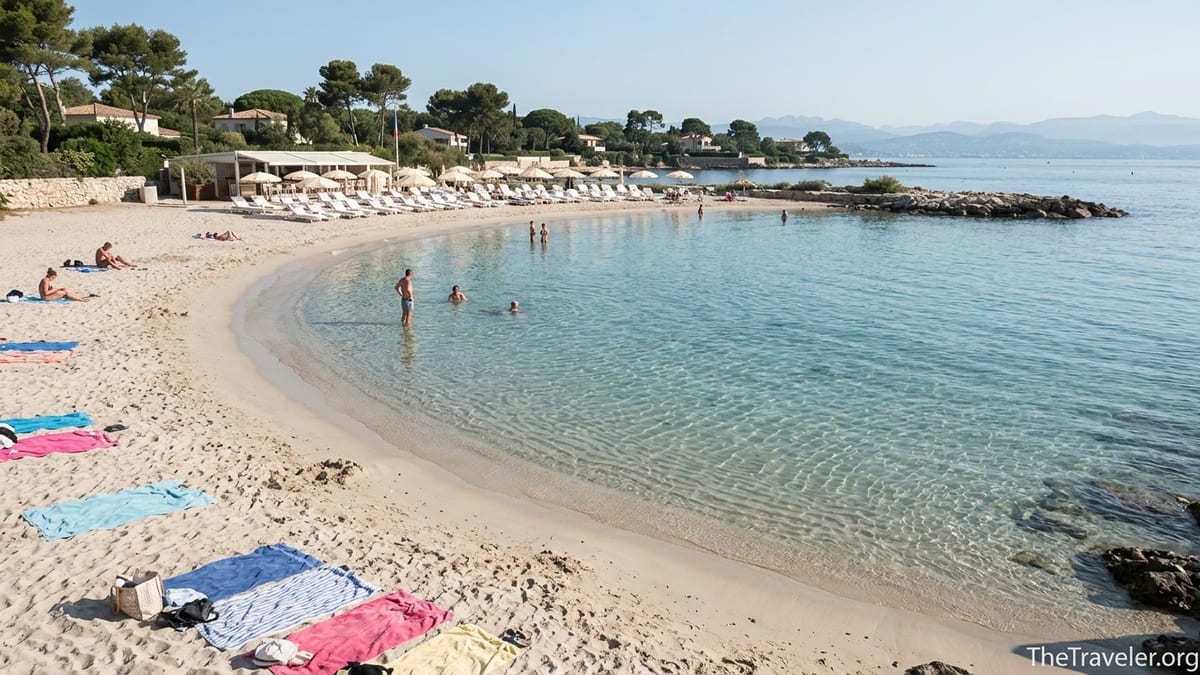
Understanding the Layout: Public Sand vs Private Beach Clubs
One of the first surprises at Plage de la Garoupe is how little of the sand is actually public. In summer, most of the crescent is occupied by private beach concessions such as Plage Keller and Plage Joseph, with rows of loungers and restaurant terraces close to the water. Only a couple of relatively small strips at either end remain free public beach. These public patches sit on the same postcard curve of soft sand and clear water as the clubs, but they can feel very busy because they concentrate all non-paying visitors into limited space.
If you plan to use the public areas, it is worth arriving early, particularly in July and August when families and locals set up by mid-morning. By 10:30 or 11:00 a.m., towels may already be packed tightly together, and latecomers often end up sitting close to the rocks or at the back of the sand. Many regulars aim to be on the beach around 9:00 a.m., when the light is soft, temperatures are more comfortable, and there is space to spread out a bit.
For those considering a beach club, understanding the layout helps you choose where to book. Plage Keller, one of the best-known clubs here, occupies a prime central slice of the bay, with its signature pale loungers, parasols, and a restaurant terrace that looks directly over the sea. Next door, Plage Joseph has a more contemporary style, also with a mix of loungers and a full-service restaurant. Both share the same calm, shallow water but offer slightly different atmospheres, so many visitors decide based on the restaurant menu or the vibe they notice while walking along the sand.
Regardless of whether you choose public or private sections, you all share the same sea and the same views. The setting is compact enough that you can stroll the entire curve in a few minutes, checking prices on boards outside each club and deciding whether to splurge on a lounger for part of the day or stick to a towel on the public sand.
Costs, Reservations, and What You Get for Your Money
Spending the day in a private beach club at Plage de la Garoupe is a classic Riviera indulgence, but it is not inexpensive. Exact rates vary by season and front-row location, yet visitors commonly report paying in the region of a few dozen euros per person for a full-day lounger and umbrella during high season, with a premium for front-row beds closest to the water. It is common for clubs to ask for a minimum spend on food and drinks during peak summer days, especially for front-row spots.
In practice, a couple might expect to spend the equivalent of a modest restaurant dinner for a full day in a club. For example, two loungers, an umbrella, shared starters, main courses like grilled sea bass or a niçoise salad, and a bottle of chilled rosé can easily total into the low hundreds of euros at one of the prime clubs in July. Ordering soft drinks, coffee, and perhaps an afternoon dessert will nudge the bill higher. On shoulder-season weekdays in late May or September, prices are often lower and minimum spends more flexible.
Reservations matter if you are visiting between late June and late August or on sunny weekends. Plage Keller and Plage Joseph both accept bookings by phone or through hotel concierges, and locals often reserve a week or more in advance for specific dates such as a Saturday in August. Without a reservation, you may still secure loungers if you arrive at opening time, but walk-ins around lunchtime risk finding that only back rows or no beds at all remain available.
What you get in return goes well beyond the physical lounger. Beach clubs provide shade, waiter service to your bed, access to changing rooms and showers, and easy ordering of drinks, snacks, and full meals without leaving your spot. There is usually a lifeguard or experienced staff watching the water in front of the club, even if there is no separate public lifeguard post for the entire beach. For many visitors, especially families with children or people planning to stay all day, the combination of comfort, service, and security justifies the cost.
Getting There and Beating the Parking Problem
Plage de la Garoupe sits on the eastern side of the Cap d’Antibes peninsula, a short but winding drive from central Antibes and Juan-les-Pins. By car, you follow the coastal roads around the cap, passing small coves and villas before descending to the bay. There is a small public parking area just above the beach and some roadside spaces, but they fill quickly in summer. It is common for all convenient spots to be taken by mid-morning on sunny days in July and August.
If you are determined to drive, aim to be parking between 8:30 and 9:30 a.m., especially on weekends. In high season, visitors arriving closer to midday often find themselves circling the narrow roads or parking farther away and walking down to the sand. Some travelers report that restaurant staff near the beach may give the impression that nearby spaces are reserved for their guests; however, many of these spots remain public until specific evening hours. Always check local signage and respect no-parking zones, because fines and towing are possible.
Public transport offers a practical alternative. The local Envibus network connects Antibes and Juan-les-Pins to stops on Cap d’Antibes, with services that run to the peninsula and around toward the beaches and lighthouse. While bus lines and numbers change periodically, the general pattern is that you can ride from Antibes bus station or the railway station toward Cap d’Antibes and then walk a short distance down to Plage de la Garoupe. A single ticket typically costs only a few euros or less, making it a budget-friendly choice compared with a taxi.
Taxis and app-based ride services can also work, particularly if you are sharing costs with friends or staying in a villa without a car. A short ride from central Antibes to Garoupe is usually under fifteen minutes in light traffic, although congestion on the narrow peninsula roads can extend this on peak days. Many visitors choose a hybrid strategy: taking a bus or taxi down in the morning and walking part of the way back along the coastal path or quiet residential streets in the late afternoon, combining transport with sightseeing.
Sea Conditions, Safety, and Environmental Rules
The bay of La Garoupe is sheltered and shallow close to the shore, which makes it particularly appealing for families and less confident swimmers. The water is typically clearer than on some town beaches nearer the harbor, and under calm conditions you can see the sandy bottom and patches of seagrass several meters out. This clarity attracts snorkelers who enjoy exploring around the rocky edges of the bay, especially near the coastal path.
Despite the generally gentle conditions, it is important to remember that there is often no dedicated public lifeguard post covering the entire beach. Beach clubs commonly employ their own lifeguards or trained staff to watch over their section of water, but people swimming from public areas are essentially relying on their own judgment and the general vigilance of those nearby. Waves and swell can pick up after storms, and there can be occasional jellyfish, so it is wise to check the water before young children go in and to keep an eye on local warning flags or notices.
Plage de la Garoupe and the broader Cap d’Antibes coastline are part of a protected marine environment, with seagrass beds and coastal ecosystems that French authorities aim to preserve. In recent years, regional regulations have tightened on anchoring boats near sensitive seabeds, and there is growing enforcement to prevent damage from mooring chains and anchors in areas with posidonia seagrass. While most visitors are on the sand rather than on boats, this protection influences how close small craft can approach and where water sports are allowed.
For beachgoers, environmental rules show up in more everyday ways. You may see clear signage asking visitors not to litter, not to leave cigarette butts in the sand, and not to disturb the vegetation behind the beach. Glass bottles are discouraged, and some clubs serve drinks in safer materials on the sand. Bringing your own reusable water bottle and a small bag for trash makes it easier to leave the beach as clean as you found it. Occasionally, sections of beach may be reduced by high tides or winter erosion, so being flexible about where you set up your towel is useful.
Planning Your Day: When to Go and What to Bring
Timing your visit can make as much difference as where you sit. In terms of months, the beach season at La Garoupe typically runs from late May through late September, with July and August as the hottest and busiest weeks. June and early September often offer a more pleasant balance: warm water, long days, and fewer crowds, especially on weekdays. Outside this core season, some beach clubs close or scale back operations, and you may find only the public sand accessible, with cooler water temperatures.
Within a single day, mornings and late afternoons are generally the most enjoyable. Early hours bring softer light and quieter sand, ideal for photography or a peaceful swim. By mid-afternoon the sun is high, and umbrellas or wide-brimmed hats become almost essential, especially on the public sections where shade is limited. Many visitors leave their beach set-up around 4:00 or 5:00 p.m. to walk the coastal path or visit the nearby Garoupe lighthouse and chapel, when the heat begins to ease and the sea often looks particularly blue.
What you bring depends on whether you plan to pay for a beach club. If you are using the public areas, pack like you would for a self-sufficient beach picnic: a good-quality beach towel or travel mat, sunscreen, a hat, water, and perhaps a light beach umbrella if you can carry it. There are small snack bars and beach restaurants around, but bringing at least some water and snacks avoids having to queue in the hottest part of the day. A pair of light water shoes can make it easier to clamber over rocks at the edges of the bay for snorkeling.
If you are heading to a private club, you can travel lighter, since the essentials are provided. Loungers come with mattresses, towels are often available for rent or included, and waiters can bring drinks and food to your chair. You will still want sunscreen, a cover-up, and perhaps a good book, but you can often leave bulky items like coolers or umbrellas behind. Regardless of where you sit, bring some form of payment that works in France, such as a widely accepted credit card or some euros in cash, because not all smaller kiosks accept foreign card types.
Beyond the Beach: Walks, Views, and Nearby Attractions
One of La Garoupe’s most appealing features is that it is not just a standalone beach; it is a gateway to some of the most beautiful coastal walks and viewpoints on Cap d’Antibes. At the southern end of the bay, a marked coastal path begins and winds around the eastern tip of the peninsula. This path, paved and rocky in sections, hugs the shoreline below dramatic villas and limestone cliffs, with uninterrupted views over the Mediterranean. Allow around two hours for a leisurely loop if you plan to walk a substantial stretch and then return by road.
Above the bay, the Garoupe plateau hosts the Garoupe lighthouse and the church of Notre-Dame de la Garoupe, both well-known local landmarks. A short drive or a steep uphill walk from the beach takes you to this viewpoint, where the panorama sweeps across the Baie des Anges toward Nice in one direction and over the Golfe Juan toward Cannes in the other. On clear days, you can sometimes see snow-capped peaks far inland, a striking contrast to the sunlit sea below. Many visitors combine a morning swim at La Garoupe with a late-afternoon visit to the lighthouse for sunset light over the Riviera.
Lunch and aperitif options extend beyond the sand as well. In addition to the beach clubs’ restaurants, small establishments in the surrounding streets offer simple Mediterranean dishes, including grilled fish, salads, and pasta, often aimed at a more local clientele than the front-row terraces. If you have a car, you can be back in Antibes’ old town in under twenty minutes, where you will find markets, the Picasso Museum, and a wider choice of cafés and wine bars for an evening stroll along the ramparts.
For families and active travelers, Cap d’Antibes also works nicely as a base for day trips to nearby coastal towns. From Antibes railway station, regional trains run to Nice, Cannes, and beyond, so you can spend one day at La Garoupe and another exploring the beaches of Juan-les-Pins or the islands off Cannes. Returning to the sheltered bay of La Garoupe after a busier excursion often feels like coming back to a calmer, more intimate corner of the Côte d’Azur.
The Takeaway
Plage de la Garoupe rewards visitors who arrive with realistic expectations and a bit of planning. This is not a wide, endless public beach where you can show up at midday and always find space. Instead, it is a relatively small, highly coveted bay where most of the sand is given over to well-run, and often expensive, beach clubs, while the remaining public areas fill quickly on sunny days.
If you understand that layout, budget for the possibility of a lounger if you want comfort, arrive early or visit in the shoulder season, and consider leaving the car behind in favor of bus or taxi, La Garoupe can deliver exactly what travelers dream of when they picture the French Riviera: clear turquoise water, gentle waves, a good lunch by the sea, and the feeling of being tucked into a beautiful, slightly hidden corner of Cap d’Antibes.
Whether you are here for a single afternoon swim or several long, lazy days, respecting the local environment and the balance between public beach and private concessions will help keep this bay special for years to come. With a bit of foresight, Plage de la Garoupe is less about logistics and more about simple pleasures: diving into cool water, watching boats drift offshore, and lingering over a coffee as the light shifts across the bay.
FAQ
Q1. Is Plage de la Garoupe mostly public or private?
The beach is a mix, but in summer the majority of the sand is occupied by private beach clubs, with only a few smaller sections remaining as free public beach.
Q2. Do I need to reserve a lounger at a beach club in advance?
In July and August or on sunny weekends, it is strongly recommended to reserve loungers at clubs like Plage Keller or Plage Joseph several days, or even a week, in advance.
Q3. How much does a day at a beach club typically cost?
Prices vary, but visitors often report paying several dozen euros per person for a lounger and umbrella in high season, with food and drinks bringing the total for a couple into the low hundreds.
Q4. Is there free parking near Plage de la Garoupe?
There is a small free public car park and some roadside spaces near the beach, but they fill quickly, especially in peak summer, so arriving early is important if you drive.
Q5. Can I reach Plage de la Garoupe by public transport?
Yes, local Envibus lines connect central Antibes and Juan-les-Pins with Cap d’Antibes. You can ride toward the peninsula and walk a short distance down to the beach from nearby stops.
Q6. Is the water suitable for children and less confident swimmers?
The bay is relatively sheltered with shallow water near the shore, which many families appreciate, but there is not always a dedicated public lifeguard, so supervision remains essential.
Q7. Are there showers and toilets on or near the beach?
Private beach clubs provide showers and well-maintained toilets for their guests. Facilities for those on the public sections are more limited, so be prepared for basic or shared options nearby.
Q8. Can I bring my own food and drinks?
On the public beach sections, bringing your own picnic, water, and snacks is common and accepted, as long as you clean up afterwards. Private clubs generally do not allow outside food and drinks on their terraces or loungers.
Q9. Is there shade on the public parts of the beach?
Natural shade is scarce on the sand, so if you are using the public areas it is wise to bring a hat, high-factor sunscreen, and, if possible, a compact beach umbrella.
Q10. What else can I do nearby besides sunbathing?
From Plage de la Garoupe you can walk the scenic coastal path around Cap d’Antibes, visit the Garoupe lighthouse and chapel for panoramic views, or head back into Antibes’ old town for museums and evening promenades.