


More news on this day
Finland’s state-owned rail company VR has unveiled its new generation of Finnish Flirt commuter trains, ahead of their planned entry into traffic later this summer on busy regional routes.
Get the latest news straight to your inbox!
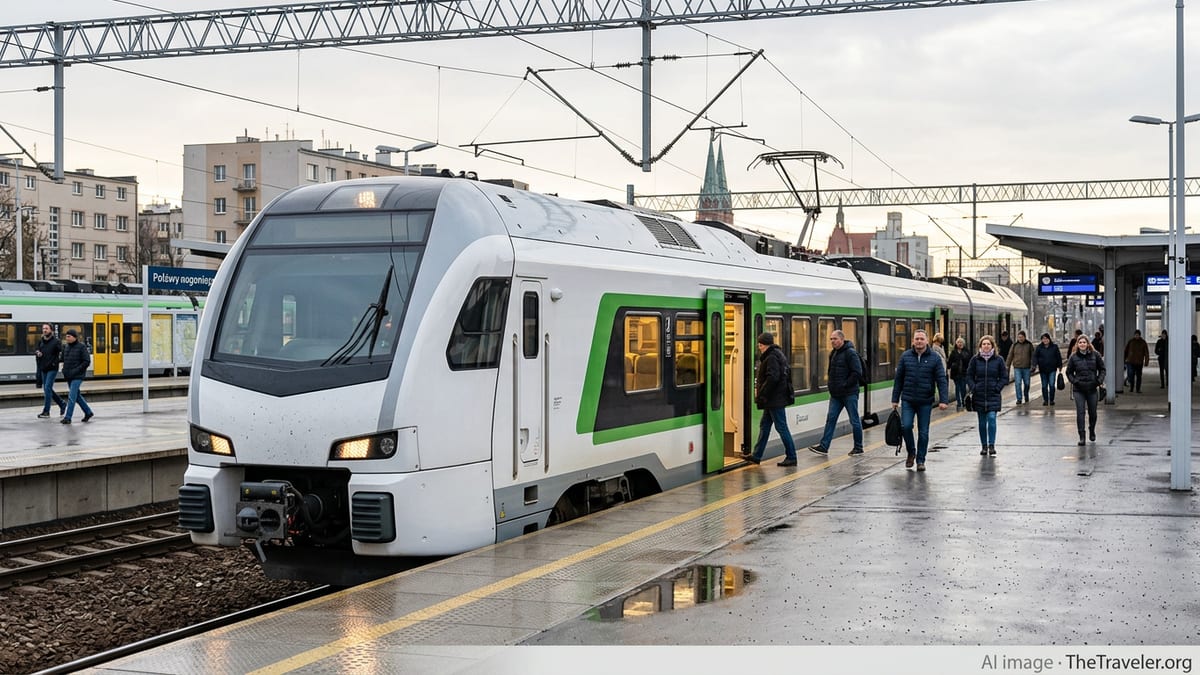
New Stadler-built fleet prepared for Finnish tracks
The Finnish Flirt units are part of VR’s broader fleet renewal, developed in partnership with Swiss manufacturer Stadler. The trains belong to the FLIRT family of electric multiple units, adapted for Finland’s broad-gauge network and demanding Nordic climate. Publicly available technical information describes the class as Sm7 and notes that the design builds on earlier FLIRT models already in service around the Helsinki region.
According to published material from Stadler and VR, the new trains are configured as single-deck electric units tailored for medium-distance commuter services. They are intended to supplement and gradually replace older rolling stock on key corridors where passenger numbers have grown strongly in recent years. Broad-gauge bogies, reinforced underframes and winterisation measures are designed to support reliable operations in snow, ice and fluctuating temperatures.
The unveiling positions Finland among a wider group of European rail operators investing in the FLIRT platform. Similar trains run in neighboring Nordic countries and across central Europe, reflecting a common push toward modern, energy-efficient units that can accelerate quickly, cut journey times and offer a more consistent on-board experience for everyday passengers.
While detailed deployment plans are still being phased in, public information indicates that the first Finnish Flirt services will focus on high-demand commuter and regional routes, where capacity constraints and aging equipment have been recurring concerns for travelers.
Capacity boost and passenger comfort at the center
Reports in Finnish regional media indicate that the new trains are expected to deliver a significant increase in passenger capacity compared with the sets they replace. The interior layout has been designed for dense commuter flows, with wide vestibules and multiple double doors intended to speed up boarding and reduce dwell times at stations, especially during busy morning and afternoon peaks.
Passenger comfort features receive particular attention in the Finnish Flirt design. Publicly available descriptions highlight power sockets installed near or under many seats, answering long-standing requests from commuters who work or study while traveling. Large windows and LED lighting are intended to create a brighter interior, while acoustic improvements aim to keep noise levels down, even at higher speeds.
Information from VR and Stadler also points to flexible interior zones as a key feature. Spaces can be adapted seasonally, for example by increasing the number of bicycle spots in summer when leisure travel peaks, or adjusting seating layouts to match changing demand. Low-floor entrances are designed to simplify boarding for passengers with reduced mobility, parents with strollers and travelers carrying luggage.
Digital passenger information systems, including clear displays and improved audio announcements, are planned to support smoother journeys and better real-time communication during disruptions. For regular users of VR’s commuter services, these details are expected to make day-to-day travel more predictable and less stressful.
Designed for Nordic conditions and greener mobility
The Finnish Flirt order is closely linked to VR’s climate and sustainability objectives. Corporate reports and earlier communications by the company emphasize a commitment to promoting rail as a low-emission alternative to private car and domestic air travel. Modern electric multiple units such as the Finnish Flirt are central to that strategy, offering lower specific energy consumption per passenger and regenerative braking that returns power to the grid.
Technical information published about the FLIRT platform notes its lightweight construction and efficient traction systems, which contribute to reduced energy use over the life cycle of the trains. In the Finnish context, where electricity generation increasingly draws on renewable sources, these efficiency gains support broader national climate targets.
The trains are also engineered for reliable operation in harsh weather. Nordic FLIRT variants incorporate winter-proofed doors and couplers, robust heating systems and insulation designed to maintain interior comfort during extended periods of sub-zero temperatures. These features are considered important for maintaining punctuality on regional routes that operate through long winters and frequent snowfalls.
For travelers and tourism operators, improved resilience in winter conditions is expected to be particularly relevant. Consistent timetables and modern rolling stock can make rail a more attractive choice for domestic trips and for international visitors exploring Finland beyond the capital region.
Summer launch timed to meet rising demand
The timing of the Finnish Flirt’s introduction coincides with a traditionally busy season for Finnish railways. Summer brings a spike in leisure travel as residents head to lakes, festivals and family homes, while interest from foreign visitors in rail-based itineraries across Finland has grown steadily in recent years. Public travel guidance frequently cites the reliability of Finnish rail services and the convenience of reaching smaller cities and towns by train.
According to VR’s recent financial and operational disclosures, both long-distance and regional services have seen record passenger volumes, supported by new contracts in Sweden and increasing domestic demand. Introducing additional and more capacious commuter trains is viewed as a way to relieve pressure on popular routes and to open up more seats at peak times.
Local coverage in Finland suggests that the new units will initially enter service on selected commuter lines before being extended to a broader network of regional services. The staged rollout allows staff training, maintenance routines and passenger feedback to be integrated gradually, reducing the risk of teething problems on heavily used routes.
Rail observers note that aligning the Finnish Flirt’s debut with the summer timetable change also provides an opportunity to refine connections with long-distance and cross-border services. Better alignment between regional trains and overnight or intercity services can shorten total travel times and simplify transfers for passengers.
What the Finnish Flirt means for travelers
For everyday commuters in the Helsinki region and beyond, the arrival of the Finnish Flirt is likely to be felt through practical improvements rather than headline-grabbing speed records. More standing space, extra doors and contemporary interiors are expected to address some of the crowding and comfort concerns that have accompanied growing passenger numbers.
Travelers on regional leisure trips may benefit from the increased bicycle capacity and flexible seating arrangements. The combination of power outlets, workstation-friendly tables in some areas and better onboard information systems reflects a broader trend in European rail toward treating trains as mobile extensions of the office and living room.
From an industry perspective, the deployment of Finnish Flirt units marks another step in the long-running partnership between VR and Stadler, and signals continued investment in rail as a core element of Finland’s transport system. As the new trains enter service over the summer, performance data and passenger feedback will shape decisions on further options in the series and potential future orders.
For visitors planning rail-based journeys in Finland, the Finnish Flirt’s entry into traffic adds another modern train type to the country’s rolling stock. As the new units become more visible on key routes, they are set to play a prominent role in how both residents and tourists experience Finnish rail travel in the coming years.