


Guavate is not just a place to eat roast pork. On peak days this mountain stretch of Route 184 in Cayey turns into a rolling block party of sound systems, salsa bands and families sharing trays of lechón and arroz con gandules. On quiet days, the same lechoneras feel almost rural, with cool air drifting in from the Sierra de Cayey and roosters louder than the speakers. Choosing the best time to visit is less about chasing sunshine and more about deciding how much atmosphere and how many people you want to share it with.
Get the latest updates straight to your inbox!
Guavate in Context: What “Best Time” Really Means
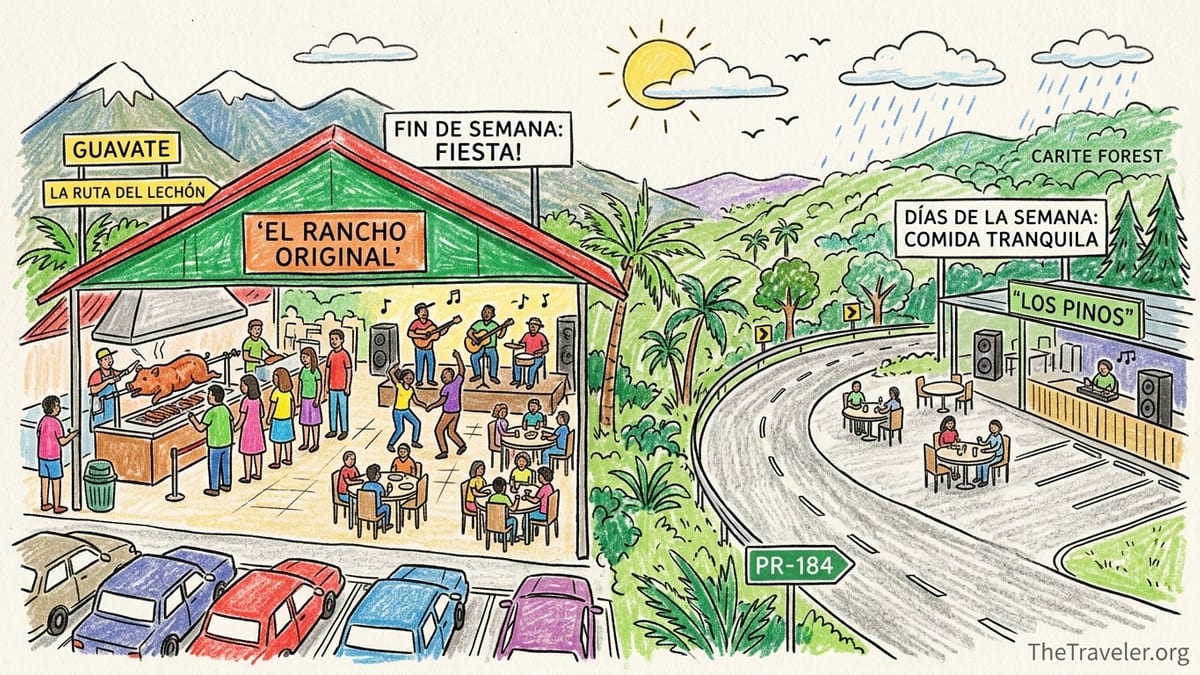
Guavate sits in the hills above Cayey along Puerto Rico Highway 184, known locally as La Ruta del Lechón, or the pork highway. Visitors drive up from San Juan, Ponce and the north and south coasts to line up at open-sided lechoneras such as El Rancho Original and Los Pinos for slow-roasted pork by the pound, pasteles, rice and local beer. On weekends some complexes add live bands, dance floors and souvenir stalls, turning the area into an all-ages roadside festival.
Tourism authorities describe Saturdays and Sundays as the liveliest days, with music, dancing and packed restaurants, while weekdays are calmer and more about the food than the party. That distinction matters more than the month on the calendar. You could visit on a cool January Tuesday and find half-empty dining halls and easy parking, or arrive on a steamy September Sunday and squeeze through crowds of families, bachelor parties and tour groups.
Weather still plays a role. The Cayey mountains are cooler and wetter than the coasts, so Guavate often feels several degrees fresher than San Juan in the afternoon but also sees more passing showers. The Atlantic hurricane season, which runs roughly from June through November with the wettest stretch in late summer and early fall, can bring heavy rain bands that complicate mountain driving. The sweet spot for many visitors is a dry-season weekend between December and April, when the air is relatively cool and the party atmosphere is at full strength.
Weekdays vs Weekends: Atmosphere, Crowds and Noise
On weekends Guavate’s pork highway functions like a continuous chinchorreo route. Speakers pump salsa and reggaetón, bands set up on stages at larger lechoneras, and families spread out at long plastic tables. A Saturday afternoon at El Rancho Original or Los Pinos can feel like a small-town festival, with kids running toward the river, grandparents dancing near the band and lines at the carving stations while staff chop crackling strips of cuerito.
Weekdays, by contrast, bring a much calmer scene. Many lechoneras still open from late morning into the afternoon, but without full bands, dance floors or shoulder-to-shoulder crowds. You might hear background music from a sound system, but you are more likely to share the space with truck drivers, local workers and a handful of tourists than with tour buses. For travelers who care primarily about the food and conversation, a Tuesday or Thursday lunch offers space to linger and hear each other talk.
This difference changes practical details. On a Sunday between about 1 p.m. and 4 p.m., lines for the most popular dishes can stretch 10 to 20 minutes or more, and parking may involve tucking into tight roadside spaces along PR-184. On a Wednesday, the same queue might be just a few people deep, and you can park directly across from the restaurant. Noise levels also diverge: photographers capturing portraits or food shots often prefer weekdays, when they do not have to compete with booming speakers or people dancing in every frame.
Your tolerance for crowds should guide your choice. If you want to see Guavate at its most iconic, with live bands, dancing and a sea of families, plan on a Saturday or Sunday and accept the congestion as part of the experience. If you envision a quiet mountain drive, a more personal chat with the carver and the ability to sample several spots without rushing, target a weekday late morning or early afternoon.
Morning vs Afternoon: Why Arrival Time Matters
For most travelers, the biggest timing decision is not the month but the hour of arrival. On weekends, traffic on PR-52 from San Juan toward Cayey is usually smooth, but the final climb along Route 184 into Guavate can slow significantly as the day progresses. Locals and recent visitors frequently recommend arriving before noon, and many seasoned drivers aim for 10:30 or 11:00 a.m. on Saturdays and Sundays.
Arriving before noon offers three major advantages. First, you typically encounter lighter traffic on the mountain section, meaning fewer slow stretches behind buses and less jockeying for position near popular lechoneras. Second, parking is much easier. Early drivers often find free roadside spaces directly in front of big names like El Rancho Original or Los Pinos, while midday arrivals may be waved into overflow lots farther away or forced to circle for a spot. Third, food selection is at its best earlier in the day, with the full range of cuts and side dishes still available before the lunchtime rush cleans out favorites such as ribs, morcilla and pastelón.
Afternoon has its own appeal. By around 1:00 or 2:00 p.m. on weekends, most bands are in full swing, dance floors are busy and nearly every table is filled. If your goal is to people-watch, dance a little and see Guavate at full volume, targeting the early to mid-afternoon makes sense. The trade-off is heavier traffic upstairs and on the way out, plus longer waits to order. On Sunday evenings, especially during the Christmas period, it can feel as if half of central Puerto Rico is inching back down PR-184 at the same time.
On weekdays timing is more forgiving, but arriving before 2:00 p.m. is still wise. Many lechoneras close by late afternoon if business is slow, and outdoor sections can feel cool and damp closer to dusk, especially during the rainy season. A late-morning arrival around 11:30 a.m. lets you eat while temperatures are comfortable and gives you flexibility to add a short drive deeper into the mountains toward Carite Forest Reserve if weather cooperates.
Traffic, Mountain Roads and Rain: Safety and Comfort
Guavate’s pork highway is scenic but not a casual city street. PR-184 climbs and winds through the Sierra de Cayey, with sharp curves, narrow shoulders and sections where parked cars leave just one clear lane. In dry daylight the road is manageable for most drivers who take it slowly, but adding weekend crowds, wet pavement and oncoming buses can increase stress, especially for visitors unused to mountain driving.
Rain changes the equation. The Cayey area receives significantly more rainfall than many coastal zones, and showers often develop quickly over the hills. A brief passing shower might just dampen the pavement, but strong mountain downpours reduce visibility, create slick surfaces from leaves and oil, and can send water flowing across bends in the road. During the peak of the wet season and throughout hurricane season, bands of heavy rain associated with tropical waves or distant storms can sweep through even on days that look fine in San Juan early in the morning.
From a planning perspective, this means two things. First, if you are driving yourself, lean toward mid-morning arrival and early afternoon departure to maximize daylight and reduce your chances of climbing or descending in heavy late-day storms. Second, if you plan to combine Guavate with stops deeper into Carite Forest, pay even closer attention to radar and advisories before committing to narrow forest roads that can flood and develop potholes after repeated storms. Local guesthouses in Cayey and official weather sources often provide updates about washouts or temporary closures higher up.
For visitors uncomfortable with these conditions, hiring a local driver or taking a small-group tour that includes transport can remove some pressure. Professional drivers familiar with PR-184 navigate regular weekend congestion and are used to adjusting speeds for sudden rain. Even if you drive yourself, treat the outing like any mountain excursion: keep your fuel topped up before leaving the highway, check that your rental has good tires and wipers, and avoid aggressive passing on blind curves no matter how slow the line seems.
Seasons, Weather Patterns and the Holiday Rush
Puerto Rico’s climate is tropical, with warm temperatures year-round and distinct wetter and drier periods rather than classic summer and winter. In broad terms, the wetter season stretches from about April into November, overlapping the official Atlantic hurricane season from June through November. The wettest stretch for many parts of the island, including interior mountains, often falls in August, September and early October, when tropical waves and occasional storms bring heavy rain.
The drier stretch, roughly December through March or April, tends to bring fewer prolonged downpours, although brief showers remain common. In the Cayey highlands, where elevations approach 1,500 feet or more, this translates to relatively comfortable daytime highs and cooler evenings compared with low-lying coastal areas. Winter afternoon temperatures around Guavate often feel several degrees lower than in San Juan, enough that locals sometimes bring a light layer for late-day visits, especially if they plan to stay for music into early evening.
Christmas season overlays this weather pattern with its own surge in crowds. In Puerto Rico, festive activities run from late November through early January and include extended parrandas, office parties and family outings. Guavate becomes one of the go-to destinations for groups celebrating with lechón, particularly on December weekends, Christmas week and around Three Kings Day in early January. Local visitors regularly describe this period as “nuts,” with even heavier traffic on PR-184, longer waits for food and full parking areas well before noon on Sundays.
If you plan to visit during the holiday stretch, adjust expectations. Aim to arrive closer to 10:00 a.m. on key weekends, build in extra time for the drive from San Juan or Ponce, and be patient with lines and music volume. The upside is that the atmosphere becomes especially joyful, with seasonal songs mixing with salsa and many locals in festive dress. For some travelers, seeing Guavate at Christmas is worth the congestion; for others, choosing a quieter weekend in January or February outside the core holiday weeks delivers a more comfortable balance of cool weather and manageable crowds.
Combining Guavate with Carite Forest: Sunshine vs Showers
Many visitors look at the map and consider pairing a Guavate lunch with a hike or swim in the nearby Carite Forest Reserve. On a clear day this can be a memorable combination: a morning drive into the highlands, a walk to a river pool such as Charco Azul or a viewpoint, and a hearty plate of lechón and yuca on the way back down. In practice, weather and timing make this combo easier in the drier months and more complicated once the wet season ramps up.
Carite sits even deeper in the mountains than Guavate and shares the region’s tendency toward frequent showers. Trails can become muddy and slippery after repeated rains, and forest roads sometimes suffer washouts or small landslides during or after major storms. Several facilities have been affected by hurricanes in recent years, leading authorities and local operators to advise checking conditions with environmental agencies or area lodgings before attempting longer hikes or drives beyond the main paved sections.
On days with unsettled forecasts, it often makes sense to treat Guavate as the anchor and Carite as optional. If skies are clear early, you might drive first to a short forest walk, then time your Guavate meal for late morning or early afternoon. If rain moves in or radar shows strong cells building over the interior, you can skip or abbreviate the forest portion and still enjoy a full food-centered outing at the lechoneras, where covered pavilions and roofed dining halls allow you to stay dry while you eat and listen to music.
In other words, a rainy day often remains perfectly workable for a Guavate food trip but becomes less appealing for a hiking and swimming itinerary. Slippery rocks, muddy trails and sudden fog in the forest argue for caution, especially for families or first-time mountain drivers. If your heart is set on exploring Carite, consider building flexibility into your schedule so you can shift that portion to the clearest day of your visit and reserve the cloudier day for a food-and-music focus in Guavate itself.
Visitor Profiles: Matching Your Timing to Your Style
First-time visitors who want the classic Guavate experience usually aim for a Saturday or Sunday, arriving before noon and staying through mid-afternoon. This schedule delivers the full sensory package: seeing whole pigs turning on spits, hearing live bands warm up, watching dance floors fill and still getting out before the heaviest return traffic after sunset. Booking a rental car with good ground clearance and automatic transmission can help reduce stress on the mountain curves for those unfamiliar with local roads.
Photographers and content creators often favor shoulder times. A late-morning weekday visit provides soft light, manageable shadows under metal roofs and fewer people crowding the frame. Even on weekends, arriving early can yield shots of carvers at work and rows of roasted pork before crowds build. In the cooler months, morning mist over the hills can create atmospheric landscape photos along PR-184, although you may need to pull into safe lay-bys rather than stop on narrow shoulders to capture the view.
Families with younger children might weigh noise levels and schedules. A Sunday lunchtime on the main strip can be exhilarating but loud, with amplified music at competing volumes and little shade in exposed parking areas. Parents who prefer a gentler experience often choose a Saturday late morning or a weekday early afternoon outside school holidays, when there is still a cheerful buzz but more space to maneuver strollers and high chairs. Many lechoneras are informal and child-friendly, with simple food that appeals to picky eaters, but checking restroom availability and changing facilities at your chosen stop is wise.
Travelers focused purely on food, as well as those who dislike crowds, generally get the best value from weekday visits or very early weekend starts. On a Wednesday around 1:00 p.m., for example, you might share El Rancho Original with a handful of tables, chat with staff about different cuts and walk the riverfront without weaving through dense groups. Even on weekends, arriving at 10:30 a.m. lets you order from the freshest trays, grab a quiet table before the music peaks and be back on PR-52 heading to San Juan or Ponce while others are still inching into the mountains.
The Takeaway
There is no single best time to visit Guavate, only a best time for the kind of experience you want. The central choice is between high-energy weekends filled with bands, dancing and crowds and calmer weekdays centered on food and mountain air. Layered on top of that are daily timing questions, with pre-noon arrivals offering easier parking and shorter lines, and seasonal considerations such as the cooler, drier months from December to April and the wetter, storm-prone stretch of late summer and early fall.
Rain and mountain conditions complicate the picture but do not ruin it. A shower-filled day may make a combined Carite hike and Guavate feast less appealing, yet it can still support a satisfying lechon-focused excursion under covered pavilions. Holiday periods, especially around Christmas and Three Kings Day, amplify both the joy and the congestion, rewarding those who arrive early and bring patience.
If you understand these patterns and match them to your preferences, Guavate becomes less of a gamble and more of a well-tuned outing. Whether you are a first-timer chasing the weekend party, a photographer seeking soft weekday light, a family balancing stimulation and comfort, or a food lover who prefers to avoid crowds, choosing your day, season and hour deliberately will shape how you remember Puerto Rico’s most famous pork highway.
FAQ
Q1. What is the best day of the week to visit Guavate for maximum atmosphere?
For the liveliest scene with music, dancing and big crowds, choose Saturday or Sunday, especially from around noon to mid-afternoon when bands are playing and restaurants are busiest.
Q2. When should I arrive in Guavate to avoid the worst traffic and lines?
On weekends, aim to arrive between 10:30 a.m. and 11:30 a.m. This timing usually brings lighter traffic on Route 184, easier parking and shorter lines at the carving stations.
Q3. Is Guavate worth visiting on a weekday?
Yes. Weekdays offer a calmer, more food-centered experience with fewer crowds, shorter queues and more conversation-friendly noise levels, although you may find less live music and fewer lechoneras operating at full capacity.
Q4. How does Puerto Rico’s rainy and hurricane season affect a Guavate trip?
From about April to November, and especially August to early October, heavier showers and occasional storms are more likely. This can mean wet, slippery mountain roads and reduced visibility, so plan to drive in daylight and monitor weather forecasts.
Q5. Are the Cayey mountains much cooler than San Juan?
Yes. The higher elevation around Cayey and Guavate usually feels a few degrees cooler than coastal San Juan, particularly from December through March, and evenings can be noticeably fresher, especially if it is breezy or after rain.
Q6. What happens in Guavate during the Christmas holiday season?
From late November through early January, weekends become especially busy as local families and groups celebrate with lechón. Expect heavier traffic, earlier crowding, longer waits and a particularly festive atmosphere with seasonal music mixed into the playlists.
Q7. Is it safe to drive to Guavate in the rain?
The drive is generally manageable but demands caution. PR-184 is a winding mountain road, and in heavy rain the pavement can become slick and visibility can drop. Reduce speed, allow extra following distance and avoid aggressive passing on curves.
Q8. Can I comfortably combine Guavate with a visit to Carite Forest in one day?
Yes, in good weather and with an early start you can visit a viewpoint or river spot in Carite and then eat in Guavate. In very wet conditions, it is usually wiser to focus on Guavate’s covered lechoneras and leave longer hikes or swims for a drier day.
Q9. What is the best timing for families with young children?
Families often do well with a Saturday late-morning or weekday early-afternoon visit outside major holidays, when there is still a cheerful buzz but less overwhelming noise and more space for strollers and high chairs.
Q10. When should I go if I dislike crowds but do not want everything to feel empty?
Choose a non-holiday weekday or arrive very early on a Saturday, around 10:30 a.m. You will find an active scene and full trays of food without the shoulder-to-shoulder crowds and longest lines of peak Sunday afternoons.