


For more than a decade, the Halifax Clarity credit card has been the default recommendation for UK travellers who want simple, cheap spending abroad. In 2026 it is still one of the strongest cards for overseas use, but it is no longer alone. A new wave of travel credit cards and app-based challengers has arrived, each promising fee-free foreign transactions, cashback, or air miles. This guide ranks the major UK travel credit cards from best to worst specifically against Halifax Clarity, using real-world examples of how they perform on a typical holiday.
Get the latest updates straight to your inbox!
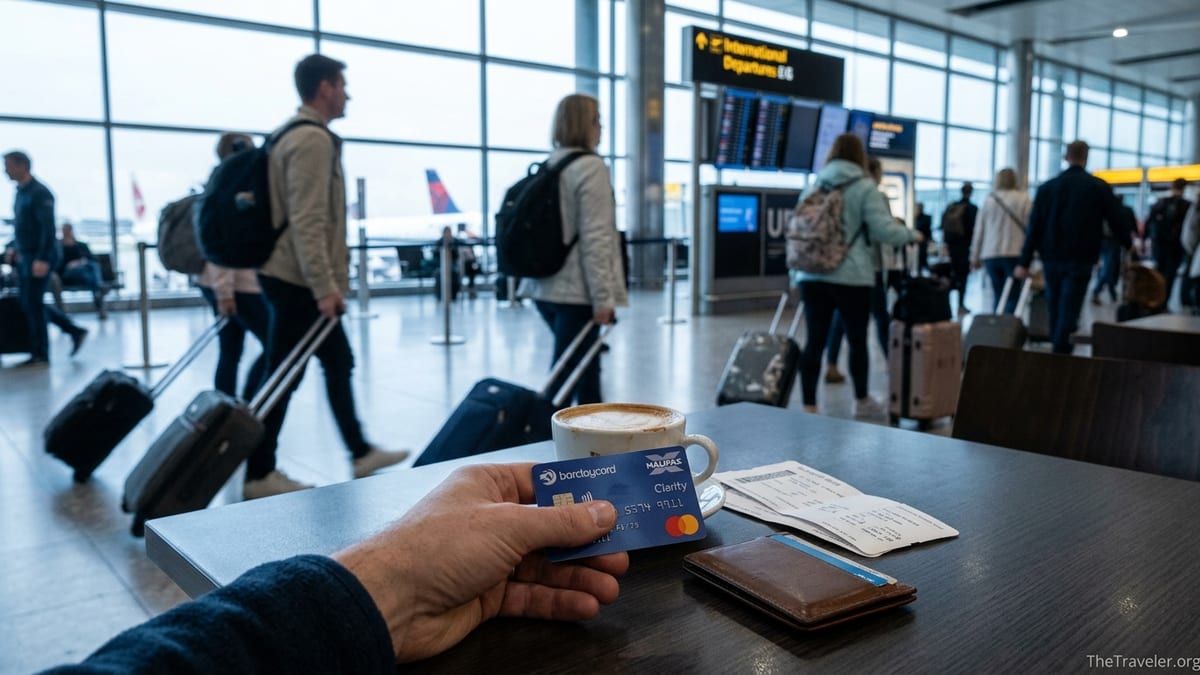
How Halifax Clarity Sets the Benchmark
The Halifax Clarity Mastercard remains a reference point because it does one core job extremely well: it lets UK travellers spend in foreign currencies almost anywhere in the world at or very close to the Mastercard wholesale exchange rate, with no foreign transaction fee and no annual fee. In practical terms, if you tap Clarity for a €100 restaurant bill in Barcelona, you will usually see roughly the same sterling amount on your statement as shown by a live Mastercard currency converter on that day, rather than paying the 3 percent loading that many standard UK credit cards still charge.
What makes Clarity particularly appealing to frequent travellers is its treatment of cash withdrawals. Many banks charge a fee simply for using a credit card at an overseas ATM, then add foreign exchange loading on top. Halifax Clarity does not charge a separate cash withdrawal fee abroad and still uses the same competitive Mastercard rate. The trade-off is that interest on cash starts accruing immediately, so the card is best used for small, occasional withdrawals where you can clear the balance as soon as you get home, or even via the app while travelling.
Clarity is, however, a “no-frills” travel card. There is no structured rewards scheme, no air miles, no lounge access and no bundled travel insurance. Many UK travellers hold it purely as a travel workhorse alongside a separate rewards card for day-to-day UK spending. As new cards enter the market, the key question is whether they can match Clarity’s low overseas costs while offering something extra, or whether they slip behind once all fees and quirks are factored in.
Because Clarity has no annual fee and no non-sterling transaction fee, it is also extremely forgiving for occasional travellers. If you fly to Europe only once a year, there is no ongoing cost to keeping it in your wallet. Any competitor has to clear a high bar: either undercut Clarity on overseas spending, or deliver enough additional value in rewards and perks to justify higher costs.
Top No-Fee Competitors: Barclaycard Rewards and Fintech Rivals
Among the current crop of travel cards, Barclaycard Rewards is the closest true rival to Halifax Clarity on pure overseas value. Like Clarity, it charges no foreign transaction fee on purchases and uses the Visa exchange rate, which is broadly comparable to Mastercard’s. Where it edges ahead for some travellers is cashback: spending overseas earns a small percentage back as a statement credit, which can slightly reduce the effective cost of holiday purchases compared with Clarity, which offers no rewards at all.
One of the most practical advantages of Barclaycard Rewards is how it handles cash withdrawals abroad. At the time of writing, cardholders can withdraw foreign currency from ATMs without a separate cash fee and without an immediate interest penalty, provided they pay off the full statement balance on time. That makes it easier to treat the card as an all-round travel tool for both card payments and occasional cash, for example taking out 2000 Swedish krona on arrival in Stockholm to cover small expenses where cards are not accepted.
Fintech-linked credit cards and companion apps also now compete hard with Halifax Clarity, especially for digital-native travellers. Products that pair a standard credit card with a multi-currency app, or that route spend through a “smart” card to avoid foreign transaction fees, can sometimes match Clarity’s exchange rate while enabling contactless payments from a smartphone wallet in dozens of currencies. For example, some travellers now run their everyday rewards card through a smart layer that absorbs the foreign exchange fee, effectively turning a standard 3 percent fee card into a travel-friendly one for moderate overseas spend.
These setups demand more effort and rule-reading than simply taking a Clarity card. Free foreign exchange allowances can be capped monthly, weekend markups can be higher, and some app-based cards charge if you exceed a certain amount in ATM withdrawals. For a long weekend in Lisbon, that may not matter; for a three-week trip combining Tokyo, Sydney and Bali, those small extras can begin to eat into any savings versus simply putting all card spend on Clarity or Barclaycard Rewards.
Premium Travel Cards: When Rewards Beat Fee-Free Spending
Above the fee-free segment sit the premium travel cards, where annual fees can run from just under £100 to more than £600 per year. These cards are rarely cheaper than Halifax Clarity on pure foreign spending; most charge foreign transaction fees of around 3 percent on non-sterling purchases. Their value comes instead from air miles, hotel points, companion vouchers and lounge access, which can dramatically reduce the cost or improve the comfort of long-haul trips if used strategically.
The American Express Platinum card is the classic example. Its annual fee runs into the hundreds of pounds, and it charges foreign transaction fees, so using it like a Clarity card to pay for everyday restaurant bills in Thailand or taxi rides in New York would be expensive. Where it shines is in turning high volumes of spend into flexible points and unlocking a bundle of travel perks. A family that redeems Membership Rewards points for business class flights to Dubai or Singapore, uses the included airport lounge access on each sector, and benefits from the comprehensive travel insurance can still extract more value than the combined cost of the annual fee and foreign spending charges.
Similarly, British Airways and Avios-focused cards such as Barclaycard Avios Plus are designed not as day-to-day travel spenders but as mileage engines. They usually impose foreign transaction fees, which means that putting a typical overseas holiday’s on-the-ground spend entirely on one of these cards would be costlier than using Halifax Clarity. However, travellers aiming for a companion voucher or upgrade voucher might deliberately accept the extra charges during a big trip to reach the required annual spend more quickly, especially if the reward will later be used for a high-value long-haul redemption in Club World or First.
In practical terms, a savvy points collector might charge a £4000 hotel bill in the Maldives to a premium Avios card to trigger a voucher worth hundreds of pounds on a future flight, while using Halifax Clarity or Barclaycard Rewards for meals, excursions and day-to-day card payments. That hybrid approach preserves the raw cost efficiency of specialist travel cards while still exploiting the outsized value of airline and hotel loyalty schemes.
Middle-of-the-Pack Cards: Reasonable but Outclassed
Below the stand-out performers sit a cluster of cards that look attractive at first glance but tend to lose out either to Halifax Clarity or to its best rivals when you examine the small print. Many mainstream bank credit cards now advertise “low” or “reduced” foreign transaction fees rather than full 3 percent loading. For a UK traveller who previously used a standard 3 percent fee card, switching to one that charges, for example, 2 percent represents a saving. Measured against Clarity’s zero fee, however, the new card is still materially more expensive on every overseas purchase.
Consider a long weekend for two in New York, with £1500 of card spending on hotels, meals and shopping. A card that charges a 2 percent foreign transaction fee would add around £30 in hidden costs. Halifax Clarity or Barclaycard Rewards would charge nothing on top of the exchange rate. Over multiple trips, such differences compound, especially for families or business travellers whose annual overseas card spend can reach into the tens of thousands of pounds.
Another issue with these middle-of-the-pack cards is the lack of clear, travel-specific benefits. Where premium cards justify their higher costs with lounge access, travel insurance or generous reward currencies, and where Clarity-style cards win on fees, many mid-tier products offer neither compelling perks nor rock-bottom costs. They can be adequate backup options if you already hold them, but they are rarely worth applying for solely as a travel solution when stronger, more focused cards exist.
For travellers who want to keep things simple, these cards are best treated as domestic spending tools, keeping Halifax Clarity or a similar specialist card reserved for any non-sterling transactions. That way, you avoid the temptation to “make do” with a mediocre card at the airport duty-free or when settling a hotel bill in euros or dollars.
Lagging Behind: Cards You Should Avoid Using Abroad
At the bottom of the ranking sit the cards that remain actively hostile to overseas use. Many older UK credit cards from major high street banks still impose a non-sterling transaction fee of around 3 percent, often coupled with a separate charge of a few pounds for each foreign cash withdrawal. On top of this, they may use exchange rates that are slightly less favourable than the raw Visa or Mastercard benchmarks, compounding the penalty for unwary travellers.
Real-world examples of poor value are easy to find. A traveller using a high-fee card to pay a €2000 hotel bill in Rome could see roughly £60 added in foreign transaction fees alone, before any difference in exchange rate is considered. If they then take out €300 from an ATM, they might face a 3 percent fee plus a flat cash withdrawal charge. Across a two-week trip, those charges can easily exceed £100, money that could otherwise go on meals, excursions or an extra night in a mid-range hotel.
Store-branded credit cards and some legacy co-branded products also deserve caution. While they can be attractive for in-store discounts or loyalty points within the UK, many were never designed with overseas travel in mind and therefore carry the same 3 percent loading and cash fees as basic bank cards. Unless the terms have been explicitly updated to remove foreign transaction fees, it is safer to assume that these products belong at the back of the wallet whenever you step onto a plane.
To make matters worse, some of these cards still display “dynamic currency conversion” prompts particularly aggressively. When a terminal abroad offers to charge you in pounds instead of the local currency, it almost always does so at a poor exchange rate. Combining that with a card that already levies its own foreign transaction fee is a recipe for needlessly expensive holidays. Halifax Clarity and its closest rivals avoid much of this pain simply by insisting you always pay in the local currency and letting the card scheme handle conversion.
Real-World Holiday Scenarios: How the Cards Compare
To see how these cards rank in practice, imagine a typical one-week summer holiday in Spain for a family of four. They spend £2500 across flights (booked in pounds), a hotel paid locally in euros, restaurants, attraction tickets and a handful of ATM withdrawals for small cash purchases. Using Halifax Clarity for all non-sterling payments and drawing around €200 in cash from Spanish ATMs, the family pays essentially the Mastercard rate without added card fees. The only extra cost is a small amount of interest on the cash if they delay repaying the balance.
If the same family used a Barclaycard Rewards card instead, the picture would be similar on pure cost. They would still avoid foreign transaction fees and get a competitive Visa rate, and they would earn a modest amount of cashback which might offset a few euros’ worth of ice creams or a taxi fare. If they hold a premium rewards card, they might decide to put the hotel bill or car hire on that card to chase a sign-up bonus, accepting foreign transaction fees on a single large purchase while funnelling all other spend through Clarity or Rewards.
Now contrast this with a family who relies solely on a generic high street credit card that charges 3 percent on non-sterling transactions. On a £2000 equivalent hotel and restaurant spend, they would quietly pay around £60 in foreign transaction fees. Add a couple of ATM withdrawals with their own cash fees, and the total card-related cost can push toward £80 or £90. Over several trips in a year, that easily climbs into the hundreds of pounds, matching what a premium travel card’s annual fee might cost, but without any of the benefits.
Business travellers face a similar calculus. A consultant who spends £1000 a month abroad on client dinners and hotels might favour Halifax Clarity or Barclaycard Rewards to keep reimbursement simple and fees minimal, while maintaining a separate premium card personally for flight and hotel bookings that earn miles. For them, the “best” card is not a single product but a small portfolio: one card that wins the cost battle against Clarity, and another that wins the rewards battle where fees are acceptable.
Strategy: Building a Travel Wallet Around Halifax Clarity
Given how competitive the UK travel card landscape has become, one of the most effective strategies is to treat Halifax Clarity as the foundation of a broader travel wallet rather than as the only card you ever use abroad. For many UK residents, the optimal starting point is to hold Clarity or Barclaycard Rewards as the default for all non-sterling purchases and ATM withdrawals, then layer in one or two premium rewards cards to capture value on flights, hotels and major expenses where benefits justify the additional cost.
For example, a frequent European city-break traveller might pay for budget flights with a no-fee debit card or a low-fee credit card, use Halifax Clarity for all on-the-ground spend in euros, and hold a mid-tier airline card purely to collect miles on UK spending. When they finally redeem those miles for a long-haul flight in premium economy, the value realised from the reward can easily outweigh the occasional foreign transaction fees paid when strategically using the airline card to meet a welcome bonus threshold.
Another sensible tactic is to segment spend by risk. Some travellers are more comfortable using a credit card rather than a debit card when booking hire cars or small local hotels that take card details as security. Using Halifax Clarity for these higher-risk transactions abroad keeps your main current account insulated, while fee-free fintech debit cards or app-based cards can be reserved for low-risk daily purchases like metro tickets or coffee.
Travellers should also plan for redundancy. Cards can be lost, stolen or blocked by fraud systems while you are away. Carrying Halifax Clarity alongside at least one alternative travel-friendly card from a different bank and network reduces the chance of being stranded. For example, pairing a Clarity Mastercard with a Visa-based travel credit card or a fee-free debit card means that if one network has an outage, you still have a functioning payment method.
The Takeaway
Measured purely on overseas cost, Halifax Clarity is still one of the best UK travel credit cards available in 2026. It sets a high benchmark with no foreign transaction fees on purchases, competitive exchange rates and no annual fee, which makes it especially attractive for occasional travellers and as a reliable backup for more frequent flyers. Barclaycard Rewards sits alongside it at the very top of the ranking, particularly for those who value a little cashback on every transaction and clearer treatment of foreign cash withdrawals.
Premium products such as American Express Platinum and Avios-earning cards rank above Halifax Clarity only if you fully exploit their rewards. Used carelessly for day-to-day overseas spending, they will often cost more once foreign transaction fees are included. Used strategically for flights, hotels and sign-up bonuses, they can transform the economics of long-haul travel even while you continue to rely on Clarity-style cards for local spending abroad.
In the middle of the pack are cards with reduced but still noticeable foreign transaction fees, and at the bottom remain older, non-specialist credit cards that add around 3 percent to every overseas transaction. For most UK travellers, the simplest, most cost-effective approach is to anchor your travel wallet with Halifax Clarity or an equivalent no-fee travel card, add a premium rewards product only if your flying and spending patterns justify it, and retire any card that still punishes you for using it outside the UK.
FAQ
Q1. Is Halifax Clarity still the best UK travel credit card in 2026?
Halifax Clarity remains among the very best for low-cost overseas spending, especially when you factor in its lack of annual fee, but some rivals now match or slightly beat it once cashback or rewards are included.
Q2. How does Barclaycard Rewards compare to Halifax Clarity for travel?
Barclaycard Rewards typically offers similarly competitive exchange rates and no foreign transaction fees, plus a small amount of cashback, which can edge it ahead of Clarity for some travellers.
Q3. Should I use a premium rewards card instead of Halifax Clarity abroad?
For everyday overseas spending, specialist travel cards like Clarity are usually cheaper. Premium rewards cards only win if you use their miles, vouchers and perks heavily enough to offset foreign transaction fees.
Q4. Is Halifax Clarity good for ATM withdrawals overseas?
Yes, Halifax Clarity does not usually charge a separate cash withdrawal fee abroad and uses the Mastercard rate, but interest on cash starts straight away, so it is best to repay withdrawals quickly.
Q5. Do American Express cards charge fees for foreign transactions?
Most UK American Express cards add a foreign transaction fee, so they are rarely the cheapest option for day-to-day spending abroad compared with fee-free travel credit cards.
Q6. Can I rely on just one travel credit card for a trip?
It is safer to carry at least two cards from different providers or networks, for example Halifax Clarity plus a second travel-friendly Visa or debit card, in case one is lost or blocked.
Q7. Are debit cards better than credit cards for travel?
Some debit cards now offer fee-free foreign spending, but credit cards like Halifax Clarity can provide stronger fraud protection and do not directly expose your main current account if something goes wrong.
Q8. What is dynamic currency conversion and should I accept it?
Dynamic currency conversion is when a terminal abroad offers to charge you in pounds instead of the local currency. It almost always gives a worse rate, so you should normally decline it and pay in local currency.
Q9. How much can foreign transaction fees really cost over a trip?
On a £2000 overseas spend, a typical 3 percent foreign transaction fee adds around £60. Over several holidays a year this can easily total hundreds of pounds in avoidable charges.
Q10. What is the simplest card setup for an occasional UK traveller?
For most occasional travellers, holding one specialist travel credit card such as Halifax Clarity or an equivalent, plus a standard everyday card for UK use, offers an easy and cost-effective combination.