


The Halifax Clarity credit card has become a cult favourite among UK travellers because it scraps foreign transaction fees and uses a competitive Mastercard exchange rate. It looks like the perfect card to slip into your passport wallet and forget about. Yet the way cash withdrawals work on Clarity is far less straightforward than the glossy marketing suggests. If you rely on cash machines abroad, there are some rarely explained traps, timelines and interest quirks you need to understand before you hit the ATM.
Get the latest updates straight to your inbox!
Why Travellers Love Halifax Clarity – And Where Cash Changes the Rules
The basic sales pitch of the Halifax Clarity credit card is simple: no foreign transaction fees, no annual fee, and access to the Mastercard exchange rate on your spending. That means if you tap your card in a Lisbon restaurant for a 40 euro dinner, you typically just see the cost converted to pounds at the prevailing Mastercard rate, with no extra percentage added by Halifax itself. Independent reviews regularly highlight Clarity as one of the few mainstream cards that still does this for free, which is why seasoned backpackers and city breakers often recommend it to friends.
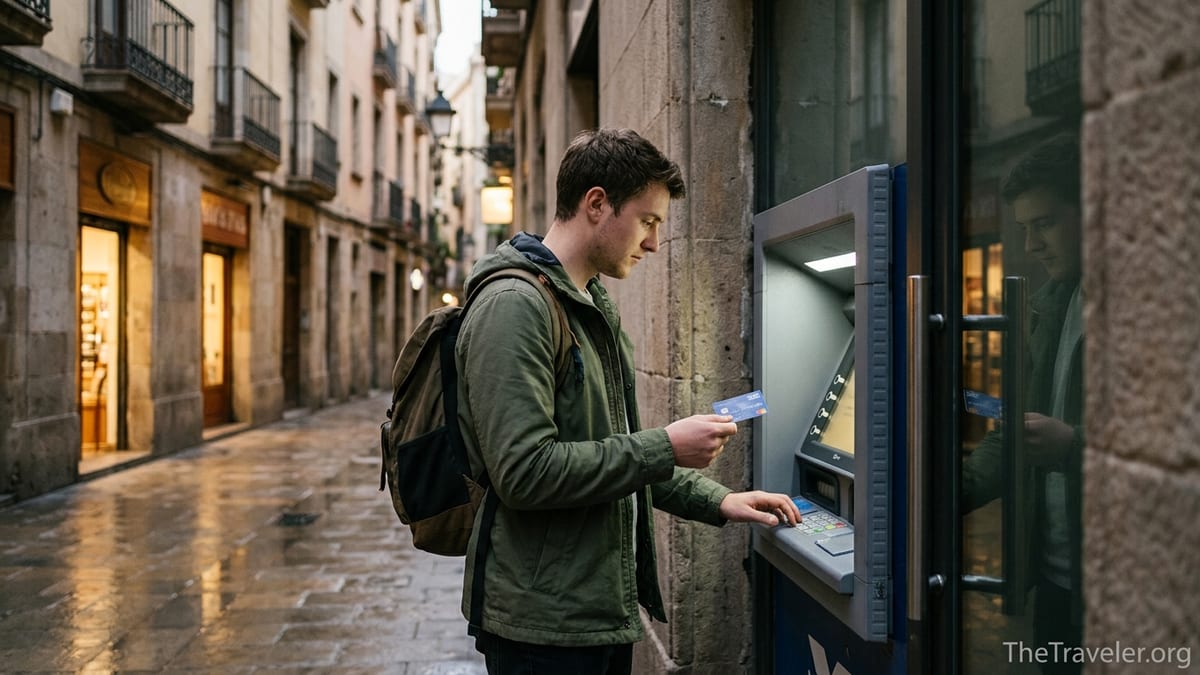
Cash withdrawals, though, sit in a separate bucket from card purchases. When you put your Clarity card into an ATM in Barcelona or Bangkok and select “credit,” the transaction is treated as a cash advance rather than a standard purchase. Halifax does something unusual here: it does not charge a separate cash withdrawal fee, at home or abroad. That already sets it apart from many UK cards that routinely add 3% or more to every ATM cash advance. For a traveller, avoiding that extra surcharge can be worth a lot over a two‑week trip.
However, the catch is interest. On purchases, most credit cards, including Clarity, give you a grace period. Pay the full statement balance by the due date and you usually avoid interest entirely. On cash withdrawals, that grace period effectively disappears. Interest on Halifax Clarity cash advances normally starts accruing from the day you take the money out, right up until the day Halifax receives a payment that clears that cash balance. That is the crucial rule nobody tends to flag when they say you can take out fee‑free cash.
The Invisible Cost: How Interest on ATM Withdrawals Really Works
To see how this plays out, imagine you arrive in Rome on a Friday and withdraw 200 euros from a local ATM using your Halifax Clarity card. The screen shows an approximate conversion to pounds using the card network’s rate, and there is no additional Halifax cash fee added on top. It feels almost like using a debit card. Yet from that moment, interest on that £170–£180 equivalent (depending on the rate) starts ticking away daily until you have paid Halifax back for that specific withdrawal.
The amount of interest will depend on the cash interest rate that applies to your Clarity account, which is set individually. Many reviews and customer reports mention rates that can run into the mid‑20% APR or higher for cash, similar to other UK credit cards, but Halifax emphasises that your exact variable rate is only confirmed at approval. Even at a seemingly modest annual rate, daily interest on a few hundred pounds can add up if you leave the balance sitting there for weeks after your holiday. The danger is that you may think “I always clear my card monthly, I will be fine,” without realising that cash usually does not benefit from the same grace period as purchases.
In practice, a traveller who takes £300 worth of local currency out at the start of a two‑week trip and only pays the bill on the following statement date can find that a quiet trail of interest has accumulated by the time they get home. You will not see a single extra “cash fee” line, but you will see “interest” added on your statement. That is the invisible cost that catches many otherwise savvy travellers by surprise.
Another subtlety is timing. Halifax only stops charging interest when cleared funds actually reach your Clarity account and are allocated against the cash balance. If you wait until the day before your payment due date to move money from your current account, but that payment takes a day or two to process, interest continues during that lag. For anyone travelling on a tight budget, that small oversight can turn a supposedly fee‑free cash withdrawal into a noticeably more expensive way to get local currency.
Paying It Off Fast: The “Same‑Day Payment” Strategy Explained
Because there is no standalone cash withdrawal fee, Halifax Clarity can be extremely cheap for cash abroad if you manage the interest window aggressively. The trick many experienced users adopt is a simple rule: whenever you take cash out, pay off that exact amount as soon as you reasonably can. That might mean logging into your Halifax app while you are still standing near the ATM in Prague, checking the sterling amount that has just posted, and sending a manual payment from your current account the same day.
For example, suppose you withdraw the equivalent of £120 in Croatian kuna for small market stalls and bus tickets. When you return to your hotel with Wi‑Fi, you open the Halifax app and see the cash transaction pending or posted. You then initiate a faster payment from your UK bank for £120, or slightly more to be safe. By doing this on the same day, you keep the number of days on which interest can accrue very small, sometimes to just one or two days of charges. On a relatively small withdrawal, that often means the total interest cost ends up at only a few pence, effectively giving you near‑spot cash with almost no mark‑up.
For this approach to work smoothly, you need three things: reliable mobile or online banking access while abroad, enough money in your linked current account to pay off cash withdrawals immediately, and the self‑discipline to reconcile withdrawals instead of waiting for a monthly bill. Travellers who prefer to settle up once a month or who are likely to lose track of multiple withdrawals will find that interest costs creep higher. In that case, a specialist debit card with no foreign usage fees might be a better fit for their style of travel spending.
One other practical detail is that card issuers often allocate your payments to the highest‑interest portions of your balance first. In theory that means money you send in should attack the cash balance before it reduces lower‑rate purchases. In real life, timing quirks can still leave a few days of cash interest showing on your statement, especially if the cash withdrawal and your payment cross over each other. If that happens on a large withdrawal, it may be worth contacting Halifax to clarify how your payment was applied, but most travellers find that small interest lines are simply part of the cost of accessing cash by credit card.
Daily Limits, Host ATM Fees and Local Currency Pitfalls
Another thing nobody tells you about Halifax Clarity cash withdrawals is how limits and third‑party fees can influence what you pay. Independent guides often cite a daily withdrawal limit of around £500 for Clarity in ATMs, though Halifax reserves the right to set or change limits and you are also constrained by your personal credit limit and the local machine’s own cap. In real‑world terms, that means you can usually take out several hundred pounds equivalent in one day, but not several thousand.
Importantly, while Halifax does not levy its own ATM withdrawal fee, the bank that owns the cash machine can still charge one. You may see a screen in a New York or Madrid ATM warning that a fixed fee, say 3 US dollars or 3 euros, will be added if you continue. That is separate from anything Halifax does and will appear as part of the total cash amount on your Clarity statement. If you are in a touristy part of town where every machine adds a similar surcharge, it is often cheaper to take out one or two larger withdrawals rather than many small ones, while still keeping an eye on your ability to repay quickly.
The other common pitfall is “dynamic currency conversion,” where an ATM offers to bill your withdrawal in pounds instead of the local currency. A traveller in Budapest might see a prompt saying something like “Withdraw 50,000 HUF, approximate conversion 120 GBP. Accept conversion or continue without?” Choosing to be billed in pounds usually allows the ATM operator to set its own exchange rate, which is often noticeably worse than the underlying Mastercard rate Halifax would use if the transaction were processed in Hungarian forints. With a Clarity card that already avoids foreign transaction fees, the smarter move in most cases is to decline the conversion and insist on being charged in the local currency.
Put together, these details mean that even though Halifax does not add a foreign cash fee, two other costs can still sneak in: a host ATM surcharge and a poor exchange rate if you accept the machine’s own conversion. Using Clarity effectively abroad therefore means shopping around for ATMs that either do not charge a fee or make it explicit, and always picking the option to be charged in the local currency rather than in pounds.
Using Clarity for Cash at Home vs Abroad
Halifax does not restrict Clarity cash withdrawals to overseas use. You can put the card into a UK cash machine and take out sterling as well. On paper, the rules are broadly similar: no separate cash withdrawal fee from Halifax, but interest on that cash starts accruing immediately. The big difference is opportunity cost. At home, most people already have a fee‑free debit card that gives access to cash with no cash‑advance interest at all, so using a credit card for domestic ATM withdrawals usually makes little sense.
Consider someone in Manchester who withdraws £100 from a UK ATM using their Clarity card because their current account is low before payday. They face the same cash‑interest behaviour as a traveller abroad, but without the benefit of dodging foreign usage fees. If they then take three weeks to clear that £100, the interest could be noticeably higher than an arranged overdraft or a short‑term transfer from savings. For this reason, personal finance advisers often warn that using any credit card for regular cash access in the UK can be a red flag to lenders and may be interpreted as a sign of financial stress.
Abroad, the trade‑offs shift. A traveller in Vietnam might otherwise rely on their home bank’s debit card and pay a 3% non‑sterling fee plus a foreign ATM charge each time. In that scenario, a Clarity cash withdrawal that is quickly repaid, with only a couple of days of interest and maybe one local ATM surcharge, can easily work out cheaper overall. The key is that Clarity becomes a tactical travel tool rather than an everyday way of getting cash.
There is also a behavioural angle. Because cash withdrawals on a credit card are reported differently from purchases, frequent use of credit for cash can leave a pattern on your credit history. Some Halifax Clarity users report that occasional holiday cash does not appear to have harmed their credit scores, while heavy or ongoing domestic cash use might raise questions with other lenders in future. Treating Clarity cash withdrawals as an emergency or travel‑specific option, rather than routine, is a sensible way to avoid sending the wrong signal about your borrowing habits.
Real‑World Trip Scenarios: When Clarity Cash Helps and When It Hurts
To understand the practical pros and cons, imagine two travellers heading to Mexico for ten days. Emma uses her Halifax Clarity card for almost everything: hotel bills, restaurant tabs, metro tickets purchased from card‑enabled machines, and only withdraws the equivalent of £60 in pesos on arrival for street food and tips. She pays off the full card balance, including that cash, as soon as she gets back and checks her statement. Her total interest on the cash might be less than the price of a coffee, and she has paid no foreign transaction fees on any of the card‑based spending.
By contrast, Alex lands with no local cash card and little planning. Over the trip, he takes out four separate ATM withdrawals totalling around £600 equivalent, often in small amounts of £100–£150 at busy tourist‑area machines that sometimes charge a local fee. He forgets to pay the card off until he sees the bill three weeks after getting home and only clears the statement balance by the due date. When he checks the detailed statement lines, he notices that a surprisingly chunky amount of interest has built up on those cash advances, even though he has technically “paid in full.” The card still did not charge separate cash fees, but the combination of multiple withdrawals, local ATM surcharges and several weeks of interest means his cash effectively cost significantly more than if he had planned ahead.
Similar trade‑offs appear with currencies that use a lot of cash, such as in smaller Balkan towns or for rural buses in South America. Clarity can be a lifesaver when a guesthouse only accepts bills or when a ticket booth does not take cards. Yet if you are heading to a country where card acceptance is widespread, like much of Scandinavia, relying primarily on contactless purchases with Clarity and keeping cash use minimal is usually the most cost‑effective strategy.
As a rule of thumb, travellers who like to carry large envelopes of local cash for peace of mind might be better served by a low‑fee travel debit card or a prepaid solution, while those who are comfortable living largely cashless can use Clarity as a near‑perfect companion card for occasional withdrawals and everyday spending abroad.
The Takeaway
The Halifax Clarity credit card has earned its reputation as one of the most traveller‑friendly cards in the UK, particularly because it avoids foreign transaction fees and taps into the Mastercard exchange rate. Yet the story is more nuanced when it comes to cash withdrawals. There is no explicit Halifax cash fee, but interest on ATM withdrawals generally starts on the day you take the money and only stops once your payment clears, which turns cash into a short‑term loan rather than an interest‑free convenience.
Used thoughtfully, that structure can still work strongly in your favour. A traveller who makes occasional withdrawals abroad, rejects poor ATM currency conversions, avoids machines with high local surcharges, and pays cash advances off quickly through online banking can get access to foreign cash at a very low effective cost. The card shines here as a flexible backup in destinations where card acceptance is patchy or where unexpected situations demand local banknotes.
Used casually, though, Clarity cash can be expensive. Multiple small withdrawals, long delays before repayment, and reliance on ATMs that charge their own fees can quietly inflate your holiday bill. At home in the UK, where ordinary debit cards already give fee‑free access to cash, using Clarity for domestic withdrawals rarely makes sense and may look like a warning sign of financial strain to other lenders.
For travellers who understand these dynamics, the solution is straightforward: treat Halifax Clarity as your primary card for foreign purchases, and as a precise tool for carefully planned cash withdrawals rather than as your everyday route to the ATM. If you build the habit of checking your app after each withdrawal and paying it down promptly, you can enjoy the big strengths of the card while sidestepping the subtle costs nobody talks about in the small print.
FAQ
Q1. Does the Halifax Clarity credit card charge a fee for cash withdrawals abroad?
Halifax does not usually add its own separate cash withdrawal fee on Clarity, either in the UK or overseas, but interest on the cash starts accruing from the day of the withdrawal.
Q2. How quickly does interest start when I take cash from an ATM with Clarity?
Interest on Clarity cash withdrawals typically begins on the date you take the money from the ATM and runs until your payment clears that cash balance, with no grace period like you might have on purchases.
Q3. Can I avoid interest completely on Halifax Clarity cash withdrawals?
In practice it is difficult to avoid all interest, but by paying off the withdrawal amount through online or mobile banking as soon as possible, some travellers keep the interest to only a few pence.
Q4. Is using Halifax Clarity for cash at home in the UK a good idea?
Generally no. Since most UK debit cards give fee‑free cash access without cash‑advance interest, using Clarity at domestic ATMs usually costs more and may look like risky borrowing behaviour.
Q5. What daily cash limit should I expect on my Halifax Clarity card?
Guides often mention a daily ATM limit of around several hundred pounds, but your real limit depends on your personal credit limit and any controls Halifax applies to your account or that individual ATMs enforce.
Q6. What is the best way to use Halifax Clarity for cash on a trip?
Use it for occasional, planned withdrawals in the local currency, prefer ATMs with low or no local fees, decline dynamic currency conversion to pounds, and pay off each withdrawal quickly using mobile banking.
Q7. Will cash withdrawals on my Clarity card hurt my credit score?
Occasional holiday cash withdrawals are unlikely to be a major problem on their own, but frequent or heavy cash use on any credit card can signal financial stress and may concern some future lenders.
Q8. What happens if I also have purchases on my Clarity card when I withdraw cash?
Your statement will usually show both purchases and cash, and payments are often applied to the highest‑interest balances first, but timing quirks can still leave some interest on cash even if you clear the full statement later.
Q9. Are Halifax Clarity cash withdrawals better than using a prepaid travel card?
It depends how you travel. Clarity can be cheaper for occasional, quickly repaid withdrawals, while prepaid or specialist debit cards may suit travellers who rely on cash heavily or prefer not to juggle repayments.
Q10. What should I do if I am charged unexpected interest on a Clarity cash withdrawal?
First, check the dates of your withdrawal and your payment in your online statement. If the interest still seems higher than expected, contact Halifax to ask how your payment was allocated and whether any adjustment is possible.