


The Halifax Clarity Credit Card has built a reputation among UK travellers as a simple, low‑fee way to spend abroad. It removes most of the usual overseas card charges and gives you a competitive exchange rate on everything from tapas in Madrid to metro tickets in Tokyo. But while it is excellent for purchases, the rules around ATM withdrawals and interest can catch people out. This guide walks through exactly how the card works for foreign spending and cash withdrawals, using concrete, real‑world travel examples so you can minimise costs on your next trip.
Get the latest updates straight to your inbox!
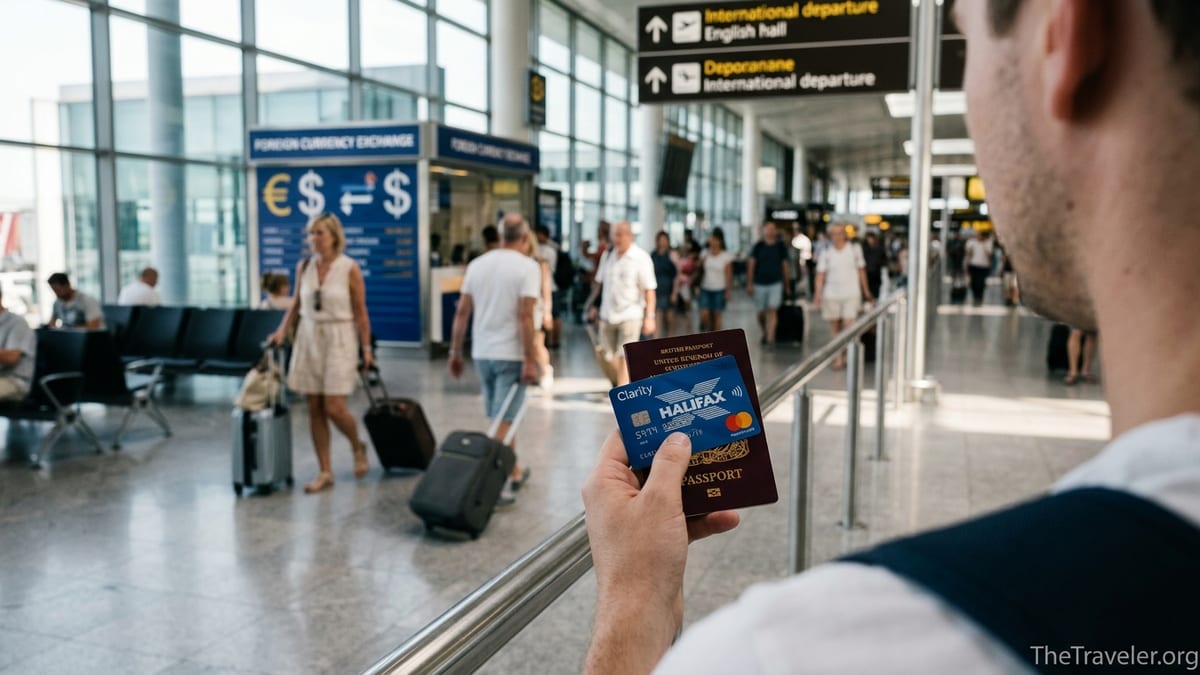
What Makes the Halifax Clarity Card Different for Travel
The core attraction of the Halifax Clarity Credit Card for travellers is that it does not charge foreign transaction fees on purchases. Most mainstream UK credit and debit cards add roughly 2.75 to 3 percent to every non‑sterling transaction. With Clarity, if you tap to pay 50 euros for dinner in Lisbon, you pay the Mastercard exchange rate for that day and nothing extra on top from Halifax for the currency conversion itself. Over a week of hotels, restaurants and transport, that can easily save a typical couple £30 to £80 compared with a standard bank card, depending on how much they spend.
The card also has no additional Halifax cash withdrawal fee when you take out foreign currency from an ATM abroad. Many cards add both a foreign transaction fee and a separate cash‑advance fee of around 3 to 5 percent. With Clarity the big difference is that Halifax does not add those extra percentage‑based charges on non‑sterling ATM withdrawals. Instead, the cost comes from interest, which starts running immediately on the amount of cash you take out.
In practical terms, this means the Clarity card is usually best used as your primary card for everyday overseas spending in shops, restaurants and online bookings in foreign currencies. You get the Mastercard rate and avoid the typical foreign usage surcharge. For cash, it can still be a good option, but only if you understand how to minimise interest and watch out for local ATM fees set by the machine operator, which Halifax cannot control.
The card does not charge an annual fee, and the interest rate is personalised, often in the region of the low to mid‑20s percent APR variable. There are also standard credit‑card penalties such as a late payment fee, currently around £12, if you miss the due date. None of those change when you are travelling, so treating it as a normal credit card in terms of repayments and limits is essential.
Overseas Purchases: How Exchange Rates and Fees Actually Work
When you make a purchase abroad with Halifax Clarity, the transaction is processed in the local currency and converted to pounds using the Mastercard wholesale rate on the day it is processed. Halifax does not add a separate non‑sterling transaction fee for Clarity card purchases, which is what makes it competitive against many everyday bank cards that add almost 3 percent. For example, if you tap your Clarity card for a 10,000 Japanese yen bar bill in Tokyo and the Mastercard rate that day is roughly 190 yen to the pound, your statement will show around £52.60, plus or minus minor fluctuations, and no extra Halifax currency fee.
The absence of a foreign transaction fee becomes clear on bigger expenses like hotel bills. Imagine a four‑night stay in Barcelona costing 600 euros. A typical high‑street debit card might convert that at the same interbank rate but then add around 3 percent, so you pay the equivalent of an extra 18 euros in fees. With Halifax Clarity, you still pay the 600 euros converted at the Mastercard rate, but there is no additional Halifax fee, saving you the equivalent of that 18 euros. Across a multi‑stop trip, this difference can easily cover a round of drinks or an airport taxi.
It is important to decline “dynamic currency conversion” when foreign merchants or ATMs ask whether you want to pay in pounds instead of the local currency. Choosing pounds usually means the retailer or ATM operator applies a poor exchange rate, often 3 to 7 percent worse than the Mastercard rate. With Clarity, you nearly always want the transaction in the local currency so that Mastercard does the conversion and you benefit from the card’s fee‑free foreign usage. For example, at a Paris department store, if the payment terminal asks “Pay in GBP or EUR?”, selecting euros lets the Clarity card work as intended.
For online bookings in foreign currencies, the same principle applies. If you are reserving a hotel in New York priced in US dollars and the site offers to convert to pounds at checkout, that conversion usually comes with a hidden margin. Paying in dollars and letting your Clarity card convert at the Mastercard rate is generally cheaper, and because there is no Halifax foreign transaction fee on Clarity, you do not pay extra for that choice.
Using Halifax Clarity for ATM Withdrawals Abroad
The way the Halifax Clarity card handles cash withdrawals is different from purchases and is where many travellers make expensive mistakes. When you withdraw cash from an ATM overseas using Clarity, Halifax does not charge a separate cash‑advance fee on non‑sterling withdrawals and does not add a foreign currency fee. You again get a rate based on Mastercard’s wholesale exchange rate. However, interest on the cash amount starts the day you take the money out and runs until you have repaid that part of the balance.
To see how this works in practice, imagine you land in Rome and immediately withdraw 200 euros from a local bank’s ATM to pay for small expenses and a cash‑only guesthouse. If the exchange rate effectively makes that around £170 on your Clarity statement, Halifax will start charging daily interest on roughly £170 straight away. At a representative interest rate in the low to mid‑20s percent APR, keeping that cash withdrawal on your card for a full month could cost a few pounds in interest. If you repay the amount online after just a few days, the interest might be around the cost of a coffee, often still cheaper than a 3 percent ATM fee on another card.
Local ATM operators can still charge their own usage fees, which are separate from Halifax’s pricing and are usually displayed on the screen before you confirm the withdrawal. In tourist hotspots in the United States or Thailand, independent ATM brands sometimes charge a fixed fee equivalent to £3 to £5 per withdrawal. In contrast, machines owned by major banks often charge less or nothing. With Clarity, you want to favour bank‑branded ATMs, take out slightly larger amounts less often and always read the prompt carefully to avoid both local fees and dynamic currency conversion into pounds.
Halifax also sets a daily ATM withdrawal limit on its credit cards, which is typically around £500 per day, though your personal limit and any machine limits may be lower. For a week in Spain, that is more than enough to cover typical day‑to‑day cash needs, such as paying for small cafés that still prefer cash or splitting bills when a group restaurant does not accept multiple cards. Planning your withdrawals to stay within local and Halifax limits and repaying quickly is key to keeping interest costs modest.
Examples: Comparing Clarity with a Typical Bank Card on a Real Trip
Consider a five‑day city break in Lisbon for a couple from the UK. They spend 400 euros on restaurants, public transport and museum tickets, plus 250 euros on a guesthouse that charges their card on checkout. With Halifax Clarity, those 650 euros are converted at the Mastercard rate with no Halifax foreign transaction fee. At a rough rate of 1.17 euros to the pound, their statement might show around £556 in total. If they pay their statement in full by the due date, no interest is charged on those purchases.
If the same couple used a typical high‑street debit card that adds a 2.75 percent foreign usage fee, they would still see the equivalent of £556 based on the underlying exchange rate but with an extra roughly £15 in foreign transaction charges. On a second holiday later in the year, those fees would mount further. Over several trips, the savings from using Clarity for card purchases alone can reach into the low hundreds of pounds for frequent travellers, depending on their spending.
Now look at cash. Suppose on day one in Lisbon they withdraw 200 euros from a bank ATM using the Clarity card for small markets and cafés that do not accept cards. The ATM does not charge a local fee and they wisely choose to be charged in euros rather than pounds. At the same exchange rate, that 200 euros may convert to about £171. If they wait until their statement arrives about three weeks later and then pay in full, they will have paid around three weeks of interest on that £171. If their personalised rate is in the low‑20s percent APR, that could add roughly £2 to £3 in interest.
By contrast, if they instead used a standard UK debit card that charges a 3 percent foreign cash fee, the bank could add roughly £5 on top of that 200‑euro withdrawal immediately, and possibly its own ATM fee. In this scenario, even after factoring in a few days of interest, Halifax Clarity can still work out cheaper for that overseas cash, provided you repay promptly and avoid machines that add high local surcharges.
Managing Interest and Repayments to Keep Costs Low
For card purchases on Halifax Clarity, you can usually benefit from up to 56 days of interest‑free credit, as long as you clear your statement balance in full and on time each month. That means your 400‑euro restaurant and ticket spend on holiday will not accrue interest if you pay off the full sterling balance by the due date. If you only pay a partial amount, interest applies to the remaining balance and you begin to lose the benefit of that interest‑free period for new purchases.
Cash withdrawals are treated differently. Interest starts from the transaction date, regardless of whether you usually clear your balance in full. The most effective way to minimise interest on cash is to pay that cash balance down as quickly as possible, rather than waiting for your monthly statement. In practice, many travellers log in to their Halifax mobile banking app or online banking during their trip, check when the cash withdrawal has appeared as a posted transaction rather than pending, and then make a payment straight away from a current account.
To use a concrete example, imagine you are backpacking through Thailand and take out the equivalent of £250 in Thai baht at an ATM on a Monday. By Wednesday or Thursday, that withdrawal has usually posted to your Halifax account. If you immediately transfer £250 from your UK current account to the Clarity card, you might only be charged two to four days of interest, often amounting to well under a pound or two. Leaving the balance on the card until your statement date at the end of the month would accrue interest for several weeks instead.
Setting up a full direct debit for at least the statement balance is still important to avoid missed payments and late fees if you forget to pay manually. You can then make extra payments during or after your trip specifically to clear any cash withdrawals early. This approach combines the best of both worlds: the protection of an automatic full payment and the flexibility to cut down interest on individual cash transactions.
Practical Tips for Using Halifax Clarity on the Road
Before travelling, it is wise to check your Halifax Clarity credit limit and make sure it comfortably covers your planned hotel deposits, car hire pre‑authorisations and daily spending. A modest limit might be quickly eaten up by a large resort booking in US dollars or a refundable car hire deposit that is only released after you return the vehicle. Some travellers like to spread big costs, such as long‑haul flights, across Clarity for the fee‑free foreign usage and a secondary card for backup, ensuring they never run close to the limit while abroad.
It is also worth telling Halifax your travel plans via the app or online banking, even though many banks now rely on automatic fraud detection rather than formal travel notices. Using the card suddenly in multiple countries within a short period can trigger security checks. Having the mobile app installed, up to date and secured means you can respond quickly if Halifax messages you to confirm an unusual transaction while you are, for example, paying a restaurant in New York or booking train tickets in Berlin.
On the ground, make Halifax Clarity your default for card payments in shops and restaurants, and use cash only where necessary. In major European cities, contactless payments are widely accepted for everything from metro tickets to small pastries at a café counter, which reduces how often you need an ATM. When you do need cash, look for ATMs that belong to mainstream banks rather than independent machines in bars or tourist souvenir shops, because bank machines are more likely to have lower or no local fees and clearer prompts.
Always take a screenshot or note of your card’s emergency contact number before you travel, and consider carrying a backup card from another issuer in case a merchant or ATM network temporarily declines Halifax transactions. Although issues are not common, there are occasional reports of individual ATMs or hotels preferring a different network, and having a second card avoids being stranded without access to funds.
The Takeaway
The Halifax Clarity Credit Card remains a strong option for UK travellers who want a simple way to avoid foreign transaction fees on everyday purchases abroad. For card payments in foreign currencies, it is straightforward: you get a competitive Mastercard exchange rate and no extra Halifax charge for spending outside the UK. Used this way for hotels, meals, transport and tickets, it can save a noticeable amount compared with a standard bank card that adds almost 3 percent to every transaction.
The picture is more nuanced for ATM withdrawals. Halifax does not levy a separate foreign cash fee on Clarity for non‑sterling cash, which is rare among UK cards, but interest is charged from the day you take out the money until you repay it. That means cash can still be cost‑effective if you withdraw infrequently, favour bank ATMs with low local fees and repay withdrawals quickly through the Halifax app or online banking. Leaving cash balances on the card for weeks, by contrast, erodes the savings and can make it more expensive than alternatives.
If you understand these rules, the Clarity card can comfortably handle most of your overseas spending, whether you are taking a city break in Europe, a road trip across the United States or a backpacking route in Southeast Asia. By paying in the local currency, avoiding dynamic currency conversion and using cash sparingly and strategically, you can take full advantage of what the Halifax Clarity Credit Card offers and keep more of your travel budget for the experiences that matter.
FAQ
Q1. Does the Halifax Clarity Credit Card charge foreign transaction fees on purchases? No, the Halifax Clarity Credit Card does not charge a separate foreign transaction fee on purchases made in non‑sterling currencies, so you pay the Mastercard exchange rate without an extra Halifax percentage charge.
Q2. How is interest charged on Halifax Clarity cash withdrawals abroad? Interest on cash withdrawals starts from the date you take the money out and runs until you repay that amount, so paying cash withdrawals off quickly through the app or online banking keeps the interest cost low.
Q3. Are there fees for using foreign ATMs with Halifax Clarity? Halifax does not add its own non‑sterling cash fee on the Clarity card, but ATM operators abroad can still charge local usage fees, which are shown on the screen before you confirm the withdrawal.
Q4. What exchange rate do I get when spending abroad with Halifax Clarity? Transactions in foreign currencies are converted using the Mastercard wholesale exchange rate for the day the transaction is processed, without an additional Halifax currency conversion markup for this card.
Q5. Is Halifax Clarity better than a debit card for overseas spending? For card purchases, Halifax Clarity is often cheaper than many UK debit cards that add a foreign usage fee of roughly 3 percent, but you should compare your own bank’s charges and remember that cash withdrawals on Clarity incur interest from the withdrawal date.
Q6. What is the daily ATM withdrawal limit on Halifax Clarity when abroad? Halifax sets a daily ATM withdrawal limit on its credit cards that is typically around a few hundred pounds, often around £500, although machine‑level limits and your personal credit limit can be lower.
Q7. How can I minimise costs when taking cash out overseas with Halifax Clarity? Withdraw cash only when necessary, choose bank‑branded ATMs, decline dynamic currency conversion into pounds, and repay the withdrawal as soon as it appears on your online statement to cut interest to a small amount.
Q8. Do I still get an interest‑free period on Halifax Clarity purchases made abroad? Yes, overseas purchases generally share the same potential interest‑free period as UK purchases, provided you pay your statement balance in full and on time; this does not apply to cash withdrawals.
Q9. Should I tell Halifax before I travel with my Clarity card? While banks increasingly rely on automated fraud systems, it can still help to update your travel details in the Halifax app or online banking and ensure your mobile number and contact details are correct before you go.
Q10. Is the Halifax Clarity Credit Card suitable as my only card on a trip? Many travellers use Clarity as their main overseas spending card, but it is sensible to carry at least one backup card from a different bank or network in case of technical issues, local preferences or temporary declines.