

If you regularly drive in the eastern United States, getting your E-ZPass strategy right can mean the difference between smooth, discounted travel and a stack of expensive toll-by-mail bills. The basics are simple – a transponder on your windshield, a prepaid balance, and cashless lanes – but the smartest way to manage E-ZPass depends heavily on how often you drive, where you live, and the specific routes you use.
Get the latest updates straight to your inbox!
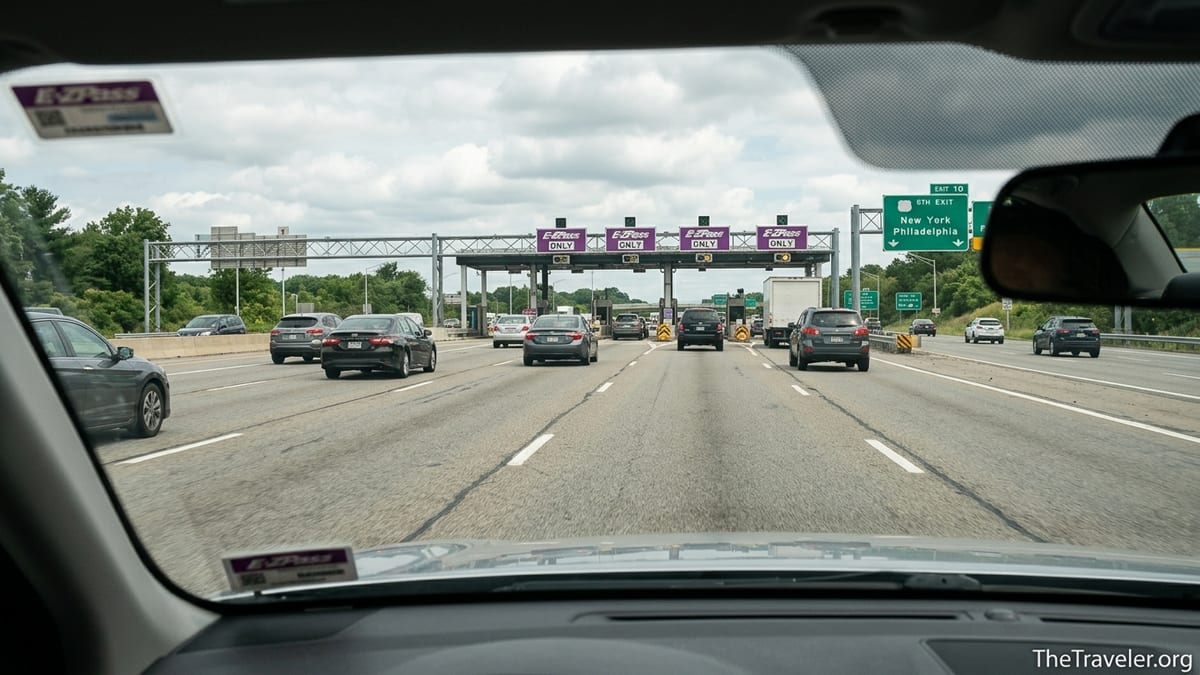
Understanding How E-ZPass Really Works
E-ZPass is an electronic toll collection system used across a large swath of the eastern United States, from Maine and New Hampshire down through Virginia and as far west as Illinois and Indiana. Your small plastic tag or windshield sticker communicates with overhead readers when you pass through toll points. The toll is then deducted from a prepaid account that you manage online or through a mobile app. In most E-ZPass states, tagholders pay a discounted rate compared with drivers billed by mail after cameras read their license plates.
Crucially, E-ZPass is not run by a single national company but by a coalition of state and regional tolling agencies. A New York State Thruway tag, a New Jersey E-ZPass tag, and a Pennsylvania Turnpike tag all work on the same roads, but the account rules, fees, and discounts can differ. For example, some agencies charge a small monthly account fee while others do not, and many reserve the biggest toll discounts for tags issued in their own state. That is why the “best” E-ZPass setup is almost always tied to your home base and your most common commuting or road-trip routes.
E-ZPass is accepted on hundreds of roads, bridges, and tunnels: think the New Jersey Turnpike, the Garden State Parkway, the Massachusetts Turnpike, Delaware’s Route 1, and major crossings like the George Washington Bridge, the Verrazzano-Narrows, and the Fort McHenry Tunnel in Baltimore. A single tag will usually cover you across roughly twenty states, though some specific facilities still have their own systems, especially outside the traditional E-ZPass footprint. Before a long trip, it is worth checking your main routes on your state E-ZPass website to confirm which roads honor your tag and which still send separate bills.
The financial advantage of E-ZPass can be significant for regular drivers. As one concrete example, as of early 2026 the car toll at a typical Garden State Parkway mainline plaza is around 2.40 dollars for cash payers and about 2.25 dollars for E-ZPass users, with similar small but recurring differences at other locations. Over a year of commuting, that gap adds up quickly. On higher-priced crossings such as Port Authority bridges and tunnels between New York and New Jersey, E-ZPass discounts and peak/off-peak pricing can mean a difference of several dollars per trip compared with toll-by-mail bills.
Choosing the Right State and Plan for Your Habits
Because each E-ZPass agency sets its own rules, one of the most overlooked decisions is which state should issue your tag. You do not have to get a tag from the state where you live, as long as you provide a valid mailing address and vehicle information. However, your main commuting or travel region usually dictates the smartest choice. For example, a Staten Island resident who crosses the Verrazzano-Narrows Bridge and Goethals Bridge multiple times a week will often benefit more from a New York–issued or Port Authority–linked account that offers targeted commuter discounts on those specific crossings, rather than a generic out-of-region tag that gets no special breaks.
Frequent commuters on the New York Thruway and MTA Bridges and Tunnels can enroll in commuter plans that trade commitment for deeper discounts. One example is a Cuomo Bridge commuter plan where drivers agree to a minimum number of trips per month in exchange for a lower per-trip rate compared with standard E-ZPass tolls. If you hit the required number of crossings, you save money every month; if you fall short, you effectively pay for the unused trips as a kind of subscription fee. This type of plan suits a weekday commuter with a steady schedule, but it is a bad fit for someone whose trips are irregular or seasonal.
Other agencies take a simpler approach by offering broad off-peak discounts to any E-ZPass tag they issued. New Jersey, for instance, applies off-peak pricing on the Turnpike and some other facilities, but the full benefit is typically restricted to accounts opened through New Jersey E-ZPass. A driver who lives in eastern Pennsylvania but commutes daily into northern New Jersey may find it worthwhile to open a New Jersey account specifically to unlock those off-peak savings, even if they already have a Pennsylvania tag. Over time, the difference between peak and off-peak rates can be worth hundreds of dollars per year to a heavy user.
For long-distance travelers or truckers who rack up large monthly toll bills, some agencies offer tiered volume discounts. On the New York State Thruway, for example, commercial accounts that exceed certain monthly thresholds can qualify for percentage discounts that grow with higher toll spending. If you run a small delivery business that frequently travels between Albany and Buffalo, it is worth speaking directly with the Thruway or your home agency to see whether you qualify for a commercial, fleet, or volume-based plan rather than relying on a standard personal account.
Managing E-ZPass as an Occasional or Seasonal Driver
If you are an occasional toll-road user, such as someone who drives into New York City a few times a year or uses the Massachusetts Turnpike only on summer trips to Cape Cod, your E-ZPass priorities are different. You probably do not need a complex commuter plan, but you do want to avoid inactivity fees, dormant accounts, or surprise toll-by-mail bills when your balance quietly runs out. In that situation, a no-fee account with a moderate prepaid balance and simple automatic replenishment settings is usually the best fit.
Consider a Boston-based family that makes three or four weekend trips per year down to New Jersey. They might open a Massachusetts E-ZPass account with a 40 or 50 dollar starting balance and set auto-replenishment to top up when the balance dips below 10 or 15 dollars. That threshold is high enough to prevent accidental negative balances on a single long trip, but not so high that money sits unused in the account for years. Because their travel is sporadic, they would skip commuter plans and instead focus on making sure their license plate is correctly listed, their mailing address is current, and their credit card on file does not expire before next summer’s road trip.
Seasonal residents face a similar question. Think of a retiree who spends winters in coastal Delaware and summers in upstate New York. They may use E-ZPass heavily on Mid-Atlantic routes between November and April, then rarely touch a toll road the rest of the year. For them, the optimal setup might be a Delaware or Maryland account that has no monthly service fee and a relatively low replenishment threshold, plus calendar reminders to log in each spring and fall to confirm that the account is active, the transponder remains properly mounted, and the payment card has not expired.
Rental cars add another twist for occasional E-ZPass users. Most rental companies in E-ZPass territory offer their own toll transponders with daily service fees, but you can often avoid those charges by bringing your own E-ZPass tag and declining the rental company’s program. A New Jersey resident flying into Boston for a week, for instance, can bring their Garden State Parkway tag, mount it in the rental car, and use it on the Zakim Bridge and Massachusetts Turnpike as usual. The key is to make sure the rental license plate is not automatically enrolled in the rental company’s tolling program, which could otherwise lead to double billing.
Best Practices for Heavy Commuters and Road Warriors
For daily commuters and high-mileage drivers, fine-tuning your E-ZPass account can unlock meaningful savings and reduce hassle. Your first step should be mapping out your real-world routes for a typical month, then matching them to available discount plans. A nurse who drives from New Jersey into Manhattan five shifts per week via the Lincoln Tunnel will likely benefit from a Port Authority commuter discount, while a technology worker who travels from Westchester County into Manhattan via the Henry Hudson Bridge and the FDR Drive may find more value in an MTA Bridges and Tunnels commuter plan.
Time of day also matters. On some systems, like the New Jersey Turnpike, tolls vary between peak and off-peak hours, with off-peak pricing applied to E-ZPass tagholders issued by that state. A warehouse worker on a 4 a.m. to noon shift might plan their commute to fall within off-peak windows and save a noticeable amount over the course of a year, while a traditional 9-to-5 commuter may simply have to budget for peak pricing. In other regions, such as parts of Maryland and Virginia, dynamically priced express lanes adjust tolls based on traffic, and some accept multiple transponder types. In those corridors, using E-ZPass in combination with HOV lanes and carpooling can dramatically cut both costs and travel time.
Commercial drivers and small fleet owners should approach E-ZPass almost like a utility contract. A landscaping company in suburban Philadelphia that regularly sends trucks along the Pennsylvania Turnpike and the Atlantic City Expressway might set up a business account with ten or fifteen transponders, assign each tag to a specific vehicle, and download detailed monthly statements to track which routes are most expensive. Some agencies allow fleet managers to set different replenishment levels for individual tags, which can be invaluable if one truck runs local routes and another frequently crosses high-toll bridges or tunnels.
Finally, heavy users should actively check for agency-specific quirks that can cost money. On some bridges, agencies now apply a “mid-tier” rate when they detect that your transponder is mounted incorrectly, splitting the difference between the cheaper E-ZPass rate and much higher toll-by-mail. If you notice that your tolls on a familiar crossing suddenly look higher than expected, compare your statement against the agency’s published peak, off-peak, and mid-tier rates. You may simply need to reposition your tag on the windshield or replace an aging transponder to restore full discounts.
Funding Strategies, Low Balances, and Avoiding Violations
However often you drive, one core principle is universal: never let your E-ZPass account quietly slip into a negative balance. When that happens, tolls stop posting to your account and instead become toll-by-mail bills or violations that carry administrative fees many times higher than the toll itself. On some major bridges and tunnels, a missed 12 or 15 dollar toll can trigger a violation fee of 50 dollars or more per crossing, and repeated failures to pay can eventually lead to collections efforts or even vehicle registration holds.
The most reliable way to avoid that spiral is to set up auto-replenishment with a credit or debit card and choose a low-balance threshold that fits your driving. If you only use toll roads occasionally, you might set your account to add 25 dollars whenever the balance falls below 10 dollars. A New Jersey commuter spending 200 dollars a month on tolls might prefer a higher threshold, such as adding 100 dollars when the balance hits 40 dollars, to reduce how often charges hit their card. The exact numbers matter less than the discipline of making sure the account never reaches zero during a long drive.
You can add a second layer of protection by enabling balance alerts. Most agencies allow you to receive emails or texts when your balance falls below a certain amount or when an auto-replenishment transaction fails. For example, if your credit card expires in June and your auto-replenishments start failing in July, a timely low-balance alert can prompt you to update your card before a Labor Day road trip that would otherwise generate expensive toll-by-mail bills up and down the New Jersey Turnpike or I-95 corridor.
If you do receive a violation notice, act quickly and do not assume you are stuck with the full fee. Many agencies are willing to waive or reduce administrative charges for first-time or infrequent violators who had an otherwise valid E-ZPass account. If you can show that your tag was properly mounted, your license plate matches the account, and your balance was positive at the time, a tolling authority may reclassify the charge as a standard toll rather than a violation. Call the customer service number on the notice or use the online dispute portal, and be prepared with dates, vehicle details, and your account number.
Avoiding Common E-ZPass Pitfalls on Real-World Routes
Some of the costliest E-ZPass mistakes happen not because drivers intentionally skip tolls, but because they do not understand how their tag interacts with specific roads or with other transponders. One classic example involves drivers who keep both an E-ZPass and a different state’s toll tag, such as an NC Quick Pass or a Peach Pass, on the same windshield. In a few regions, if both tags are visible, a toll plaza’s equipment can accidentally read both, leading to double billing. Agencies typically warn against this and provide small metallic pouches to shield any tag you are not actively using, but in practice many travelers forget.
Another recurring issue is improper mounting. Newer E-ZPass stickers are designed to adhere directly to the glass in a specific shaded area behind the rearview mirror. If you place the tag too low, on a dashboard, or in a heavily tinted part of the windshield, the reader may miss it. On certain bridges run by regional authorities, this can trigger that mid-tier pricing mentioned earlier, where your toll is higher than the normal E-ZPass rate but not as punishing as toll-by-mail. If you notice strange pricing patterns on a familiar trip, double-check that you followed the mounting diagram included with your transponder.
License plate mismatches also create headaches, especially after vehicle changes. Suppose a Maryland driver sells their car and buys a new compact SUV, but forgets to update the plate in their E-ZPass account before a weekend trip through Delaware and New Jersey. The system may still read the tag correctly on most plazas, but any camera-based image checks could flag the plate as not associated with a valid account, leading to toll-by-mail notices or violations mailed weeks later. Building a habit of updating your account whenever you change license plates, move to a new address, or add a second car can prevent these retroactive surprises.
Finally, be aware of how rental car toll programs interact with your own E-ZPass. A Florida-based rental company might pre-enroll its license plates with tolling agencies along the East Coast, so if you drive a rental vehicle on the Pennsylvania Turnpike with your personal E-ZPass on the windshield, the system could theoretically register both the plate and the tag. Most agencies are increasingly good at crediting the tag read and ignoring the plate in this scenario, but to be safe, check your rental agreement for daily toll program fees and keep your receipts and toll statements in case you need to contest duplicate charges later.
Planning Multi-State Road Trips with E-ZPass
For travelers driving long distances along the eastern seaboard or across multiple states, E-ZPass can streamline trips through some of the most toll-heavy corridors in the country. A classic road trip example is a family driving from Boston to Walt Disney World in Florida. From Massachusetts through Rhode Island, Connecticut, New York, New Jersey, Delaware, and Maryland, their E-ZPass is widely accepted on major toll roads and bridges. By the time they reach Virginia, North Carolina, and South Carolina, many stretches of Interstate 95 are toll-free, but optional express lanes and regional toll roads may use their own systems or offer interoperability with E-ZPass, SunPass, or NC Quick Pass.
Before a big trip like that, it is smart to log into your account and verify your contact information, make sure your balance is robust enough to handle several days of travel, and check whether your route includes any toll roads that do not accept E-ZPass. For instance, certain local express lanes in Georgia or Florida may be compatible with E-ZPass thanks to expanding interoperability agreements, but some smaller toll facilities still only honor their home-state systems. If you know you will be using those roads heavily, you might consider a second transponder like SunPass or Peach Pass, keeping it shielded except when you are in its home territory.
Using a toll calculator or a navigation app that estimates toll costs can help you budget and compare routes. A driver heading from Philadelphia to Washington, DC, for example, can choose between staying on I-95 through Delaware and Maryland, where E-ZPass is accepted and tolls are straightforward, or detouring via inland routes that are toll-free but slower. If the mainline tolls total around 20 to 25 dollars round-trip with E-ZPass discounts, a business traveler may decide the time savings are worth the cost, while a budget-conscious vacationer may prefer the slower, toll-free roads through Pennsylvania and rural Maryland.
At the end of a road trip, it is worth reviewing your E-ZPass statement to understand where your money went. Suppose you notice that your tolls through New York were higher than expected, with a noticeable jump on the return leg. That might prompt you to investigate whether one leg fell into peak hours, whether you used a different river crossing with a higher toll, or whether an equipment issue nudged your trip into a mid-tier rate. Those insights can help you fine-tune departure times and route choices on your next journey, so you get the best blend of speed, scenery, and savings.
The Takeaway
Managing E-ZPass effectively is less about mastering obscure rules and more about matching the program to your real-world driving life. Daily commuters benefit most from carefully chosen state-issued tags, commuter plans, and peak-versus-off-peak strategies. Occasional and seasonal drivers should prioritize simple, no-fee accounts with conservative replenishment thresholds and up-to-date vehicle information, so that infrequent trips do not generate costly surprises. Long-distance travelers gain peace of mind by confirming interoperability, funding their accounts ahead of multi-state drives, and reviewing post-trip statements to understand how different route choices affect their budgets.
Across all these groups, the fundamentals stay the same: keep your balance positive, mount your tag correctly, update your plates and payment information, and respond quickly to any violation notices. Within that framework, you can fine-tune details such as which state issues your tag, whether a commuter plan makes sense for your schedule, and how aggressively you want to use express lanes or off-peak travel to save time and money. With a bit of planning and periodic check-ins, E-ZPass can shift from an opaque line item in your budget to a transparent, manageable tool that supports the way you actually travel.
FAQ
Q1. Is there any real advantage to getting E-ZPass if I only use toll roads a few times a year?
If you drive on toll roads even occasionally, E-ZPass usually saves you money compared with toll-by-mail bills and greatly reduces the risk of missed payments turning into expensive violations. Even modest discounts at places like Garden State Parkway plazas can add up over several trips, and having a tag already in place means you do not have to think about how a particular bridge or tunnel will bill you when you are focused on travel.
Q2. Does it matter which state issues my E-ZPass tag?
Yes. While almost all E-ZPass transponders work on the same network of roads, each issuing agency sets its own fees and discounts, and many reserve their best deals for tags they issued. If you regularly commute on New York Thruway, MTA, Port Authority, or New Jersey Turnpike facilities, it is usually worth getting your tag from the agency that runs most of your routes so you can access local commuter plans and off-peak discounts.
Q3. How much money should I keep in my E-ZPass account?
The right balance depends on how often and where you drive. Occasional users might be comfortable with a balance that covers one or two long trips, such as 40 to 60 dollars, while daily commuters may prefer enough to cover several weeks of tolls. The key is that your low-balance threshold and auto-replenishment amount are high enough that you will not hit zero during a typical travel day.
Q4. What is the best way to avoid E-ZPass violations and extra fees?
Set up automatic replenishment, enable low-balance alerts, and keep your vehicle and payment information current. Make sure your transponder is mounted according to the instructions so it reads reliably. If you receive a notice anyway, contact the tolling agency promptly. Many will waive first-time administrative fees if you have an otherwise good payment history and a valid account.
Q5. Can I use my E-ZPass in rental cars?
In most cases, yes. You can bring your own transponder, mount it properly in the rental car, and use it as you would in your personal vehicle. You should still read the rental agreement carefully, because some companies automatically enroll their license plates in their own toll programs and charge daily service fees. Keeping your E-ZPass statement and rental receipts makes it easier to challenge any duplicate charges.
Q6. What happens if I move or change license plates?
Whenever you move or register a new vehicle, log into your E-ZPass account and update your address and license plate information before your next toll-road trip. If your plates do not match what is in the system, some tolls may not post correctly and could turn into toll-by-mail bills or violations. Taking five minutes to update your details can prevent weeks of back-and-forth with customer service later.
Q7. Are commuter plans always a good deal for daily drivers?
Commuter plans can offer excellent savings for people with very consistent routines, such as crossing the same bridge 20 or more times per month. However, they usually require a minimum number of trips, and if your schedule changes, you may end up paying for unused crossings. Before enrolling, look at your last few months of travel to confirm that you reliably meet or exceed the plan’s minimum usage.
Q8. Can I have more than one toll transponder in my car?
You can, but you should be careful. If you have both an E-ZPass and another region’s tag, like a SunPass or NC Quick Pass, on the same windshield, it is possible for some readers to detect both and charge you twice. Many agencies recommend keeping only the tag you need visible and storing any others in a shielded pouch when you are outside their home region.
Q9. How do dynamic or express lanes work with E-ZPass?
On some highways, especially around Washington, DC, Baltimore, and in parts of the Southeast, express lanes use variable pricing that changes based on traffic levels. E-ZPass transponders are often the main way to pay for those lanes. If you choose to use them, your toll can be significantly higher than nearby standard lanes during rush hour but much lower at off-peak times. For frequent users, planning your schedule to catch lower-priced periods can save substantial money over time.
Q10. What should I check before a long multi-state road trip?
A few days before departure, log into your account, confirm that your balance and auto-replenishment settings can handle several days of heavier use, and verify that your license plate and contact details are correct. Look over your planned route for any major toll bridges, tunnels, or express lanes and confirm that E-ZPass is accepted there. After the trip, review your statement so you understand which segments were most expensive and whether adjusting departure times or routes next time could trim your toll costs.