


If you are planning a road trip along the New Jersey Turnpike, over the George Washington Bridge into New York, or across the Massachusetts Turnpike, setting up E‑ZPass before you go can save you time and money. But the system only works smoothly if your account, vehicle details, and payment method are configured correctly before you roll into your first all‑electronic toll lane. This guide walks through what to set up in advance so your first experience with E‑ZPass is uneventful in the best possible way.
Get the latest updates straight to your inbox!
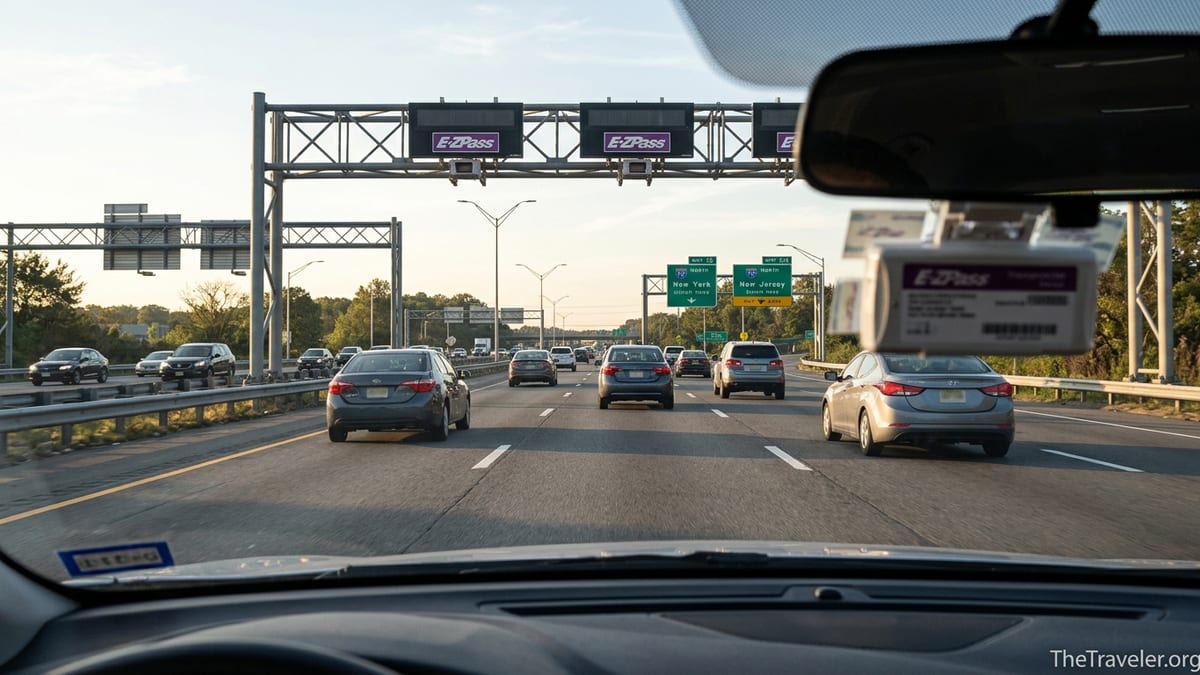
Understand Where Your E‑ZPass Will Work
Before you even order a transponder, confirm that E‑ZPass is the right system for the roads you plan to use. E‑ZPass is accepted across a large network of toll roads, bridges, and tunnels, primarily in the Northeast and Mid‑Atlantic, but also in parts of the Midwest and South. As of 2026, the network covers 20 states with dozens of participating agencies, including New York, New Jersey, Pennsylvania, Massachusetts, Maryland, Virginia, Ohio, Illinois, Minnesota, and Georgia, among others. Not every toll road in those states uses E‑ZPass, but the major interstates and high‑volume bridges typically do.
For a practical example, a family driving from Boston to Washington, DC can use a single E‑ZPass tag through Massachusetts, Connecticut, New York, New Jersey, Delaware, and Maryland, including roads like the Mass Pike (I‑90), the New Jersey Turnpike, and the Baltimore Harbor Tunnel. Likewise, an Illinois I‑PASS transponder is compatible on most E‑ZPass facilities, so a driver based in Chicago can use that same tag when visiting New York or Pennsylvania. If your usual driving is in a non‑E‑ZPass state such as Florida or Texas, however, a local system like SunPass or TxTag may be a better primary choice, though some regional passes now offer broader interoperability.
It is worth spending a few minutes with your route on a map and checking which stretches are tolled and whether E‑ZPass is accepted there. A traveler flying into Newark Liberty International Airport who plans to rent a car and drive straight into Manhattan, for example, will encounter tolled facilities such as the New Jersey Turnpike and the Holland or Lincoln Tunnels. In that case, using an E‑ZPass or the rental company’s toll program can make exits and crossings smoother compared with paying toll‑by‑mail rates later.
Finally, keep in mind that E‑ZPass rules and discounts can vary by state. A New York E‑ZPass account may offer better rates on New York bridges and tunnels than an out‑of‑state tag, while a New Jersey account might be more advantageous for frequent Turnpike commuters. If you split your time between two regions, compare the discounts in the state where you expect to pay the most tolls and open your account there.
Choose the Right E‑ZPass Issuing Agency and Account Type
Once you know E‑ZPass will work on your route, the next step is choosing which state’s E‑ZPass agency to open your account with. For most drivers, the best choice is the state where you live or where you will use toll roads most often. Each agency sets its own rules for minimum opening balance, fees, and discount plans. For example, in 2026 E‑ZPass New York typically requires a $25 opening balance for a standard account, which simply pre‑loads your tolls. In some downstate retail locations, “On‑The‑Go” tags bought off the shelf may cost around $30, which is then converted into prepaid toll credit once you register the tag.
Other agencies follow similar models, but there are key differences. Some, such as Massachusetts, issue E‑ZPass transponders with no monthly fee and only require that you maintain a minimum prepaid balance. Others may charge a small monthly service fee or a one‑time transponder deposit that you can recover when you close the account and return the device. A New Jersey commuter who opens an account through the New Jersey Turnpike Authority, for instance, may see specific discounts during off‑peak hours or on commuter plans that do not exist for an out‑of‑state tag using the same road.
Deciding between a personal and a commercial account is also important. If you operate a small business with multiple vehicles traveling through toll areas, you may want a commercial account that supports several transponders and provides itemized statements suitable for expense tracking. A delivery company running three vans from Philadelphia to suburban New Jersey every day might assign a separate tag to each vehicle but keep them under the same commercial account for centralized billing. By contrast, a household that only uses toll roads for summer trips to the Jersey Shore will usually be fine with a single personal account and one or two tags.
Think ahead about who will use the tag. A college student borrowing the family car for a semester in New York or New Jersey might need to be added as an authorized user on the account, especially if they will log in to check balances or update license plates. Clarifying these details before you submit your application prevents delays and confusion later if you need to dispute a charge or replace a lost transponder.
Gather the Information You Need Before Applying
Opening an E‑ZPass account online is usually straightforward, but it goes much faster if you have all required information ready. Nearly every agency will ask for your full name, mailing address, email address, and at least one phone number. You will also need a valid payment method, typically a major credit or debit card. Some agencies allow bank account drafts, but card payments are still the most common for automatic replenishment of toll balances.
Vehicle details are essential, since the system relies on linking each transponder to specific license plates. Plan to provide the license plate number, state of registration, vehicle year, make, model, and body type. For example, if you are registering a 2021 Toyota RAV4 with New York plates, you will need that full plate number and must indicate that it is a passenger vehicle, not a commercial truck. If the car is leased, the agency may also ask you to indicate the leasing company or whether the vehicle is part of a rental fleet.
Think about whether you need to add more than one vehicle on day one. A couple in northern Virginia might share two cars, one used primarily for commuting into Washington, DC and another for weekend trips. They can often place two transponders under the same account and assign each to a specific license plate, or in some states, designate a movable tag that can be used in multiple vehicles as long as they are all listed on the account. Gathering all those plate numbers ahead of time avoids logging in repeatedly to add them piecemeal.
Finally, have an idea of your typical toll usage so you can choose an appropriate starting balance and replenishment threshold. If you expect to take a single round‑trip over the Delaware Memorial Bridge during a holiday weekend, a modest $25 opening balance is probably sufficient. But if you are a new commuter using a tolled express lane daily, it might make sense to start with a higher balance so you are not constantly triggering small top‑ups on your card.
Set Up Payment, Auto‑Replenishment, and Alerts
One of the most important steps to complete before driving through your first E‑ZPass toll lane is configuring how your account will be funded. Most agencies operate as prepaid systems: your account holds a positive balance, and each time you pass a toll point the appropriate amount is deducted. When the balance falls below a certain threshold, the system will charge your card or bank account to top up the balance automatically. This prevents your account from running dry and triggering violations.
In practice, you might set your E‑ZPass account to auto‑replenish with $25 whenever your balance dips below $10. A frequent New Jersey Turnpike commuter who spends more than $50 per week on tolls might choose a higher replenishment amount, such as $75 or $100, to reduce the number of card charges each month. Whichever numbers you choose, make sure the linked card has sufficient available credit or funds. Many agencies will send email alerts if a payment fails, but if you ignore those messages your account can quickly slide into negative territory.
It is also a smart idea to enable account alerts before your first trip. Most E‑ZPass systems let you opt in to email or text notifications for low balances, replenishments, and unusual activity. For example, you might receive a message stating that your account was just charged for a toll in a region where you have not been driving, indicating that your transponder may have been stolen or misread. A family from Ohio visiting New York City for the first time could then check their online statement from the hotel and contact customer service if something looks wrong.
Setting up alerts can help you avoid unpleasant surprises weeks later. Travelers sometimes discover only after a trip that their credit card on file had expired, causing tolls to post as violations with higher administrative fees. A simple email flag warning that your card is about to expire or that a replenishment failed gives you a chance to fix the problem long before it leads to costly notices in the mail.
Correctly Mount and Test Your Transponder
Once your E‑ZPass tag arrives in the mail or you purchase one at a retail location and register it, you will need to mount it correctly in your vehicle. Agencies provide specific instructions, usually recommending that the tag be placed on the inside of the windshield, just behind the rearview mirror, at a particular height. The goal is to ensure that the transponder has a clear line of sight to the overhead readers at toll points. Many tags come with adhesive strips or a plastic mounting bracket to help you place them accurately.
Windshield design matters more than travelers might think. Some vehicles have metallic tinting or embedded heaters that can interfere with signal transmission. In those cases, manufacturers often leave a small untreated area specifically designed for electronic toll tags. For example, some late‑model luxury sedans require that you mount the tag within a dotted or shaded section near the mirror. If you simply stick the tag in a convenient corner, the toll reader may miss it, leading the system to fall back on license plate recognition and potentially flag a violation if the plate is not on your account.
Convertible drivers or motorcycle riders often need alternative mounting methods. A driver in a soft‑top Jeep Wrangler who rarely uses the full windshield might ask their E‑ZPass agency for an external license‑plate‑mounted tag that can withstand weather and still be read reliably. Motorcyclists sometimes carry a small, waterproof tag holder attached near the handlebars. These special tags usually require explicit request during the account setup process, so it is important to know your vehicle type and needs before finalizing your order.
After installation, use a low‑stress test run. Drive through a local toll plaza at the posted E‑ZPass speed, stay in a clearly marked E‑ZPass lane, and later log in to confirm that the toll recorded properly against your account. If you see a “toll unpaid” message on the overhead sign as you pass or notice that the toll does not post within a day or two, contact customer service right away. Fixing a mounting or tag issue after the first missed toll is much easier than sorting out a stack of violations weeks later.
Register Every License Plate You Intend to Use
Even though E‑ZPass is a transponder‑based system, the cameras that record license plates act as an important backup. If the tag is not read for any reason, the toll system relies on the plate to locate the correct account. That only works if the plate is listed correctly. Before you drive under your first toll gantry, double‑check that every license plate you might use with the tag is registered on your account and that the numbers and letters are exactly right.
Real‑world problems often arise when drivers buy or rent vehicles. Suppose you trade in your old sedan with New Jersey plates and drive away from the dealer in a new SUV with different plates but forget to update your E‑ZPass account. The next time you drive through a toll point on the Garden State Parkway, the system might not recognize your account and instead mark the toll as unpaid, triggering a violation notice by mail. In some states, repeated missed payments can lead to administrative fees of tens of dollars per violation and, over time, to more serious consequences such as registration holds if large balances remain unpaid.
Rental cars require special attention. If you bring your personal E‑ZPass tag on a flight and mount it in a rental car at a New York or Boston airport, you need to add the rental’s license plate to your account for the duration of the trip, then remove it afterward. Otherwise, tolls that fail to read your tag might be billed to the rental company’s toll program instead, which often carries steep daily convenience fees on top of the toll amount. Travelers have reported returning home to find that a weeklong vacation with only a handful of toll crossings turned into a much larger bill because the rental company’s per‑day toll program was triggered unnecessarily.
Pay attention to temporary plates as well. New vehicles sometimes carry paper tags for several weeks before permanent plates arrive. If you will be driving through E‑ZPass territory during that period, ask whether your agency recommends adding the temporary plate to your account or simply waiting for the permanent registration before using toll facilities. Getting clear guidance early helps you avoid mismatched records later, especially if any tolls are disputed.
Learn How Violations Work Before You Make a Mistake
No one plans to receive an E‑ZPass violation notice, but it is useful to understand how the process works before your first trip. If your tag fails to read and your license plate is not properly registered, or if your account balance is negative, the toll system will generally treat your passage as unpaid. In many states, the first step is a toll‑by‑mail bill sent to the registered owner of the vehicle, with the toll amount plus a modest administrative fee. If that bill is ignored, additional penalties and collection steps can follow.
Penalties vary widely by state and road operator. For example, on some major New Jersey toll roads an unpaid toll might initially carry an administrative fee of around $50 per violation, while other states may add smaller late fees that accumulate over time. A driver who inadvertently crosses several tolled bridges on a weekend trip without a working tag or valid account information can return home to find a series of notices that collectively cost far more than the original tolls would have. Understanding this risk ahead of time encourages you to take setup details seriously.
Many agencies have clear timelines for disputing charges or requesting leniency for first‑time users. A Pennsylvania driver who realizes they drove through an E‑ZPass lane without a tag, for instance, may have a limited window to contact customer service, explain the mistake, and pay the base toll before full violation fees apply. Although policies differ, agencies often offer one‑time courtesy waivers of certain fees if you promptly set up a legitimate account and keep it in good standing going forward.
Some states have gone further, linking chronic toll evasion to enforcement actions such as vehicle registration blocks. Travelers who allow large unpaid balances to accumulate across multiple trips can eventually face difficulties renewing their registration or even risk their vehicle being flagged. Knowing these potential consequences ahead of time is not meant to create fear, but rather to emphasize that a few minutes of careful setup before your first trip is far easier than trying to untangle a web of violations later.
The Takeaway
Setting up E‑ZPass before your first use is less about technology and more about preparation. You are creating a small financial account tied closely to your vehicle and travel patterns, and small oversights can ripple into expensive surprises. By confirming that E‑ZPass covers the routes you plan to drive, choosing the most appropriate state agency, and gathering all the details for your vehicles and payment methods, you lay a solid foundation for trouble‑free tolling.
A bit of extra attention to the details pays off. Mount the transponder exactly where your agency recommends, verify that every license plate you might use is entered correctly, and run a short test drive before relying on the system for a long road trip. Take advantage of tools like email or text alerts so you are the first to know if your balance runs low or a payment fails. If something does go wrong, reach out to customer service promptly while issues are still small and easier to fix.
For most travelers, a properly configured E‑ZPass quickly fades into the background, letting you glide through toll points on busy corridors like I‑95 or over iconic spans such as the Verrazzano‑Narrows Bridge without stopping to fumble for cash or worry about a stack of bills arriving later. A bit of careful setup before that very first trip is what makes that seamless experience possible.
FAQ
Q1. Do I need a separate E‑ZPass for each state I drive through?
In most cases, no. A single E‑ZPass issued by one member state will work across the broader E‑ZPass network, including many toll roads in the Northeast, Mid‑Atlantic, parts of the Midwest, and some Southern states. The main reason to choose one agency over another is access to local discounts where you drive most often.
Q2. How long does it take to receive an E‑ZPass after I apply?
Processing times vary, but many agencies mail transponders within about one week of approving your online application. If you need one immediately, some states sell prepackaged tags at supermarkets, pharmacies, or service plazas that can be used as soon as you register them online.
Q3. Can I move my E‑ZPass transponder between cars?
Often yes, but only if all vehicles that will use the transponder are listed on your account and meet the same class requirements. For example, you can typically move a tag among multiple passenger cars in the same household, but not between a car and a heavy commercial truck. Always check your agency’s rules before swapping.
Q4. What happens if my E‑ZPass account balance runs out?
If your balance falls below zero and auto‑replenishment fails, tolls may start posting as violations instead of regular charges. You will usually receive a notice by mail with the toll amount plus additional fees. To avoid this, keep your payment method current, enable low‑balance alerts, and respond quickly if you receive any warning emails or letters.
Q5. Do I still get charged if the transponder does not beep at the toll?
Not all toll plazas use audible beeps, and some vehicles are well insulated, so you may not hear anything even when the tag is read correctly. The definitive record is your online account statement. If you suspect a problem, check that statement within a day or two and contact customer service if the toll does not appear or appears as a violation.
Q6. Is it worth getting E‑ZPass if I only take one or two toll trips a year?
It can be, especially in regions where toll‑by‑mail rates are significantly higher than E‑ZPass rates. A traveler who drives to New York City or along the New Jersey Turnpike once or twice a year may recoup the small effort of opening an account through lower tolls and the convenience of avoiding mailed bills and rental car toll fees.
Q7. Can I use my E‑ZPass in a rental car?
Yes, but you should add the rental’s license plate to your E‑ZPass account for the duration of your trip and confirm that the rental company’s own toll transponder is turned off or shielded. Otherwise, you may be charged through the rental company’s toll program, which can include daily service fees in addition to the tolls.
Q8. What should I do if I sell my car or get new plates?
Log in to your E‑ZPass account as soon as possible to remove the old license plate and add the new one. If you forget, tolls taken soon after the change may not match your account, risking violations. If your transponder will no longer be used at all, ask your agency how to return it and close or adjust the account.
Q9. Are there privacy concerns with using E‑ZPass?
E‑ZPass systems record the time and location of each toll transaction, which is necessary for billing. Agencies typically restrict access to this data to billing, customer service, and limited law enforcement requests under applicable laws. If you are concerned, review your issuing agency’s privacy policy to understand how long records are kept and under what circumstances they may be shared.
Q10. Can E‑ZPass help me get discounted tolls?
Yes. Many states offer reduced toll rates or special commuter plans for E‑ZPass users, particularly on bridges, tunnels, or busy commuter corridors. For example, local residents with an E‑ZPass account often pay less at certain metropolitan crossings than drivers who use toll‑by‑mail. Checking available plans when you set up your account can lead to meaningful savings over time.