


More news on this day
A bid to let travelers wager on flight delays is pushing prediction markets into the heart of the airline industry, raising fresh questions about insider trading, data use, and how far financial-style betting should reach into everyday travel disruptions.
Get the latest news straight to your inbox!
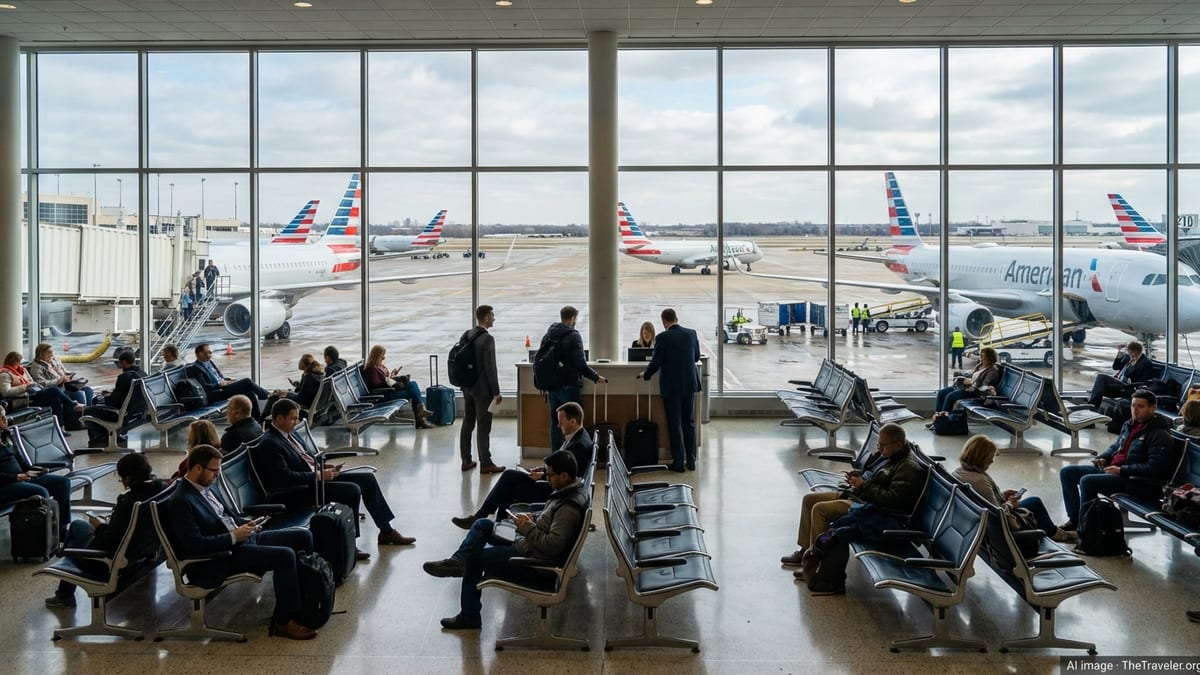
Prediction Markets Move Onto the Tarmac
Prediction markets, where contracts pay out if real-world events occur, have rapidly expanded from politics and sports into areas that directly affect travelers. One of the most visible players, Kalshi, is registered with the U.S. Commodity Futures Trading Commission (CFTC) and already lists contracts on topics such as weather, economic data releases, and sports outcomes, marketing itself as a regulated alternative to offshore betting platforms and informal wagering communities.
Recent proposals and product tests have focused on on-time performance, cancellations, and airport-level disruption, effectively turning flight reliability into a tradable asset. Coverage of Kalshi’s federal filings indicates that the company has sought CFTC approval for contracts tied to airline delays and cancellations, pitched as hedging tools for travelers and businesses exposed to disruption rather than as pure entertainment gambling.
Travel media reports describe how such markets could work: traders would buy low-cost “yes” or “no” contracts on whether a certain share of flights on a given route or at a particular airport would be delayed beyond a threshold on a specific day. If the event occurs, the contract settles at a fixed value, typically one dollar per contract, leaving correct forecasters with a profit and others with a loss.
The move toward aviation-linked contracts comes as prediction markets have grown sharply in trading volume and regulatory attention. Publicly available information shows that, within just a few years, these platforms have moved from niche experiments to markets handling billions of dollars in monthly volume across politics, weather, sports, and economic indicators.
Insider Trading Concerns Hit the Gate
As contract topics shift closer to operational decisions inside airlines and airports, concerns about insider trading have intensified. Industry commentary and legal analysis highlight a common scenario: an airline dispatcher, operations manager, or airport ground supervisor with nonpublic knowledge of crew shortages, maintenance issues, or staffing disruptions might be able to trade profitably on that information before the general public sees any sign of delay.
According to Kalshi’s own public-facing materials, insider trading and market manipulation are prohibited on its platform, and as a designated contract market it falls under the CFTC’s enforcement regime for illegal trading practices. The company emphasizes that it can suspend accounts, share information with regulators, and structure markets to reduce the impact of individual actors with privileged knowledge.
Yet academic work and policy commentary cited in recent regulatory filings suggest that prediction markets are particularly sensitive to information asymmetries. Even when insider trading is formally banned, traders who can see operational data minutes before passengers and the broader public may consistently profit, potentially distorting prices and undermining confidence among retail users who believe they are competing on equal footing.
Legal and compliance specialists have begun warning that many corporate insider trading policies were drafted for conventional securities, not event contracts. As one recent client advisory noted, few corporate codes of conduct explicitly address prediction markets, even as employees gain access to platforms where internal knowledge about airline schedules, air traffic control staffing, or airport construction timelines could translate into direct financial gains.
Data Disputes and the FlightAware Lawsuit
The legal and ethical questions around flight delay markets are not limited to employees. Data vendors that power airline tracking tools are now scrutinizing how their information is used in betting-style products. Earlier this month, real-time flight tracking company FlightAware filed suit against Kalshi, alleging that the prediction market improperly relied on its data to support gambling-style markets on cancellations and delays.
According to technology industry coverage of the case, FlightAware contends that its feeds were never licensed for use in regulated wagering and that linking its information to loss-bearing contracts changes both the nature of the product and the level of risk associated with any data errors. The lawsuit frames the issue as a clash between a data provider focused on operational tools for airlines and travelers and a financial platform that turns flight outcomes into tradable contracts.
Reports also indicate that, even before the suit, Kalshi faced public backlash online over proposed flight cancellation products, with critics questioning whether such markets would encourage speculation on disruption that harms passengers. Some observers argued that using real-time aviation data to support betting, rather than planning and safety, could erode public trust in flight information services.
The outcome of the FlightAware dispute may shape how data licensing appears in future aviation-related prediction markets. If courts or settlements affirm that certain datasets cannot be repurposed for wagering without explicit consent, platforms may need to renegotiate contracts or turn to alternative, potentially less granular, public data sources, which would affect the precision and perceived fairness of settlement outcomes.
Regulators Test the Limits of “Event Contracts”
The debate over flight delay betting is unfolding against a broader regulatory reassessment of event-based derivatives. In 2023 the CFTC issued an order rejecting Kalshi’s bid to list contracts on which political party would control Congress, finding that the proposal involved gaming and could be contrary to the public interest under federal commodities law. That decision triggered litigation, and in 2024 a federal district court in Washington, D.C., ruled that the agency had exceeded its authority in blocking the contracts, a ruling that was widely interpreted as a victory for prediction markets.
Regulatory records show that the CFTC has since moved toward issuing specific guidance on prediction markets. A June 2024 notice in the Federal Register outlined factors the agency considers when deciding whether event contracts constitute gambling or fall within its derivatives oversight. More recently, a 2026 advisory from the CFTC’s enforcement division reiterated that the agency views manipulation, fraud, and insider trading on prediction markets as within its remit, signaling that operators listing aviation-related contracts can expect closer scrutiny.
These developments are closely watched by airlines and airports, which are already accustomed to federal oversight from aviation regulators but have had little direct interaction with derivatives regulators. If flight delay contracts are approved at scale, carriers may find themselves having to respond to CFTC enforcement requests or adapt internal compliance programs to reflect exposure to prediction markets.
Advocacy groups that monitor derivatives policy have also weighed in, warning lawmakers that prediction markets built around real-world disruptions could strain the CFTC’s enforcement capacity and blur lines between federally regulated derivatives and gambling products traditionally overseen by states and tribal authorities. Hearings in Congress have referenced Kalshi’s event contracts as an example of how quickly these products can expand once one category, such as elections or sports, is permitted.
Travelers, Employees, and Platforms Face New Rules
For travelers, the prospect of betting on disruptions is emerging alongside more familiar products such as travel insurance, credit card delay coverage, and airline vouchers. Supporters of aviation-linked contracts argue that a regulated market could offer a transparent, price-based signal of disruption risk for specific airports or regions, complementing traditional tools like airline apps, FlightAware dashboards, and weather forecasts.
Critics counter that, unlike insurance, prediction markets are not designed to restore passengers financially to their prior position after a disruption. Instead, they reward accurate forecasting, regardless of whether the trader is personally affected. Consumer advocates caution that travelers enticed by the idea of “hedging” a vacation could instead find themselves speculating on complex operational risks they do not fully understand.
Inside companies, especially airlines, regulators and compliance departments are beginning to adapt. Recent news coverage shows that Kalshi plans to collect employment information from customers who trade in markets identified as especially vulnerable to insider trading, such as contracts tied to specific corporate decisions or sensitive government data releases. That approach is designed to help flag patterns where employees may be trading on nonpublic information, and similar measures could extend to aviation markets if they are approved.
Experts in corporate governance suggest that airlines, airports, and aviation contractors may need to update codes of conduct, explicitly banning employees from trading on prediction markets that involve their employer’s operations. Some also recommend that companies monitor public markets for unusual trading activity ahead of major schedule changes, weather disruptions, or labor actions, treating sharp moves in delay-related contracts as potential early warnings of leaks or misconduct.
For now, flight delay betting remains largely at the proposal and pilot-project stage, constrained by regulatory reviews, public skepticism, and legal disputes over data and jurisdiction. Yet the rapid growth of prediction markets and the attention of major regulators indicate that aviation-linked contracts are unlikely to disappear from the policy agenda. How regulators, airlines, and platforms resolve the tension between hedging, speculation, and insider access will shape whether future passengers see flight delay markets as useful risk tools or just another avenue for betting on travel headaches.
Fodor’s: You Could Soon Bet on Flight Delays Under New Federal Proposal
TechCrunch: FlightAware sues Kalshi over flight cancellation prediction markets
Proskauer client advisory on prediction markets and insider trading risk