


More news on this day
A 12-hour Odisha bandh enforced by parties of the INDIA bloc on October 8 has brought travel between Bhubaneswar and Cuttack to a near standstill, with road blockades choking key junctions, bus stands lying largely deserted and reports emerging of patients and carers stranded on the way to hospitals.
Get the latest news straight to your inbox!
Road Blockades Freeze Arterial Routes in Twin Cities
Publicly available information shows that the shutdown, observed from 6 a.m. to 6 p.m., has had its sharpest impact along the busy Bhubaneswar–Cuttack corridor, one of Odisha’s most important commuter and freight routes. Demonstrations and tyre-burning blockades were reported on stretches of National Highway 16 linking the capital with the older commercial and judicial hub, forcing long tailbacks and bringing routine intercity bus traffic to a halt.
In Bhubaneswar, reports indicate that protesters have concentrated at familiar choke points including Master Canteen Square, Acharya Vihar, Vani Vihar and Jaydev Vihar Square, spots that typically handle much of the city’s daily bus and auto-rickshaw flow. Coverage from regional outlets describes groups occupying carriageways, slowing or stopping private vehicles and creating bottlenecks that have rippled outward into residential districts and office corridors across the city.
On the Cuttack side, published accounts point to blockades near major approach roads into the city, affecting traffic bound for key institutions and industrial areas. While some private cars and two-wheelers have continued to navigate side streets and smaller bridges, the combination of barricades, sit-ins and sporadic tyre burning has sharply reduced the overall number of vehicles moving freely between the two urban centres.
The Odisha government had earlier issued guidance to district collectors warning that the 12-hour bandh could involve road blockades, rallies and demonstrations at major intersections, with the potential to disrupt both local commuting and through traffic on national highways. The impact in the twin cities has borne out those concerns, effectively testing how quickly Bhubaneswar and Cuttack can absorb a sudden interruption in their shared transport lifeline.
Deserted Bus Stands and Disrupted Mo Bus Services
The most visible sign of paralysis for travellers has been the state of the main bus depots. Reports from the Baramunda bus stand in Bhubaneswar and the Badambadi bus stand in Cuttack describe long rows of stationary buses, shuttered ticket counters and small clusters of passengers waiting with luggage on largely empty platforms. Earlier bandhs in Odisha have produced similar scenes, and initial images and on-the-ground descriptions today suggest a repeat pattern in the twin hubs.
City bus services operated under the Capital Region Urban Transport banner appear to have been sharply curtailed on several key routes, with publicly available route updates indicating fewer departures and longer gaps between buses. While some services continued on select corridors during the morning, regional transport coverage suggests that many drivers kept vehicles off the road in areas where pickets had formed, particularly around railway stations, bus depots and busy junctions.
Private bus operators in the state had not formally joined the bandh, but several outlets report that their services were nonetheless hit by road blockades and uncertainty over whether vehicles would be stopped or damaged. This has left many long-distance passengers from interior districts arriving in Bhubaneswar or Cuttack with limited options to continue on to the other city, often relying on sporadic shared taxis or walking long stretches to reach functioning local transport nodes.
For visitors using the twin cities as a gateway to coastal destinations and temple circuits, the standstill at the bus stands has been particularly disruptive. With intercity links curtailed, onward journeys to places such as Puri or nearby heritage sites have required significant re-planning, including last-minute train reservations where available or waiting until after the bandh to resume overland travel.
Railway Stations, Airport and Stranded Patients
Rail services into Bhubaneswar and Cuttack have broadly continued to operate, according to publicly accessible timetable information, but the bandh has significantly affected travel beyond the station gates. Local media coverage describes passengers stepping off long-distance trains only to find few buses or autos willing to navigate blockade-prone stretches, particularly on routes toward the main hospitals and educational districts.
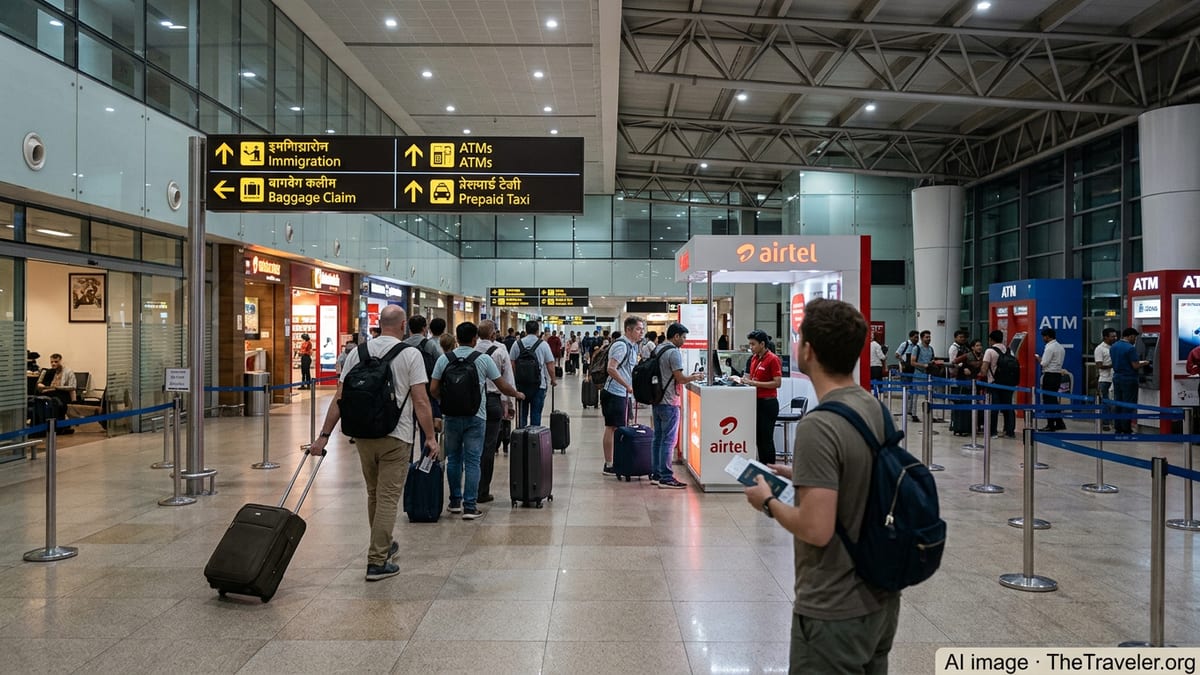
Similar conditions have been reported at Biju Patnaik International Airport in Bhubaneswar, where the arrival of scheduled flights has not necessarily translated into a smooth onward journey. Published accounts mention travellers facing inflated fares for the limited cabs and autos on the road, or waiting extended periods in the hope that blockades at nearby junctions would ease enough for airport-bound vehicles to circulate more freely.
Across the twin cities, several reports highlight the particular difficulties faced by patients and their families. Odisha-wide coverage of the bandh notes cases in which individuals heading to major medical facilities in Cuttack, including its cluster of government and teaching hospitals, have been delayed on bridges and key approach roads by sit-in protests and impromptu barricades. While ambulances are nominally exempt from such actions, even these vehicles have at times been forced to take long detours around protest sites or negotiate passage through stationary traffic.
For residents and travellers alike, the disruption has underscored how heavily access to healthcare in the region depends on uninterrupted road connectivity between Bhubaneswar and Cuttack. Delays of even 30 to 60 minutes along this corridor can be critical for time-sensitive treatments, and today’s reports of stranded patients and anxious relatives have sharpened local debate about how shutdowns intersect with the right to emergency medical access.
Impact on Daily Life, Tourism and Future Travel Plans
Beyond transport nodes, the bandh’s impact on daily life in the twin cities has been mixed but noticeable. Several news outlets describe closed market streets, reduced footfall near shopping complexes and limited operations at small eateries that normally cater to office workers and commuters. Some schools and colleges shifted to remote or shortened schedules, anticipating that students and staff would struggle to cross blockaded junctions or find running buses.
For domestic and international visitors staying in central Bhubaneswar or Cuttack, the travel restrictions have sharply narrowed sightseeing plans. With city tours curtailed and hired vehicles wary of getting trapped in static traffic, many guests have reportedly spent the day closer to their accommodation, focusing on attractions within walking distance or postponing excursions to major sites such as Lingaraj Temple, Dhauli Shanti Stupa or the historic lanes of old Cuttack.
Travel advisories from local operators ahead of the bandh had already suggested that those with fixed itineraries avoid intercity road journeys during the 12-hour window, recommending that passengers reschedule bus and car transfers and rely on confirmed train services wherever possible. The unfolding situation in Bhubaneswar and Cuttack has reinforced that guidance, with the practical difficulties faced by stranded passengers offering a real-time case study of how statewide political actions can reshape individual travel plans.
Looking ahead, the day’s events are likely to factor into how both residents and repeat visitors plan movement between the twin cities. Public discussions following earlier shutdowns have called for more resilient contingency planning, including clearer protocols for keeping at least limited public transport and medical access corridors open during protests. For now, however, today’s Odisha bandh stands as another reminder that, across this tightly linked urban corridor, a single day of coordinated road blockades can reverberate through nearly every aspect of mobility, from routine commuting to emergency care.