


More news on this day
New security warnings for Saudi Arabia and rising regional tensions are creating fresh uncertainty around WWE’s planned Crown Jewel event in Riyadh on November 7, raising questions for traveling fans and the wider sports tourism sector.
Get the latest news straight to your inbox!
Heightened Advisories Ahead of a Major Stadium Show
The 2026 edition of WWE Crown Jewel is scheduled for November 7 at Riyadh Season Stadium at KAFD, a centerpiece venue for Saudi Arabia’s Riyadh Season entertainment program. Corporate announcements from WWE and Saudi Arabia’s General Entertainment Authority in early September promoted the show as part of a broader calendar designed to draw international visitors and showcase large-scale live events in the capital.
Since those plans were confirmed, the security backdrop has changed significantly. Publicly available U.S. government information shows that Saudi Arabia is currently subject to a Level 3 “Reconsider Travel” advisory, reflecting risks that include missile and drone attacks, armed conflict and terrorism. A subsequent update from Mission Saudi Arabia in mid-September emphasized an ongoing threat environment in multiple regions of the country, including restrictions on movements by U.S. government personnel.
In early October, a new alert circulated to U.S. citizens in Saudi Arabia cited specific concerns over Houthi threats toward airports and airspace. Coverage from specialist wrestling outlets and international media has noted that this warning arrived less than a month before fans, performers and production staff are due to converge on Riyadh for Crown Jewel, putting renewed focus on the prudence of long-haul leisure travel into a conflict-affected region.
The shifting advisories do not currently single out sports events or WWE by name, but they frame the risk picture that visitors must now weigh. For many fans who had viewed Crown Jewel as an anchor for a wider Middle East trip, the new language around airspace and missile risks has become a central factor in deciding whether to proceed.
Internal Debate and Reports of “Large Concern” in WWE
Coverage in industry publications such as Fightful, PWInsider and the Wrestling Observer Newsletter indicates that WWE is internally reassessing how to approach the Riyadh event without having publicly committed to any change in venue or date. One widely cited report described a “large concern” inside the company about the evolving situation, particularly in light of updated government guidance and recent incidents affecting Riyadh’s airspace.
According to this reporting, Crown Jewel remains advertised for November 7 in Riyadh and ticketing channels are still promoting the Saudi capital as the host city. However, multiple outlets note that travel, insurance and security questions are being discussed at corporate level, including scenarios in which the show might be relocated or reconfigured if conditions deteriorate further.
Observers also point out that WWE’s current rights and partnership structure may give the company more flexibility than in previous years. Analysis from wrestling business commentators suggests that, because of the way appearance fees and long-term agreements with Saudi Arabia are reportedly structured, WWE might avoid significant financial losses if Crown Jewel had to move out of the Kingdom or be staged in a reduced-capacity format elsewhere.
At the same time, publicly available coverage indicates that talent and staff who regularly travel to Saudi Arabia for major shows have been closely monitoring the situation. While no mass refusals have been reported, several outlets describe performers and production workers asking detailed questions about contingency plans, flight routing and on-the-ground security arrangements.
Travel Impact for International Fans
For travelers, the main practical issue is the gap between high-profile event marketing and the cautious tone of official advisories. As of early October, the U.S. Department of State maintains its Level 3 designation for Saudi Arabia, recommending that citizens reconsider travel, while also identifying certain border regions and provinces as Level 4 “Do Not Travel” areas. These higher-risk regions lie away from Riyadh, but the capital has nonetheless experienced air alerts and reported missile or drone activity in recent weeks.
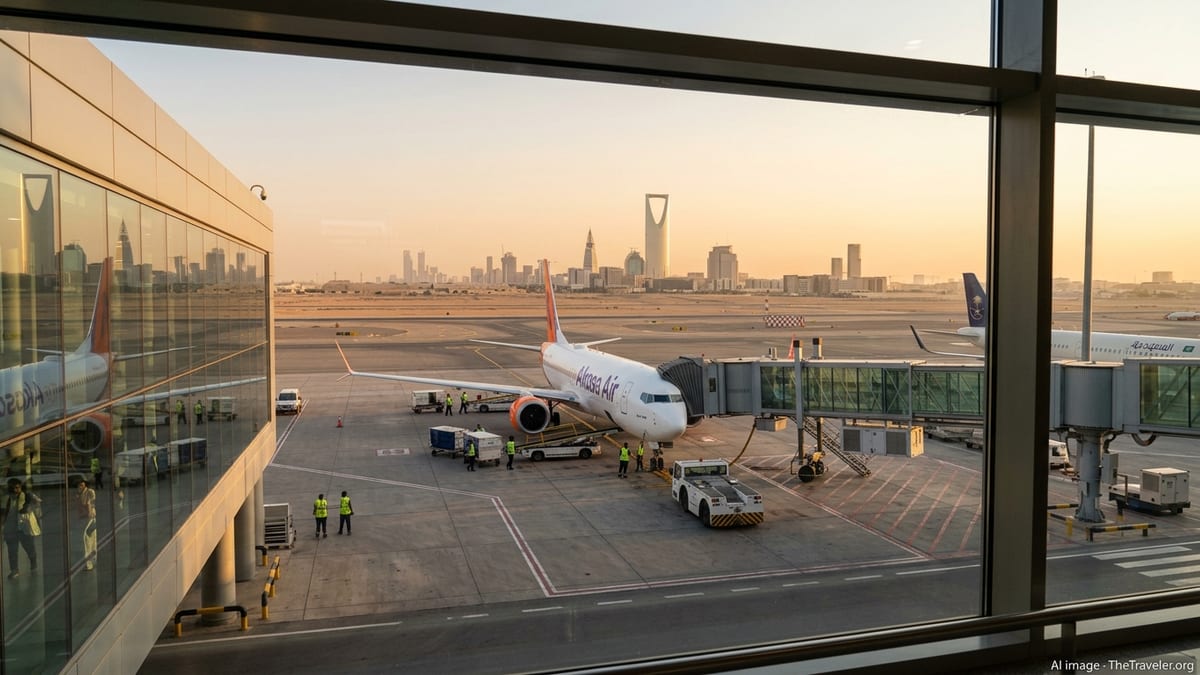
Air connectivity into Saudi Arabia remains open, and airlines serving Riyadh’s King Khalid International Airport continue to advertise regular services. However, recent publicly reported incidents involving the country’s airspace have raised questions about potential last-minute disruptions. Travelers holding nonrefundable hotel bookings or event tickets could face financial exposure if flights are canceled or rerouted at short notice due to security concerns.
Insurance is another complicating factor. Many standard travel insurance policies contain exclusions related to war, terrorism or known conflict zones. Industry commentary suggests that travelers considering Crown Jewel should closely examine policy wording and, if necessary, seek coverage that explicitly addresses trip cancellation and medical evacuation in the event of security-related incidents. Without such provisions, visitors might find that major costs are not recoverable if circumstances change.
Fans are also monitoring visa and entry rules. At the time of writing, Saudi Arabia continues to issue tourist visas, including electronic visas for eligible nationalities, as part of efforts to grow inbound tourism. There has been no public indication of special restrictions linked to Crown Jewel, but prospective visitors are being urged by travel experts and news coverage to check for updates frequently given the fluid regional environment.
Saudi Arabia’s Event Strategy Meets a New Reality
Riyadh’s position as a global hub for high-profile sporting and entertainment events has been a central pillar of the Kingdom’s tourism drive. WWE’s partnership with Saudi Arabia dates back to 2018 and has brought multiple premium live events to venues in Riyadh, including previous editions of Crown Jewel, Night of Champions, Elimination Chamber and, more recently, the 2026 Royal Rumble. Official Saudi announcements describe these events as core components of the Vision 2030 strategy to diversify the economy and boost visitor numbers.
The current security environment, however, has tested that model. Earlier in the year, reports surrounding another WWE event, Night of Champions, suggested it was “unlikely to happen” in Riyadh under previously agreed terms, reflecting a broader pattern that has also seen questions raised over other international properties such as Formula 1 and major boxing cards. While many events have so far stayed on the calendar, each new alert draws attention to the balancing act between the desire to host global spectacles and the practicalities of operating in a conflict-adjacent airspace.
For Saudi tourism authorities, keeping Riyadh positioned as a safe and reliable host city is central to long-term goals that go beyond any single wrestling show. Riyadh Season has been credited in local and international reporting with attracting tens of millions of visitors in recent years through a mix of concerts, sports, festivals and cultural programming. Disruptions to marquee events like Crown Jewel could have ripple effects for confidence among promoters and travelers considering the Kingdom for future trips.
At the same time, analysts note that many of the contractual relationships underpinning these spectacles span several years and involve substantial fixed investments in venues and infrastructure. That reality may encourage both Saudi partners and event rights holders to prioritize mitigation measures, such as enhanced security protocols and route planning, over outright cancellation whenever circumstances allow.
What Comes Next for Crown Jewel and Sports Tourism in the Region
As of October 8, WWE has not issued a public statement announcing changes to Crown Jewel’s location or date, and the show continues to be promoted for Riyadh on November 7. Industry coverage characterizes internal discussions as ongoing, with the company monitoring developments in coordination with local partners and external security assessments. This leaves fans, travel planners and hospitality providers in a holding pattern.
For would-be visitors, the coming weeks are likely to revolve around risk tolerance and timing. Some travelers may choose to wait until closer to the event before committing to flights, while others with existing bookings might watch for signals from airlines and major hotel groups regarding flexible change or cancellation policies. If WWE were to shift Crown Jewel to a different country or to a closed-set format with reduced live attendance, inbound tourism to Riyadh tied directly to the show would shrink sharply.
More broadly, the Crown Jewel situation highlights how quickly geopolitical shifts can reshape the calculus for destination marketing that leans heavily on major events. Cities and countries across the Middle East have invested in stadiums, arenas and entertainment districts to compete for global attention. The experience of Riyadh this autumn will be closely watched by other host cities, as organizers evaluate how to build contingency planning and traveler communication into future event strategies.
For now, the central facts for travelers are clear: Crown Jewel remains on the schedule in Riyadh, security advisories for Saudi Arabia have tightened, and the regional conflict has introduced additional layers of uncertainty. Whether WWE decides that the show can safely go on in its current form, or opts for a different approach, will shape not only one night of sports entertainment but also perceptions of the Kingdom as a destination at a time when safety, access and stability are under intense scrutiny.