


Ask someone about visiting Maryland and they will probably mention Baltimore’s waterfront or historic Annapolis. Those cities deserve their fame, but they are only the opening chapter of the state’s story. From the Allegheny highlands in the west to the quiet coves of the Eastern Shore, Maryland is packed with mountain lakes, small artsy cities, and Chesapeake Bay towns that rarely make national headlines yet reward travelers who are willing to look beyond the usual stops.
Get the latest updates straight to your inbox!
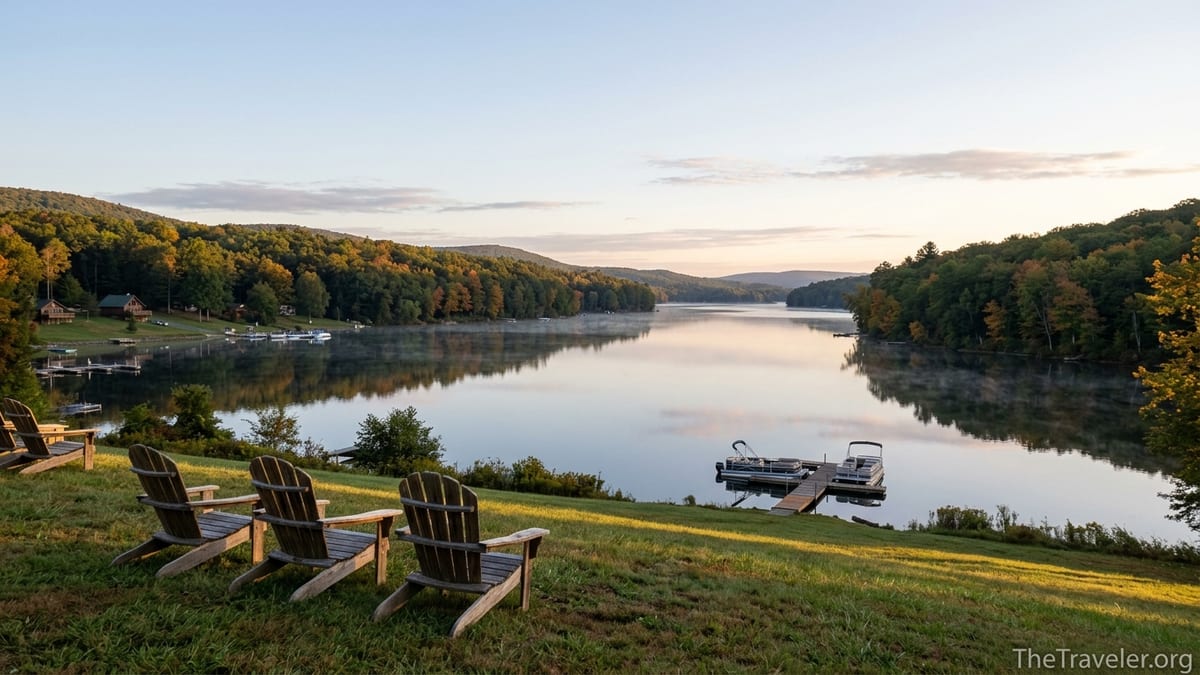
Western Maryland’s Mountain Side: Lakes, Trails and Small Towns
Far from the Inner Harbor, Western Maryland feels like a different state, with thick forests, cool mountain air, and a culture that leans more toward trail shoes than boat shoes. Garrett County in particular has become a four season playground for East Coast travelers who want a lake and mountain escape without going as far as New England. Driving west on Interstate 68 from Washington or Baltimore, the landscape slowly climbs into the Allegheny Mountains until billboards give way to ridgelines and wind farms.
Deep Creek Lake is the region’s centerpiece, a man made lake surrounded by coves, rental cabins, and marinas where summer visitors rent pontoon boats or kayaks for the day. At Deep Creek Lake State Park, a sandy public beach, picnic pavilions, and easy hiking trails make it approachable for families who just want to spread out a blanket and spend an afternoon by the water. In summer you are likely to see fishing boats heading out at sunrise, while on fall weekends the shoreline turns shades of red and gold that draw leaf peepers from across the Mid Atlantic.
Winter adds a completely different flavor. Wisp Resort, just a few minutes from the lake, operates ski lifts, snow tubing lanes, and a small terrain park that appeals to beginners and families more than experts. Many travelers book a weekend cabin with a fireplace and hot tub, then spend the day on Wisp’s groomed runs before returning to cook dinner and watch snow fall across the lake. Prices for these cabins fluctuate with the season, but couples can often find a one bedroom place with lake access in the shoulder months for less than what a downtown Baltimore hotel might cost on a busy weekend.
To understand Western Maryland’s character, it is worth leaving the lakefront and visiting nearby towns like Oakland and Grantsville. Oakland’s brick lined downtown holds an old fashioned movie theater, a farmer’s market pavilion, and the Garrett County Historical Society museum in a restored Victorian building. Grantsville, north along historic US 40, preserves a 19th century stone arch bridge and a cluster of artisan shops around it. These are the sorts of places where you can still order a homemade pie in a roadside diner, talk to the owner, and get tips on where the locals actually hike and fish.
State Parks, Waterfalls and Rail Trails Between the Cities
Maryland’s middle reaches, often zoomed past on Interstate 70 and Interstate 270, hide a string of state parks and rail trails that work well as either day trips or overnight stops between Baltimore and the mountains. Many travelers first discover this side of the state at Patapsco Valley State Park, just outside the beltway, where rocky trails thread along the Patapsco River and back under the ruins of old mill towns. On a Saturday morning you are likely to see trail runners, families with strollers on the easier river paths, and local photographers lining up shots of swinging suspension bridges.
Deeper into the interior, Cunningham Falls State Park in Thurmont offers one of the more accessible waterfalls in the state. A short but sometimes rooty trail leads to a series of cascading falls that spill over a rocky ledge, particularly dramatic after spring rains. The park’s lake has lifeguarded swimming in summer, and families often bring coolers, folding chairs, and inflatable floats to turn it into a full day outing. Because it is within reasonable driving distance of both Baltimore and Washington, weekends can be busy, so midweek visits feel much calmer.
Just across the road, Catoctin Mountain Park, managed by the National Park Service, has more extensive hiking, including moderate loops to rocky overlooks such as Chimney Rock and Wolf Rock. It is common to see day hikers spreading out trail maps at the small visitor center before choosing a loop that fits both the time they have and the fitness of everyone in the group. In fall, these trails become a favorite for regional photographers chasing views of patchwork farms and small towns framed by autumn color.
For cyclists and walkers, the Western Maryland Rail Trail and stretches of the C&O Canal towpath offer long, mostly flat routes along the Potomac River corridor. Small canal towns like Hancock and Williamsport provide trailheads, parking, and casual restaurants where riders order burgers or homemade ice cream before turning back. Unlike crowded urban bike paths, these routes can feel remarkably quiet; in some sections your main company is likely to be herons and turtles sunning on canal stones.
Frederick and Hagerstown: Small Cities with Big Personalities
While Baltimore tends to grab the spotlight, central Maryland’s smaller cities have been investing in their historic cores and cultural scenes. Frederick, about an hour from both Baltimore and Washington, is perhaps the best example. Once seen mainly as a commuter town, it now welcomes visitors with a walkable downtown lined with restored 19th century row buildings, independent bookstores, and chef driven restaurants that would not feel out of place in a much larger city. Carroll Creek Park, which runs through the center of town, transformed a flood control project into a linear park with water features, sculpture, and outdoor seating.
Frederick’s arts scene is especially visible during monthly First Saturday events, when galleries stay open late, local musicians perform on sidewalks, and pop up vendors sell everything from handmade jewelry to small batch chocolate. Travelers who prefer a slower pace often book a room in a historic inn within walking distance of Market Street so they can leave the car behind for the weekend. Prices for these boutique stays vary, but couples can sometimes find mid range rooms competitive with chain hotels near the interstate, especially outside of peak festival weekends.
A bit farther west, Hagerstown is in the middle of a significant downtown revitalization effort, including the construction of a new minor league baseball stadium and upgrades to the Maryland Theatre performing arts center. The city already serves as a gateway to several Civil War sites, including Antietam National Battlefield just south along the Potomac. Many history minded travelers combine a day walking Antietam’s quiet lanes and farm fields with an evening show or dinner in downtown Hagerstown, turning what could be a quick photo stop into a more rounded overnight trip.
Both Frederick and Hagerstown also function as convenient bases for exploring nearby wine and beer trails. Farm breweries in the surrounding countryside often host food trucks and live music in warmer months, with families spreading picnic blankets on the grass while children play lawn games. For travelers used to Maryland only in the context of crabs and waterfront bars, this pastoral side, with red barns and cornfields, can be a welcome surprise.
Chesapeake Bay Beyond Annapolis: Quiet Towns and Working Harbors
East of the Bay Bridge, the Chesapeake shoreline splinters into peninsulas, creeks, and small towns that share a water focused culture but express it in different ways. Many visitors simply drive through on their way to Atlantic beaches, yet the Eastern Shore rewards those who slow down. Saint Michaels, for example, sits on a tributary of the Bay and pairs polished inns and well known seafood restaurants with a working harbor where deadrise workboats still head out to oyster grounds. The Chesapeake Bay Maritime Museum on the waterfront preserves this heritage and often has wooden boatbuilders at work in open air sheds.
Farther north in Kent County, Rock Hall and Chestertown offer contrasting but complementary experiences. Rock Hall, set directly on the Bay, centers around marinas, charter fishing outfits, and waterside tiki bars that fill up with boaters on summer evenings. From town, sunset cruises often take visitors out to watch the sun drop behind the low line of the Western Shore, a simple outing that can be more relaxing than any crowded city attraction. Chestertown, along the Chester River, shows off brick sidewalks, colonial architecture, and a small liberal arts college that adds coffee shops and bookstores to the mix. On Saturday mornings, the waterfront farmers market brings together growers, oyster farmers, and craftspeople in one compact space.
On the western shore of the Bay, smaller communities like Chesapeake Beach and North Beach in Calvert County provide an easy escape for Washington area residents who want boardwalk promenades and sunset views without driving all the way to the Atlantic. Chesapeake Beach combines a marina full of charter boats with a small public beach, waterpark, and a waterfront railway museum that nods to its early 20th century resort history. North Beach, just up the shoreline, has a long pier where locals fish for spot and rockfish, along with benches that fill up near dusk when the sky often turns pastel over the water.
What ties these towns together is not a single marquee attraction but a rhythm of life shaped by the tides. Breakfast might be a crab omelet at a diner where the cook knows which waterman brought in that morning’s catch. Midday could mean renting kayaks to explore tree lined creeks where ospreys and herons hunt. Evening is often as simple as finding a bench, a dock, or a waterfront bar stool and watching the wind shift the pattern of ripples on the Bay.
Small Towns, Back Roads and Agricultural Heritage
Between the mountain ridges and the Chesapeake’s edges, much of Maryland is still rural, with grain elevators, dairy farms, and orchards tucked just out of sight of the main highways. Travelers who leave the interstates often encounter small towns where church steeples and water towers are the tallest structures in sight, and where traffic jams are more likely to involve a slow moving tractor than city congestion. Many of these communities have begun to lean into agritourism as a way to support family farms and attract visitors looking for authentic experiences.
In Washington and Carroll counties, for instance, roadside farm stands in summer sell sweet corn, peaches, and tomatoes by the basket, often on the honor system with a metal cash box or digital payment sign. In fall, those same farms may host corn mazes, pick your own pumpkin patches, and hayrides that appeal to families from Baltimore and Washington who want a simple weekend outing. Some properties add small wineries or hard cider operations that use local fruit, offering tastings in converted barns with views over rolling fields.
Historic market towns like Westminster and Easton illustrate how agricultural wealth once flowed into compact urban centers. Easton, on the Eastern Shore, has built a reputation on its annual outdoor arts festivals, live performance venues, and an array of well regarded restaurants packed into a surprisingly walkable downtown. Visitors might spend the morning browsing galleries and antique shops, enjoy a locally sourced lunch featuring rockfish or farm vegetables, and then drive just a few minutes to find quiet country roads lined with old tobacco barns and modern grain silos.
Because these areas sit off the main tourist circuit, accommodation can be both more personal and more limited. Travelers may find a handful of bed and breakfasts, small inns over historic taverns, or vacation rentals on working farms. Prices are often lower than in the state’s larger cities, but booking ahead for popular fall foliage or festival weekends is wise, as rooms can fill quickly when events bring in regional crowds.
Outdoor Adventures Close to the Suburbs
Even near Maryland’s busiest suburbs, travelers can find genuine outdoor escapes that feel far removed from office parks and shopping centers. Seneca Creek State Park, near Gaithersburg in Montgomery County, spreads across thousands of acres along its namesake creek. Around Clopper Lake, easy lakeside paths attract walkers and birdwatchers, while longer natural surface trails wind through forests that blaze with spring wildflowers and fall color. On summer weekends, families line up at a small boat rental area for canoes and kayaks, often packing picnics to eat at shaded tables overlooking the water.
Closer to Baltimore, Gunpowder Falls State Park and Rocks State Park protect scenic stretches of river and forested hills. At Rocks, the short but steep trail up to the King and Queen Seat, a rocky outcrop high above the valley, rewards hikers with wide views and photo opportunities. Because the rocks sit close to sheer drops, rangers and signs caution visitors to stay behind railings and keep children close, a reminder that even modest hikes require attention and respect for the terrain.
Patuxent River and Susquehanna state parks, along their respective rivers, serve as quiet alternatives to busier sites. Anglers set up along gravel bars and wooded banks in search of bass and catfish, while paddlers put in kayaks at informal launches to float through stretches of river lined by sycamores and oaks. None of these places have the name recognition of a national park, yet for travelers staying in Columbia, Towson, or the northern Washington suburbs, they offer half day microadventures that do not require long drives or elaborate planning.
What surprises many visitors is how quickly the environment shifts. One moment you might be in a strip mall parking lot; ten minutes later, you are at a trailhead listening to woodpeckers and flowing water. For travelers who need to balance work trips or family obligations in the suburbs with a desire to explore, these parks can turn unnoticed gaps in the schedule into meaningful outdoor experiences.
The Takeaway
Maryland’s reputation often begins and ends with Baltimore’s skyline and Annapolis’s sailing culture, but travelers who look beyond those cities discover a state far more varied than its compact map suggests. In the west, lakefront cabins and ski slopes share space with small towns that still run on diner coffee and local gossip. In the center, waterfalls, rail trails, and revitalized downtowns provide easy getaways that fit into a single night or long weekend. To the east, Chesapeake Bay towns balance polished inns with working harbors, while the rural back roads that tie everything together offer farm stands, wineries, and quiet country churches.
For visitors planning a trip, the most valuable shift may be psychological: instead of treating Maryland as an add on stop between bigger destinations, think of it as a layered landscape worth exploring on its own terms. You might book a week that starts with a couple of nights in Frederick, continues with a cabin at Deep Creek Lake, and ends with quiet mornings watching watermen head out from Rock Hall or Saint Michaels. Or you might build a long weekend around one region, digging deeply into its trails, restaurants, and small town rhythms.
However you approach it, Maryland rewards curiosity. Take the scenic byway instead of the interstate, choose a family run inn over a generic highway hotel, ask the person behind the counter where they go on their day off. The answers are likely to lead you to places that do not appear in glossy brochures yet linger in memory long after a postcard view of the Inner Harbor has faded.
FAQ
Q1. When is the best time of year to explore Maryland beyond Baltimore and Annapolis?
For most travelers, late April through early June and September through late October offer mild weather, lighter humidity, and fewer crowds in both the mountains and along the Bay.
Q2. How many days do I need to see Western Maryland and the Chesapeake Bay in one trip?
A week is a comfortable minimum if you want time at Deep Creek Lake, a night or two in a small city like Frederick, and a couple of days on the Eastern Shore without rushing.
Q3. Do I need a car to visit Maryland’s smaller towns and state parks?
Yes, a car is the most practical way to reach mountain towns, rural areas, and many Chesapeake communities, since public transit outside the main cities is limited.
Q4. Are Maryland’s state parks suitable for families with young children?
Many parks provide easy trails, lakeside picnic areas, and supervised swimming beaches in season, making places like Deep Creek Lake and Cunningham Falls approachable for families.
Q5. Can I enjoy Maryland’s outdoors if I am not an experienced hiker?
Absolutely. Boardwalks, short riverside paths, rail trails, and gentle lakeside walks at parks such as Seneca Creek and Patapsco Valley make nature accessible without strenuous climbs.
Q6. What budget should I plan for lodging outside Baltimore and Annapolis?
Prices vary by season, but in smaller cities and rural areas mid range hotels and inns often cost less than big city properties, and vacation rentals can be economical for groups.
Q7. Is it possible to experience Maryland’s mountains and Bay on a long weekend?
It is tight but possible. Many travelers focus on one mountain destination, such as Deep Creek, and one Bay town, then accept that they are getting a tasting menu rather than the full spread.
Q8. Are there good food options beyond seafood in Maryland’s smaller communities?
Yes. Farm country supports excellent produce, dairy, and meat, and many small town restaurants and breweries feature local ingredients alongside traditional crab dishes.
Q9. How busy do these lesser known destinations get in peak season?
Summer weekends and fall foliage periods can be crowded at popular lakes and Bay towns, so booking lodging in advance and aiming for midweek stays helps avoid the heaviest traffic.
Q10. Is Maryland a good destination for travelers who prefer slower, small town experiences?
Very much so. Outside the major cities, many communities move at a relaxed pace, with walkable main streets, independent shops, and easy access to countryside or water.