


Few American drives pack in as much contrast, culture and coastline in such a short distance as the eastward run across Maryland. Within a couple of hours you can leave the marble monuments of Washington and the rowhouse blocks of Baltimore, crest the Chesapeake Bay Bridge, and roll into a world of weathered docks, crab shacks and Atlantic surf. This is a journey where the scenery, pace and even the way people talk shift quickly, revealing how closely city streets and tidal creeks coexist in the Old Line State.
Get the latest updates straight to your inbox!
From Monuments and Rowhouses to the Open Road
Most travelers begin this crossing in Washington, D.C. or Baltimore, where Maryland is defined by traffic lights, transit lines and dense neighborhoods. In downtown Washington, U.S. Route 50 runs along Constitution Avenue past the National Mall before turning into a busy surface artery lined with gas stations and strip malls as you enter Maryland. It still feels like city driving, with commuters jockeying for position and grocery stores replacing museums as your main landmarks.
Baltimore offers a different urban starting point. Here the story begins along the Inner Harbor, where glassy hotels and attractions curve around the waterfront and places like Phillips Crab Deck sit on overwater piers serving steamed blue crabs and crab cakes within sight of downtown office towers. A crab feast at a harbor restaurant might cost around 40 to 60 dollars per person for all-you-can-eat crabs in peak summer, a reminder that in Maryland seafood culture is never far away, even in the middle of the city.
As you merge onto Route 50 heading east, high-rises give way to low-slung shopping centers, then to broader sweeps of freeway. The road at first is just another commuter corridor, with exits to Bowie and the sprawling suburbs of Prince George’s County. But overhead signs pointing toward "Ocean City" and "Bay Bridge" hint that this is also the final stretch of a transcontinental highway that runs from the Pacific to the Atlantic.
For visitors, this is a practical gateway. Rental cars are easy to pick up in either city, and weekday one-way rentals from Washington or Baltimore to the Eastern Shore often start in the 60 to 100 dollar range for a compact car, if booked ahead. Metro and commuter rail will take you only so far; to feel the transition from city streets to shoreline, you need to be on four wheels following the flow of brake lights toward the Bay.
The Chesapeake Bay Bridge: Leaving the City Behind
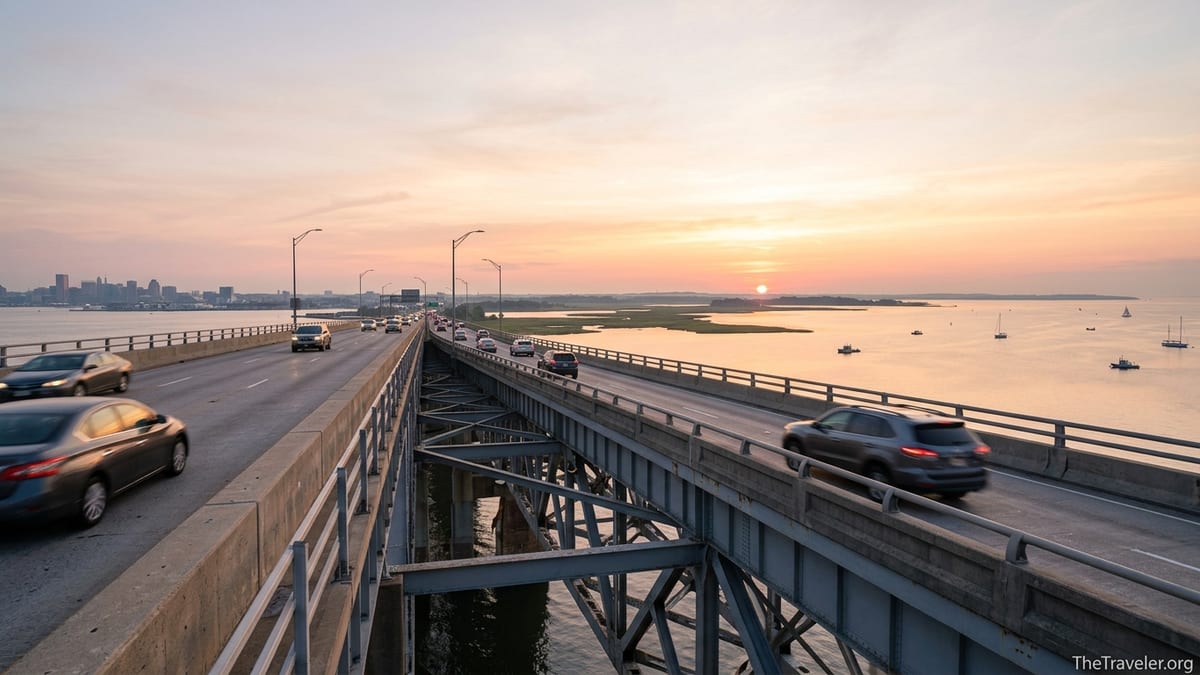
East of Annapolis, Route 50 rises onto one of the most dramatic pieces of infrastructure in the Mid-Atlantic: the dual-span Chesapeake Bay Bridge. More than four miles long, it carries six lanes of traffic high above America’s largest estuary, linking the Baltimore and Washington metro areas with Maryland’s Eastern Shore. Windshield wipers sometimes fight sea mist, and in summer the bridge can feel like a moving parking lot as beach traffic crawls toward the coast.
The bridge is more than a spectacular view. It is a psychological threshold. Westbound lanes carry commuters into the city grind; eastbound lanes feel like an exit ramp into another lifestyle. On clear days you can look south to sailboats tacking toward Annapolis and north toward cargo ships sliding up the Bay, while below you the water is dotted with crab pots and working boats that hint at the seafood economy waiting on the far shore.
Because this crossing is such a chokepoint, Maryland spends a lot of energy managing congestion. On peak summer weekends, signs warn of delays that can stretch past an hour, and local advice is consistent: avoid heading east on Friday evenings and west on Sunday afternoons if you can. MDTA, the state authority that operates the span, has tested ramp closures on nearby Kent Island to keep Route 50 traffic moving, a reminder that this is both a vacation route and a freight corridor.
If you are anxious about bridge driving, a cottage industry has even sprung up around Bay Bridge drive services that, for a fee, will take the wheel and get you across while you ride as a passenger. Most travelers will not need that, but it speaks to how iconic and intimidating this crossing can feel, especially in high wind or heavy rain.
Kent Island and the First Taste of Crab Shack Country
The land that greets you on the east side is low and laced with water. Kent Island, the first stop after the bridge, signals that you have entered a different Maryland. Here Route 50 threads past exits for marinas, boat dealers and a string of crab houses along Kent Narrows, a narrow channel lined with docks and decks. Logos featuring blue crabs and Old Bay seasoning outnumber chain fast-food signs.
Stopping here is the quickest way to experience the shift from city streets to crab shacks. At places along the Narrows, outdoor decks perch just above the water, serving steamed crabs on brown paper–covered tables. A typical steamed crab dozen in high season might range from 45 to 90 dollars depending on size and market conditions, with pitchers of local beer adding to the bill. Group crab feast menus commonly bundle all-you-can-eat crabs, corn on the cob, fried chicken and slaw, with a service charge and Maryland’s 6 percent food tax added at the end.
The atmosphere could not be more different from a downtown restaurant. You arrive in flip-flops rather than work shoes, are handed a mallet instead of a linen napkin, and the soundtrack is gulls and boat engines rather than city sirens. Staff expect that not every visitor knows how to pick a crab, and it is common to see a server demonstrating how to crack claws and lift mustard-colored crab fat from the shell for first-timers.
Beyond dining, Kent Island and nearby Cape Shore communities offer your first close-up look at Bay life. Small bait shops sell minnows and bloodworms next to racks of sunscreen and sunglasses. Modest motels and vacation rentals tucked into the pines cater to anglers who are more interested in rockfish and striped bass than beach nightlife. You are less than an hour from the towers of Baltimore, but evening light here falls across tidal marsh, not brick rowhouses.
Across the Eastern Shore: Fields, Small Towns and Working Watermen
East of Kent Narrows, Maryland’s Eastern Shore opens up into a patchwork of corn and soybean fields, chicken farms and small towns that feel far away from government offices and tech campuses. Route 50 becomes a broad, divided highway skirting communities like Easton, Cambridge and Salisbury, while older alignments and side roads peel off toward historic districts and waterfronts.
Town centers here are compact and walkable, often built around 18th and 19th century brick buildings that now house antique shops, coffeehouses and independent bookstores. In Cambridge, for example, you can park near the Choptank River waterfront, stroll past the Dorchester County courthouse and grab a bowl of Maryland crab soup or cream of crab at a local tavern for around 10 to 15 dollars. In Easton, art galleries and cafes sit a short drive from quiet creeks lined with kayaks and paddleboards.
Throughout this region, the working life of the Bay is never far from view. Before dawn, pickup trucks pull up to small docks where watermen load trotlines and crab pots into low deadrise boats. Later in the day those same boats return with wooden bushels of blue crabs headed for picking houses, crab shacks and roadside stands. A small shed along a back road might sell soft-shell crabs and local oysters out of a refrigerated case on the honor system, a setup that feels unimaginable in the city.
Travelers who leave the highway for a few hours can follow smaller roads to refuge areas like Blackwater National Wildlife Refuge, where bald eagles and wading birds hunt over broad marshes, or to sleepy towns such as Oxford and St. Michaels, where historic inns and marinas cater to weekenders. In many of these places, restaurant menus read like a checklist of Bay specialties: crab dip with toasted baguette, rockfish tacos, oyster po’boys and seasonal soft-shell sandwiches. Prices are often lower than in the big cities, but portions are generous and the emphasis is on freshness.
Crab Culture: From Newspaper-Covered Tables to Bay Cruises
To cross Maryland without joining at least one crab feast is to miss the point of the journey. Steamed blue crabs are a seasonal ritual on both sides of the Bay, peaking from late spring into early fall when local harvests are strongest. Traditional feasts involve heavy brown paper or newspaper spread across picnic tables, metal buckets for shells, wooden mallets and a dusting of Old Bay or similar seasoning that turns your fingers orange.
In Baltimore, you might join this ritual at a long-running crab house in neighborhoods like Canton or Locust Point, paying market price per dozen and washing the spice down with local beer. Near the Inner Harbor, some operators even run crab feast cruises that combine all-you-can-eat steamed crabs and sides with two to three hours of skyline views aboard a yacht-style vessel. Tickets can run in the range of 80 to 120 dollars per adult depending on the date and menu, often including live music and a cash bar.
On the Eastern Shore, crab feasts tend to feel more utilitarian and waterman-focused. Outdoor decks along Kent Narrows, Rock Hall or the Choptank River are filled with families in T-shirts and ballcaps digging into communal piles of crabs. It is normal to see paper bibs, piles of corn cobs and plastic pitchers sweating in the summer humidity. Some spots advertise "all you can eat" specials for set periods, while others sell by the dozen or half-dozen, adjusting prices week by week as supply shifts.
Because wild crab harvests fluctuate with weather and water conditions, many restaurants now supplement local catches with crabs and crab meat from other states or countries. Menus often specify "Maryland crab meat" or "domestic" when available, and dedicated diners sometimes ask servers exactly where the crabs were harvested. It is a subtle reminder that the easy abundance implied by every roadside crab sign depends on a delicate estuary economy.
Reaching the Atlantic: Ocean City and the Edge of the Continent
The final act of this crossing is the run into Ocean City, the resort town that anchors the Atlantic end of Route 50. After passing farm stands selling sweet corn, tomatoes and peaches in season, the highway widens and fills with minivans and SUVs sporting beach chairs strapped to the roof. Billboards advertise water parks, mini-golf and all-you-can-eat seafood buffets. The flat horizon ahead turns from green to a hazy band of high-rises and hotels.
Ocean City itself is a narrow barrier island with a split personality. The southern end centers on a wooden boardwalk lined with arcades, T-shirt shops, pizzerias and stands selling fried crab cakes and soft-shell sandwiches on paper plates. Here you can grab a quick crab cake for 15 to 25 dollars as you walk between amusements and the beach. North of the boardwalk, midrise condos and hotels march along Coastal Highway, with bayside restaurants and marinas offering sunset views over Assawoman Bay.
Crab culture follows you right to the oceanfront. Local opinions on where to find the best crab cake are passionate and divided, with year-round residents pointing travelers toward unassuming places in West Ocean City or along the highway rather than the most obvious tourist traps. Crowd favorites change with new ownership and chefs, but the common advice is to look for cakes that are mostly lump crab meat with minimal filler and to ask whether the meat is local when possible.
When you finally step out onto the Atlantic beach, waves thudding against the sand and the boardwalk’s neon at your back, it can be hard to believe that, a few hours earlier, you were dodging city buses in Washington or navigating Baltimore’s one-way grid. The directness of Route 50 compresses that distance, turning a complex state into a single legible line from marble columns to lifeguard stands.
Planning Your Own Crossing: Timing, Seasons and Costs
Crossing Maryland from city streets to coastline is achievable as a day trip, but it rewards a slower pace. In light traffic the drive from downtown Washington or Baltimore to Ocean City takes around three hours. On peak summer weekends, especially between Memorial Day and Labor Day, Bay Bridge congestion and Shore-bound traffic can stretch that into five hours or more. Planning to travel on weekday mornings or later in the evening can save both time and stress.
Season matters as much as timing. Summer brings warm water, open crab decks and nightly events along the Ocean City boardwalk, but also the highest hotel rates and the biggest crowds. Midweek summer rooms in Ocean City commonly fall in the 180 to 300 dollar range for standard chain hotels, while weekends and holidays can push well above that, particularly for oceanfront locations. Spring and fall shoulder seasons offer cooler temperatures, better lodging deals and easier reservations at popular crab houses, though some smaller seasonal spots may close or reduce hours.
Budget-conscious travelers can trim costs by spending more time on the Eastern Shore and less in the resort core. Towns like Cambridge, Easton or Salisbury generally offer lower hotel rates than beachfront properties, and you can still reach Ocean City’s beaches within an hour or so. Packing a cooler for breakfasts and snacks, then splurging selectively on standout crab shacks or seafood dinners, can also keep daily expenses manageable.
Regardless of the season, it pays to think ahead about reservations. Inner Harbor seafood restaurants, popular Annapolis dockside spots and Eastern Shore crab decks can all book up on weekends and holidays. Calling ahead earlier in the week, checking same-day availability in the afternoon and being flexible about dining times make it easier to snag a waterfront table without a long wait.
The Takeaway
Driving across Maryland from its urban core to its coastal edge is a compact way to experience how geography shapes culture. In a single day you can move from marble monuments and harborfront skyscrapers to low country bridges, tide-fed creeks and the roar of Atlantic surf. Along the way, crab shacks, watermen’s docks and small-town main streets illustrate how deeply the Chesapeake Bay and its bounty define daily life outside the big cities.
For travelers, this crossing is less about mileage than about contrast. It is the feeling of leaving behind sirens and subway rumble for gull cries and the thump of mallets on crab shells, of watching high-rises shrink in the rearview mirror while grain silos and church steeples come into view. Whether you are road-tripping coast to coast on Route 50 or simply stealing a long weekend from Washington or Baltimore, the journey east across Maryland offers a tangible reminder that, in this small state, big city energy and quiet shorelines are separated by only a few dozen miles of asphalt and a long bridge over a legendary bay.
FAQ
Q1. How long does it take to drive from Washington or Baltimore to Ocean City?
In light traffic, expect about three hours. On peak summer weekends, congestion at the Chesapeake Bay Bridge and along Route 50 can extend the trip to four or five hours or more.
Q2. When is the best time of year to plan this Maryland crossing?
Late spring through early fall offers the best combination of open crab decks, pleasant weather and active coastal towns. July and August are liveliest but also the most crowded and expensive.
Q3. What days and times should I avoid because of Bay Bridge traffic?
Eastbound Friday afternoons and evenings in summer, plus westbound Sunday afternoons, are typically the most congested. Early morning or later evening departures usually mean smoother sailing.
Q4. How much should I budget for a traditional crab feast?
Prices vary by size and season, but a steamed crab meal with sides and drinks often runs 40 to 70 dollars per person, and more at all-you-can-eat feasts or cruise-style experiences.
Q5. Do I need a car, or can I do this trip by public transport?
Public transit will get you from Washington or Baltimore to some Bay towns, but reaching crab shacks, small Eastern Shore communities and Ocean City’s beaches is far easier with a car.
Q6. Are there family-friendly stops along the way for kids?
Yes. Waterfront parks in Annapolis, small-town playgrounds in places like Easton or Cambridge, and the amusement rides and arcades on the Ocean City boardwalk all work well for families.
Q7. Is it safe to drive across the Chesapeake Bay Bridge if I am afraid of heights?
The bridge is high and long, which can be intimidating. If you are very anxious, specialized drive services can take the wheel for you, or you can ride as a passenger while someone else drives.
Q8. Can I find good seafood without paying Inner Harbor or beachfront prices?
Yes. Neighborhood crab houses in Baltimore, casual decks along Kent Narrows and local taverns in Eastern Shore towns often serve excellent seafood at lower prices than marquee waterfront venues.
Q9. Do crab shacks operate year-round?
Many stay open most of the year but may reduce hours outside peak season. Smaller, highly seasonal spots sometimes close in winter, so checking current hours before you go is wise.
Q10. Is it possible to make this crossing as a day trip from Washington or Baltimore?
It is possible to drive to the Eastern Shore and even Ocean City and back in a day, but staying overnight allows time for a relaxed crab feast, a sunset over the Bay and a less rushed return.