


More news on this day
Birmingham Airport has issued updated guidance to passengers after a national air traffic control problem led to delays across the UK network, urging travellers to check their flight status and arrive prepared for longer waiting times.
Get the latest news straight to your inbox!
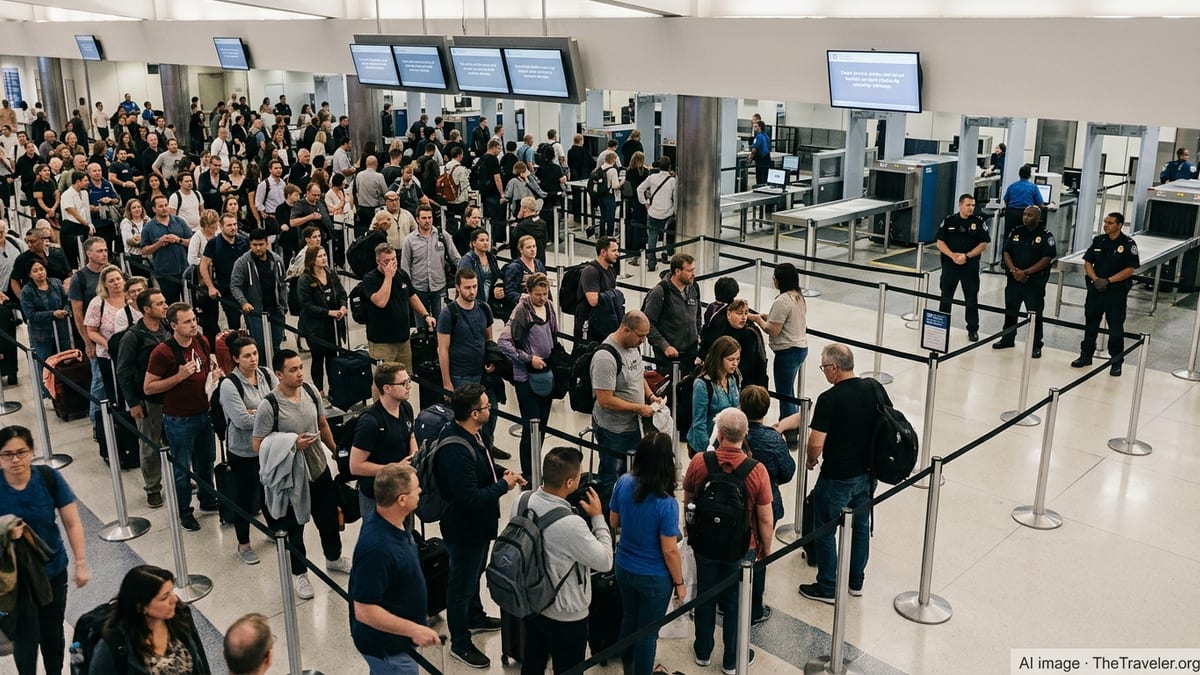
National air traffic control issue disrupts UK flights
Reports from UK and European aviation monitoring services show that a technical problem affecting air traffic control has caused significant delays and some cancellations across the country, with disruption concentrated at major hubs and spreading to regional airports. Published coverage indicates that National Air Traffic Services is investigating an issue that has reduced the rate at which flights can be handled, creating knock-on impacts for both departures and arrivals.
Live tracking data and passenger accounts suggest that delays have been felt not only at London airports but also at regional gateways, including Birmingham, as aircraft are held on the ground or placed into holding patterns while airspace capacity is restricted. Similar incidents in recent years, including high-profile outages in 2023 and 2025, have shown that even a short-lived systems problem can take many hours for airlines and airports to recover from once capacity is restored.
Industry analysis of earlier disruption has highlighted how interconnected the UK’s airspace is, with constraints in one region often forcing airlines to rejig schedules nationwide. Government commentary on aviation resilience this summer has also pointed to wider pressures on the system linked to geopolitical tensions, weather disruption and slot reductions, all of which can magnify the impact of a technical fault when it occurs.
Consumer bodies note that, although events of this scale remain relatively rare, data for 2026 already show heightened sensitivity to any network problem, as airlines operate fuller schedules and airports work closer to peak capacity during the main holiday period.
Birmingham Airport outlines its role and current status
Publicly available information on Birmingham Airport’s operations shows that the Midlands hub relies on the national air traffic control provider for its tower and engineering services following a transition of responsibilities that was completed earlier in 2026. The arrangement means that any nationwide capacity restriction in UK airspace is likely to be reflected in Birmingham’s own movements, even if local weather and runway conditions remain normal.
Operational updates from independent flight-status services indicate that Birmingham Airport has experienced a mixture of delayed departures and extended turnarounds as airlines adjust to revised air traffic control flow rates. While some flights have continued to operate, holding patterns, gate changes and aircraft being out of position elsewhere in the network have contributed to longer-than-normal waits for passengers.
The airport’s customer guidance emphasises that decisions on delays and cancellations rest with individual airlines, and directs passengers to contact their carrier first for information on rebooking, refunds and compensation. Airport support pages further stress that queries about missed connections, lost baggage and schedule changes must be handled by the airline, although airport teams provide on-site assistance with wayfinding and welfare.
Information published by the airport on security and terminal processes also underlines that, during periods of disruption, passengers should allow extra time to clear checkpoints and be prepared for busy departure lounges as multiple delayed flights overlap.
Key advice for passengers flying from Birmingham
In response to the latest disruption, Birmingham Airport’s existing travel advice combines with national guidance from regulators to provide a clear set of steps for passengers. Public-facing materials repeatedly urge travellers to check their flight status directly with their airline before setting off for the airport, using carrier apps, websites or SMS alerts where available.
Once at the airport, passengers are advised to follow the latest information on terminal screens and listen for gate announcements, as last-minute stand or gate changes are common when air traffic control restrictions are in place. Airport security guidance recommends arriving in good time and ensuring that cabin baggage complies with UK hand luggage rules to avoid additional delays at checkpoints.
Consumer advice from the UK Civil Aviation Authority highlights that, when delays reach certain thresholds, airlines may be required to provide care in the form of meals, refreshments and, when necessary, hotel accommodation. The regulator’s summer 2026 travel guidance reiterates that air traffic control restrictions and other safety-related decisions are generally treated as extraordinary circumstances for compensation purposes, but passengers should still expect clear communication and appropriate assistance while they wait.
Government information on travel disruption released this year also encourages passengers to keep receipts for reasonable expenses if they have to make their own arrangements for food or accommodation during long delays, as these costs can often be reclaimed from airlines where statutory rights apply.
Understanding passenger rights during national delays
Published government documents on air passenger rights set out the framework that applies when flights to, from or within the UK are delayed or cancelled. Under this regime, travellers departing from Birmingham are entitled to a choice between a refund and re-routing if their flight is cancelled, regardless of the cause, provided the service falls under UK or retained EU legislation.
For delays, entitlements depend on both distance and waiting time, with thresholds typically starting at two hours for short-haul flights and rising for medium- and long-haul journeys. Once these thresholds are met, airlines are expected to provide care and assistance, even where a national air traffic control problem is deemed beyond their control.
Recent government updates on aviation reform also outline proposals to give the Civil Aviation Authority stronger enforcement powers, including the ability to fine airlines and airports that fail to meet obligations on passenger welfare and accessibility. Travel experts view these measures as part of a broader effort to improve resilience and consumer protection as the aviation system modernises and adapts to new pressures.
Regulators and consumer organisations alike advise passengers affected by disruption to keep detailed records of delay times, communications with airlines, and any additional costs incurred, and to use official complaints channels or alternative dispute resolution bodies if they are dissatisfied with how a case has been handled.
Planning ahead for the rest of the summer
While the latest air traffic control issue has drawn attention to the vulnerabilities of the network, official travel advice for summer 2026 continues to emphasise that the vast majority of UK flights are operating as planned. Recent government statistics suggest that cancellations remain below 1 percent of scheduled services over the season, although localised disruption can still be significant on affected days.
The Civil Aviation Authority’s seasonal guidance encourages passengers flying from Birmingham and other UK airports to build additional time into their journeys, particularly when connecting to cruises, rail services or long-distance onward travel. Travellers are also urged to review their travel insurance policies to ensure that coverage for delays, missed connections and accommodation expenses is adequate for their plans.
For Birmingham specifically, the airport’s long-term development plans and recent upgrade to its air traffic control arrangements are presented as part of a strategy to improve resilience and capacity in the years ahead. Industry observers note that investment in airspace modernisation, digital systems and passenger facilities is intended to reduce the impact of future disruption, even if extraordinary events cannot be eliminated entirely.
Passengers with upcoming bookings are encouraged to monitor official channels in the days before departure, sign up for airline and airport alerts where available, and keep essential items, medications and valuables in their hand luggage in case of unexpected delays on the day of travel.
Coverage of UK-wide air traffic control disruption
Birmingham Airport customer support and travel advice
UK Civil Aviation Authority summer 2026 consumer travel advice