


More news on this day
Booking Holdings’ latest quarterly update suggests that steady domestic and short‑haul travel is helping Booking.com navigate a complicated global backdrop marked by geopolitical disruption and weaker demand on some long‑haul routes.
Get the latest news straight to your inbox!
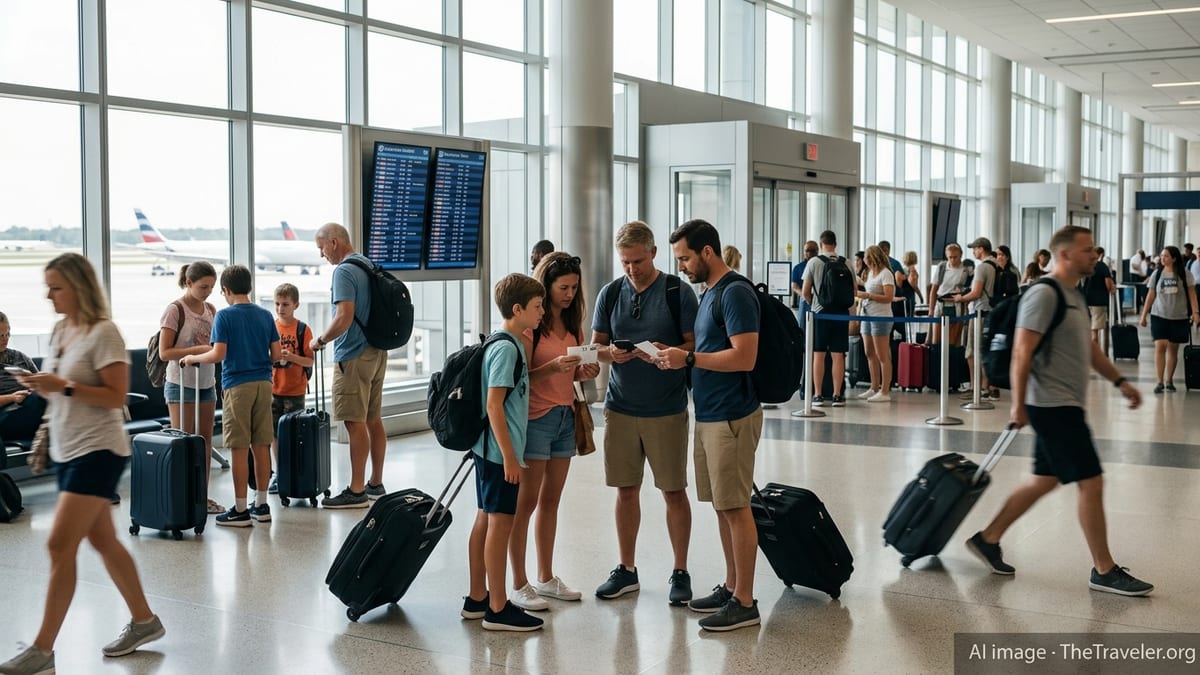
Double Beat For Parent Company As Travel Demand Holds Up
Booking Holdings, the parent of Booking.com, reported second quarter 2026 figures that surpassed market expectations on both revenue and earnings, according to recent earnings coverage and investor commentary. Preliminary tallies circulating in financial media point to revenue in the mid‑7 billion dollar range, modestly ahead of consensus, with profitability supported by disciplined marketing spend and a continued mix shift toward higher‑margin direct traffic.
While complete regulatory filings were still being processed at the time of the announcement, publicly available summaries indicate mid‑single‑digit growth in room nights and high‑single‑digit growth in gross travel bookings compared with the same period in 2025. Analysts tracking the stock had anticipated only a low‑single‑digit advance in volumes, reflecting concerns about war‑related disruption in parts of the Middle East and spillover effects into Europe.
The performance extends the company’s record of posting resilient results even as global travel patterns become more uneven. Commentary in investor notes portrays the quarter as solid rather than spectacular, but notably better than many had feared earlier in the year when guidance was revised to reflect elevated geopolitical risk.
Domestic And Short‑Haul Trips Offset Middle East Headwinds
Management and outside analysts have been flagging the impact of conflict in Iran and surrounding areas since late April, when Booking Holdings cut its revenue forecast and explicitly linked the revision to a war‑related slowdown in travel. Subsequent sector analysis has highlighted weaker demand across several Middle Eastern inbound and outbound routes, as well as some hesitancy on certain Europe‑adjacent itineraries that typically rely on long‑haul international visitors.
Second quarter data now emerging indicates that these pressures were real but contained. Booking.com saw softer trends on corridors tied directly to the conflict zone, with some compression in average daily rates and cancellations skewed toward higher‑priced, last‑minute international trips. However, this drag was largely offset by steady or improving conditions in large domestic markets across Europe, North America and parts of Asia, where travelers continued to prioritize nearby breaks and city stays.
Analysts note that intra‑regional travel within the European Union, as well as domestic tourism in countries such as the United States and the United Kingdom, appeared especially resilient. Short‑haul beach, countryside and city‑break bookings helped fill gaps left by more cautious long‑haul travelers, while flexible cancellation policies and last‑minute inventory on Booking.com gave consumers confidence to keep planning trips despite headlines.
Connected Trip Strategy Gains Traction With Local Travelers
Beyond headline booking volumes, the latest quarter offered more evidence that Booking.com’s long‑running “Connected Trip” strategy is gaining traction, particularly among domestic and regional users. Publicly available commentary from the company and outside observers indicates that a growing slice of customers are now booking more than one element of their journey within the same ecosystem, combining accommodation with flights, car rentals, attractions or ground transport.
This behavior was once expected to be driven primarily by complex international itineraries, but Q2 2026 trends suggest that local travelers are increasingly stitching together shorter, multi‑stop trips using the same platform. Long weekends that mix train travel, rental cars and multiple hotel stays, as well as domestic air plus accommodation packages, have become more common, according to recent market analyses.
The shift matters for earnings because multi‑product customers tend to generate higher revenue per trip and are more likely to return to the platform. It also helps diversify Booking.com’s exposure away from any single geography or travel corridor. In a quarter where conflict dampened activity in specific regions, the ability to cross‑sell ancillary services to domestic users offered a meaningful cushion.
Pricing, Currency And Marketing Discipline Support Profitability
Financial disclosures in Booking Holdings’ earlier 2026 guidance pointed to a modest tailwind from foreign exchange in the second quarter, with currency expected to add roughly 2 percent to reported revenue growth. The latest earnings coverage indicates that this benefit materialized broadly in line with expectations, helping to offset some of the revenue lost to war‑related cancellations and weaker demand in affected markets.
At the same time, Booking.com appears to have maintained a disciplined approach to performance marketing, particularly search advertising and paid referrals. Analysts tracking advertising intensity across the online travel sector observed that the company leaned more heavily on direct and app‑based traffic, which typically carries lower acquisition costs. This helped protect margins even as the company continued to invest in product development and artificial intelligence tools to improve search, personalization and customer service.
Pricing power for accommodation partners remained mixed. Urban inventory in major European and North American cities continued to command relatively strong rates during peak events and summer weekends, while resort and leisure destinations showed more modest growth amid concerns about consumer budgets. Overall, publicly available data suggest that average daily rates rose slightly year over year on the platform, but not enough to fully explain the revenue beat, reinforcing the importance of mix and marketing efficiency.
Outlook: Persistent Disruption, But Structural Travel Demand Intact
Looking ahead to the remainder of 2026, Booking Holdings’ previously issued guidance and more recent analyst commentary both emphasize a cautious but constructive view of the travel sector. The company has already acknowledged that a prolonged conflict could introduce broader inflationary pressures and further disrupt certain routes, with the Middle East and parts of Europe expected to remain volatile.
Even so, institutional investors following the stock often highlight several structural tailwinds that continue to favor large online travel agencies. These include the long‑term shift from offline to online bookings, rising middle‑class incomes in emerging markets and the gradual expansion of business and blended leisure travel. Commentators on investment forums have also pointed to Booking.com’s substantial cash generation and share repurchases as key elements of the equity story, particularly in periods when revenue growth is constrained by external shocks.
For now, the second quarter of 2026 demonstrates that domestic and intra‑regional travel demand can provide a stabilizing counterweight when global events disrupt specific corridors. As Booking.com deepens its integration of flights, stays and on‑trip services, the platform’s exposure to any single type of traveler or route appears to be diminishing, even as the broader travel industry continues to navigate an unpredictable world.