


More news on this day
UAE stock markets edged lower this week as investors reacted to a renewed safety warning on Gulf airspace, reviving concerns about regional air travel disruption and its impact on tourism, airlines and airport operators across the Emirates.
Get the latest news straight to your inbox!
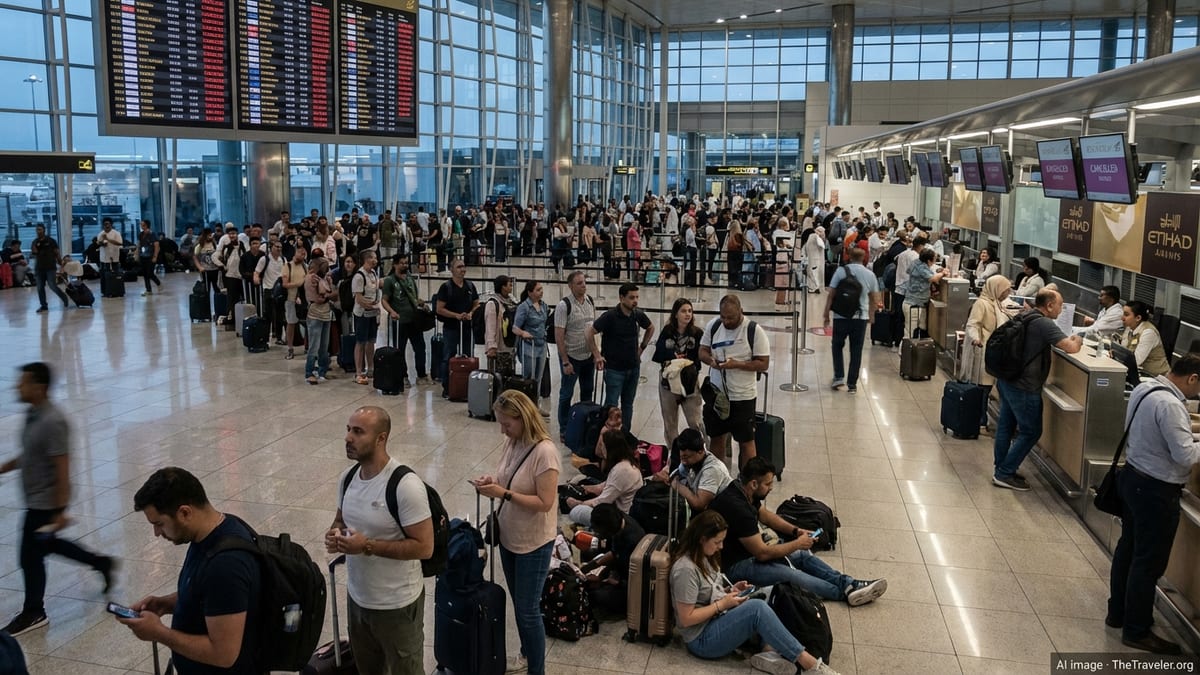
Fresh airspace advisory revives conflict risks for Gulf carriers
The latest warning on regional air travel followed the European Union Aviation Safety Agency’s decision to extend its conflict-zone bulletin covering the airspace over the UAE, Bahrain, Qatar, Kuwait and parts of the Gulf of Oman. The advisory, which was revised in late July and is now valid until August 31, highlights ongoing risks linked to military activity and heightened geopolitical tensions in the wider Middle East.
While the bulletin does not close airspace, it urges operators to carefully assess risks when planning routes through the region. Publicly available information indicates that several long-haul carriers have already adjusted flight paths to avoid sensitive corridors, adding distance and time to some intercontinental journeys that would ordinarily transit Gulf hubs.
This renewed focus on security comes after months of disruption sparked by the US Iran conflict and related flashpoints around the Strait of Hormuz. Reports indicate that a series of airspace restrictions earlier in the year forced airlines to reroute or temporarily suspend services, contributing to higher operating costs and persistent schedule volatility across Gulf gateways.
The Emirates, as home to Dubai International and Abu Dhabi’s Zayed International Airport, sits at the center of these changes. With Gulf hubs handling a significant share of global transfer traffic, any perception of elevated risk can quickly translate into shifts in booking patterns and investor sentiment.
Market reaction focuses on tourism and aviation earnings
Following the latest advisory, UAE equity benchmarks slipped as trading opened, with travel connected names among those seeing pressure. Market commentary cited by regional financial outlets points to renewed worries over the earnings outlook for airlines, airports, hotel chains and duty free operators whose performance is closely tied to long haul traffic through Dubai and Abu Dhabi.
Economic analysis produced for Gulf investors earlier this year already highlighted how regional tensions were weighing on growth expectations across the GCC, with particular concern around sectors reliant on cross border mobility and discretionary spending. Aviation and tourism were identified as especially exposed, given their dependence on stable perceptions of safety and reliable air links.
Dubai’s position as a global transit hub has magnified these sensitivities. Data from Dubai Airports for the first quarter of 2026 showed passenger numbers down more than 20 percent year on year, as earlier airspace disruptions and war related concerns temporarily depressed demand and reduced available capacity. Aircraft movements also declined, reflecting fewer scheduled services and the impact of rerouting.
Although airspace over the UAE was subsequently fully restored and airports began scaling up operations, the latest advisory has reminded investors that the recovery remains vulnerable to renewed bouts of geopolitical stress. That uncertainty encouraged some market participants to lock in recent gains and rotate toward perceived defensive sectors within local indices.
Flight schedules stabilizing but delays and higher fares persist
For travelers on the ground, the new warning comes as airlines are still working through a complex operational environment. According to recent coverage by Gulf based outlets, Emirates, Etihad, flydubai and Air Arabia have largely restored their networks but continue to face intermittent delays and occasional cancellations linked to congestion on alternative routings and evolving security assessments.
Travel reports from early September showed that flights to and from Dubai and Abu Dhabi were still experiencing some disruption on certain days, even as the scale of cancellations eased compared with the peak of the crisis. Passengers have been repeatedly advised through public updates to monitor airline communications closely and to allow additional time at airports, as schedules can change at short notice.
At the same time, fares on many popular routes remain elevated. Industry analysis published in August indicated that airfares from the UAE could stay high through much of 2026, as airlines grapple with longer flight times, constrained capacity and higher fuel costs. Jet fuel benchmarks tracked by aviation bodies have risen in recent weeks, adding further cost pressure that is often passed through to ticket prices.
For leisure travelers considering trips through the region, these dynamics translate into higher trip budgets and a premium on flexible conditions. Some insurers and tour operators have also updated small print around coverage in conflict affected areas, encouraging customers to review policies carefully when booking travel that transits Gulf hubs.
Tourism outlook: demand resilient but more price sensitive
Despite the near term volatility, there are signs that underlying appetite for travel to the UAE remains resilient. Earlier in the summer, tour operators reported a sharp rebound in interest from key source markets such as the United Kingdom after certain governments eased or removed their own travel advisories for the Emirates. Industry commentary suggested that clear safety messaging and the resumption of regular flights had helped restore confidence among holidaymakers.
However, analysts now expect travelers to be more price sensitive and selective in their planning. Research cited by regional business media warns that sustained disruption could shave several percentage points off global travel volumes this year, with some passengers opting for shorter haul or domestic trips if long haul fares through the Gulf stay elevated. That trend could slow the pace of recovery for destinations that rely heavily on transfer traffic and long stay visitors.
Hotel data from Dubai for the first half of 2026 already showed occupancy and revenue per room under pressure compared with the previous year, reflecting both reduced arrivals and promotional pricing aimed at stimulating demand. Travel companies are responding with targeted campaigns, including incentives for residents to encourage friends and relatives abroad to visit and bundled packages that combine flights with discounted stays.
For now, the renewed air travel warning adds another layer of uncertainty to those efforts. Market participants will be watching booking trends closely in the coming weeks, particularly for the key winter season when Dubai and other UAE destinations typically see a surge in tourists from Europe, Russia and Asia.
What travelers transiting UAE hubs should watch
The latest developments have practical implications for passengers planning to transit Dubai, Abu Dhabi or Sharjah in the coming months. Public advisories from airlines and airports stress the importance of checking flight status before departure, as rerouting decisions and short term schedule tweaks remain possible while the conflict zone bulletin is in force.
Travelers booking new itineraries may find that certain routings involve longer journey times than in previous years, especially on flights between Europe and Asia that would traditionally use more direct Gulf overflight corridors. In some cases, connections may be tighter or involve different intermediate hubs as carriers balance operational efficiencies with risk assessments.
Industry observers also note that demand for premium cabins and flexible tickets has risen, as corporate travelers and high spending tourists seek greater protection against disruption. For more budget conscious passengers, low cost options remain available but can sell out quickly on popular dates, particularly where capacity on specific city pairs is still constrained.
Looking ahead, the trajectory of UAE markets and the region’s travel sector will depend heavily on how geopolitical tensions evolve and whether the current aviation warning is relaxed or extended beyond August 31. For now, the latest decline in local equities underscores how closely investor sentiment is tied to the skies above the Gulf, where any new signal on safety can reverberate through stock screens and departure boards alike.