


More news on this day
UAE stock markets weakened this week as a fresh warning over regional air travel, coupled with unresolved US Iran tensions, unsettled investors and put additional pressure on tourism and aviation linked shares.
Get the latest news straight to your inbox!
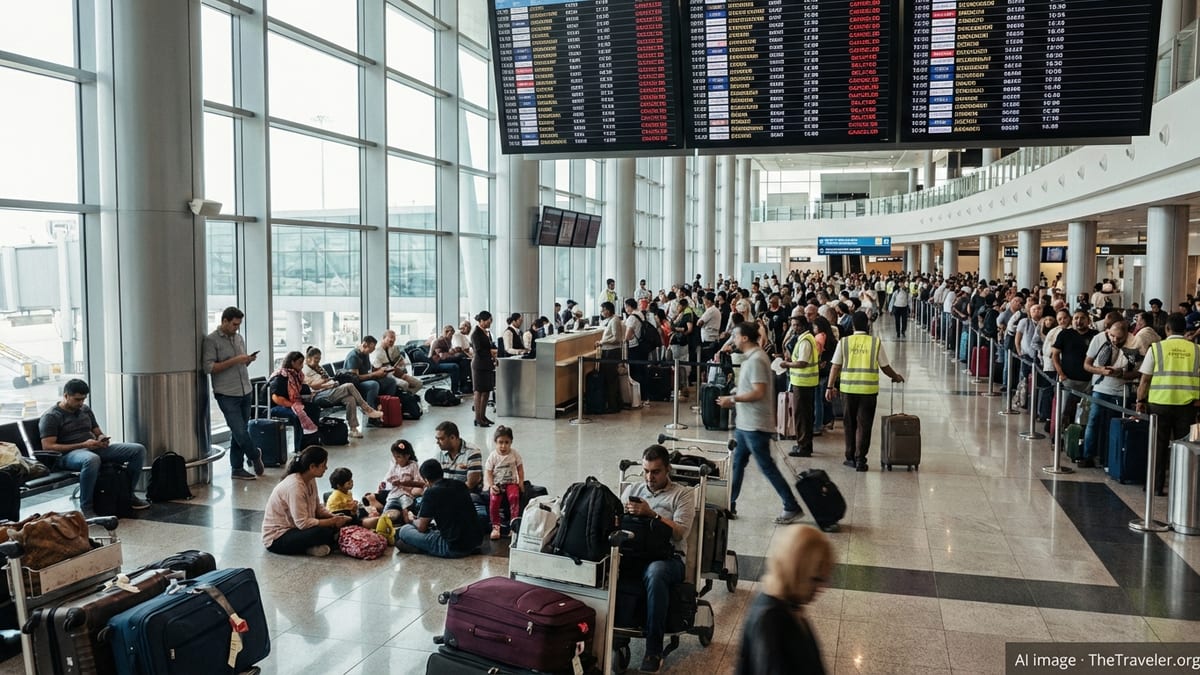
Warning on regional air travel heightens market anxiety
Recent commentary on Middle East airspace disruption and the vulnerability of key Gulf aviation hubs has sharpened investor focus on flight safety, rerouting and potential airport disruption. A report highlighted how months of airspace restrictions and elevated security alerts have placed the wider global air transport network under unusual stress, with the Middle East sitting at the core of those pressures.
The latest concern follows renewed rhetoric from Iranian officials indicating that airports in neighboring countries could face operational risks if they are seen to cooperate with efforts to halt Iranian flights. Such language has revived memories of earlier episodes in 2026 when drone and missile exchanges led to the temporary closure of airspace and airports in parts of the Gulf, including short suspensions on UAE capital markets trading.
Travel focused analysis from regional outlets notes that Gulf airspace has repeatedly been redrawn over recent months, with airlines forced to operate longer routings and maintain contingency plans for sudden changes in permitted flight paths. These operational shifts have already pushed up fuel consumption and contributed to higher airfares, and equity investors are increasingly pricing in the possibility that aviation disruption could become a semi permanent feature rather than a short lived shock.
Market research distributed in May pointed out that prolonged disruptions of this kind tend to weigh not only on carriers, but also on airport operators, tourism groups and consumer facing companies that depend heavily on visitor flows through hubs such as Dubai International and Abu Dhabi’s Zayed International Airport.
Dubai and Abu Dhabi benchmarks edge lower
Against this backdrop, UAE equity indexes traded softer. Publicly available market data shows Dubai’s main share index slipping as investors cut exposure to sectors most sensitive to tourism and external demand, while the Abu Dhabi bourse also moved lower in line with a broader Gulf sell off. The declines were modest in points terms, but they extended a run of fragile sentiment that has marked several recent sessions.
Regional market round ups indicate that Dubai’s benchmark dropped around 0.4 percent in the latest session, with leading lender Emirates NBD retreating and contributing significantly to the index move. In Abu Dhabi, the main index also traded in negative territory, partly reflecting weakness in banking and industrial names that are exposed to cross border trade and regional confidence.
These moves came as Gulf stocks more broadly reacted to continued geopolitical tension and shipping risks in and around the Strait of Hormuz. Reports on Thursday showed Saudi Arabia’s benchmark index down as much as 0.8 percent, with major financial stocks under pressure, underscoring that the latest bout of volatility is regional rather than confined to the UAE.
Analysts following Gulf markets describe the current pullback as another example of how geopolitical risk is increasingly intertwined with sector specific concerns. In the UAE’s case, the combination of aviation uncertainty and sensitivity to global trade flows means its markets can move quickly in response to any perceived threat to connectivity.
Aviation disruption weighs on travel sentiment
The air travel warning comes on top of an already challenging period for passengers and airlines operating in and out of the UAE. Travel advisories issued in early September highlighted delays and cancellations at Dubai and Abu Dhabi airports after a renewed escalation in US Iran tensions, even as both hubs continued to function. Flight schedules remained fluid, and airlines cautioned that services could change at short notice.
More recently, an updated status report on UAE flights described ongoing disruptions affecting services operated by Emirates, Etihad, Air Arabia and flydubai on certain regional and Central Asian routes. Passengers heading to destinations such as Almaty, Astana, Moscow, Jeddah, Damascus and Baghdad were urged to check directly with carriers for the latest information before traveling to the airport.
At the same time, local travel industry coverage indicates that many UAE residents are becoming more selective about leisure travel plans. Travel agents report that high summer airfares, uncertainty over regional tensions and a weaker economic backdrop have combined to soften demand for discretionary holidays, even though emergency travel and essential business trips continue.
Sector research suggests that if the current disruption persists, elevated fares and changing route structures could alter long term travel patterns. Some travelers may favor alternative hubs or closer to home destinations, which would have knock on effects for Gulf carriers that have built their business models around large scale international connectivity.
Tourism and hospitality stocks under renewed scrutiny
The UAE’s stock market reaction is particularly important for global travel watchers because of the central role of tourism, hospitality and aviation in the country’s economic model. Dubai in particular has positioned itself as a leading international tourism and transit hub, with pre conflict data showing it ranked among the busiest airports worldwide for international passengers.
Market commentary compiled over the summer noted that hospitality and real estate shares tied to visitor demand had already seen periods of underperformance as investors weighed the impact of disruptions to air connectivity. A regional market analysis in July highlighted declines across tourism exposed stocks on both the Dubai Financial Market and Abu Dhabi Securities Exchange as tensions between the United States and Iran escalated.
While detailed intraday moves for individual tourism names were limited in the latest trading session, broader Gulf equity reports emphasize that investors are rotating toward perceived safer segments such as utilities and certain defensive financials. That pattern mirrors earlier flare ups this year, when aviation and travel names lagged even as passenger numbers through Gulf hubs remained relatively resilient.
Market strategists have also drawn attention to the reputational dimension of repeated airspace scares. If major global investors begin to view Gulf hubs as structurally higher risk from an operational standpoint, the result could be higher required returns for companies that rely on aviation related revenue, with potential implications for valuation multiples and capital raising plans.
Longer term outlook for Gulf travel and markets
Looking beyond the latest session, regional assessments of the Middle East aviation market point to a complex outlook. A widely cited report last month warned that disruption affecting Gulf airspace, airline capacity and fuel markets could take months to unwind, even under relatively positive diplomatic scenarios. The analysis suggested that global travel volumes could shrink by around 3 percent under a prolonged disruption case, with weakness extending into 2027.
For the UAE, that scenario would challenge both airlines and the wider visitor economy. Higher jet fuel costs, reduced capacity and more circuitous routings would likely keep airfares elevated for longer, squeezing price sensitive travelers and potentially encouraging a shift toward shorter haul or regional trips. Such behavioral changes would be felt across hotels, retail, entertainment and transport providers that depend on a steady stream of international visitors.
Financial market specialists tracking the Gulf note that investors have begun to differentiate more sharply between countries based on domestic demand strength and exposure to tourism. Some global banks have recently expressed a relative preference for Saudi Arabian equities over UAE stocks, citing lower foreign ownership and an economy perceived to be less geared to foreign trade and tourism during periods of heightened geopolitical stress.
Nonetheless, commentary from regional research desks also underlines the resilience that Gulf markets and aviation players have displayed through past crises. Dubai and Abu Dhabi have repeatedly restored connectivity after shocks, and listed companies across the travel, banking and infrastructure sectors continue to emphasize balance sheet strength and state backing. For now, however, the latest warning over regional air travel appears to have tipped sentiment back toward caution, leaving UAE markets vulnerable to further headlines on airspace and security.