


More news on this day
A severe operational breakdown centered on Boston Logan International Airport has triggered a fresh wave of global travel disruption, with regional operator Republic and low cost carrier JetBlue collectively suffering an estimated 365 delays and 45 cancellations across their networks, according to flight tracking data and industry reports.
Get the latest news straight to your inbox!
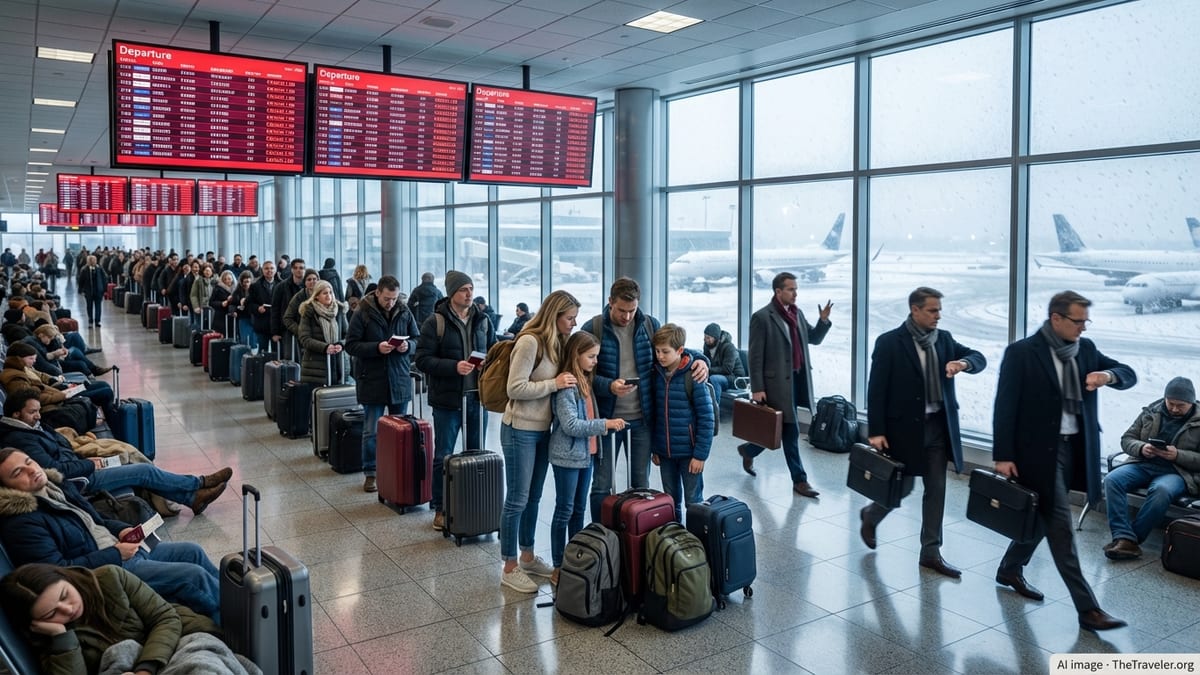
Logan Gridlock Ripples Across Domestic and International Routes
The disruption at Boston Logan emerged over the weekend and intensified into Monday, as data from multiple flight tracking services pointed to unusually high levels of delays and cancellations clustered around the airport. Publicly available information shows that departures and arrivals operated by Republic and JetBlue were particularly affected, with schedules unraveling across the Northeast corridor and onward connections.
Reports indicate that aircraft and crews scheduled through Boston quickly fell out of position, creating a domino effect that spread to routes serving major hubs such as New York, Washington, and key Midwest and Southeast cities. Passengers connecting through Boston on Republic operated regional services for larger network carriers and on JetBlue point to point flights encountered rolling departure time changes, gate swaps, and, in many cases, outright cancellations.
The turbulence at Logan comes during a period of heightened sensitivity to travel disruption across the United States, where recent incidents at other large hubs have underscored how quickly a localized outage can snowball into widespread chaos. Aviation analysts note that Boston’s role as both a transatlantic gateway and a dense domestic connecting point makes it especially vulnerable when operations seize up.
In addition to the direct impact on Boston based travelers, the Logan bottleneck generated knock on issues at outstations as aircraft scheduled to return from New England either arrived significantly late or did not arrive at all. That pattern left ground teams at smaller airports scrambling to rework boarding times and crew assignments with little advance notice.
Republic and JetBlue Networks Strain Under Knock On Effects
Regional carrier Republic, which operates flights under the banners of larger U.S. airlines, experienced a surge of late running services tied to its Boston flying. Publicly available tracking data shows that a significant portion of the carrier’s schedule in and out of Logan ran behind, contributing to the tally of hundreds of delayed operations. Each late arriving regional jet created additional pressure, as turn times shortened and crews approached duty limits.
JetBlue, with Boston as one of its primary focus cities, faced parallel challenges. Real time status boards reflected a patchwork of delayed departures on key Logan routes, particularly to other East Coast and mid continent destinations. In some instances, flights that eventually operated did so hours behind schedule, while others were removed from the timetable altogether as the day’s disruptions accumulated.
The combined picture for the two operators, according to compiled tracking data, amounted to an estimated 365 delayed flights and 45 cancellations linked to the Logan disruption window across their broader networks. While those numbers represent a fraction of total daily U.S. departures, the geographic concentration at an already busy New England hub magnified the passenger impact.
Aviation industry observers note that both Republic and JetBlue had entered the summer travel period with relatively low cancellation rates compared with some competitors, making the Logan event a sharp contrast with their recent operational performance. The episode highlights how even carriers performing well in monthly statistics can quickly be thrown off course by a single focal point of disruption.
Weather, Congestion and System Strain Combine Into a “Perfect Storm”
While a full post event analysis is still emerging, early reporting points to a convergence of factors behind the Boston disruption. Typical seasonal weather volatility in New England, including low clouds and turbulence at cruising altitudes, paired with heavy schedule loads around peak travel days, appeared to constrain the flow of arrivals and departures.
As arrival rates were reduced and holding patterns formed, aircraft inbound to Logan burned additional fuel and crews edged closer to legally mandated duty time limits. In such scenarios, even modest ground delays can push a flight from “late” to “unable to operate,” as airlines must remove a service rather than exceed crew time regulations. Those constraints are especially acute for regional operators such as Republic, which run dense sequences of short haul flights.
At the same time, reports from recent months underline the broader strain on airline technology and resource planning systems. Industry coverage has documented instances in which schedule planning and crew assignment platforms have struggled to recover quickly from sudden disruptions at major hubs. Boston’s latest meltdown fits into that pattern, with a localized issue rapidly cascading into a far wider operational imbalance.
Observers point out that Boston Logan has faced periodic bouts of congestion related disruption in recent travel seasons, as the airport juggles growth in international flying with heavy regional and low cost traffic. The current event adds to mounting evidence that major hubs with constrained runway and gate capacity are particularly exposed when schedules are running near their limits.
Global Travelers Face Missed Connections and Scrambled Itineraries
The Logan disruptions did not stay confined to the United States. Because Boston serves as a key entry and exit point for transatlantic services, delayed regional and JetBlue feeder flights had downstream effects on passengers heading to or arriving from Europe and beyond. Late arriving travelers missed long haul departures, while inbound international passengers found their onward connections to domestic cities no longer viable.
Travel industry tracking of misconnected passengers suggests that even a relatively small number of canceled and significantly delayed flights can translate into large volumes of disrupted itineraries, especially when they involve international journeys stitched together across multiple tickets or carriers. Rebooking options are often limited during peak periods, leaving travelers facing extended overnight stays or multi stop routings far from their original plans.
According to published coverage of recent global aviation meltdowns, the knock on effects can persist for days after the initial trigger. Aircraft and crew rosters require time to be rebalanced, and spare capacity is often scarce when overall demand is strong. That dynamic was visible in previous episodes at other major hubs and appears to be repeating around the Boston event, with residual delays lingering even as the most acute phase passes.
For travelers, the Logan crisis serves as another reminder of the fragility of complex global air networks. Even when the issue begins with a single airport or region, the web of connections can ensure that the consequences are felt across continents.
What the Meltdown Signals for Summer 2026 Travel
The Boston Logan meltdown arrives as airlines, airports, and regulators prepare for what is expected to be one of the busiest summer travel seasons since before the pandemic era. Industry forecasts have pointed to record passenger volumes on many U.S. routes, accompanied by tight aircraft utilization and limited spare capacity in fleets and staffing.
Analysts caution that the combination of high demand, constrained infrastructure, and increasingly complex technology systems leaves the aviation sector vulnerable to further high profile breakdowns. Recent episodes at major airports in the United States and abroad suggest that many carriers are still refining their disruption management practices, including how quickly they can reposition aircraft and crews after a shock to the system.
Published assessments of airline performance in early 2026 show improving average cancellation rates for several major carriers, including JetBlue, but also highlight that on time performance remains highly variable by day and by hub. The Logan event underscores that aggregated statistics can mask sharp, short term spikes in disruption when conditions deteriorate at a key node.
For travelers planning trips through Boston and other major hubs in the coming weeks, travel experts commonly recommend building in additional connection time, monitoring flight status closely, and considering earlier departures on critical travel days. While such measures cannot eliminate the risk of disruption, they can provide more flexibility when a local meltdown, like the one now centered on Logan, sends shockwaves across the broader aviation network.